


Hero image 0 of Schooled and Sorted: How Educational Categories Create Inequality : How Educational Categories Create Inequality (Paperback), 0 of 1
Schooled and Sorted: How Educational Categories Create Inequality : How Educational Categories Create Inequality (Paperback)
(No ratings yet)
Key item features
We tend to view education primarily as a way to teach students skills and knowledge that they will draw upon as they move into their adult lives. However, schools do more than educate students—they also place students into categories, such as kindergartner, English language learner, or honor roll student. In Schooled & Sorted, Thurston Domina, Andrew M. Penner, and Emily K. Penner, explore processes of educational categorization in order to explain the complex relationship between education and social inequality—and to identify strategies that can help build more just educational systems.
Some educational categories have broadly egalitarian consequences. Indeed, Domina, Penner, and Penner argue that when societies enroll young people in school, making them students, they mark them as individuals who are worthy of rights. But other educational categories reinforce powerful social categories—including race, gender, and class—and ultimately reproduce social and economic inequality in society. Elite colleges, tracked high schools, and elementary school gifted programs provide not only different educational experiences, but also create merit and inequality by sorting students into categories that are defined by the students who are excluded.
Schooled & Sorted highlights that many of the decisions that define educational categories occur in school-based committee meetings and other relatively local settings. The local nature of these decisions provides many opportunities to define educational categories differently, and for school communities to bring about change.
Schooled & Sorted is an illuminating investigation into the ways sorting within schools translates into inequality in the larger world. While some educational categorization may be unavoidable, the authors suggest ways to build a more equitable system—and thus a more equitable society.
Some educational categories have broadly egalitarian consequences. Indeed, Domina, Penner, and Penner argue that when societies enroll young people in school, making them students, they mark them as individuals who are worthy of rights. But other educational categories reinforce powerful social categories—including race, gender, and class—and ultimately reproduce social and economic inequality in society. Elite colleges, tracked high schools, and elementary school gifted programs provide not only different educational experiences, but also create merit and inequality by sorting students into categories that are defined by the students who are excluded.
Schooled & Sorted highlights that many of the decisions that define educational categories occur in school-based committee meetings and other relatively local settings. The local nature of these decisions provides many opportunities to define educational categories differently, and for school communities to bring about change.
Schooled & Sorted is an illuminating investigation into the ways sorting within schools translates into inequality in the larger world. While some educational categorization may be unavoidable, the authors suggest ways to build a more equitable system—and thus a more equitable society.
Specs
- Book formatPaperback
- Fiction/nonfictionNon-Fiction
- GenreNonfiction
- Publication dateJune, 2023
- Pages294
- Age range11 - 100 Years
Current price is USD$38.71
Price when purchased online
- Free shipping
 Free 30-day returns
How do you want your item?
Ships to
Arrives between May 29 - Jun 5
|
Sold and shipped by newbookdeals
4.5605676634566645 stars out of 5, based on 1973 seller reviews(4.6)1973 seller reviews

Free 30-day returns
About this item
Product details
Society primarily views education as a way to teach students skills and knowledge that they will draw upon as they move into their adult lives. However, schools do more than educate students – they also place students into categories, such as kindergartner, English language learner, and honor roll student. But do these categories have larger consequences than simply sorting students into classrooms? In Schooled & Sorted Thurston Domina, Andrew M. Penner, and Emily K. Penner, explore how educational categories reify and reinforce powerful existing social categories – including race, ethnicity, and class – and ultimately reproduce social and economic inequality in broader society.
Domina and colleagues argue that while education is often seen as a tool for social mobility and reducing inequality, categories used in schools shape students’ access to resources, which ultimately have far-reaching impacts on their lives. The authors assert that the classes students are sorted into influence their educational experiences – students who are placed in higher-tracked classes are believed to have stronger academic skills than students in lower-tracked classes. As a result, more resources are often devoted to students in higher-tracked classes. Because many measures of academic achievement reflect values of the status quo, white, affluent students are overrepresented in these track assignments, leading to a reproduction of societal status and resource inequality within schools.
This inequality within schools translates into lasting inequalities in the adult world. Society views educational achievement to be based on merit – high achievers have done well because they worked hard and are rewarded with resources, status, and power, including high-paying, high-status jobs at prestigious organizations. Those with lower educational status, on the other hand, are seen as undeserving and are therefore sorted into lower-paid jobs in lower-status professions and hold less influence.
Domina and colleagues contend, however, that while educational categorization is unavoidable, a more equitable system, and thus a more equitable society, can be built. A key component is to build and uphold categories that emphasize educational goods that are inherently valuable, such as the ability to read, as opposed to those that derive value from scarcity, such as status and prestige.
Schooled & Sorted is an illuminating investigation into the ways sorting within schools translates to sorting – and inequality – into the larger world.
Domina and colleagues argue that while education is often seen as a tool for social mobility and reducing inequality, categories used in schools shape students’ access to resources, which ultimately have far-reaching impacts on their lives. The authors assert that the classes students are sorted into influence their educational experiences – students who are placed in higher-tracked classes are believed to have stronger academic skills than students in lower-tracked classes. As a result, more resources are often devoted to students in higher-tracked classes. Because many measures of academic achievement reflect values of the status quo, white, affluent students are overrepresented in these track assignments, leading to a reproduction of societal status and resource inequality within schools.
This inequality within schools translates into lasting inequalities in the adult world. Society views educational achievement to be based on merit – high achievers have done well because they worked hard and are rewarded with resources, status, and power, including high-paying, high-status jobs at prestigious organizations. Those with lower educational status, on the other hand, are seen as undeserving and are therefore sorted into lower-paid jobs in lower-status professions and hold less influence.
Domina and colleagues contend, however, that while educational categorization is unavoidable, a more equitable system, and thus a more equitable society, can be built. A key component is to build and uphold categories that emphasize educational goods that are inherently valuable, such as the ability to read, as opposed to those that derive value from scarcity, such as status and prestige.
Schooled & Sorted is an illuminating investigation into the ways sorting within schools translates to sorting – and inequality – into the larger world.
We tend to view education primarily as a way to teach students skills and knowledge that they will draw upon as they move into their adult lives. However, schools do more than educate students—they also place students into categories, such as kindergartner, English language learner, or honor roll student. In Schooled & Sorted, Thurston Domina, Andrew M. Penner, and Emily K. Penner, explore processes of educational categorization in order to explain the complex relationship between education and social inequality—and to identify strategies that can help build more just educational systems.
Some educational categories have broadly egalitarian consequences. Indeed, Domina, Penner, and Penner argue that when societies enroll young people in school, making them students, they mark them as individuals who are worthy of rights. But other educational categories reinforce powerful social categories—including race, gender, and class—and ultimately reproduce social and economic inequality in society. Elite colleges, tracked high schools, and elementary school gifted programs provide not only different educational experiences, but also create merit and inequality by sorting students into categories that are defined by the students who are excluded.
Schooled & Sorted highlights that many of the decisions that define educational categories occur in school-based committee meetings and other relatively local settings. The local nature of these decisions provides many opportunities to define educational categories differently, and for school communities to bring about change.
Schooled & Sorted is an illuminating investigation into the ways sorting within schools translates into inequality in the larger world. While some educational categorization may be unavoidable, the authors suggest ways to build a more equitable system—and thus a more equitable society.
Some educational categories have broadly egalitarian consequences. Indeed, Domina, Penner, and Penner argue that when societies enroll young people in school, making them students, they mark them as individuals who are worthy of rights. But other educational categories reinforce powerful social categories—including race, gender, and class—and ultimately reproduce social and economic inequality in society. Elite colleges, tracked high schools, and elementary school gifted programs provide not only different educational experiences, but also create merit and inequality by sorting students into categories that are defined by the students who are excluded.
Schooled & Sorted highlights that many of the decisions that define educational categories occur in school-based committee meetings and other relatively local settings. The local nature of these decisions provides many opportunities to define educational categories differently, and for school communities to bring about change.
Schooled & Sorted is an illuminating investigation into the ways sorting within schools translates into inequality in the larger world. While some educational categorization may be unavoidable, the authors suggest ways to build a more equitable system—and thus a more equitable society.
info:
We aim to show you accurate product information. Manufacturers, suppliers and others provide what you see here, and we have not verified it.
Specifications
Book format
Paperback
Fiction/nonfiction
Non-Fiction
Genre
Nonfiction
Publication date
June, 2023
Warranty
Warranty information
Please be aware that the warranty terms on items offered for sale by third party Marketplace sellers may differ from those displayed in this section (if any). To confirm warranty terms on an item offered for sale by a third party Marketplace seller, please use the 'Contact seller' feature on the third party Marketplace seller's information page and request the item's warranty terms prior to purchase.
Similar items you might like
Based on what customers bought
Educational Delusions? : Why Choice Can Deepen Inequality and How to Make Schools Fair (Edition 1) (Paperback) $42.02
 $4202current price $42.02
Educational Delusions? : Why Choice Can Deepen Inequality and How to Make Schools Fair (Edition 1) (Paperback)
Children and Their Education in Secure Accommodation: Interdisciplinary Perspectives of Education, Health and Youth Just, (Paperback) $56.14
 $5614current price $56.14
Children and Their Education in Secure Accommodation: Interdisciplinary Perspectives of Education, Health and Youth Just, (Paperback)
Smoother Pebbles: Essays in the Sociology of Science, (Paperback) $58.17
 $5817current price $58.17
Smoother Pebbles: Essays in the Sociology of Science, (Paperback)
Dr William Li's Eat to Beat Disease & Your Diet 2 Books - Non Fiction - Paperback $49.99
 $4999current price $49.99
Dr William Li's Eat to Beat Disease & Your Diet 2 Books - Non Fiction - Paperback
Unequal Lessons: School Diversity and Educational Inequality in New York City, (Paperback) $20.87
 $2087current price $20.87
Unequal Lessons: School Diversity and Educational Inequality in New York City, (Paperback)
Seda Flexible Learning in Action: Case Study in Higher Education, (Paperback) $41.59 Was $48.99
 $4159current price $41.59, Was $48.99$48.99
Seda Flexible Learning in Action: Case Study in Higher Education, (Paperback)
Disability Studies in Education Inclusive Education Twenty Years after Salamanca, Book 19, (Paperback) $29.65
 $2965current price $29.65
Disability Studies in Education Inclusive Education Twenty Years after Salamanca, Book 19, (Paperback)
Studies in Social Inequality Mobility and Inequality: Frontiers of Research in Sociology and Economics, (Paperback) $40.00
 $4000current price $40.00
Studies in Social Inequality Mobility and Inequality: Frontiers of Research in Sociology and Economics, (Paperback)
Difference Making at the Heart of Learning: Students, Schools, and Communities Alive with Possibility (Paperback) $51.88
 $5188current price $51.88
Difference Making at the Heart of Learning: Students, Schools, and Communities Alive with Possibility (Paperback)
Building Communities of Learners: A Collaboration Among Teachers, Students, Families, and Community, (Paperback) $31.52
 $3152current price $31.52
Building Communities of Learners: A Collaboration Among Teachers, Students, Families, and Community, (Paperback)
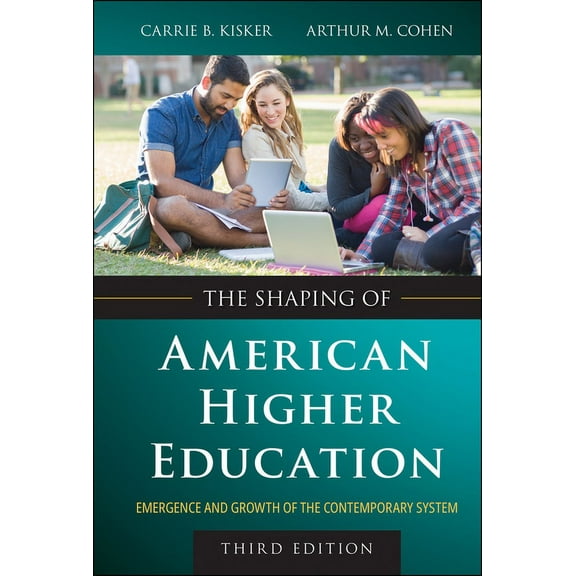
The Shaping of American Higher Education (Hardcover) $58.29
 $5829current price $58.29
The Shaping of American Higher Education (Hardcover)
Cheating Academic Integrity: Lessons from 30 Years of Research, (Paperback) $34.49
 $3449current price $34.49
Cheating Academic Integrity: Lessons from 30 Years of Research, (Paperback)
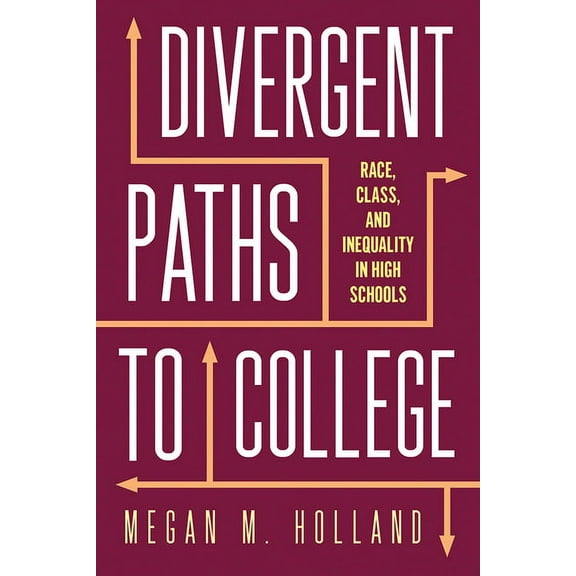
Critical Issues in American Education: Divergent Paths to College : Race, Class, and Inequality in High Schools (Paperback) $41.48
 $4148current price $41.48
Critical Issues in American Education: Divergent Paths to College : Race, Class, and Inequality in High Schools (Paperback)
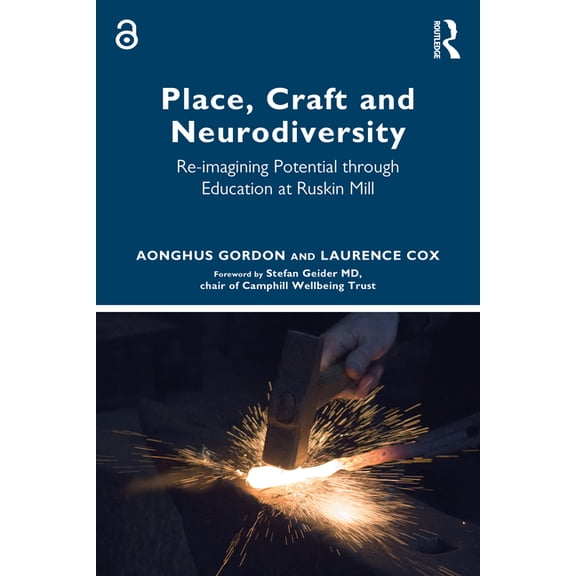
Place, Craft and Neurodiversity: Re-Imagining Potential Through Education at Ruskin Mill, (Paperback) $41.11
 $4111current price $41.11
Place, Craft and Neurodiversity: Re-Imagining Potential Through Education at Ruskin Mill, (Paperback)
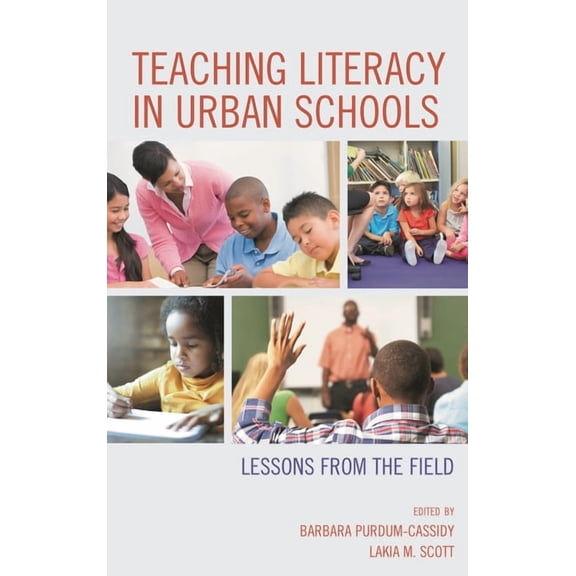
Teaching Literacy in Urban Schools: Lessons from the Field, (Paperback) $40.40
 $4040current price $40.40
Teaching Literacy in Urban Schools: Lessons from the Field, (Paperback)
Schooling Inequality: Aspirations, Opportunities and the Reproduction of Social Class, (Paperback) $36.19 Was $42.95
 $3619current price $36.19, Was $42.95$42.95
Schooling Inequality: Aspirations, Opportunities and the Reproduction of Social Class, (Paperback)
Students Resolving Conflict: Peer Mediation in Schools (Paperback) by Richard Cohen $29.99
 $2999current price $29.99
Students Resolving Conflict: Peer Mediation in Schools (Paperback) by Richard Cohen
Adult Coloring Books: Christmas Creative Haven Candy Cane Lane Coloring Book, (Paperback) $8.99
 $899current price $8.99
Adult Coloring Books: Christmas Creative Haven Candy Cane Lane Coloring Book, (Paperback)
Routledge International Studies in the P Parallels and Responses to Curricular Innovation: The Possibilities of Posthumanistic Education, (Paperback) $58.96
 $5896current price $58.96
Routledge International Studies in the P Parallels and Responses to Curricular Innovation: The Possibilities of Posthumanistic Education, (Paperback)
Teaching Literacy Skills to Adolescents Using Coretta Scott King Award Winners, (Paperback) $49.80
 $4980current price $49.80
Teaching Literacy Skills to Adolescents Using Coretta Scott King Award Winners, (Paperback)
Customer ratings & reviews
0 ratings|0 reviews
This item does not have any reviews yet

Related pages
- Matlab Equation
- Brb Publications
- Answer Key Go Math
- Best Sellers In Mathematics For Teens Young Adults
- Inti Publishing & Resource Books
- Math Properties
- Number Systems Books
- Early Childhood Education Books
- General Mathematics Teen & Young Adult Books
- Study Aids & Workbooks for Kids
- Number Theory Books
- Recreations & Games in Mathematics Books