


Buffalo Bill in Bologna : The Americanization of the World, 1869-1922 (Paperback)
(No ratings yet)
Key item features
When it comes to the production and distribution of mass culture, no country in modern times has come close to rivaling the success of America. From blue jeans in central Europe to Elvis Presley's face on a Republic of Chad postage stamp, the reach of American mass culture extends into every corner of the globe. Most believe this is a twentieth-century phenomenon, but here Robert W. Rydell and Rob Kroes prove that its roots are far deeper.
Buffalo Bill in Bologna reveals that the process of globalizing American mass culture began as early as the mid-nineteenth century. In fact, by the end of World War I, the United States already boasted an advanced network of culture industries that served to promote American values. Rydell and Kroes narrate how the circuses, amusement parks, vaudeville, mail-order catalogs, dime novels, and movies developed after the Civil War—tools central to hastening the reconstruction of the country—actually doubled as agents of American cultural diplomacy abroad. As symbols of America's version of the "good life," cultural products became a primary means for people around the world, especially in Europe, to reimagine both America and themselves in the context of America's growing global sphere of influence. Paying special attention to the role of the world's fairs, the exporting of Buffalo Bill's Wild West show to Europe, the release of The Birth of a Nation, and Woodrow Wilson's creation of the Committee on Public Information, Rydell and Kroes offer an absorbing tour through America's cultural expansion at the turn of the century. Buffalo Bill in Bologna is thus a tour de force that recasts what has been popularly understood about this period of American and global history.
Buffalo Bill in Bologna reveals that the process of globalizing American mass culture began as early as the mid-nineteenth century. In fact, by the end of World War I, the United States already boasted an advanced network of culture industries that served to promote American values. Rydell and Kroes narrate how the circuses, amusement parks, vaudeville, mail-order catalogs, dime novels, and movies developed after the Civil War—tools central to hastening the reconstruction of the country—actually doubled as agents of American cultural diplomacy abroad. As symbols of America's version of the "good life," cultural products became a primary means for people around the world, especially in Europe, to reimagine both America and themselves in the context of America's growing global sphere of influence. Paying special attention to the role of the world's fairs, the exporting of Buffalo Bill's Wild West show to Europe, the release of The Birth of a Nation, and Woodrow Wilson's creation of the Committee on Public Information, Rydell and Kroes offer an absorbing tour through America's cultural expansion at the turn of the century. Buffalo Bill in Bologna is thus a tour de force that recasts what has been popularly understood about this period of American and global history.
Specs
- Book formatPaperback
- Fiction/nonfictionNon-Fiction
- GenreHistory
- Pub date2012-11-28
- Pages224
- Edition1
Current price is USD$32.12
Price when purchased online
- Free shipping
 Free 30-day returns
How do you want your item?
Columbus, 43215
Arrives between Apr 17 - Apr 24
|
Sold and shipped by newbookdeals
4.559304164470216 stars out of 5, based on 1897 seller reviews(4.6)1897 seller reviews

Free 30-day returns
About this item
Product details
When it comes to the production and distribution of mass culture, no country in modern times has come close to rivaling the success of America. From blue jeans in central Europe to Elvis Presley's face on a Republic of Chad postage stamp, the reach of American mass culture extends into every corner of the globe. Most believe this is a twentieth-century phenomenon, but here Robert W. Rydell and Rob Kroes prove that its roots are far deeper. Buffalo Bill in Bologna reveals that the process of globalizing American mass culture began as early as the mid-nineteenth century. In fact, by the end of World War I, the United States already boasted an advanced network of culture industries that served to promote American values. Rydell and Kroes narrate how the circuses, amusement parks, vaudeville, mail-order catalogs, dime novels, and movies developed after the Civil War--tools central to hastening the reconstruction of the country--actually doubled as agents of American cultural diplomacy abroad. As symbols of America's version of the "good life," cultural products became a primary means for people around the world, especially in Europe, to reimagine both America and themselves in the context of America's growing global sphere of influence. Paying special attention to the role of the world's fairs, the exporting of Buffalo Bill's Wild West show to Europe, the release of The Birth of a Nation, and Woodrow Wilson's creation of the Committee on Public Information, Rydell and Kroes offer an absorbing tour through America's cultural expansion at the turn of the century. Buffalo Bill in Bologna is thus a tour de force that recasts what has been popularly understood about this period of American and global history.
When it comes to the production and distribution of mass culture, no country in modern times has come close to rivaling the success of America. From blue jeans in central Europe to Elvis Presley's face on a Republic of Chad postage stamp, the reach of American mass culture extends into every corner of the globe. Most believe this is a twentieth-century phenomenon, but here Robert W. Rydell and Rob Kroes prove that its roots are far deeper.
Buffalo Bill in Bologna reveals that the process of globalizing American mass culture began as early as the mid-nineteenth century. In fact, by the end of World War I, the United States already boasted an advanced network of culture industries that served to promote American values. Rydell and Kroes narrate how the circuses, amusement parks, vaudeville, mail-order catalogs, dime novels, and movies developed after the Civil War—tools central to hastening the reconstruction of the country—actually doubled as agents of American cultural diplomacy abroad. As symbols of America's version of the "good life," cultural products became a primary means for people around the world, especially in Europe, to reimagine both America and themselves in the context of America's growing global sphere of influence. Paying special attention to the role of the world's fairs, the exporting of Buffalo Bill's Wild West show to Europe, the release of The Birth of a Nation, and Woodrow Wilson's creation of the Committee on Public Information, Rydell and Kroes offer an absorbing tour through America's cultural expansion at the turn of the century. Buffalo Bill in Bologna is thus a tour de force that recasts what has been popularly understood about this period of American and global history.
Buffalo Bill in Bologna reveals that the process of globalizing American mass culture began as early as the mid-nineteenth century. In fact, by the end of World War I, the United States already boasted an advanced network of culture industries that served to promote American values. Rydell and Kroes narrate how the circuses, amusement parks, vaudeville, mail-order catalogs, dime novels, and movies developed after the Civil War—tools central to hastening the reconstruction of the country—actually doubled as agents of American cultural diplomacy abroad. As symbols of America's version of the "good life," cultural products became a primary means for people around the world, especially in Europe, to reimagine both America and themselves in the context of America's growing global sphere of influence. Paying special attention to the role of the world's fairs, the exporting of Buffalo Bill's Wild West show to Europe, the release of The Birth of a Nation, and Woodrow Wilson's creation of the Committee on Public Information, Rydell and Kroes offer an absorbing tour through America's cultural expansion at the turn of the century. Buffalo Bill in Bologna is thus a tour de force that recasts what has been popularly understood about this period of American and global history.
info:
We aim to show you accurate product information. Manufacturers, suppliers and others provide what you see here, and we have not verified it.
Specifications
Book format
Paperback
Fiction/nonfiction
Non-Fiction
Genre
History
Pub date
2012-11-28
Warranty
Warranty information
Please be aware that the warranty terms on items offered for sale by third party Marketplace sellers may differ from those displayed in this section (if any). To confirm warranty terms on an item offered for sale by a third party Marketplace seller, please use the 'Contact seller' feature on the third party Marketplace seller's information page and request the item's warranty terms prior to purchase.
Warnings
State Chemical Disclosure
None
Similar items you might like
Based on what customers bought
A History of the Kägy Relationship in America, (Paperback) $31.95
 $3195current price $31.95
A History of the Kägy Relationship in America, (Paperback)
An outline history of Orange County (Paperback) $32.00
 $3200current price $32.00
An outline history of Orange County (Paperback)
Up the River. (Paperback) $32.75
 $3275current price $32.75
Up the River. (Paperback)
The Centennial Gazetteer of the United States, etc. (Paperback) $30.95
 $3095current price $30.95
The Centennial Gazetteer of the United States, etc. (Paperback)
The Grafters of America, Who They Are and How They Work (Paperback) $27.95
 $2795current price $27.95
The Grafters of America, Who They Are and How They Work (Paperback)
The political text-book, or, Encyclopedia (Paperback) $32.00
 $3200current price $32.00
The political text-book, or, Encyclopedia (Paperback)
-NA- $32.94
 $3294current price $32.94
-NA-
Manjiro, the Man Discovered America (Paperback) $27.14
 $2714current price $27.14
Manjiro, the Man Discovered America (Paperback)
A Monograph On the Isopods of North America, (Paperback) $33.89
 $3389current price $33.89
A Monograph On the Isopods of North America, (Paperback)
The History of Ancient America, Anterior to the Time of Columbus, (Paperback) $27.63
 $2763current price $27.63
The History of Ancient America, Anterior to the Time of Columbus, (Paperback)
The Secret Rout, (Paperback) $26.99
 $2699current price $26.99
The Secret Rout, (Paperback)
The Old Merchants of New York City. (Paperback) $34.75
 $3475current price $34.75
The Old Merchants of New York City. (Paperback)
The Dows or Dowse Family in America, (Paperback) $26.78
 $2678current price $26.78
The Dows or Dowse Family in America, (Paperback)
History of the Great American Fortunes, (Paperback) $32.82
 $3282current price $32.82
History of the Great American Fortunes, (Paperback)
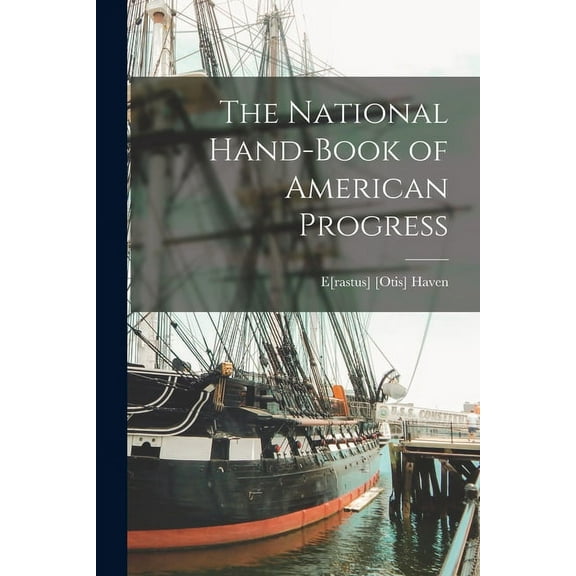
The National Hand-book of American Progress (Paperback) $30.95
 $3095current price $30.95
The National Hand-book of American Progress (Paperback)
History of New-York (Paperback) $27.95
 $2795current price $27.95
History of New-York (Paperback)
The American Race (Paperback) $25.37
 $2537current price $25.37
The American Race (Paperback)
Rome in America, (Paperback) $20.95
 $2095current price $20.95
Rome in America, (Paperback)
Four Years Among Spanish-Americans (Paperback) $25.95
 $2595current price $25.95
Four Years Among Spanish-Americans (Paperback)


Customer ratings & reviews
0 ratings|0 reviews
This item does not have any reviews yet
