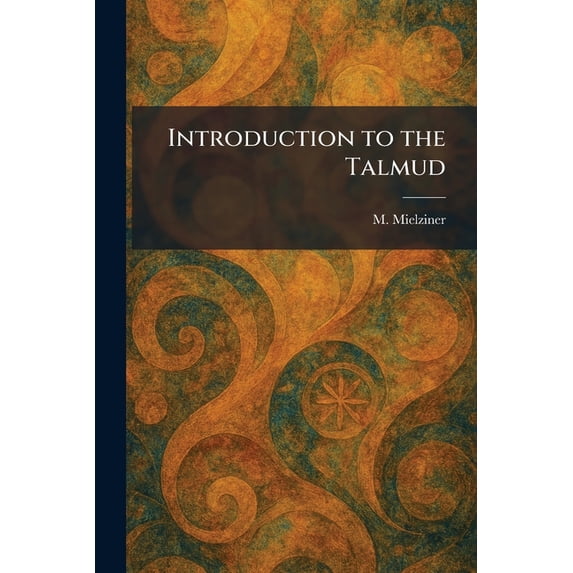
"Introduction to the Talmud" by M. Mielziner is a foundational scholarly resource designed to provide a clear and systematic entrance into the vast world of Rabbinic literature. This comprehensive work explores the origins, development, and complex structure of both the Mishnah and the Gemara, making it an essential tool for students of Jewish law and history. Mielziner provides a detailed analysis of the Talmudic legal system, the hermeneutic rules used by the ancient sages, and the specialized terminology required to navigate these intricate texts.
The book is structured to guide the reader through the historical eras of the Tannaim and Amoraim, offering insights into the evolution of Halakhah and the dialectical methods that define Talmudic reasoning. By breaking down the linguistic and logical challenges of the text, "Introduction to the Talmud" serves as a bridge between traditional study and modern academic inquiry. It remains a highly regarded classic for its ability to distill centuries of intellectual tradition into an accessible yet rigorous format, preserving the spiritual and legal legacy of Judaism for scholars and laypeople alike.
This work has been selected by scholars as being culturally important, and is part of the knowledge base of civilization as we know it. This work was reproduced from the original artifact, and remains as true to the original work as possible. Therefore, you may see the original copyright references, library stamps (as most of these works have been housed in our most important libraries around the world), and other notations in the work.
This work is in the public domain in the United States of America, and possibly other nations. Within the United States, you may freely copy and distribute this work, as no entity (individual or corporate) has a copyright on the body of the work.
As a reproduction of a historical artifact, this work may contain missing or blurred pages, poor pictures, errant marks, etc. Scholars believe, and we concur, that this work is important enough to be preserved, reproduced, and made generally available to the public. We appreciate your support of the preservation process, and thank you for being an important part of keeping this knowledge alive and relevant.