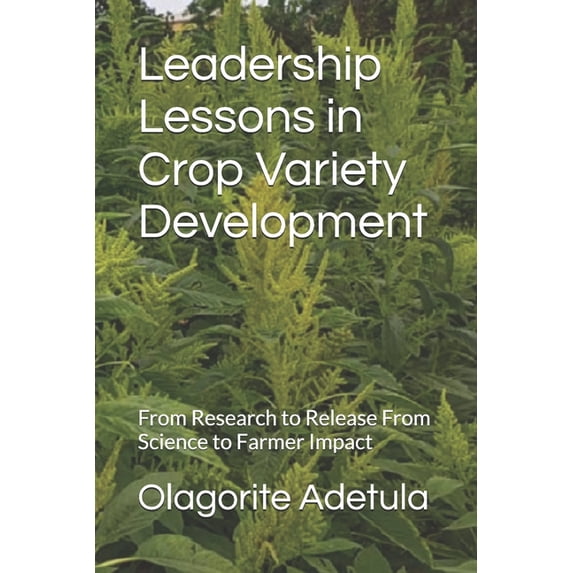
The true measure of success in agricultural research is not funding, publications, or number of trials, but the delivery of improved crop varieties that are adopted by farmers and endure over time. It positions leadership-not money or infrastructure-as the missing link between scientific effort and real impact.
The book Leadership Lessons in Crop Variety Development: From Research to Release, From Science to Farmer Impact redefines crop improvement as a leadership journey shaped by mindset, competence, systems, and accountability rather than credentials or budgets. It shows that strong leadership can drive results even under resource constraints, while weak leadership can cause failure even in well-funded programs.
The first part highlights how focused leadership protects breeding timelines, maintains data integrity, and keeps teams aligned despite challenges such as unpredictable seasons, institutional delays, and resource gaps. It critiques reliance on academic titles alone and emphasizes practical competence and field experience.
The second part examines research culture, ethics, accountability, and institutional systems. It argues that sustainable success depends on well-designed systems, effective teamwork, and leaders who understand breeding timelines. It also stresses the role of digital tools, data management, and integrated breeding platforms in strengthening transparency and decision-making.
The final section focuses on adoption, seed systems, and legacy. It emphasizes that varieties only matter if farmers actually use them, which requires strong seed systems, maintenance breeding, and stakeholder engagement. It warns that without proper seed preservation and quality control, years of research can be lost. The conclusion calls for redefining success around long-term farmer impact rather than activities or funding.
Overall, the book presents leadership as central to transforming scientific research into lasting agricultural development.