


The French Revolution Confronts Pius VI : Volume 1: His Writings to Louis XVI, French Cardinals, Bishops, the National Assembly, and the People of France with Special Emphasis on the Civil Constitution of the Clergy (Hardcover)
Key item features
The writings of Pope Pius VI, head of the Catholic Church during the most destructive period of the French Revolution, were compiled in two volumes by M.N.S. Guillon and published in 1798 and 1800. But during the Revolution, the reign of Napoleon, and the various revolutionary movements of the 19th century, there were extraordinary efforts to destroy writings that critiqued the revolutionary ideology. Many books and treatises, if they survived the revolution or the sacking from Napoleon’s armies. To this day, no public copy of Guillon’s work exists in Paris.
Now, for the first time in English, these works comprising the letters, briefs, and other writings of Pius VI on the French Revolution are available. Volume I treats the first shock of the Revolution and the efforts of the Pope in 1790 and 1791 to oppose the Civil Constitution of the Clergy (which famous revolutionary and shrewd diplomat Talleyrand referred to as “the greatest fault of the National Assembly”). Volume II will be published later, and deals with the aftermath of the Civil Constitution through Pius’s death in exile). Editor and translator Jeffrey Langan presents the materials leading up to and directly connected with these decrees, in which the National Assembly attempted to set up a Catholic Church that would be completely submissive to the demands of the Assembly. Volume I also covers Pius’s efforts to deal with the immediate aftermath of the Constitution after the National Assembly implemented it, including his encyclical, Quod Aliquantum.
The letters will show how Pius chose to oppose the Civil Constitution. He did so not by a public campaign, for he had no real temporal power to oppose the violence, but by attempting to work personally with Louis XVI and various archbishops in France to articulate what were the points on which he could concede (matters dealing with the political structures of France) and what were the essential points in which he could not concede (matters dealing with the organization of dioceses and appointment of bishops).
Since the 1980s, with the writings and school that developed around François Furet, as well as Simon Schama’s Citizens, a new debate over the French Revolution has ensued, bringing forth a more objective account of the Revolution, one that avoids an excessively Marxist lens and that brings to light some of its defects and more gruesome parts – the destruction and theft of Church property, and the sadistic methods of torture and killing of priests, nuns, aristocrats, and fellow-revolutionaries.
An examination of the writings of Pius VI will not only help set the historical record straight for English-speaking students of the Revolution, it will also aid them to better understand the principles that the Catholic Church employs when confronted with chaotic political change. They will see that the Church has a principled approach to distinguishing, while not separating, the power of the Church and the power of the state. They will also see, as Talleyrand himself also saw, that one of the essential elements that makes the Church the Church is the right to appoint bishops and to discipline its own bishops. The Church herself recognizes that she cannot long survive without this principle that guarantees her unity.
Pius VI’s efforts were able to keep the Catholic Church intact (though badly bruised) so that she could reconstitute herself and build up a vibrant life in 19th-century France. (He did this in the face of the Church’s prestige having sunk to historic lows; some elites in Europe thought there would be no successor to Pius and jokingly referred to him as “Pius the Last.”) He began a process that led to the restoration of the prestige of the Papacy throughout the world, and he initiated a two-century process that led to the Church finally being able to select bishops without any interference from secular authorities. This had been at least a 1,000-year problem in the history of the Church. By 1990, only two countries of the world, China and Vietnam, were interfering in any significant way in the process that the Church used to select bishops.
Pius VI’s papacy, especially during the years of the French Revolution, was a pivotal point for the French Revolution and for the interaction between Church and state in Western history. All freedom-loving people will be happy to read his distinc-tions between the secular power and the spiritual power. His papacy also was important for the internal developments that the Church would make over the next 200 years with respect to its self-understanding of the Papacy and the role of the bishop.
Specs
- Book formatHardcover
- Fiction/nonfictionNon-Fiction
- GenreHistory
- Publication dateDecember, 2018
- Pages115
- Number in series1
- Free shipping
 Free 30-day returns
How do you want your item?


About this item
Product details
The writings of Pope Pius VI, head of the Catholic Church during the most destructive period of the French Revolution, were compiled in two volumes by M.N.S. Guillon and published in 1798 and 1800. But during the Revolution, the reign of Napoleon, and the various revolutionary movements of the 19th century, there were extraordinary efforts to destroy writings that critiqued the revolutionary ideology. Many books and treatises, if they survived the revolution or the sacking from Napoleon's armies. To this day, no public copy of Guillon's work exists in Paris.
Now, for the first time in English, these works comprising the letters, briefs, and other writings of Pius VI on the French Revolution are available. Volume I treats the first shock of the Revolution and the efforts of the Pope in 1790 and 1791 to oppose the Civil Constitution of the Clergy (which famous revolutionary and shrewd diplomat Talleyrand referred to as "the greatest fault of the National Assembly"). Volume II will be published later, and deals with the aftermath of the Civil Constitution through Pius's death in exile). Editor and translator Jeffrey Langan presents the materials leading up to and directly connected with these decrees, in which the National Assembly attempted to set up a Catholic Church that would be completely submissive to the demands of the Assembly. Volume I also covers Pius's efforts to deal with the immediate aftermath of the Constitution after the National Assembly implemented it, including his encyclical, Quod Aliquantum.
The letters will show how Pius chose to oppose the Civil Constitution. He did so not by a public campaign, for he had no real temporal power to oppose the violence, but by attempting to work personally with Louis XVI and various archbishops in France to articulate what were the points on which he could concede (matters dealing with the political structures of France) and what were the essential points in which he could not concede (matters dealing with the organization of dioceses and appointment of bishops).
Since the 1980s, with the writings and school that developed around François Furet, as well as Simon Schama's Citizens, a new debate over the French Revolution has ensued, bringing forth a more objective account of the Revolution, one that avoids an excessively Marxist lens and that brings to light some of its defects and more gruesome parts - the destruction and theft of Church property, and the sadistic methods of torture and killing of priests, nuns, aristocrats, and fellow-revolutionaries.
An examination of the writings of Pius VI will not only help set the historical record straight for English-speaking students of the Revolution, it will also aid them to better understand the principles that the Catholic Church employs when confronted with chaotic political change. They will see that the Church has a principled approach to distinguishing, while not separating, the power of the Church and the power of the state. They will also see, as Talleyrand himself also saw, that one of the essential elements that makes the Church the Church is the right to appoint bishops and to discipline its own bishops. The Church herself recognizes that she cannot long survive without this principle that guarantees her unity.
Pius VI's efforts were able to keep the Catholic Church intact (though badly bruised) so that she could reconstitute herself and build up a vibrant life in 19th-century France. (He did this in the face of the Church's prestige having sunk to historic lows; some elites in Europe thought there would be no successor to Pius and jokingly referred to him as "Pius the Last.") He began a process that led to the restoration of the prestige of the Papacy throughout the world, and he initiated a two-century process that led to the Church finally being able to select bishops without any interference from secular authorities. This had been at least a 1,000-year problem in the history of the Church. By
The writings of Pope Pius VI, head of the Catholic Church during the most destructive period of the French Revolution, were compiled in two volumes by M.N.S. Guillon and published in 1798 and 1800. But during the Revolution, the reign of Napoleon, and the various revolutionary movements of the 19th century, there were extraordinary efforts to destroy writings that critiqued the revolutionary ideology. Many books and treatises, if they survived the revolution or the sacking from Napoleon’s armies. To this day, no public copy of Guillon’s work exists in Paris.
Now, for the first time in English, these works comprising the letters, briefs, and other writings of Pius VI on the French Revolution are available. Volume I treats the first shock of the Revolution and the efforts of the Pope in 1790 and 1791 to oppose the Civil Constitution of the Clergy (which famous revolutionary and shrewd diplomat Talleyrand referred to as “the greatest fault of the National Assembly”). Volume II will be published later, and deals with the aftermath of the Civil Constitution through Pius’s death in exile). Editor and translator Jeffrey Langan presents the materials leading up to and directly connected with these decrees, in which the National Assembly attempted to set up a Catholic Church that would be completely submissive to the demands of the Assembly. Volume I also covers Pius’s efforts to deal with the immediate aftermath of the Constitution after the National Assembly implemented it, including his encyclical, Quod Aliquantum.
The letters will show how Pius chose to oppose the Civil Constitution. He did so not by a public campaign, for he had no real temporal power to oppose the violence, but by attempting to work personally with Louis XVI and various archbishops in France to articulate what were the points on which he could concede (matters dealing with the political structures of France) and what were the essential points in which he could not concede (matters dealing with the organization of dioceses and appointment of bishops).
Since the 1980s, with the writings and school that developed around François Furet, as well as Simon Schama’s Citizens, a new debate over the French Revolution has ensued, bringing forth a more objective account of the Revolution, one that avoids an excessively Marxist lens and that brings to light some of its defects and more gruesome parts – the destruction and theft of Church property, and the sadistic methods of torture and killing of priests, nuns, aristocrats, and fellow-revolutionaries.
An examination of the writings of Pius VI will not only help set the historical record straight for English-speaking students of the Revolution, it will also aid them to better understand the principles that the Catholic Church employs when confronted with chaotic political change. They will see that the Church has a principled approach to distinguishing, while not separating, the power of the Church and the power of the state. They will also see, as Talleyrand himself also saw, that one of the essential elements that makes the Church the Church is the right to appoint bishops and to discipline its own bishops. The Church herself recognizes that she cannot long survive without this principle that guarantees her unity.
Pius VI’s efforts were able to keep the Catholic Church intact (though badly bruised) so that she could reconstitute herself and build up a vibrant life in 19th-century France. (He did this in the face of the Church’s prestige having sunk to historic lows; some elites in Europe thought there would be no successor to Pius and jokingly referred to him as “Pius the Last.”) He began a process that led to the restoration of the prestige of the Papacy throughout the world, and he initiated a two-century process that led to the Church finally being able to select bishops without any interference from secular authorities. This had been at least a 1,000-year problem in the history of the Church. By 1990, only two countries of the world, China and Vietnam, were interfering in any significant way in the process that the Church used to select bishops.
Pius VI’s papacy, especially during the years of the French Revolution, was a pivotal point for the French Revolution and for the interaction between Church and state in Western history. All freedom-loving people will be happy to read his distinc-tions between the secular power and the spiritual power. His papacy also was important for the internal developments that the Church would make over the next 200 years with respect to its self-understanding of the Papacy and the role of the bishop.
Specifications
Book format
Fiction/nonfiction
Genre
Publication date
Warranty
Warranty information
Similar items you might like
Based on what customers bought
Classics of the Radical Reformation The Great Article Book: A Hutterite Defense of Doctrine and Practice, Book 15, (Paperback) $32.00
 $3200current price $32.00
Classics of the Radical Reformation The Great Article Book: A Hutterite Defense of Doctrine and Practice, Book 15, (Paperback)
Catholicism in Rhode Island and the Diocese of Providence 1921-1948, volume 3, (Hardcover) $30.26
 $3026current price $30.26
Catholicism in Rhode Island and the Diocese of Providence 1921-1948, volume 3, (Hardcover)
Saint Benedict Joseph Labre: Votary of Holy Poverty and Pilgrim (Hardcover) $31.95
 $3195current price $31.95
Saint Benedict Joseph Labre: Votary of Holy Poverty and Pilgrim (Hardcover)
The works of Jacob Behmen, the Teutonic theosopher. Volume I. ... To which is prefixed, the life of the author. With figures, illustrating his principles, left by the Reverend William Law, M.A. Volume $34.31
 $3431current price $34.31
The works of Jacob Behmen, the Teutonic theosopher. Volume I. ... To which is prefixed, the life of the author. With figures, illustrating his principles, left by the Reverend William Law, M.A. Volume
Les Cérémonies De La Messe Basse: Exposées Selon Les Rubriques Du Missel Romain Avec Les Différences Du Rit Parisien (Hardcover) $31.95
 $3195current price $31.95
Les Cérémonies De La Messe Basse: Exposées Selon Les Rubriques Du Missel Romain Avec Les Différences Du Rit Parisien (Hardcover)
Pope Paul VI and His Quest for Peace: 1963-1978: Volume One: "Never Again War!", (Hardcover) $29.59
 $2959current price $29.59
Pope Paul VI and His Quest for Peace: 1963-1978: Volume One: "Never Again War!", (Hardcover)
A Commentary On the New Code of Canon Law; Volume 1 (Hardcover) $31.95
 $3195current price $31.95
A Commentary On the New Code of Canon Law; Volume 1 (Hardcover)
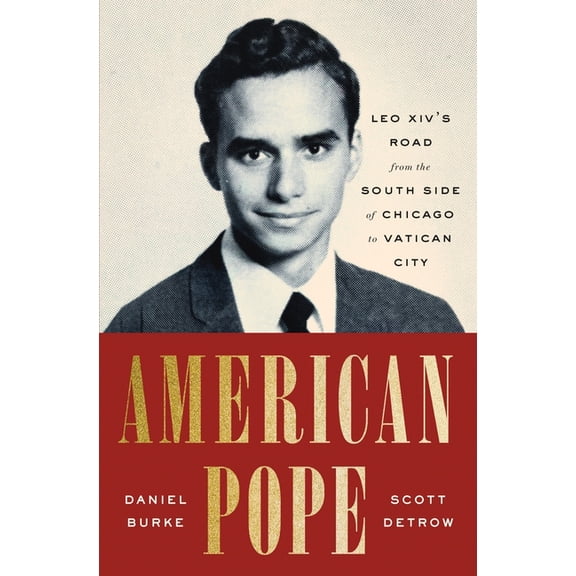
American Pope: Leo XIV's Road from the South Side of Chicago to Vatican City, (Hardcover) $29.99
 $2999current price $29.99
American Pope: Leo XIV's Road from the South Side of Chicago to Vatican City, (Hardcover)
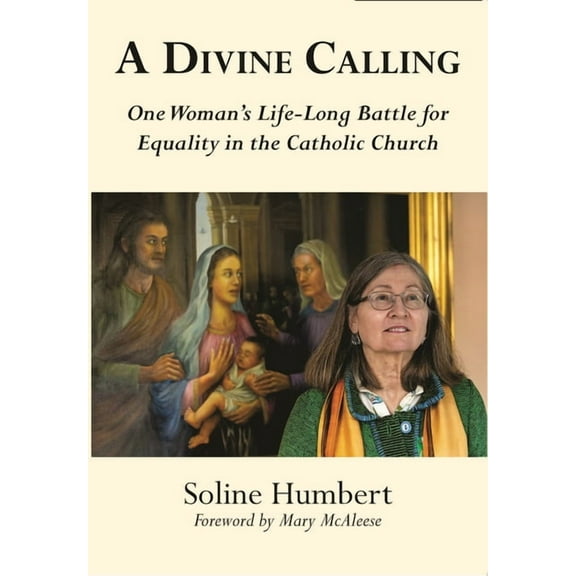
A Divine Calling: One Woman's Life-Long Battle for Equality in the Catholic Church, (Paperback) $19.96 Was $24.92
 $1996current price $19.96, Was $24.92$24.92
A Divine Calling: One Woman's Life-Long Battle for Equality in the Catholic Church, (Paperback)
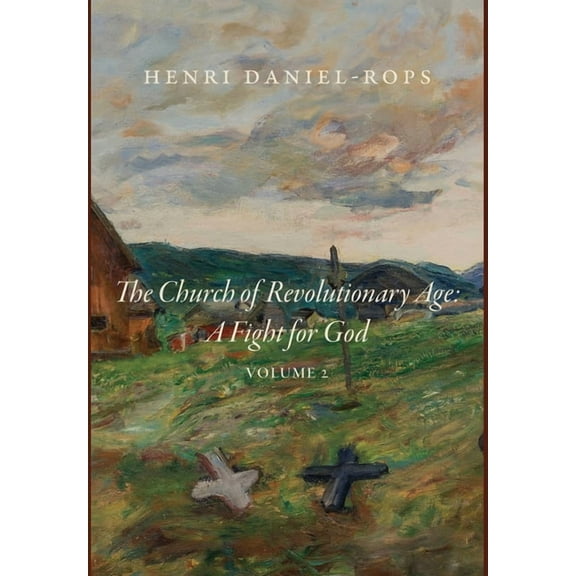
The Church of the Revolutionary Age: A Fight for God, Volume 2, (Hardcover) $22.98
 $2298current price $22.98
The Church of the Revolutionary Age: A Fight for God, Volume 2, (Hardcover)
De Impedimentis Matrimonii: Accedit Collectio Declarationum Ac Decretorum Benedicti Xiv, Pii Vi, Aliorumque Summorum Pontificum Circa Eamdem Materiam... (Hardcover) $32.95
 $3295current price $32.95
De Impedimentis Matrimonii: Accedit Collectio Declarationum Ac Decretorum Benedicti Xiv, Pii Vi, Aliorumque Summorum Pontificum Circa Eamdem Materiam... (Hardcover)
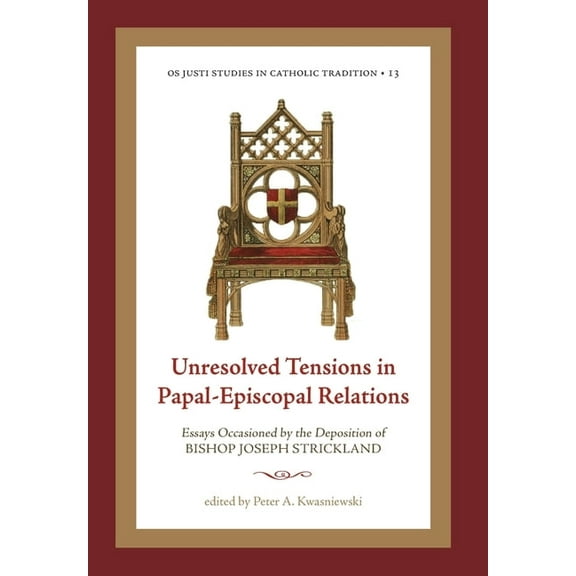
OS Justi Studies in Catholic Tradition Unresolved Tensions in Papal-Episcopal Relations: Essays Occasioned by the Deposition of Bishop Joseph Strickland, Book 13, (Hardcover) $28.95
 $2895current price $28.95
OS Justi Studies in Catholic Tradition Unresolved Tensions in Papal-Episcopal Relations: Essays Occasioned by the Deposition of Bishop Joseph Strickland, Book 13, (Hardcover)
The Church of the Revolutionary Age: Christian Brotherhood, Volume 1, (Hardcover) $49.95
 $4995current price $49.95
The Church of the Revolutionary Age: Christian Brotherhood, Volume 1, (Hardcover)
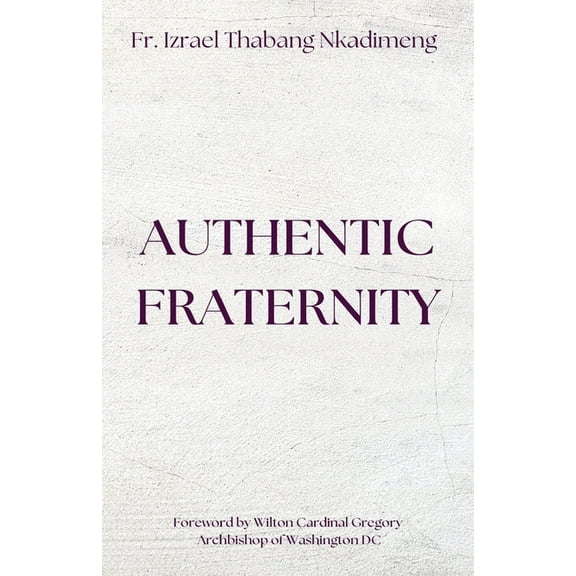
AUTHENTIC FRATERNITY. The Notion of Fraternitas in Pope Benedict XVI's Caritas in Veritate and Africae Munus, (Paperback) $16.75
 $1675current price $16.75
AUTHENTIC FRATERNITY. The Notion of Fraternitas in Pope Benedict XVI's Caritas in Veritate and Africae Munus, (Paperback)
Constitution and Law of the Church in the First Two Centuries (Paperback) $32.08
 $3208current price $32.08
Constitution and Law of the Church in the First Two Centuries (Paperback)
Nouveau Code De Droit Canonique Et Théologie Morale (Hardcover) $32.95
 $3295current price $32.95
Nouveau Code De Droit Canonique Et Théologie Morale (Hardcover)
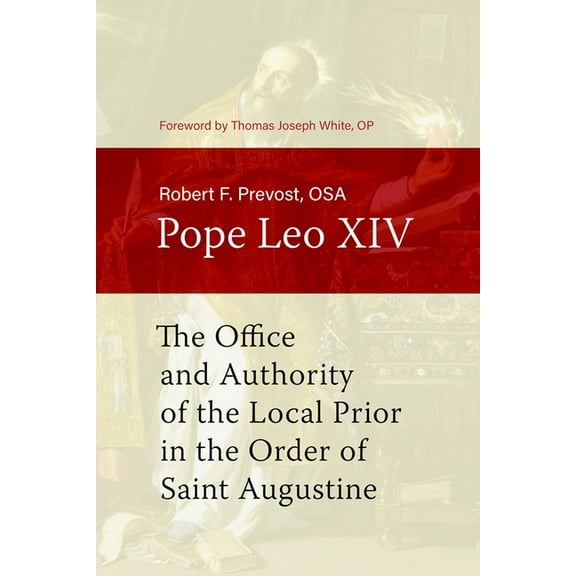
The Office and Authority of the Local Prior in the Order of Saint Augustine, (Hardcover) $38.01
 $3801current price $38.01
The Office and Authority of the Local Prior in the Order of Saint Augustine, (Hardcover)
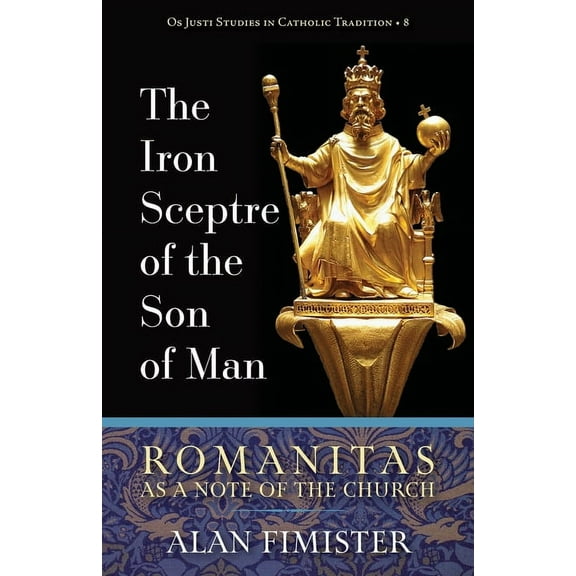
OS Justi Studies in Catholic Tradition The Iron Sceptre of the Son of Man: Romanitas as a Note of the Church, Book 8, (Paperback) $19.95
 $1995current price $19.95
OS Justi Studies in Catholic Tradition The Iron Sceptre of the Son of Man: Romanitas as a Note of the Church, Book 8, (Paperback)
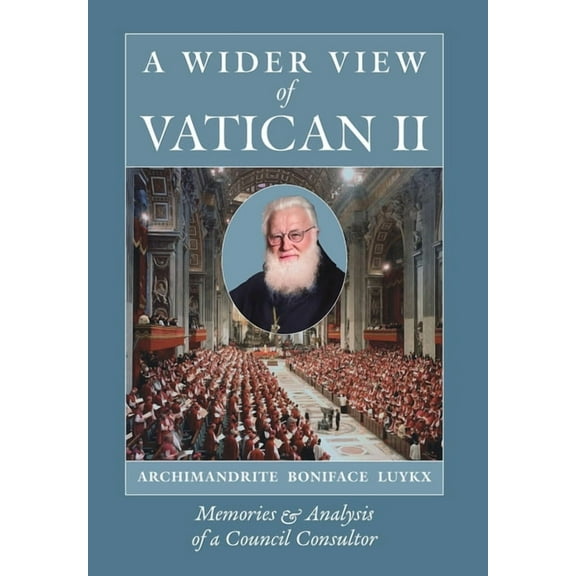
A Wider View of Vatican II: Memories and Analysis of a Council Consultor, (Hardcover) $31.19
 $3119current price $31.19
A Wider View of Vatican II: Memories and Analysis of a Council Consultor, (Hardcover)
Law and the Restoration: Law and Latter-day Saint Thought and Scripture, (Hardcover) $37.09
 $3709current price $37.09
Law and the Restoration: Law and Latter-day Saint Thought and Scripture, (Hardcover)
Customer ratings & reviews

Related pages
- Underground Church China
- Church Of England Diocese Of Quebec
- Institute Of Jesuit Sources
- Israel Tunnels Israel Palestine History Books
- United Church Of England And Ireland
- Church Of Scotland General Assembly
- General Movements in Philosophy Books
- Russian & Former Soviet Union Poetry Books
- Historiography Books
- Israel & Palestine History Books
- Russian History Books
- Middle Eastern Political Books