Sufi Talks : Teachings of an American Sufi Sheihk (Paperback)
Key item features
Once a woman brought her son to the thirteenth-century Turkish Sufi master Nasruddin complaining that the boy had an uncontrollable sweet tooth. She asked Nasruddin to tell the boy to stop eating sweets. He said to bring him back in four weeks. When they returned he said, "Boy, I order you to stop eating sweets!" The mother asked, "Couldn't you have said that at the beginning? Why make us wait four weeks?" "No, I couldn't have said that even two weeks ago," Nasruddin replied. "Why not?" asked the mother. "Because I love sweets myself. First I had to control my own love for them. Only then could I tell your son to stop eating them."
That is, words are empty unless backed by experience, says Robert Frager. People will not change until they hear from those who have lived what they teach. Frager has indeed lived his teaching. Founder of the Institute for Transpersonal Psychology in 1975, in 1976 he became a student of the Sufi master Muzaffer Efendi. Since becoming a sheikh in 1985, he has given many sohbets-a Turkish word for the spiritual conversations Sufi teachers hold to inspire their students. The sohbets he presents here are compiled from his talks over the past decade and represent Sufism as it is now practiced in the United States.
Frager believes that the wisdom in such talks flows through the sheikh from his teacher and his teacher's teacher all the way back to the Prophet Mohammad and God; the sheikh is merely a channel for something greater than any individual. Moreover, these talks are not lectures but rather living connections going both ways between heart and heart. Indeed, the warm, personal immediacy to Frager's voice is rarely found. Like the tales of Nasruddin, he teaches through colorful anecdote and metaphors. Sufi practice has two sides, he says: one is to develop our love of God; the other is to become less self-centered. We need both, just as a bird needs both wings to fly.
"How can I put my knowledge into practice?" is the question we must ask. As the Qur'an states, those who fail to live by their understanding are like donkeys carrying a load of books. The books won't change them. They can carry the holiest books but will still be donkeys.
Among the practices Frager teaches are zikr, or remembrance of God through chanting; halvet, or spiritual retreat; and adab, or "right action." Thus do we develop character-or, rather, restore the character we had at birth. "I've never seen a baby with a bad character," he says. "We are all born in a pure state. With hard work and God's blessings we can return to it." Other topics include Obstacles on the Path, Reducing Narcissism, Inner Work, Prayer, Marriage, Generosity, Taking Responsibility, and Waking before We Die.
No matter what one's religion, the reader will find such universal wisdom in this book that he will agree with Frager's teacher Muzaffer Efendi who once advised, "You can tell these stories ten thousand times and people will still benefit from them"
Specs
- Book formatPaperback
- Fiction/nonfictionNon-Fiction
- GenreReligion
- Publication dateJune, 2012
- Pages296
- SubgenreSufi
How do you want your item?
About this item
Product details
That is, words are empty unless backed by experience, says Robert Frager. People will not change until they hear from those who have lived what they teach. Frager has indeed lived his teaching. Founder of the Institute for Transpersonal Psychology in 1975, in 1976 he became a student of the Sufi master Muzaffer Efendi. Since becoming a sheikh in 1985, he has given many sohbets-a Turkish word for the spiritual conversations Sufi teachers hold to inspire their students. The sohbets he presents here are compiled from his talks over the past decade and represent Sufism as it is now practiced in the United States.
Frager believes that the wisdom in such talks flows through the sheikh from his teacher and his teacher's teacher all the way back to the Prophet Mohammad and God; the sheikh is merely a channel for something greater than any individual. Moreover, these talks are not lectures but rather living connections going both ways between heart and heart. Indeed, the warm, personal immediacy to Frager's voice is rarely found. Like the tales of Nasruddin, he teaches through colorful anecdote and metaphors. Sufi practice has two sides, he says: one is to develop our love of God; the other is to become less self-centered. We need both, just as a bird needs both wings to fly.
"How can I put my knowledge into practice?" is the question we must ask. As the Qur'an states, those who fail to live by their understanding are like donkeys carrying a load of books. The books won't change them. They can carry the holiest books but will still be donkeys.
Among the practices Frager teaches are zikr, or remembrance of God through chanting; halvet, or spiritual retreat; and adab, or "right action." Thus do we develop character-or, rather, restore the character we had at birth. "I've never seen a baby with a bad character," he says. "We are all born in a pure state. With hard work and God's blessings we can return to it." Other topics include Obstacles on the Path, Reducing Narcissism, Inner Work, Prayer, Marriage, Generosity, Taking Responsibility, and Waking before We Die.
No matter what one's religion, the reader will find such universal wisdom in this book that he will agree with Frager's teacher Muzaffer Efendi who once advised, "You can tell these stories ten thousand times and people will still benefit from them."
Once a woman brought her son to the thirteenth-century Turkish Sufi master Nasruddin complaining that the boy had an uncontrollable sweet tooth. She asked Nasruddin to tell the boy to stop eating sweets. He said to bring him back in four weeks. When they returned he said, "Boy, I order you to stop eating sweets!" The mother asked, "Couldn't you have said that at the beginning? Why make us wait four weeks?" "No, I couldn't have said that even two weeks ago," Nasruddin replied. "Why not?" asked the mother. "Because I love sweets myself. First I had to control my own love for them. Only then could I tell your son to stop eating them."
That is, words are empty unless backed by experience, says Robert Frager. People will not change until they hear from those who have lived what they teach. Frager has indeed lived his teaching. Founder of the Institute for Transpersonal Psychology in 1975, in 1976 he became a student of the Sufi master Muzaffer Efendi. Since becoming a sheikh in 1985, he has given many sohbets-a Turkish word for the spiritual conversations Sufi teachers hold to inspire their students. The sohbets he presents here are compiled from his talks over the past decade and represent Sufism as it is now practiced in the United States.
Frager believes that the wisdom in such talks flows through the sheikh from his teacher and his teacher's teacher all the way back to the Prophet Mohammad and God; the sheikh is merely a channel for something greater than any individual. Moreover, these talks are not lectures but rather living connections going both ways between heart and heart. Indeed, the warm, personal immediacy to Frager's voice is rarely found. Like the tales of Nasruddin, he teaches through colorful anecdote and metaphors. Sufi practice has two sides, he says: one is to develop our love of God; the other is to become less self-centered. We need both, just as a bird needs both wings to fly.
"How can I put my knowledge into practice?" is the question we must ask. As the Qur'an states, those who fail to live by their understanding are like donkeys carrying a load of books. The books won't change them. They can carry the holiest books but will still be donkeys.
Among the practices Frager teaches are zikr, or remembrance of God through chanting; halvet, or spiritual retreat; and adab, or "right action." Thus do we develop character-or, rather, restore the character we had at birth. "I've never seen a baby with a bad character," he says. "We are all born in a pure state. With hard work and God's blessings we can return to it." Other topics include Obstacles on the Path, Reducing Narcissism, Inner Work, Prayer, Marriage, Generosity, Taking Responsibility, and Waking before We Die.
No matter what one's religion, the reader will find such universal wisdom in this book that he will agree with Frager's teacher Muzaffer Efendi who once advised, "You can tell these stories ten thousand times and people will still benefit from them"
Once a woman brought her son to the thirteenth-century Turkish Sufi master Nasruddin complaining that the boy had an uncontrollable sweet tooth. She asked Nasruddin to tell the boy to stop eating sweets. He said to bring him back in four weeks. When they returned he said, "Boy, I order you to stop eating sweets!" The mother asked, "Couldn't you have said that at the beginning? Why make us wait four weeks?" "No, I couldn't have said that even two weeks ago," Nasruddin replied. "Why not?" asked the mother. "Because I love sweets myself. First I had to control my own love for them. Only then could I tell your son to stop eating them."
That is, words are empty unless backed by experience, says Robert Frager. People will not change until they hear from those who have lived what they teach. Frager has indeed lived his teaching. Founder of the Institute for Transpersonal Psychology in 1975, in 1976 he became a student of the Sufi master Muzaffer Efendi. Since becoming a sheikh in 1985, he has given many sohbets-a Turkish word for the spiritual conversations Sufi teachers hold to inspire their students. The sohbets he presents here are compiled from his talks over the past decade and represent Sufism as it is now practiced in the United States.
Frager believes that the wisdom in such talks flows through the sheikh from his teacher and his teacher's teacher all the way back to the Prophet Mohammad and God; the sheikh is merely a channel for something greater than any individual. Moreover, these talks are not lectures but rather living connections going both ways between heart and heart. Indeed, the warm, personal immediacy to Frager's voice is rarely found. Like the tales of Nasruddin, he teaches through colorful anecdote and metaphors. Sufi practice has two sides, he says: one is to develop our love of God; the other is to become less self-centered. We need both, just as a bird needs both wings to fly.
"How can I put my knowledge into practice?" is the question we must ask. As the Qur'an states, those who fail to live by their understanding are like donkeys carrying a load of books. The books won't change them. They can carry the holiest books but will still be donkeys.
Among the practices Frager teaches are zikr, or remembrance of God through chanting; halvet, or spiritual retreat; and adab, or "right action." Thus do we develop character-or, rather, restore the character we had at birth. "I've never seen a baby with a bad character," he says. "We are all born in a pure state. With hard work and God's blessings we can return to it." Other topics include Obstacles on the Path, Reducing Narcissism, Inner Work, Prayer, Marriage, Generosity, Taking Responsibility, and Waking before We Die.
No matter what one's religion, the reader will find such universal wisdom in this book that he will agree with Frager's teacher Muzaffer Efendi who once advised, "You can tell these stories ten thousand times and people will still benefit from them"
Specifications
Book format
Fiction/nonfiction
Genre
Publication date
Warranty
Warranty information
Similar items you might like
Based on what customers bought
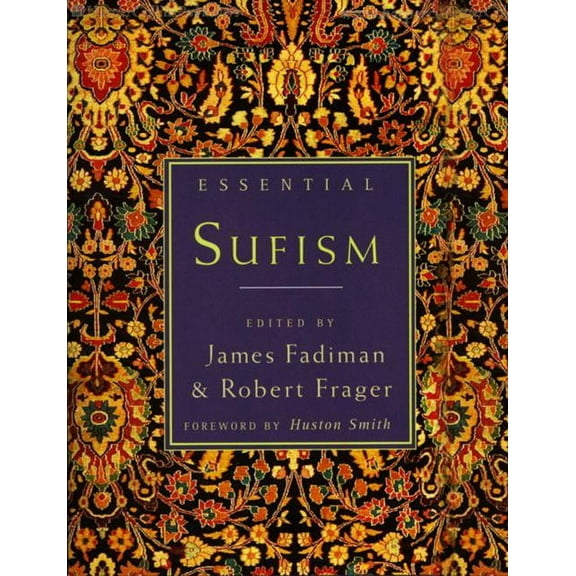
Essential Sufism, (Paperback) $8.99
 $899current price $8.99
Essential Sufism, (Paperback)
Islam - The Religion of Truth, (Paperback) $9.09
 $909current price $9.09
Islam - The Religion of Truth, (Paperback)
The Wisdom of Ramana Maharshi: A Modern Sufi Rendition, (Paperback) $9.01 Was $11.96
 $901current price $9.01, Was $11.96$11.96
The Wisdom of Ramana Maharshi: A Modern Sufi Rendition, (Paperback)
Enter Islam, (Paperback) $10.57
 $1057current price $10.57
Enter Islam, (Paperback)
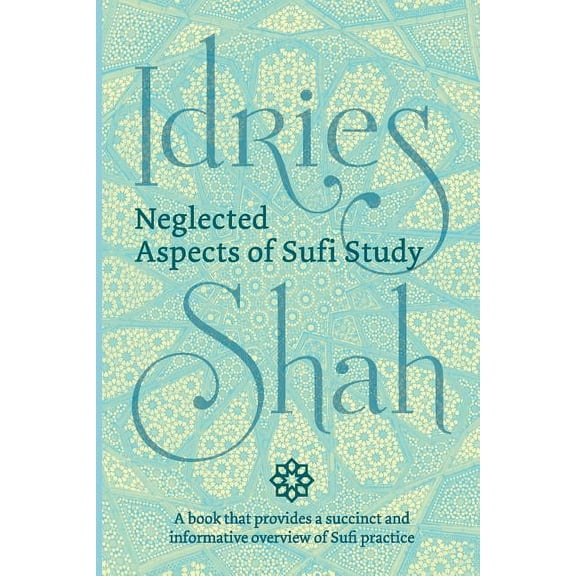
Neglected Aspects of Sufi Study (Pocket Edition) (Paperback) $8.99
 $899current price $8.99
Neglected Aspects of Sufi Study (Pocket Edition) (Paperback)
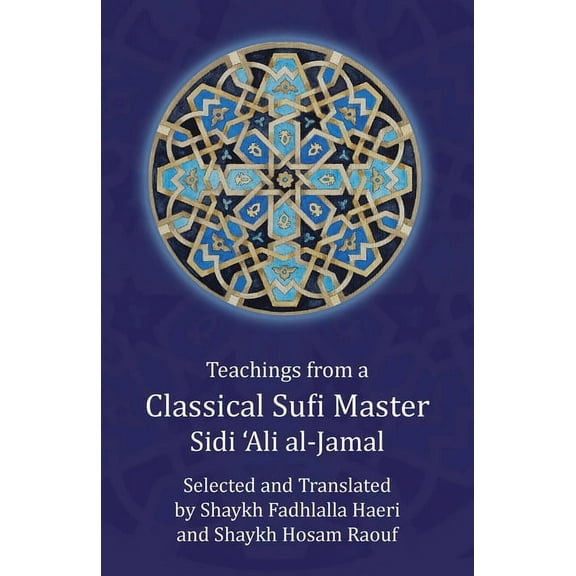
Teachings from a Classical Sufi Master (Paperback) $13.00
 $1300current price $13.00
Teachings from a Classical Sufi Master (Paperback)
Special Problems in the Study of Sufi ideas (Pocket Edition) (Paperback) $9.75
 $975current price $9.75
Special Problems in the Study of Sufi ideas (Pocket Edition) (Paperback)
Ascension: A Journey Beyond Space & Time, (Paperback) $7.99
 $799current price $7.99
Ascension: A Journey Beyond Space & Time, (Paperback)
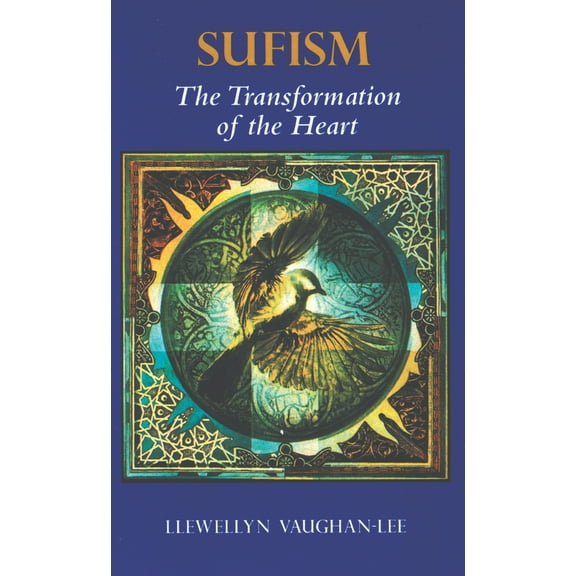
Pre-Owned Sufism: The Transformation of the Heart (Paperback) 0963457446 9780963457448 $5.48 Was $6.40
 2 optionsAvailable in additional 2 options$548current price $5.48, Was $6.40$6.40
Pre-Owned Sufism: The Transformation of the Heart (Paperback) 0963457446 9780963457448
Pre-Owned The Complete Idiot's Guide to Understanding Islam, 2nd Edition (Paperback) 1592572723 9781592572724 $5.10
 $510current price $5.10
Pre-Owned The Complete Idiot's Guide to Understanding Islam, 2nd Edition (Paperback) 1592572723 9781592572724
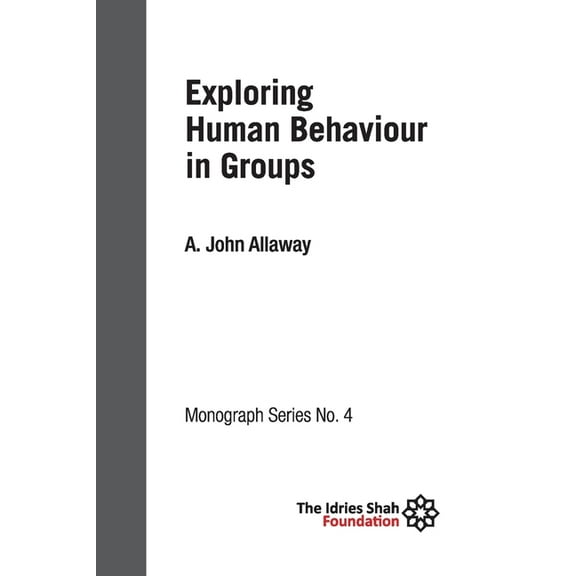
Exploring Human Behaviour in Groups: ISF Monograph 4 (Paperback) $4.99
 $499current price $4.99
Exploring Human Behaviour in Groups: ISF Monograph 4 (Paperback)
Pre-Owned The No-Nonsense Guide to Islam (Paperback) 1904456618 9781904456612 $9.02 Was $10.72
 $902current price $9.02, Was $10.72$10.72
Pre-Owned The No-Nonsense Guide to Islam (Paperback) 1904456618 9781904456612
Pre-Owned When You Hear Hoofbeats, Think of a Zebra: Talks on Sufism (Paperback) 0060961287 9780060961282 $7.23
 $723current price $7.23
Pre-Owned When You Hear Hoofbeats, Think of a Zebra: Talks on Sufism (Paperback) 0060961287 9780060961282
Shades of Reality, (Paperback) $7.81
 $781current price $7.81
Shades of Reality, (Paperback)
Thinkers of the East (Paperback) $14.95
 $1495current price $14.95
Thinkers of the East (Paperback)