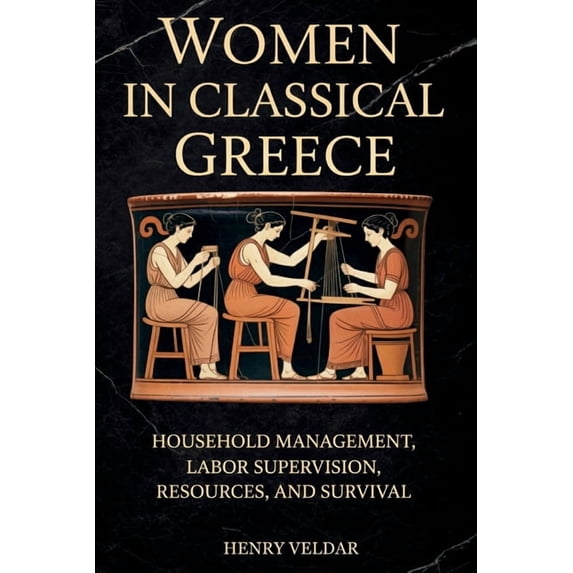
Women in Classical Greece: Household Management, Labor Supervision, Resources, and Survival examines how Greek society functioned at its most basic and essential level and the central role women played in sustaining it. Rather than focusing on political exclusion or legal status alone, this book looks closely at the everyday systems that allowed households and communities to survive.
Using historical texts, legal sources, philosophical writings, and material evidence, the book explores how women managed domestic economies, supervised labor, controlled resources, and ensured continuity in a world defined by scarcity, instability, and social hierarchy. Household management was not passive or symbolic but a complex form of organization that required authority, planning, and responsibility.
The book places male-authored philosophical and literary sources in context, showing how elite ideals often differed from lived reality. It explains how women operated within and around formal limitations, exercising practical power in areas essential to social stability, including food production, storage, inheritance management, and ritual obligations tied to survival.
By shifting attention from political institutions to economic and social structures, this work offers a clearer understanding of how classical Greek society actually functioned. Written in clear and accessible language and grounded in established scholarship, it is intended for readers interested in ancient history, classical studies, social history, and the material foundations of civilizations.