


Hero image 0 of The Paradoxes of Modernity: Creating Belief Through Art, Community, and Ritual, (Paperback), 0 of 1
The Paradoxes of Modernity: Creating Belief Through Art, Community, and Ritual, (Paperback)
(No ratings yet)
Key item features
- The Paradoxes of Modernity: Creating Belief Through Art, Community, and Ritual, (Paperback)
- Author: Palgrave MacMillan
- ISBN: 9783030990589
- Format: Paperback
- Publication Date: 2023-05-12
- Page Count: 238
Specs
- Book formatPaperback
- Fiction/nonfictionNon-Fiction
- Pub date2023-05-12
- Pages238
- SubgenreMovements
- Series titleNo Series
Current price is USD$113.16
Price when purchased online
- Free shipping
 Free 90-day returns
How do you want your item?
Try 30 days of Free Shipping with Walmart+! Choose plan at checkout.
Columbus, 43215
Arrives by Tue, Apr 14
Sold and shipped by Walmart.com

Free 90-day returns

This item is gift eligible
More seller options (4)
Starting from $117.21

Get free delivery, shipping and more*
*Restrictions apply Try Walmart+ now
About this item
Product details
A paradox lies at the heart of modernity: the simultaneous demand to create ideas to make us better humans and communities, along with the contrary imperative that we criticize all ideals, especially the ones we have created. In philosophy we see this paradox most acutely in figures like Immanuel Kant, who states that we cannot know the essence of things and yet we must retain old ideas - God, freedom, and the soul - in order to become better and more ethical humans. Or in Friedrich Nietzsche, whose eternal recurrence, a self-created myth whose sole purpose is to get us to see the value in the everyday. This basic scheme - belief and un-belief - is one of the fundamental elements of modernity, manifesting itself in the philosophies of Herbert Marcuse and Michel Foucault, along with the theologies of Blaise Pascal, C.S. Lewis, William James, Sallie McFague, and Philip Clayton.
How do we live out the values we know to be constructions? This question holds captiveour ability to solve public goods problems and make our lives more meaningful. Instead of seeing this paradox of modernity as self-deception or bad faith, Zachary Simpson employs cognitive and social scientific research to explain how best to realize values that we know to be false: through art, community, and ritual. In Simpson's account, the values we construct must conform to narrative, be reinforced through community, and habituated through ritual. And yet modernity has also undermined collectivity and ritual. Thus arises the second paradox of modernity: the best tools we have for realizing values are those which devalue the individual modern subject.The last part of the book attempts to make three normative points regarding modernity. First, the modern, individualist subject is insufficient to realize the very values and aspirations of modernity. We must recognize that humans are collective and communal. Second, we cannot simply create values - they must arise in communities and be realized through narrative and ritual. And, third, if we are to live meaningful lives as contemporary meta-ethicists and positive psychologists argue, then such lives must include art, community, and ritual as a way to affirm and reinforce one's values.Let's Pretend is a statement about one of the dilemmas of the contemporary western world and how that dilemma is, and might be, resolved. How do we believe in the values that we know will make a better world, even if they are of our own making? We must do so, in part, by becoming less modern, by engaging with one another and imagining more.The book should serve as both an essay in the history of Western thought as well as a constructive argument about the nature of the modern epoch and what resources we have to realize the central aspirations of modernity. It aims to fill a critical lacuna in theoretical and philosophical approaches to modernity. While most texts focus on either the need for created values or the need to remedy modern subjectivity, few, if any, link the two problems together. Moreover, they do not ground their analyses in the social sciences and contemporary findings regarding the efficacy of narrative, communal action, and rituals.The book is unique, then, because it asks a central question - how do we believe in what we know to be false? - and because it answers this question using interdisciplinary methods that allow us to see the faultlines and paradoxes of our age.
How do we live out the values we know to be constructions? This question holds captiveour ability to solve public goods problems and make our lives more meaningful. Instead of seeing this paradox of modernity as self-deception or bad faith, Zachary Simpson employs cognitive and social scientific research to explain how best to realize values that we know to be false: through art, community, and ritual. In Simpson's account, the values we construct must conform to narrative, be reinforced through community, and habituated through ritual. And yet modernity has also undermined collectivity and ritual. Thus arises the second paradox of modernity: the best tools we have for realizing values are those which devalue the individual modern subject.The last part of the book attempts to make three normative points regarding modernity. First, the modern, individualist subject is insufficient to realize the very values and aspirations of modernity. We must recognize that humans are collective and communal. Second, we cannot simply create values - they must arise in communities and be realized through narrative and ritual. And, third, if we are to live meaningful lives as contemporary meta-ethicists and positive psychologists argue, then such lives must include art, community, and ritual as a way to affirm and reinforce one's values.Let's Pretend is a statement about one of the dilemmas of the contemporary western world and how that dilemma is, and might be, resolved. How do we believe in the values that we know will make a better world, even if they are of our own making? We must do so, in part, by becoming less modern, by engaging with one another and imagining more.The book should serve as both an essay in the history of Western thought as well as a constructive argument about the nature of the modern epoch and what resources we have to realize the central aspirations of modernity. It aims to fill a critical lacuna in theoretical and philosophical approaches to modernity. While most texts focus on either the need for created values or the need to remedy modern subjectivity, few, if any, link the two problems together. Moreover, they do not ground their analyses in the social sciences and contemporary findings regarding the efficacy of narrative, communal action, and rituals.The book is unique, then, because it asks a central question - how do we believe in what we know to be false? - and because it answers this question using interdisciplinary methods that allow us to see the faultlines and paradoxes of our age.
- The Paradoxes of Modernity: Creating Belief Through Art, Community, and Ritual, (Paperback)
- Author: Palgrave MacMillan
- ISBN: 9783030990589
- Format: Paperback
- Publication Date: 2023-05-12
- Page Count: 238
info:
We aim to show you accurate product information. Manufacturers, suppliers and others provide what you see here, and we have not verified it.
Specifications
Book format
Paperback
Fiction/nonfiction
Non-Fiction
Genre
Political & Social Sciences
Pub date
2023-05-12
Warranty
Warranty information
Please be aware that the warranty terms on items offered for sale by third party Marketplace sellers may differ from those displayed in this section (if any). To confirm warranty terms on an item offered for sale by a third party Marketplace seller, please use the 'Contact seller' feature on the third party Marketplace seller's information page and request the item's warranty terms prior to purchase.
Similar items you might like
Based on what customers bought
The Will to Create: Goethe's Philosophy of Nature, (Paperback) $56.16
 $5616current price $56.16
The Will to Create: Goethe's Philosophy of Nature, (Paperback)
Dennett's Real Patterns in Science and Nature, (Paperback) $85.66
 $8566current price $85.66
Dennett's Real Patterns in Science and Nature, (Paperback)
Fâ, Philosophie et Religion, (Paperback) $78.69
 $7869current price $78.69
Fâ, Philosophie et Religion, (Paperback)
Embodiment Theory and Chinese Philosophy: Contextualization and Decontextualization of Thought, (Paperback) $39.95
 $3995current price $39.95
Embodiment Theory and Chinese Philosophy: Contextualization and Decontextualization of Thought, (Paperback)
Martinus Nijhoff Philosophy Library Creativity and the Philosophy of C.S. Peirce, Book 27, (Paperback) $89.54
 $8954current price $89.54
Martinus Nijhoff Philosophy Library Creativity and the Philosophy of C.S. Peirce, Book 27, (Paperback)
Life as Art: Aesthetics and the Creation of Self, (Hardcover) $125.00
 $12500current price $125.00
Life as Art: Aesthetics and the Creation of Self, (Hardcover)
Philosophical Studies Knowing Art: Essays in Aesthetics and Epistemology, Book 107, (Paperback) $88.69
 $8869current price $88.69
Philosophical Studies Knowing Art: Essays in Aesthetics and Epistemology, Book 107, (Paperback)
Between Philosophy and Religion, Vol. II: Spinoza, the Bible, and Modernity, (Paperback) $59.99
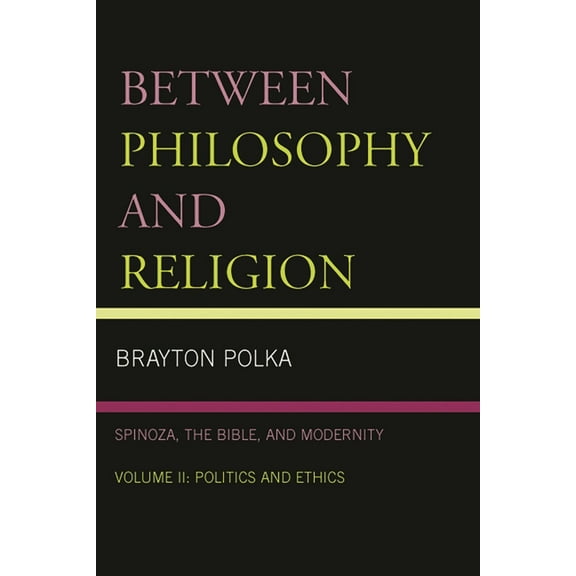 $5999current price $59.99
Between Philosophy and Religion, Vol. II: Spinoza, the Bible, and Modernity, (Paperback)
Springerbriefs in Philosophy Mind-Body Entanglement: Theory and Therapies, (Paperback) $69.99
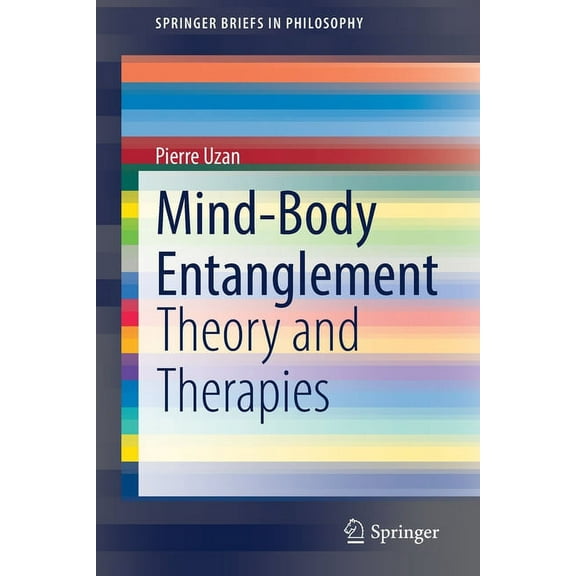 $6999current price $69.99
Springerbriefs in Philosophy Mind-Body Entanglement: Theory and Therapies, (Paperback)
Spinoza and Medieval Jewish Philosophy, (Hardcover) $120.40
 $12040current price $120.40
Spinoza and Medieval Jewish Philosophy, (Hardcover)
Too Weird to Believe, Too Plausible to Deny: Mind-Blowing Philosophical Ideas, (Paperback) $49.58
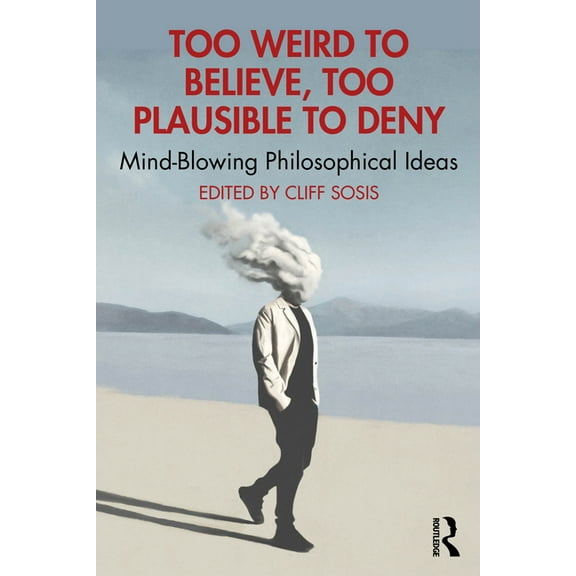 $4958current price $49.58
Too Weird to Believe, Too Plausible to Deny: Mind-Blowing Philosophical Ideas, (Paperback)
Kant's Aesthetic, (Paperback) $91.36 Was $105.40
 $9136current price $91.36, Was $105.40$105.40
Kant's Aesthetic, (Paperback)
Hegel on Second Nature in Ethical Life, (Paperback) $45.56
 $4556current price $45.56
Hegel on Second Nature in Ethical Life, (Paperback)
A Secular Absolute: How Modern Philosophy Discovered Authenticity, (Paperback) $82.03
 $8203current price $82.03
A Secular Absolute: How Modern Philosophy Discovered Authenticity, (Paperback)
Routledge Philosophical Minds The Schopenhauerian Mind, (Paperback) $78.79
 $7879current price $78.79
Routledge Philosophical Minds The Schopenhauerian Mind, (Paperback)
Imagination and Praxis: Criticality and A Philosophy for Education: A Study in Aesthetic Rationality, Book 19, (Paperback) $54.91
 $5491current price $54.91
Imagination and Praxis: Criticality and A Philosophy for Education: A Study in Aesthetic Rationality, Book 19, (Paperback)
International Library of Philosophy The Immaterial Self: A Defence of the Cartesian Dualist Conception of the Mind, (Paperback) $89.02
 $8902current price $89.02
International Library of Philosophy The Immaterial Self: A Defence of the Cartesian Dualist Conception of the Mind, (Paperback)
Imagination and Praxis: Criticality and Discovering Black Existentialism, Book 17, (Paperback) $62.98
 $6298current price $62.98
Imagination and Praxis: Criticality and Discovering Black Existentialism, Book 17, (Paperback)

Customer ratings & reviews
0 ratings|0 reviews
This item does not have any reviews yet
