What happens when legal protections designed to safeguard justice evolve into mechanisms that shield misconduct?
Absolute privilege was created to protect the integrity of court proceedings by allowing advocates to speak freely without fear of retaliation. Over time, however, its application has expanded far beyond its original purpose-often operating as an institutional shield that limits accountability and disproportionately affects self-represented litigants.
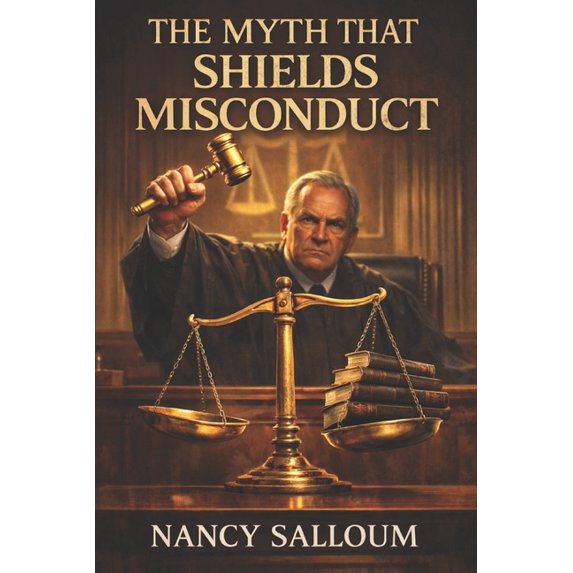
The Myth That Shields Misconduct is a work of non-fiction legal analysis and public-interest commentary examining how absolute privilege, procedural discretion, administrative practices, and appellate structures interact within modern courts. Drawing on decades of procedural observation and lived experience, the book documents recurring patterns that affect access to justice, evidentiary fairness, and democratic legitimacy.
Rather than focusing on individual blame, this book explores systemic design:
- How written evidence is often subordinated to oral advocacy
- How self-represented litigants are procedurally disadvantaged
- How court administration and appellate rules can entrench inequality
- How conflict of interest becomes structural rather than exceptional
- Why inherited court rules no longer reflect contemporary democratic expectations
This book does not reject the rule of law-it argues for its renewal.
Written for readers interested in law, governance, public policy, and access to justice, The Myth That Shields Misconduct calls for reform that restores balance between protection and accountability, discretion and transparency, authority and legitimacy.
This is a timely contribution to the ongoing conversation about how democratic legal systems must evolve to remain worthy of public trust.