


Pre-Owned The Revenge of Geography : What the Map Tells Us About Coming Conflicts and the Battle Against Fate (Paperback)
(No ratings yet)
Condition
Pre-Owned: Good
Seller Rating
4.3 out of 5 stars4.3/5
Key item features
NEW YORK TIMES BESTSELLER • In this “ambitious and challenging” (The New York Review of Books) work, the bestselling author of Monsoon and Balkan Ghosts offers a revelatory prism through which to view global upheavals and to understand what lies ahead for continents and countries around the world.
In The Revenge of Geography, Robert D. Kaplan builds on the insights, discoveries, and theories of great geographers and geopolitical thinkers of the near and distant past to look back at critical pivots in history and then to look forward at the evolving global scene. Kaplan traces the history of the world’s hot spots by examining their climates, topographies, and proximities to other embattled lands. The Russian steppe’s pitiless climate and limited vegetation bred hard and cruel men bent on destruction, for example, while Nazi geopoliticians distorted geopolitics entirely, calculating that space on the globe used by the British Empire and the Soviet Union could be swallowed by a greater German homeland.
Kaplan then applies the lessons learned to the present crises in Europe, Russia, China, the Indian subcontinent, Turkey, Iran, and the Arab Middle East. The result is a holistic interpretation of the next cycle of conflict throughout Eurasia. Remarkably, the future can be understood in the context of temperature, land allotment, and other physical certainties: China, able to feed only 23 percent of its people from land that is only 7 percent arable, has sought energy, minerals, and metals from such brutal regimes as Burma, Iran, and Zimbabwe, putting it in moral conflict with the United States. Afghanistan’s porous borders will keep it the principal invasion route into India, and a vital rear base for Pakistan, India’s main enemy. Iran will exploit the advantage of being the only country that straddles both energy-producing areas of the Persian Gulf and the Caspian Sea. Finally, Kaplan posits that the United States might rue engaging in far-flung conflicts with Iraq and Afghanistan rather than tending to its direct neighbor Mexico, which is on the verge of becoming a semifailed state due to drug cartel carnage.
A brilliant rebuttal to thinkers who suggest that globalism will trump geography, this indispensable work shows how timeless truths and natural facts can help prevent this century’s looming cataclysms.
In The Revenge of Geography, Robert D. Kaplan builds on the insights, discoveries, and theories of great geographers and geopolitical thinkers of the near and distant past to look back at critical pivots in history and then to look forward at the evolving global scene. Kaplan traces the history of the world’s hot spots by examining their climates, topographies, and proximities to other embattled lands. The Russian steppe’s pitiless climate and limited vegetation bred hard and cruel men bent on destruction, for example, while Nazi geopoliticians distorted geopolitics entirely, calculating that space on the globe used by the British Empire and the Soviet Union could be swallowed by a greater German homeland.
Kaplan then applies the lessons learned to the present crises in Europe, Russia, China, the Indian subcontinent, Turkey, Iran, and the Arab Middle East. The result is a holistic interpretation of the next cycle of conflict throughout Eurasia. Remarkably, the future can be understood in the context of temperature, land allotment, and other physical certainties: China, able to feed only 23 percent of its people from land that is only 7 percent arable, has sought energy, minerals, and metals from such brutal regimes as Burma, Iran, and Zimbabwe, putting it in moral conflict with the United States. Afghanistan’s porous borders will keep it the principal invasion route into India, and a vital rear base for Pakistan, India’s main enemy. Iran will exploit the advantage of being the only country that straddles both energy-producing areas of the Persian Gulf and the Caspian Sea. Finally, Kaplan posits that the United States might rue engaging in far-flung conflicts with Iraq and Afghanistan rather than tending to its direct neighbor Mexico, which is on the verge of becoming a semifailed state due to drug cartel carnage.
A brilliant rebuttal to thinkers who suggest that globalism will trump geography, this indispensable work shows how timeless truths and natural facts can help prevent this century’s looming cataclysms.
Specs
- Book formatPaperback
- Fiction/nonfictionNon-Fiction
- GenreHistory
- Publication dateSeptember, 2013
- Pages448
- Reading levelGeneral (US: Trade)
Current price is USD$6.16
Price when purchased online
- Free shipping
 Free 30-day returns
$13.16
$6.16
Pre-Owned: Good
How do you want your item?
Ships to
Arrives by Sat, May 23
|
Sold and shipped by World of Books Inc
4.328083989501312 stars out of 5, based on 9906 seller reviews(4.3)9906 seller reviews

Free 30-day returns
About this item
Product details
NEW YORK TIMES BESTSELLER - In this "ambitious and challenging" (The New York Review of Books) work, the bestselling author of Monsoon and Balkan Ghosts offers a revelatory prism through which to view global upheavals and to understand what lies ahead for continents and countries around the world. In The Revenge of Geography, Robert D. Kaplan builds on the insights, discoveries, and theories of great geographers and geopolitical thinkers of the near and distant past to look back at critical pivots in history and then to look forward at the evolving global scene. Kaplan traces the history of the world's hot spots by examining their climates, topographies, and proximities to other embattled lands. The Russian steppe's pitiless climate and limited vegetation bred hard and cruel men bent on destruction, for example, while Nazi geopoliticians distorted geopolitics entirely, calculating that space on the globe used by the British Empire and the Soviet Union could be swallowed by a greater German homeland. Kaplan then applies the lessons learned to the present crises in Europe, Russia, China, the Indian subcontinent, Turkey, Iran, and the Arab Middle East. The result is a holistic interpretation of the next cycle of conflict throughout Eurasia. Remarkably, the future can be understood in the context of temperature, land allotment, and other physical certainties: China, able to feed only 23 percent of its people from land that is only 7 percent arable, has sought energy, minerals, and metals from such brutal regimes as Burma, Iran, and Zimbabwe, putting it in moral conflict with the United States. Afghanistan's porous borders will keep it the principal invasion route into India, and a vital rear base for Pakistan, India's main enemy. Iran will exploit the advantage of being the only country that straddles both energy-producing areas of the Persian Gulf and the Caspian Sea. Finally, Kaplan posits that the United States might rue engaging in far-flung conflicts with Iraq and Afghanistan rather than tending to its direct neighbor Mexico, which is on the verge of becoming a semifailed state due to drug cartel carnage. A brilliant rebuttal to thinkers who suggest that globalism will trump geography, this indispensable work shows how timeless truths and natural facts can help prevent this century's looming cataclysms.
NEW YORK TIMES BESTSELLER • In this “ambitious and challenging” (The New York Review of Books) work, the bestselling author of Monsoon and Balkan Ghosts offers a revelatory prism through which to view global upheavals and to understand what lies ahead for continents and countries around the world.
In The Revenge of Geography, Robert D. Kaplan builds on the insights, discoveries, and theories of great geographers and geopolitical thinkers of the near and distant past to look back at critical pivots in history and then to look forward at the evolving global scene. Kaplan traces the history of the world’s hot spots by examining their climates, topographies, and proximities to other embattled lands. The Russian steppe’s pitiless climate and limited vegetation bred hard and cruel men bent on destruction, for example, while Nazi geopoliticians distorted geopolitics entirely, calculating that space on the globe used by the British Empire and the Soviet Union could be swallowed by a greater German homeland.
Kaplan then applies the lessons learned to the present crises in Europe, Russia, China, the Indian subcontinent, Turkey, Iran, and the Arab Middle East. The result is a holistic interpretation of the next cycle of conflict throughout Eurasia. Remarkably, the future can be understood in the context of temperature, land allotment, and other physical certainties: China, able to feed only 23 percent of its people from land that is only 7 percent arable, has sought energy, minerals, and metals from such brutal regimes as Burma, Iran, and Zimbabwe, putting it in moral conflict with the United States. Afghanistan’s porous borders will keep it the principal invasion route into India, and a vital rear base for Pakistan, India’s main enemy. Iran will exploit the advantage of being the only country that straddles both energy-producing areas of the Persian Gulf and the Caspian Sea. Finally, Kaplan posits that the United States might rue engaging in far-flung conflicts with Iraq and Afghanistan rather than tending to its direct neighbor Mexico, which is on the verge of becoming a semifailed state due to drug cartel carnage.
A brilliant rebuttal to thinkers who suggest that globalism will trump geography, this indispensable work shows how timeless truths and natural facts can help prevent this century’s looming cataclysms.
In The Revenge of Geography, Robert D. Kaplan builds on the insights, discoveries, and theories of great geographers and geopolitical thinkers of the near and distant past to look back at critical pivots in history and then to look forward at the evolving global scene. Kaplan traces the history of the world’s hot spots by examining their climates, topographies, and proximities to other embattled lands. The Russian steppe’s pitiless climate and limited vegetation bred hard and cruel men bent on destruction, for example, while Nazi geopoliticians distorted geopolitics entirely, calculating that space on the globe used by the British Empire and the Soviet Union could be swallowed by a greater German homeland.
Kaplan then applies the lessons learned to the present crises in Europe, Russia, China, the Indian subcontinent, Turkey, Iran, and the Arab Middle East. The result is a holistic interpretation of the next cycle of conflict throughout Eurasia. Remarkably, the future can be understood in the context of temperature, land allotment, and other physical certainties: China, able to feed only 23 percent of its people from land that is only 7 percent arable, has sought energy, minerals, and metals from such brutal regimes as Burma, Iran, and Zimbabwe, putting it in moral conflict with the United States. Afghanistan’s porous borders will keep it the principal invasion route into India, and a vital rear base for Pakistan, India’s main enemy. Iran will exploit the advantage of being the only country that straddles both energy-producing areas of the Persian Gulf and the Caspian Sea. Finally, Kaplan posits that the United States might rue engaging in far-flung conflicts with Iraq and Afghanistan rather than tending to its direct neighbor Mexico, which is on the verge of becoming a semifailed state due to drug cartel carnage.
A brilliant rebuttal to thinkers who suggest that globalism will trump geography, this indispensable work shows how timeless truths and natural facts can help prevent this century’s looming cataclysms.
info:
We aim to show you accurate product information. Manufacturers, suppliers and others provide what you see here, and we have not verified it.
Specifications
Book format
Paperback
Fiction/nonfiction
Non-Fiction
Genre
History
Publication date
September, 2013
Warranty
Warranty information
Please be aware that the warranty terms on items offered for sale by third party Marketplace sellers may differ from those displayed in this section (if any). To confirm warranty terms on an item offered for sale by a third party Marketplace seller, please use the 'Contact seller' feature on the third party Marketplace seller's information page and request the item's warranty terms prior to purchase.
Similar items you might like
Based on what customers bought
The Irish Penny Journal, (Volume I) No. 05, August 1, 1840, (Paperback) $18.02
 $1802current price $18.02
The Irish Penny Journal, (Volume I) No. 05, August 1, 1840, (Paperback)
The Irish Penny Journal, (Volume I) No. 48, May 29, 1841, (Paperback) $18.02
$1802current price $18.02The Irish Penny Journal, (Volume I) No. 48, May 29, 1841, (Paperback)
Revenge: Meghan, Harry, and the War Between the Windsors, (Paperback) $11.64
 $1164current price $11.64
Revenge: Meghan, Harry, and the War Between the Windsors, (Paperback)
34.3 out of 5 Stars. 3 reviewsBest seller Enemies to Lovers: a Romantasy Coloring Book, 120 pages (Paperback) $11.48
Best seller $1148current price $11.48
Enemies to Lovers: a Romantasy Coloring Book, 120 pages (Paperback)
324.3 out of 5 Stars. 32 reviewsThe Irish Penny Journal, (Volume I) No. 38, March 20, 1841, (Paperback) $17.95
 $1795current price $17.95
The Irish Penny Journal, (Volume I) No. 38, March 20, 1841, (Paperback)
History Class Revisited: Tools and Projects to Engage Middle School Students in Social Studies, (Paperback) $21.26
 $2126current price $21.26
History Class Revisited: Tools and Projects to Engage Middle School Students in Social Studies, (Paperback)
The Irish Penny Journal, (Volume I) No. 49, June 5, 1841, (Paperback) $18.02
 $1802current price $18.02
The Irish Penny Journal, (Volume I) No. 49, June 5, 1841, (Paperback)
The Irish Penny Journal, (Volume I) No. 17, October 24, 1840, (Paperback) $15.11 Was $18.09
 $1511current price $15.11, Was $18.09$18.09
The Irish Penny Journal, (Volume I) No. 17, October 24, 1840, (Paperback)
The Irish Penny Journal, (Volume I) No. 11, September 12, 1840, (Paperback) $15.11 Was $18.09
 $1511current price $15.11, Was $18.09$18.09
The Irish Penny Journal, (Volume I) No. 11, September 12, 1840, (Paperback)
The Irish Penny Journal, (Volume I) No. 25, December 19, 1840, (Paperback) $18.02
 $1802current price $18.02
The Irish Penny Journal, (Volume I) No. 25, December 19, 1840, (Paperback)
The Irish Penny Journal, (Volume I) No. 40, April 3, 1841, (Paperback) $17.95
 $1795current price $17.95
The Irish Penny Journal, (Volume I) No. 40, April 3, 1841, (Paperback)
Must We Fight?: From the Battlefield to the Schoolyard-A New Perspective on Violent Conflict and Its Prevention, (Paperback) $17.89
 $1789current price $17.89
Must We Fight?: From the Battlefield to the Schoolyard-A New Perspective on Violent Conflict and Its Prevention, (Paperback)
Pre-Owned Kingdoms in Conflict (Paperback) 0310397715 9780310397717 $6.36
 $636current price $6.36
Pre-Owned Kingdoms in Conflict (Paperback) 0310397715 9780310397717
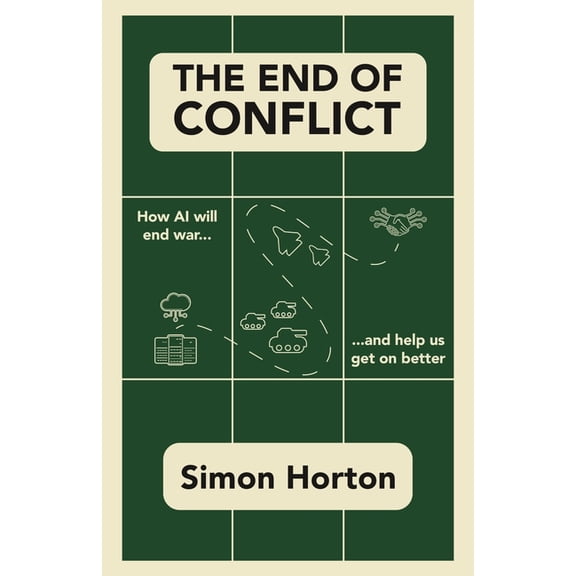
The End of Conflict: How AI Will End War and Help Us Get on Better, (Paperback) $17.99
 $1799current price $17.99
The End of Conflict: How AI Will End War and Help Us Get on Better, (Paperback)
Letter to the White World, (Paperback) $18.30
 $1830current price $18.30
Letter to the White World, (Paperback)
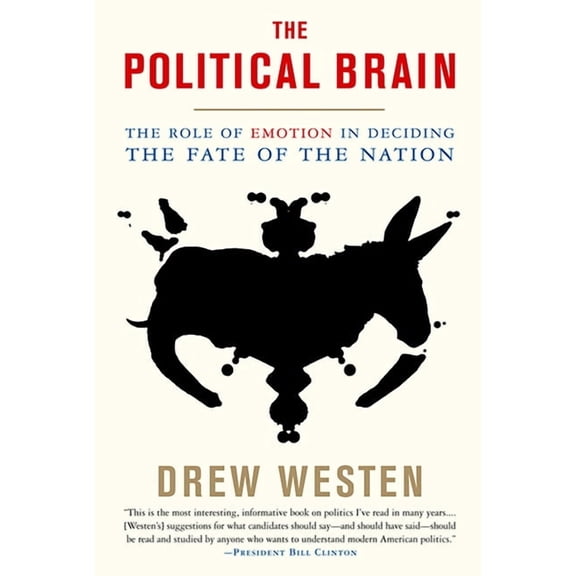
The Political Brain: The Role of Emotion in Deciding the Fate of the Nation, (Paperback) $10.79
 $1079current price $10.79
The Political Brain: The Role of Emotion in Deciding the Fate of the Nation, (Paperback)
The Irish Penny Journal, (Volume I) No. 18, October 31, 1840, (Paperback) $18.02
$1802current price $18.02The Irish Penny Journal, (Volume I) No. 18, October 31, 1840, (Paperback)
Guerre Au Crédit Ou Considérations Sur Les Dangers de l'Emprunt, Par Un Banquier (Paperback) $13.95
 $1395current price $13.95
Guerre Au Crédit Ou Considérations Sur Les Dangers de l'Emprunt, Par Un Banquier (Paperback)
The Irish Penny Journal, (Volume I) No. 20, November 14, 1840, (Paperback) $17.59
$1759current price $17.59The Irish Penny Journal, (Volume I) No. 20, November 14, 1840, (Paperback)
Pre-Owned The Conflict Survival Kit: Tools for Resolving Conflict at Work (Paperback) 0131183036 9780131183032 $4.74 Was $8.82
 2 optionsAvailable in additional 2 options$474current price $4.74, Was $8.82$8.82
Pre-Owned The Conflict Survival Kit: Tools for Resolving Conflict at Work (Paperback) 0131183036 9780131183032
Customer ratings & reviews
Resold at Walmart
0 ratings|0 reviews
This item does not have any reviews yet
