

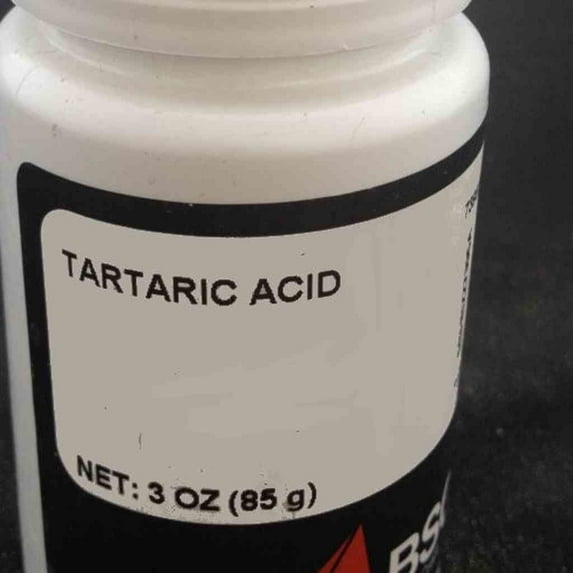
Hero image 0 of Tartaric Acid 3 OZ BSG, 0 of 3
Tartaric Acid 3 OZ BSG
(No ratings yet)
Actual Color:3 OZ BSG-Out of stock
Key item features
Tartaric Acid has a sharper more biting level of tartness than Citric Acid.Tartaric Acid is anatural crystalline compound most often found in grapes andis the principal acid in wine and the component that promotes aging and crispness of flavor.Tartaric Acid is used to balance the acidity of wine.Lowers the pH of fermenting "must" to a level where many undesirable spoilage bacteria cannot live.A preservative after fermentation.Tartaric acid provides some of the tartness in the wine.Tartaric Acid is considerably more tart than Malic or Citric acid and has its own qualities that some say gives wine its viniferous character.Tartaric Acid is the primary acid found in fruits such as oranges lemons and pineapples. It is typically used in wines that are naturally lacking in acid. Wines too low in acid are flat tasting. Tartaric Acid adds a liveliness to the wine and helps to bring out it`s fruity flavors.Preferred Acid for fruit wines is acid blendunless otherwise stated.Tartaric acid is preferred for Grapes.Having the proper level of acidity will help to establish a vigorous fermentation.Before you add any acid to a wine you should first check its acid level with pH Strips or a Acid Test Kit or follow a reliable recipe.Directions: Before Fermentaton: Dissolve the required amount of Tartaric Acid directly into the wine before the yeast is added. Titration readings taken with an Acid Test Kit should be about .55%-tartaric for a proper fermentation.Readings taken using pH Test Papers should be about 3.8 to 3.4. One level teaspoon of Tartaric Acid will raise the acid content of on U.S. gallon by .15%-tartaric.At Bottling Time: Sometimes wines will not taste their best even when they are at their optimal level of acidity and may require a slight final acid adjustment to taste. This can depend on the wine`s character and your personal taste.To do this first put measured amounts of Tartaric Acid by taste in a quart sample of your wine. If you add too much to your sample blend it back into the batch and pull a new sample.Once the dosage is established add that dose to the entire batch. note: some tartaric acid will drop out of suspension as potassium bitartrate if you are doing any cold stabilization.You might want to re-test total acidity after cold stabilization.One teaspoon of Tartaric Acid will raise the titratable acid level in a gallon of wine by .15 per cent tartaric.
Specs
- BrandVarious
- Sizeinches
- Food formFresh
Current price is USD$9.95
Price when purchased online
Out of stock
How do you want your item?
Out of stock
About this item
Product details
Tartaric Acid has a sharper more biting level of tartness than Citric Acid.Tartaric Acid is anatural crystalline compound most often found in grapes andis the principal acid in wine and the component that promotes aging and crispness of flavor.Tartaric Acid is used to balance the acidity of wine.Lowers the pH of fermenting "must" to a level where many undesirable spoilage bacteria cannot live.A preservative after fermentation.Tartaric acid provides some of the tartness in the wine.Tartaric Acid is considerably more tart than Malic or Citric acid and has its own qualities that some say gives wine its viniferous character.Tartaric Acid is the primary acid found in fruits such as oranges lemons and pineapples. It is typically used in wines that are naturally lacking in acid. Wines too low in acid are flat tasting. Tartaric Acid adds a liveliness to the wine and helps to bring out it`s fruity flavors.Preferred Acid for fruit wines is acid blendunless otherwise stated.Tartaric acid is prefe
Tartaric Acid has a sharper more biting level of tartness than Citric Acid.Tartaric Acid is anatural crystalline compound most often found in grapes andis the principal acid in wine and the component that promotes aging and crispness of flavor.Tartaric Acid is used to balance the acidity of wine.Lowers the pH of fermenting "must" to a level where many undesirable spoilage bacteria cannot live.A preservative after fermentation.Tartaric acid provides some of the tartness in the wine.Tartaric Acid is considerably more tart than Malic or Citric acid and has its own qualities that some say gives wine its viniferous character.Tartaric Acid is the primary acid found in fruits such as oranges lemons and pineapples. It is typically used in wines that are naturally lacking in acid. Wines too low in acid are flat tasting. Tartaric Acid adds a liveliness to the wine and helps to bring out it`s fruity flavors.Preferred Acid for fruit wines is acid blendunless otherwise stated.Tartaric acid is preferred for Grapes.Having the proper level of acidity will help to establish a vigorous fermentation.Before you add any acid to a wine you should first check its acid level with pH Strips or a Acid Test Kit or follow a reliable recipe.Directions: Before Fermentaton: Dissolve the required amount of Tartaric Acid directly into the wine before the yeast is added. Titration readings taken with an Acid Test Kit should be about .55%-tartaric for a proper fermentation.Readings taken using pH Test Papers should be about 3.8 to 3.4. One level teaspoon of Tartaric Acid will raise the acid content of on U.S. gallon by .15%-tartaric.At Bottling Time: Sometimes wines will not taste their best even when they are at their optimal level of acidity and may require a slight final acid adjustment to taste. This can depend on the wine`s character and your personal taste.To do this first put measured amounts of Tartaric Acid by taste in a quart sample of your wine. If you add too much to your sample blend it back into the batch and pull a new sample.Once the dosage is established add that dose to the entire batch. note: some tartaric acid will drop out of suspension as potassium bitartrate if you are doing any cold stabilization.You might want to re-test total acidity after cold stabilization.One teaspoon of Tartaric Acid will raise the titratable acid level in a gallon of wine by .15 per cent tartaric.
info:
We aim to show you accurate product information. Manufacturers, suppliers and others provide what you see here, and we have not verified it.
Specifications
Brand
Various
Size
inches
Food form
Fresh
Warranty
Warranty information
Please be aware that the warranty terms on items offered for sale by third party Marketplace sellers may differ from those displayed in this section (if any). To confirm warranty terms on an item offered for sale by a third party Marketplace seller, please use the 'Contact seller' feature on the third party Marketplace seller's information page and request the item's warranty terms prior to purchase.
Customer ratings & reviews
0 ratings|0 reviews
This item does not have any reviews yet
