


Hero image 0 of After Collapse : The Regeneration of Complex Societies (Paperback), 0 of 1
After Collapse : The Regeneration of Complex Societies (Paperback)
(No ratings yet)
Key item features
From the Euphrates Valley to the southern Peruvian Andes, early complex societies have risen and fallen, but in some cases they have also been reborn. Prior archaeological investigation of these societies has focused primarily on emergence and collapse. This is the first book-length work to examine the question of how and why early complex urban societies have reappeared after periods of decentralization and collapse.
Ranging widely across the Near East, the Aegean, East Asia, Mesoamerica, and the Andes, these cross-cultural studies expand our understanding of social evolution by examining how societies were transformed during the period of radical change now termed “collapse.” They seek to discover how societal complexity reemerged, how second-generation states formed, and how these re-emergent states resembled or differed from the complex societies that preceded them.
The contributors draw on material culture as well as textual and ethnohistoric data to consider such factors as preexistent institutions, structures, and ideologies that are influential in regeneration; economic and political resilience; the role of social mobility, marginal groups, and peripheries; and ethnic change. In addition to presenting a number of theoretical viewpoints, the contributors also propose reasons why regeneration sometimes does not occur after collapse. A concluding contribution by Norman Yoffee provides a critical exegesis of “collapse” and highlights important patterns found in the case histories related to peripheral regions and secondary elites, and to the ideology of statecraft.
After Collapse blazes new research trails in both archaeology and the study of social change, demonstrating that the archaeological record often offers more clues to the “dark ages” that precede regeneration than do text-based studies. It opens up a new window on the past by shifting the focus away from the rise and fall of ancient civilizations to their often more telling fall and rise.
CONTRIBUTORS
Bennet Bronson
Arlen F. Chase
Diane Z. Chase
Christina A. Conlee
Lisa Cooper
Timothy S. Hare
Alan L. Kolata
Marilyn A. Masson
Gordon F. McEwan
Ellen Morris
Ian Morris
Carlos Peraza Lope
Kenny Sims
Miriam T. Stark
Jill A. Weber
Norman Yoffee
Ranging widely across the Near East, the Aegean, East Asia, Mesoamerica, and the Andes, these cross-cultural studies expand our understanding of social evolution by examining how societies were transformed during the period of radical change now termed “collapse.” They seek to discover how societal complexity reemerged, how second-generation states formed, and how these re-emergent states resembled or differed from the complex societies that preceded them.
The contributors draw on material culture as well as textual and ethnohistoric data to consider such factors as preexistent institutions, structures, and ideologies that are influential in regeneration; economic and political resilience; the role of social mobility, marginal groups, and peripheries; and ethnic change. In addition to presenting a number of theoretical viewpoints, the contributors also propose reasons why regeneration sometimes does not occur after collapse. A concluding contribution by Norman Yoffee provides a critical exegesis of “collapse” and highlights important patterns found in the case histories related to peripheral regions and secondary elites, and to the ideology of statecraft.
After Collapse blazes new research trails in both archaeology and the study of social change, demonstrating that the archaeological record often offers more clues to the “dark ages” that precede regeneration than do text-based studies. It opens up a new window on the past by shifting the focus away from the rise and fall of ancient civilizations to their often more telling fall and rise.
CONTRIBUTORS
Bennet Bronson
Arlen F. Chase
Diane Z. Chase
Christina A. Conlee
Lisa Cooper
Timothy S. Hare
Alan L. Kolata
Marilyn A. Masson
Gordon F. McEwan
Ellen Morris
Ian Morris
Carlos Peraza Lope
Kenny Sims
Miriam T. Stark
Jill A. Weber
Norman Yoffee
Specs
- Manual & guide typeInstruction Manual
- Book formatPaperback
- Edition1
- Pages336
- LanguageEnglish
- BrandDr Glenn M Schwartz
Current price is USD$34.99
Price when purchased online
 Free 90-day returns
How do you want your item?
Try 30 days of Free Shipping with Walmart+! Choose plan at checkout.
Columbus, 43215
Arrives by Fri, Apr 10
Sold and shipped by Walmart.com

Free 90-day returns

This item is gift eligible
More seller options (3)
Starting from $44.21

Get free delivery, shipping and more*
*Restrictions apply Try Walmart+ now
About this item
Product details
From the Euphrates Valley to the southern Peruvian Andes, early complex societies have risen and fallen, but in some cases they have also been reborn. Prior archaeological investigation of these societies has focused primarily on emergence and collapse. This is the first book-length work to examine the question of how and why early complex urban societies have reappeared after periods of decentralization and collapse. Ranging widely across the Near East, the Aegean, East Asia, Mesoamerica, and the Andes, these cross-cultural studies expand our understanding of social evolution by examining how societies were transformed during the period of radical change now termed "collapse." They seek to discover how societal complexity reemerged, how second-generation states formed, and how these re-emergent states resembled or differed from the complex societies that preceded them. The contributors draw on material culture as well as textual and ethnohistoric data to consider such factors as preexistent institutions, structures, and ideologies that are influential in regeneration; economic and political resilience; the role of social mobility, marginal groups, and peripheries; and ethnic change. In addition to presenting a number of theoretical viewpoints, the contributors also propose reasons why regeneration sometimes does not occur after collapse. A concluding contribution by Norman Yoffee provides a critical exegesis of "collapse" and highlights important patterns found in the case histories related to peripheral regions and secondary elites, and to the ideology of statecraft. After Collapse blazes new research trails in both archaeology and the study of social change, demonstrating that the archaeological record often offers more clues to the "dark ages" that precede regeneration than do text-based studies. It opens up a new window on the past by shifting the focus away from the rise and fall of ancient civilizations to their often more telling fall and rise. CONTRIBUTORS Bennet Bronson
Arlen F. Chase
Diane Z. Chase
Christina A. Conlee
Lisa Cooper
Timothy S. Hare
Alan L. Kolata
Marilyn A. Masson
Gordon F. McEwan
Ellen Morris
Ian Morris
Carlos Peraza Lope
Kenny Sims
Miriam T. Stark
Jill A. Weber
Norman Yoffee
Arlen F. Chase
Diane Z. Chase
Christina A. Conlee
Lisa Cooper
Timothy S. Hare
Alan L. Kolata
Marilyn A. Masson
Gordon F. McEwan
Ellen Morris
Ian Morris
Carlos Peraza Lope
Kenny Sims
Miriam T. Stark
Jill A. Weber
Norman Yoffee
From the Euphrates Valley to the southern Peruvian Andes, early complex societies have risen and fallen, but in some cases they have also been reborn. Prior archaeological investigation of these societies has focused primarily on emergence and collapse. This is the first book-length work to examine the question of how and why early complex urban societies have reappeared after periods of decentralization and collapse.
Ranging widely across the Near East, the Aegean, East Asia, Mesoamerica, and the Andes, these cross-cultural studies expand our understanding of social evolution by examining how societies were transformed during the period of radical change now termed “collapse.” They seek to discover how societal complexity reemerged, how second-generation states formed, and how these re-emergent states resembled or differed from the complex societies that preceded them.
The contributors draw on material culture as well as textual and ethnohistoric data to consider such factors as preexistent institutions, structures, and ideologies that are influential in regeneration; economic and political resilience; the role of social mobility, marginal groups, and peripheries; and ethnic change. In addition to presenting a number of theoretical viewpoints, the contributors also propose reasons why regeneration sometimes does not occur after collapse. A concluding contribution by Norman Yoffee provides a critical exegesis of “collapse” and highlights important patterns found in the case histories related to peripheral regions and secondary elites, and to the ideology of statecraft.
After Collapse blazes new research trails in both archaeology and the study of social change, demonstrating that the archaeological record often offers more clues to the “dark ages” that precede regeneration than do text-based studies. It opens up a new window on the past by shifting the focus away from the rise and fall of ancient civilizations to their often more telling fall and rise.
CONTRIBUTORS
Bennet Bronson
Arlen F. Chase
Diane Z. Chase
Christina A. Conlee
Lisa Cooper
Timothy S. Hare
Alan L. Kolata
Marilyn A. Masson
Gordon F. McEwan
Ellen Morris
Ian Morris
Carlos Peraza Lope
Kenny Sims
Miriam T. Stark
Jill A. Weber
Norman Yoffee
Ranging widely across the Near East, the Aegean, East Asia, Mesoamerica, and the Andes, these cross-cultural studies expand our understanding of social evolution by examining how societies were transformed during the period of radical change now termed “collapse.” They seek to discover how societal complexity reemerged, how second-generation states formed, and how these re-emergent states resembled or differed from the complex societies that preceded them.
The contributors draw on material culture as well as textual and ethnohistoric data to consider such factors as preexistent institutions, structures, and ideologies that are influential in regeneration; economic and political resilience; the role of social mobility, marginal groups, and peripheries; and ethnic change. In addition to presenting a number of theoretical viewpoints, the contributors also propose reasons why regeneration sometimes does not occur after collapse. A concluding contribution by Norman Yoffee provides a critical exegesis of “collapse” and highlights important patterns found in the case histories related to peripheral regions and secondary elites, and to the ideology of statecraft.
After Collapse blazes new research trails in both archaeology and the study of social change, demonstrating that the archaeological record often offers more clues to the “dark ages” that precede regeneration than do text-based studies. It opens up a new window on the past by shifting the focus away from the rise and fall of ancient civilizations to their often more telling fall and rise.
CONTRIBUTORS
Bennet Bronson
Arlen F. Chase
Diane Z. Chase
Christina A. Conlee
Lisa Cooper
Timothy S. Hare
Alan L. Kolata
Marilyn A. Masson
Gordon F. McEwan
Ellen Morris
Ian Morris
Carlos Peraza Lope
Kenny Sims
Miriam T. Stark
Jill A. Weber
Norman Yoffee
info:
We aim to show you accurate product information. Manufacturers, suppliers and others provide what you see here, and we have not verified it.
Specifications
Manual & guide type
Instruction Manual
Book format
Paperback
Edition
1
Pages
336
Warranty
Warranty information
Please be aware that the warranty terms on items offered for sale by third party Marketplace sellers may differ from those displayed in this section (if any). To confirm warranty terms on an item offered for sale by a third party Marketplace seller, please use the 'Contact seller' feature on the third party Marketplace seller's information page and request the item's warranty terms prior to purchase.
Similar items you might like
Based on what customers bought
Isaaci Newtoni opera quæ exstant omnia. Commentariis illustrabat Samuel Horsley, ... Volume 2 of 5, (Paperback) $29.26 Was $34.24
 $2926current price $29.26, Was $34.24$34.24
Isaaci Newtoni opera quæ exstant omnia. Commentariis illustrabat Samuel Horsley, ... Volume 2 of 5, (Paperback)
A handbook of Attic red-figured vases signed by or attributed to the various masters of the sixth and fifth centuries B., (Paperback) $51.23
 $5123current price $51.23
A handbook of Attic red-figured vases signed by or attributed to the various masters of the sixth and fifth centuries B., (Paperback)
The foundations of society and the land; a review of the social systems of the middle ages in Britain, their growth and , (Paperback) $35.02
 $3502current price $35.02
The foundations of society and the land; a review of the social systems of the middle ages in Britain, their growth and , (Paperback)
The Goddess and the Bull : Çatalhöyük: An Archaeological Journey to the Dawn of Civilization (Paperback) $57.08
 $5708current price $57.08
The Goddess and the Bull : Çatalhöyük: An Archaeological Journey to the Dawn of Civilization (Paperback)
From Plato to NATO : The Idea of the West and Its Opponents (Paperback) $23.52
 $2352current price $23.52
From Plato to NATO : The Idea of the West and Its Opponents (Paperback)
Le voyageur fran $30.95
 $3095current price $30.95
Le voyageur fran
The Pretender of Pitcairn Island (Paperback) $34.78
 $3478current price $34.78
The Pretender of Pitcairn Island (Paperback)
Essays in World History Ancient Civilizations Of The New World, (Paperback) $36.13
 $3613current price $36.13
Essays in World History Ancient Civilizations Of The New World, (Paperback)
Ancient Babylonia, (Paperback) $30.00
 $3000current price $30.00
Ancient Babylonia, (Paperback)
The Eureka Springs Story, (Paperback) $19.85
 $1985current price $19.85
The Eureka Springs Story, (Paperback)
Rouen (Paperback) $14.95
 $1495current price $14.95
Rouen (Paperback)
After Camp : Portraits in Midcentury Japanese American Life and Politics (Edition 1) (Paperback) $42.02
 $4202current price $42.02
After Camp : Portraits in Midcentury Japanese American Life and Politics (Edition 1) (Paperback)
Abrégé de l'Histoire de Laon (Paperback) $11.95
 $1195current price $11.95
Abrégé de l'Histoire de Laon (Paperback)
A Concise History of Western Civilization (Paperback) $22.00
 $2200current price $22.00
A Concise History of Western Civilization (Paperback)
History of Taylor County, Iowa ... Illustrated. (Paperback) $37.94
 $3794current price $37.94
History of Taylor County, Iowa ... Illustrated. (Paperback)
Sciences Sociales: Tablettes Parisienne (Paperback) $22.95
 $2295current price $22.95
Sciences Sociales: Tablettes Parisienne (Paperback)
Pélerinage Poétique En Suisse Et Poésies Diverses (Paperback) $25.95
 $2595current price $25.95
Pélerinage Poétique En Suisse Et Poésies Diverses (Paperback)
George L. Mosse Series in the History of European Culture, Sexuality, and Ideas: Cataclysms : A History of the Twentieth Century from Europe’s Edge (Hardcover) $44.42
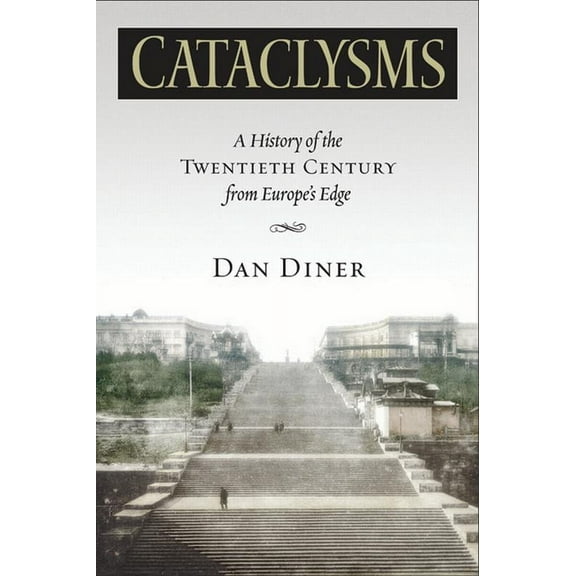 $4442current price $44.42
George L. Mosse Series in the History of European Culture, Sexuality, and Ideas: Cataclysms : A History of the Twentieth Century from Europe’s Edge (Hardcover)

Customer ratings & reviews
0 ratings|0 reviews
This item does not have any reviews yet

Related pages
- Battle Nations
- World Conspiracy
- Leviathan Job
- Colin P Clarke
- Apocalypse World War 1
- World War 3 Prophecy
- Civilization History Books
- War & Military Teen & Young Adult Books
- Genocide & War Crimes Political Books
- Alternative History Novels
- Visionary & Metaphysical Novels
- Historical Military & Wars Teen & Young Adult Books