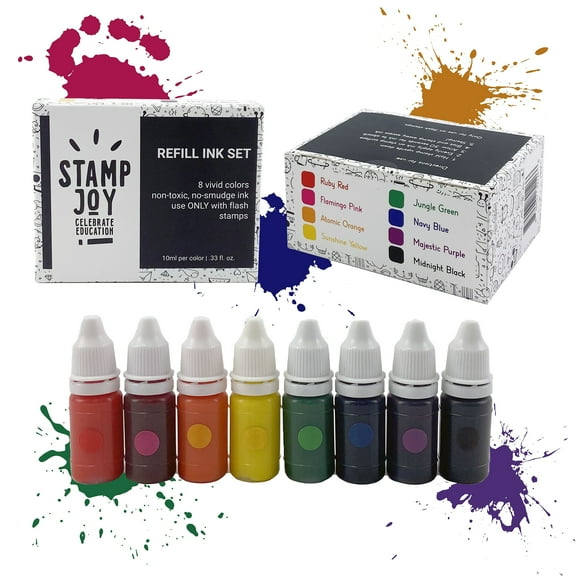
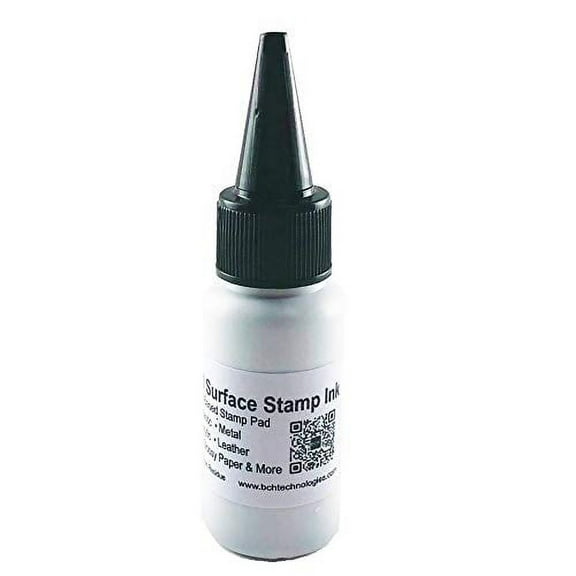
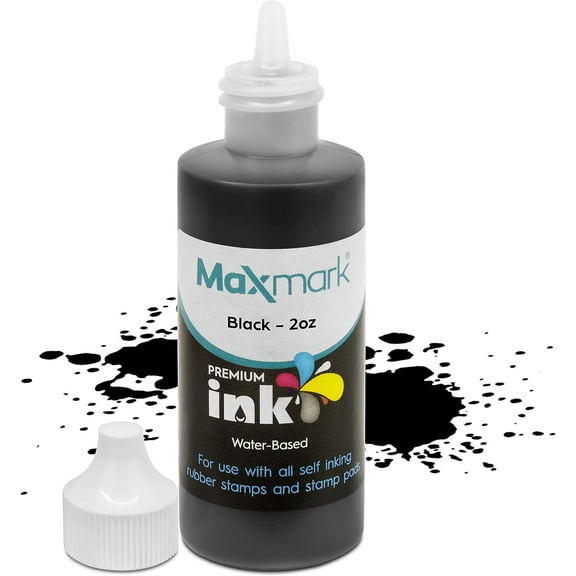
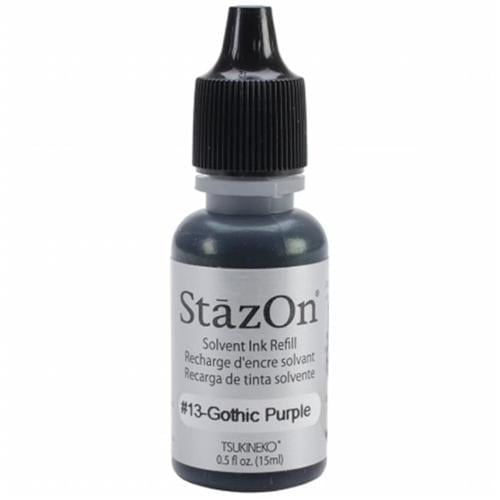
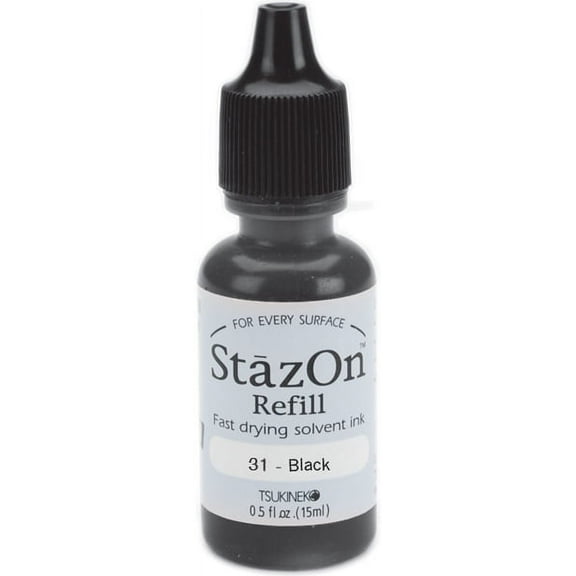
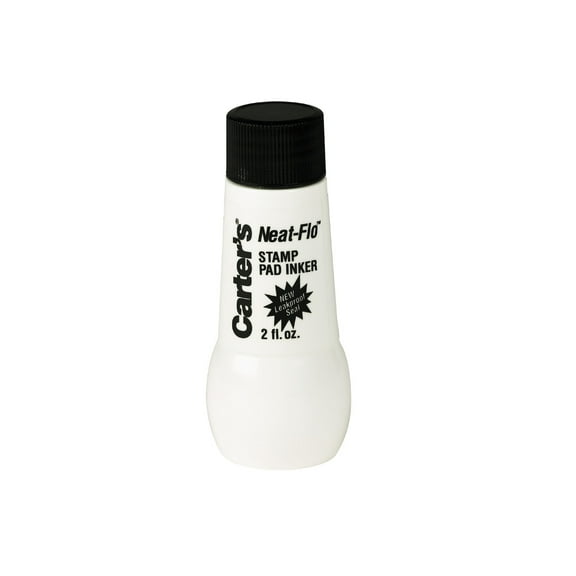
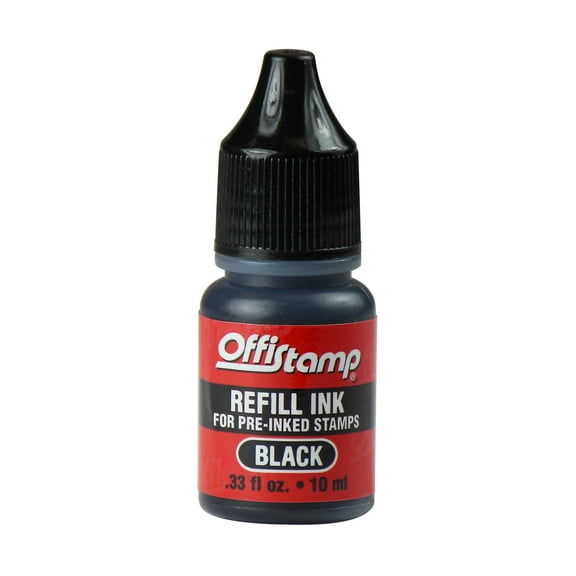
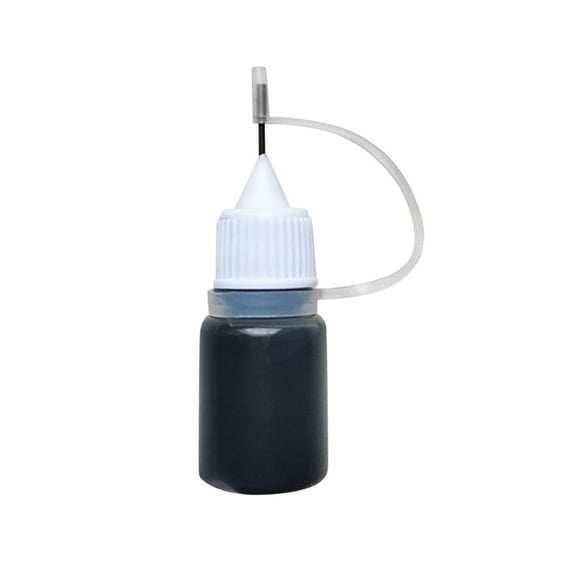
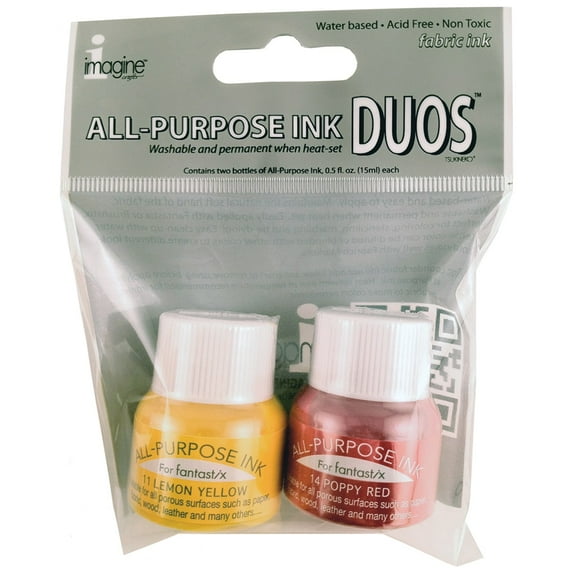
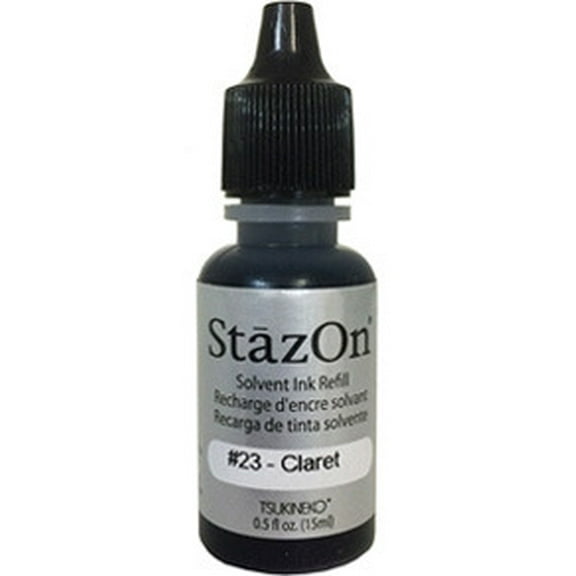
Carefully choose the ink you use when you refill your stamp.
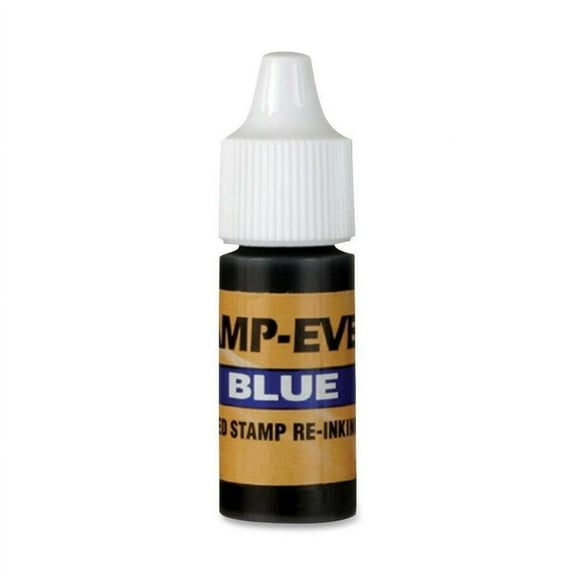
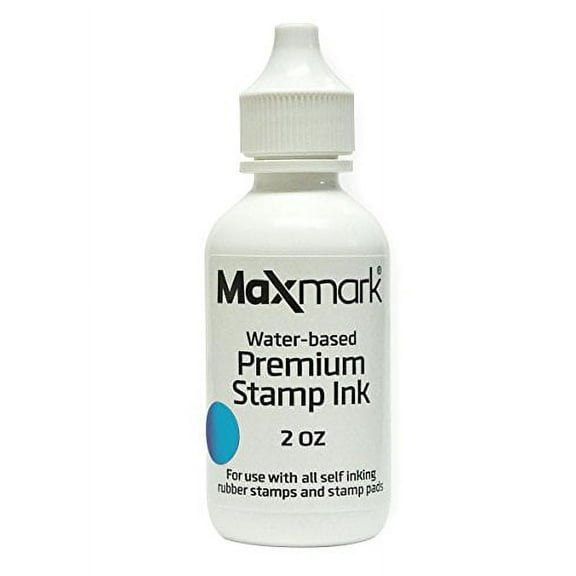
This BCH product is a water-based pigment formula for self-inking pads, and it is for porous surfaces. WATER-BASED vs OIL BASED. The selection of ink depends on the type of stamp. The self-inking stamp uses BCH water-based ink, and the pre-inked stamp uses BCH oil-based ink. Self-inking stamps either use a felt pad (not a gel pad) or have an inner refillable pad, while pre-ink stamps soak the stamp ink inside their rubber and release the ink with a simple press. Both stamps are refillable, but you need to select the correct type of ink. There are some pads that are rubber gel pads rather than felt pads, so these pads will need oil-based ink too.
PIGMENT vs DYE INK FORMULA. Dye ink is the classic stamping and scrapbooking ink. Dye ink dissolves into the paper. Also, it is not waterproof and fades in sunlight. BCH Premium Pigment ink is more vibrant in intensity and is opaque. The BCH pigment ink is waterproof, does not bleed,and is UV proof after drying. It additionally has a much longer life than dye ink.
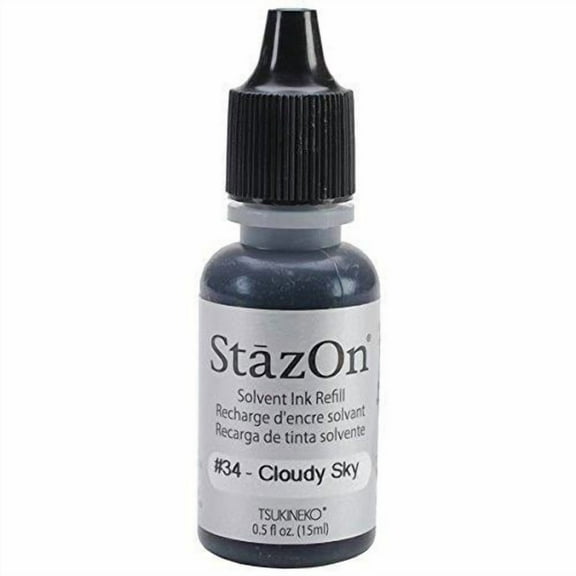
POROUS vs NON-POROUS SURFACE. Water and oil-based stamps work well with porous (paper, wood, popsicle sticks…) or semi-porous surfaces. Neither water-based or oil-based ink can be used with non-porous surfaces directly. Examples of non-porous surfaces include glass, glossy paper, vinyl, milk cartons, and ice cream lids. A special solvent-based BCH stamp ink will be needed in the application to non-porous surfaces if you want to use it directly. However, a heating tool can be used to shorten drying time, so the water-based ink can be used on glossy surfaces.