

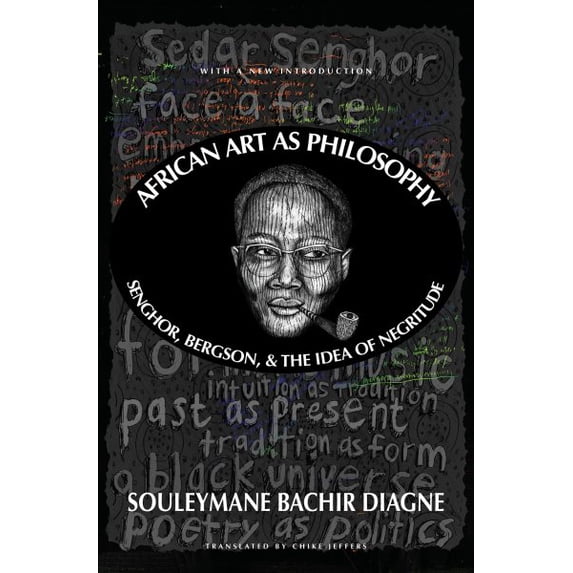
African Art as Philosophy: Senghor, Bergson, and the Idea of Negritude (Paperback)
(No ratings yet)
Key item features
This critically acclaimed study offers a distinct, incisive look at how Senegalese philosopher Senghor sees in African art the most acute expression of Bergson’s philosophy.
Léopold Sédar Senghor (1906–2001) was a Senegalese poet and philosopher who in 1960 also became the first president of the Republic of Senegal. In African Art as Philosophy, Souleymane Bachir Diagne uses a unique approach to reading Senghor’s influential works, taking as the starting point for his analysis Henri Bergson’s idea that in order to understand philosophers, one must find the initial intuition from which every aspect of their work develops. In the case of Senghor, Diagne argues that his primordial intuition is that African art is a philosophy.
To further this point, Diagne looks at what Senghor called the “1889 Revolution” (the year Bergson’s Time and Free Will was published), as well as the influential writers and publications of that period—specifically, Nietzsche and Rimbaud. The 1889 Revolution, Senghor claims, is what led him to the understanding of the “Vitalism” at the core of African religions and beliefs that found expression in the arts.
Léopold Sédar Senghor (1906–2001) was a Senegalese poet and philosopher who in 1960 also became the first president of the Republic of Senegal. In African Art as Philosophy, Souleymane Bachir Diagne uses a unique approach to reading Senghor’s influential works, taking as the starting point for his analysis Henri Bergson’s idea that in order to understand philosophers, one must find the initial intuition from which every aspect of their work develops. In the case of Senghor, Diagne argues that his primordial intuition is that African art is a philosophy.
To further this point, Diagne looks at what Senghor called the “1889 Revolution” (the year Bergson’s Time and Free Will was published), as well as the influential writers and publications of that period—specifically, Nietzsche and Rimbaud. The 1889 Revolution, Senghor claims, is what led him to the understanding of the “Vitalism” at the core of African religions and beliefs that found expression in the arts.
Specs
- Book formatPaperback
- Fiction/nonfictionNon-Fiction
- Publication dateSeptember, 2023
- Pages208
- Reading levelGeneral
- EditionStandard
Current price is USDNow $14.53
You save $2.46
was $16.99$16.99
You save$2.46
Price when purchased online
- Free shipping
 Free 30-day returns
How do you want your item?
Ships to
Arrives between May 26 - May 29
|
Sold and shipped by RAREWAVES-USA
4.5747278126031015 stars out of 5, based on 3031 seller reviews(4.6)3031 seller reviews

Free 30-day returns
More seller options (1)
Starting from $15.26
About this item
Product details
This critically acclaimed study offers a distinct, incisive look at how Senegalese philosopher Senghor sees in African art the most acute expression of Bergson's philosophy. Léopold Sédar Senghor (1906-2001) was a Senegalese poet and philosopher who in 1960 also became the first president of the Republic of Senegal. In African Art as Philosophy, Souleymane Bachir Diagne uses a unique approach to reading Senghor's influential works, taking as the starting point for his analysis Henri Bergson's idea that in order to understand philosophers, one must find the initial intuition from which every aspect of their work develops. In the case of Senghor, Diagne argues that his primordial intuition is that African art is a philosophy. To further this point, Diagne looks at what Senghor called the "1889 Revolution" (the year Bergson's Time and Free Will was published), as well as the influential writers and publications of that period--specifically, Nietzsche and Rimbaud. The 1889 Revolution, Senghor claims, is what led him to the understanding of the "Vitalism" at the core of African religions and beliefs that found expression in the arts.
This critically acclaimed study offers a distinct, incisive look at how Senegalese philosopher Senghor sees in African art the most acute expression of Bergson’s philosophy.
Léopold Sédar Senghor (1906–2001) was a Senegalese poet and philosopher who in 1960 also became the first president of the Republic of Senegal. In African Art as Philosophy, Souleymane Bachir Diagne uses a unique approach to reading Senghor’s influential works, taking as the starting point for his analysis Henri Bergson’s idea that in order to understand philosophers, one must find the initial intuition from which every aspect of their work develops. In the case of Senghor, Diagne argues that his primordial intuition is that African art is a philosophy.
To further this point, Diagne looks at what Senghor called the “1889 Revolution” (the year Bergson’s Time and Free Will was published), as well as the influential writers and publications of that period—specifically, Nietzsche and Rimbaud. The 1889 Revolution, Senghor claims, is what led him to the understanding of the “Vitalism” at the core of African religions and beliefs that found expression in the arts.
Léopold Sédar Senghor (1906–2001) was a Senegalese poet and philosopher who in 1960 also became the first president of the Republic of Senegal. In African Art as Philosophy, Souleymane Bachir Diagne uses a unique approach to reading Senghor’s influential works, taking as the starting point for his analysis Henri Bergson’s idea that in order to understand philosophers, one must find the initial intuition from which every aspect of their work develops. In the case of Senghor, Diagne argues that his primordial intuition is that African art is a philosophy.
To further this point, Diagne looks at what Senghor called the “1889 Revolution” (the year Bergson’s Time and Free Will was published), as well as the influential writers and publications of that period—specifically, Nietzsche and Rimbaud. The 1889 Revolution, Senghor claims, is what led him to the understanding of the “Vitalism” at the core of African religions and beliefs that found expression in the arts.
info:
We aim to show you accurate product information. Manufacturers, suppliers and others provide what you see here, and we have not verified it.
Specifications
Book format
Paperback
Fiction/nonfiction
Non-Fiction
Genre
Art, Music, and Photography
Publication date
September, 2023
Warranty
Warranty information
Please be aware that the warranty terms on items offered for sale by third party Marketplace sellers may differ from those displayed in this section (if any). To confirm warranty terms on an item offered for sale by a third party Marketplace seller, please use the 'Contact seller' feature on the third party Marketplace seller's information page and request the item's warranty terms prior to purchase.
Warnings
State Chemical Disclosure
No harmful chemicals
Similar items you might like
Based on what customers bought
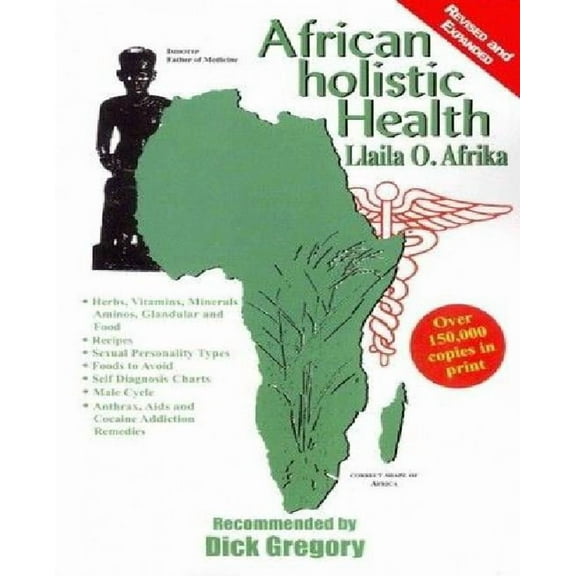
African Holistic Health, (Paperback) $18.39
 $1839current price $18.39
African Holistic Health, (Paperback)
224.6 out of 5 Stars. 22 reviewsBest seller Project Hail Mary: A Novel (Paperback) $16.50
Best seller $1650current price $16.50
Project Hail Mary: A Novel (Paperback)
1184.8 out of 5 Stars. 118 reviewsIn 25+ people's carts The Housemaid (Paperback) $14.24
In 25+ people's carts 2 optionsAvailable in additional 2 options$1424current price $14.24
The Housemaid (Paperback)
5654.7 out of 5 Stars. 565 reviewsAfrican proverbs (Paperback) $15.62
 $1562current price $15.62
African proverbs (Paperback)
Colonize Me, (Paperback) $14.88
 $1488current price $14.88
Colonize Me, (Paperback)
Best seller King of Envy (Paperback) $10.87
Best seller $1087current price $10.87
King of Envy (Paperback)
544.7 out of 5 Stars. 54 reviewsBest seller The Silent Patient (Paperback) $4.89 Was $6.98
Best seller $489current price $4.89, Was $6.98$6.98
The Silent Patient (Paperback)
2124.6 out of 5 Stars. 212 reviewsBest seller The Housemaid Is Watching (Paperback) $8.63
Best seller $863current price $8.63
The Housemaid Is Watching (Paperback)
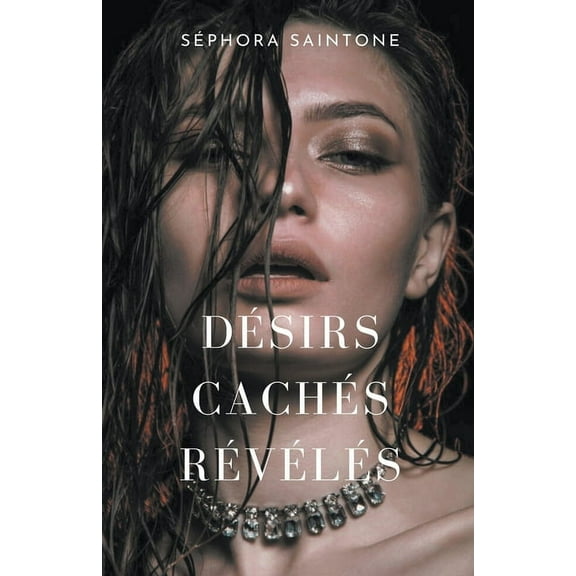
1724.7 out of 5 Stars. 172 reviewsDésirs Cachés Révélés, (Paperback) $16.99
 $1699current price $16.99
Désirs Cachés Révélés, (Paperback)
Memorias de Ãfrica / Out of Africa, (Paperback) $17.30
 $1730current price $17.30
Memorias de Ãfrica / Out of Africa, (Paperback)
Best seller Gachiakuta 2 (Paperback) $10.38
Best seller $1038current price $10.38
Gachiakuta 2 (Paperback)
205 out of 5 Stars. 20 reviewsModern Plays 54.60 Africa, (Paperback) $15.95
 $1595current price $15.95
Modern Plays 54.60 Africa, (Paperback)
Stories that Awaken, (Paperback) $16.00
 $1600current price $16.00
Stories that Awaken, (Paperback)
Best seller The Clear Quran: A Thematic English Translation (Paperback, 5.8" x 8.4") $4.39
Best seller $439current price $4.39
The Clear Quran: A Thematic English Translation (Paperback, 5.8" x 8.4")
1294.7 out of 5 Stars. 129 reviewsWhere Is Africa: Volume 1, (Paperback) $13.17
 $1317current price $13.17
Where Is Africa: Volume 1, (Paperback)
Ali Hazelwood Mate (Paperback) $17.39
 $1739current price $17.39
Ali Hazelwood Mate (Paperback)
Two Can Play (Paperback) $10.30
 $1030current price $10.30
Two Can Play (Paperback)
23 out of 5 Stars. 2 reviewsBest seller I m Dead Now What, Book, (Paperback) $10.00
Best seller $1000current price $10.00
I m Dead Now What, Book, (Paperback)
2554.6 out of 5 Stars. 255 reviewsBest seller Kingdom of Ash (Paperback) $10.53 Was $12.70
Best seller $1053current price $10.53, Was $12.70$12.70
Kingdom of Ash (Paperback)
1004.9 out of 5 Stars. 100 reviews

Customer ratings & reviews
0 ratings|0 reviews
This item does not have any reviews yet
