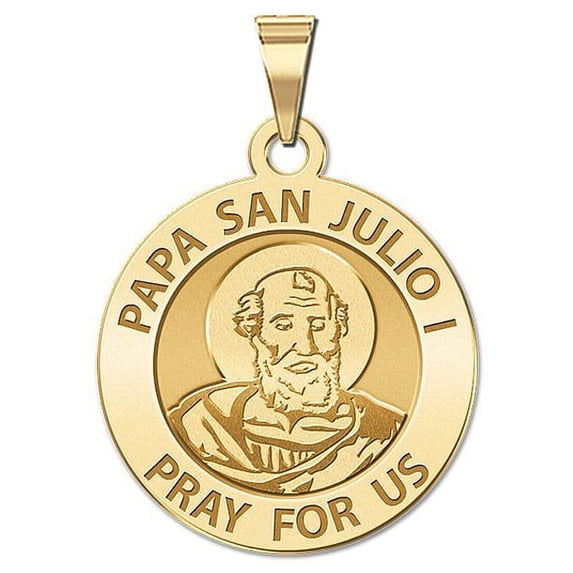
CHAIN IS NOT INCLUDED Available in Solid 14K Yellow or White Gold, or Sterling Silver Size Reference: 17mm is the size of a US dime 19mm is the size of a US nickel 25mm is the size of a US quarter Julius I was a native of Rome and was chosen as successor of Peter after the Roman see had been vacant for four months. He is chiefly known by the part he took in the Arian controversy. After the followers of Eusebius of Nicomedia, who had become the archbishop of Constantinople, renewed their deposition of Athanasius at a synod held in Antioch in 341, they resolved to send delegates to Constans, Emperor of the West, and also to Julius, setting forth the grounds on which they had proceeded. Julius, after expressing an opinion favourable to Athanasius, adroitly invited both parties to lay the case before a synod to be presided over by himself. This proposal, however, the Arian Eastern bishops declined to accept. On this second banishment from Alexandria, Athanasius came to Rome, and was recognised as a regular bishop by the synod presided over by Julius in 342. Julius sent a letter to the Eastern bishops that is an early instance of the claims of primacy for the bishop of Rome. Even if Athanasius and his companions were somewhat to blame, the letter runs, the Alexandrian Church should first have written to the pope. "Can you be ignorant," writes Julius, "that this is the custom, that we should be written to first, so that from here what is just may be defined" (Epistle of Julius to Antioch, c. xxii). It was through the influence of Julius that, at a later date, the council of Sardica in Illyria was held, which was attended only by seventy-six Eastern bishops, who speedily withdrew to Philippopolis and deposed Julius at the council of Philippopolis, along with Athanasius and others. The three hundred Western bishops who remained, confirmed the previous decisio