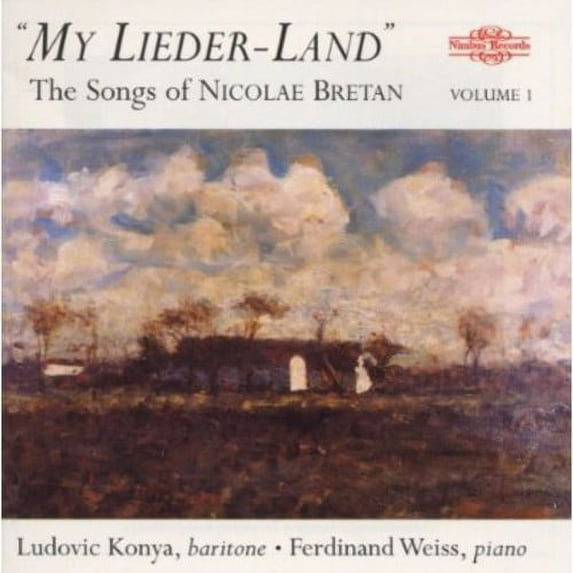
It is apparent in Nicolae Bretan's songs that he was first a singer. Displaying a vocal-friendliness and lyrically expressive lines, they are intimate works of emotion and dedication. Comparable perhaps to Norwegian composer Grieg, Bretan never felt he had so much of a motherland, belonging concurrently to Hungary, Romania, and Germany, writing songs in the languages of all three and reiterating a thread-like theme of yearning and searching. This can be seen in "Cフntecul Pugarului" ("Lament of the Plow") for instance, where a plowman asks a lark about his freedom, and yearns for such a freedom himself. A clear but subtle birdsong motif is heard in the accompaniment, which also becomes a tremolo in the form of the man's inner volcanic desires, and the plow moving against the vast and open earth. Similarly, in "A Fiam Bヤlcsojツnツl" ("At My Son's Cradle"), ghostly hints of a lullaby are present in the accompaniment, which on a more visceral level is the soft bed upon which the voice laments the child that never was. These are human and heartfelt pieces.
Baritone Ludovic Konya has an appropriate voice and linguistic ability to bring across the music. His affinity for the music of Bretan is as direct as Bretan's for his poets, a marriage most necessary for this skillful and poetic form of music.
International Record Review (6/00, p.97) - "...[Nicolae Bretan] ought to be much better known....Ludovic Konya...turns out these honest, heartfelt songs beautifully, with sensitive accompaniment from his pianist..."