

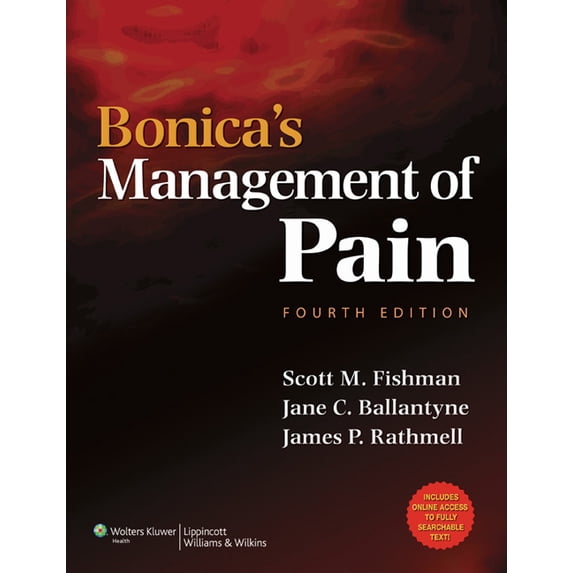
Bonica's Management of Pain
(No ratings yet)
Key item features
Now in its Fourth Edition, with a brand-new editorial team, Bonica's Management of Pain will be the leading textbook and clinical reference in the field of pain medicine. An international group of the foremost experts provides comprehensive, current, clinically oriented coverage of the entire field. The contributors describe contemporary clinical practice and summarize the evidence that guides clinical practice.
The first section covers basic considerations, including mechanisms of nociception, functional neuroanatomy and musculoskeletal anatomy, psychological aspects of pain, cultural and environmental aspects of pain, and clinical trials. The second section addresses economic, political, legal, and ethical considerations in pain management. The third section describes current methods for evaluation of the patient with pain. The fourth section provides in-depth coverage of specific painful conditions—neuropathic pain syndromes, psychological contributions to pain, vascular, cutaneous, and musculoskeletal pains, pain due to cancer, acute pain, pain in special populations, visceral pain, regional pain, and low back pain. The fifth section describes the full range of methods for symptomatic control, including pharmacologic therapies, psychological techniques, physical and other noninterventional therapies, implanted electrical stimulators, interventional pain management, and surgical approaches. The book concludes with discussions of the provision of pain treatment in a variety of clinical settings, including pain clinics, spine clinics, the primary care setting, the emergency department, the intensive care unit, and end-of-life care.
The first section covers basic considerations, including mechanisms of nociception, functional neuroanatomy and musculoskeletal anatomy, psychological aspects of pain, cultural and environmental aspects of pain, and clinical trials. The second section addresses economic, political, legal, and ethical considerations in pain management. The third section describes current methods for evaluation of the patient with pain. The fourth section provides in-depth coverage of specific painful conditions—neuropathic pain syndromes, psychological contributions to pain, vascular, cutaneous, and musculoskeletal pains, pain due to cancer, acute pain, pain in special populations, visceral pain, regional pain, and low back pain. The fifth section describes the full range of methods for symptomatic control, including pharmacologic therapies, psychological techniques, physical and other noninterventional therapies, implanted electrical stimulators, interventional pain management, and surgical approaches. The book concludes with discussions of the provision of pain treatment in a variety of clinical settings, including pain clinics, spine clinics, the primary care setting, the emergency department, the intensive care unit, and end-of-life care.
Specs
- Book formatHardcover
- Fiction/nonfictionNon-Fiction
- Publication dateDecember, 2009
- Pages2064
- Number in series1
- Edition4
Price when purchased online
Not Available
How do you want your item?
Not available
About this item
Product details
Now in its Fourth Edition, with a brand-new editorial team, Bonica's Management of Pain will be the leading textbook and clinical reference in the field of pain medicine. An international group of the foremost experts provides comprehensive, current, clinically oriented coverage of the entire field. The contributors describe contemporary clinical practice and summarize the evidence that guides clinical practice. Major sections cover basic considerations; economic, political, legal, and ethical considerations; evaluation of the patient with pain; specific painful conditions; methods for symptomatic control; and provision of pain treatment in a variety of clinical settings.
Now in its Fourth Edition, with a brand-new editorial team, Bonica's Management of Pain will be the leading textbook and clinical reference in the field of pain medicine. An international group of the foremost experts provides comprehensive, current, clinically oriented coverage of the entire field. The contributors describe contemporary clinical practice and summarize the evidence that guides clinical practice.
The first section covers basic considerations, including mechanisms of nociception, functional neuroanatomy and musculoskeletal anatomy, psychological aspects of pain, cultural and environmental aspects of pain, and clinical trials. The second section addresses economic, political, legal, and ethical considerations in pain management. The third section describes current methods for evaluation of the patient with pain. The fourth section provides in-depth coverage of specific painful conditions—neuropathic pain syndromes, psychological contributions to pain, vascular, cutaneous, and musculoskeletal pains, pain due to cancer, acute pain, pain in special populations, visceral pain, regional pain, and low back pain. The fifth section describes the full range of methods for symptomatic control, including pharmacologic therapies, psychological techniques, physical and other noninterventional therapies, implanted electrical stimulators, interventional pain management, and surgical approaches. The book concludes with discussions of the provision of pain treatment in a variety of clinical settings, including pain clinics, spine clinics, the primary care setting, the emergency department, the intensive care unit, and end-of-life care.
The first section covers basic considerations, including mechanisms of nociception, functional neuroanatomy and musculoskeletal anatomy, psychological aspects of pain, cultural and environmental aspects of pain, and clinical trials. The second section addresses economic, political, legal, and ethical considerations in pain management. The third section describes current methods for evaluation of the patient with pain. The fourth section provides in-depth coverage of specific painful conditions—neuropathic pain syndromes, psychological contributions to pain, vascular, cutaneous, and musculoskeletal pains, pain due to cancer, acute pain, pain in special populations, visceral pain, regional pain, and low back pain. The fifth section describes the full range of methods for symptomatic control, including pharmacologic therapies, psychological techniques, physical and other noninterventional therapies, implanted electrical stimulators, interventional pain management, and surgical approaches. The book concludes with discussions of the provision of pain treatment in a variety of clinical settings, including pain clinics, spine clinics, the primary care setting, the emergency department, the intensive care unit, and end-of-life care.
info:
We aim to show you accurate product information. Manufacturers, suppliers and others provide what you see here, and we have not verified it.
Specifications
Book format
Hardcover
Fiction/nonfiction
Non-Fiction
Publication date
December, 2009
Pages
2064
Customer ratings & reviews
0 ratings|0 reviews
This item does not have any reviews yet
