

Butcher Knives in Kitchen Knives Knife Block Sets and Cutlery
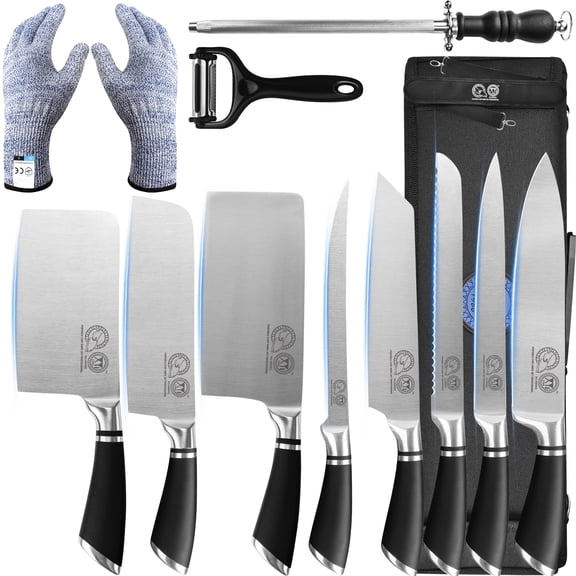


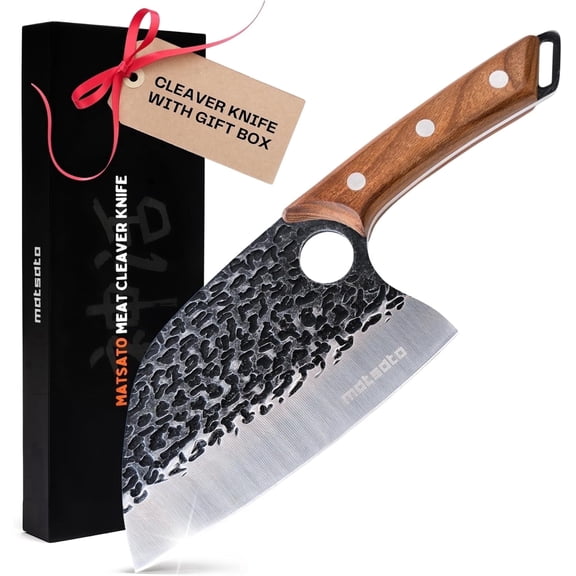
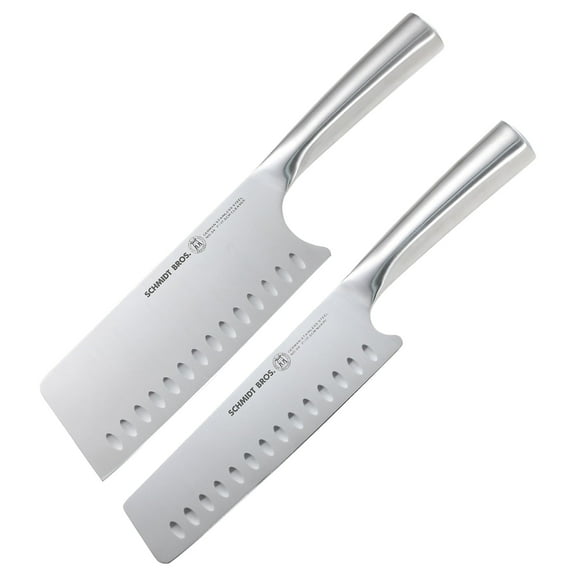
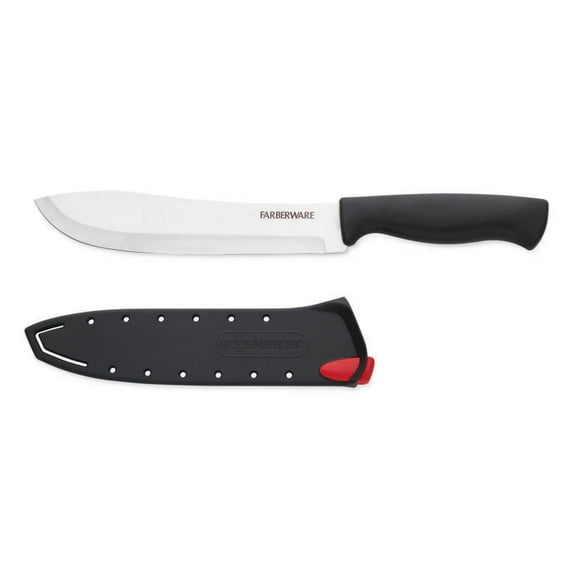


















About Butcher Knives in Kitchen Knives Knife Block Sets and Cutlery - Walmart.com
When you need a butcher knife for trimming brisket or breaking down large cuts, you should compare blade shape, steel, and handle details carefully. You can use this guide to understand category differences that matter during home butchering, meal prep, and bulk meat processing.
How to choose a butcher knife
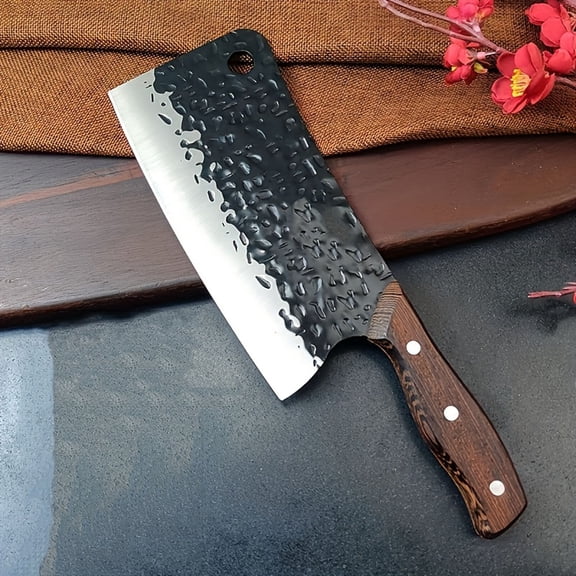
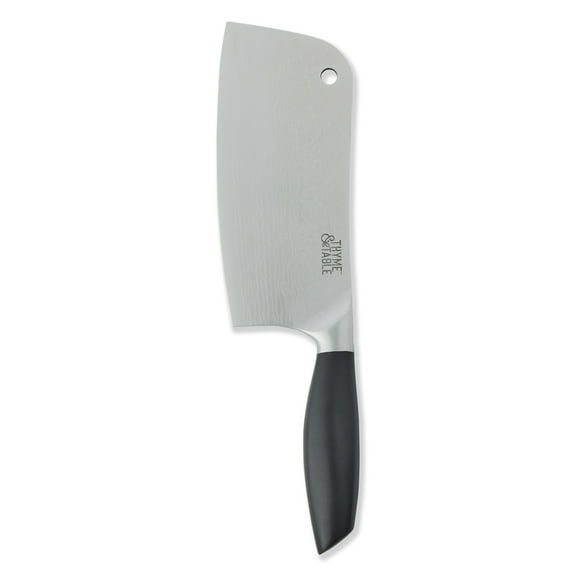
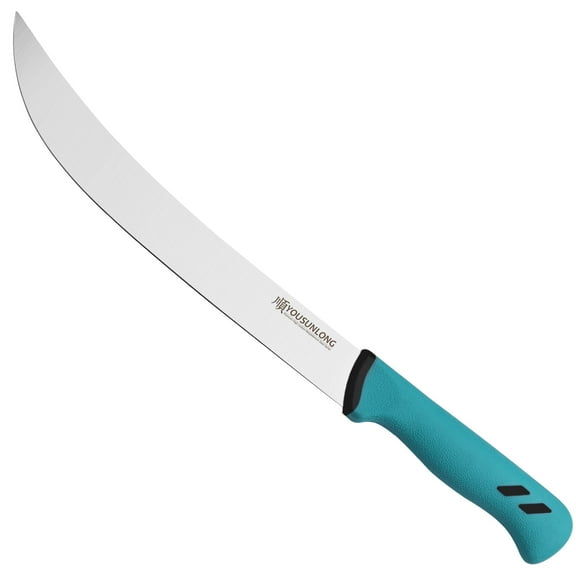
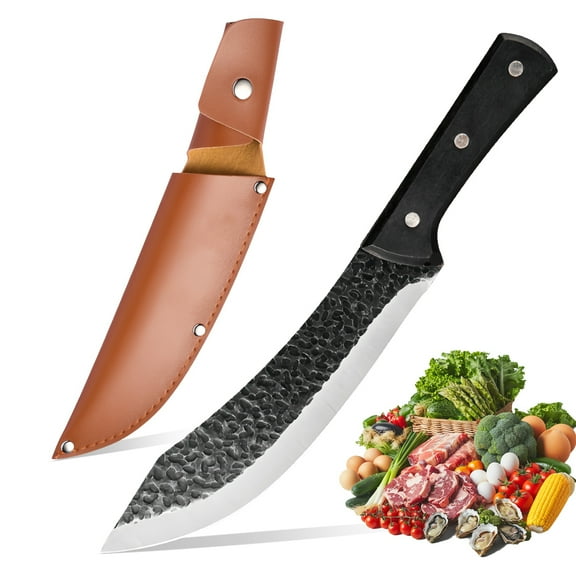
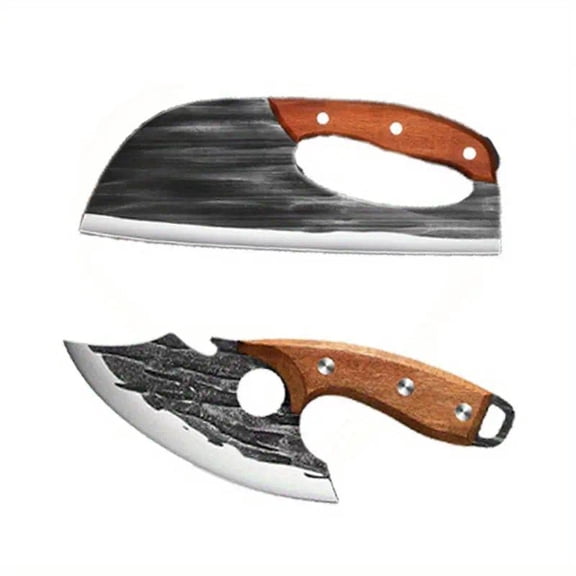
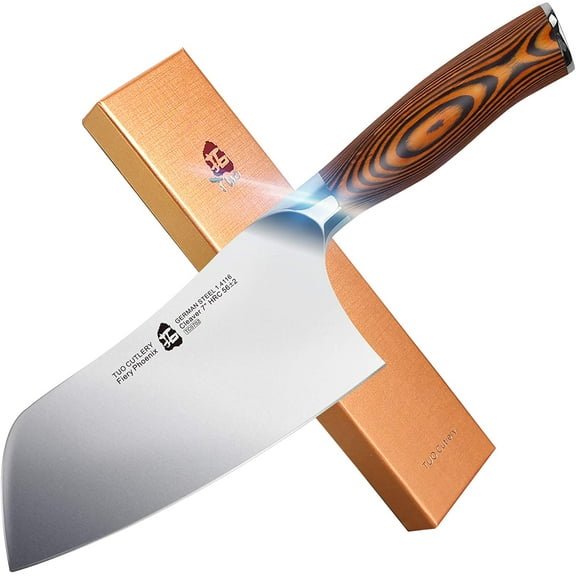
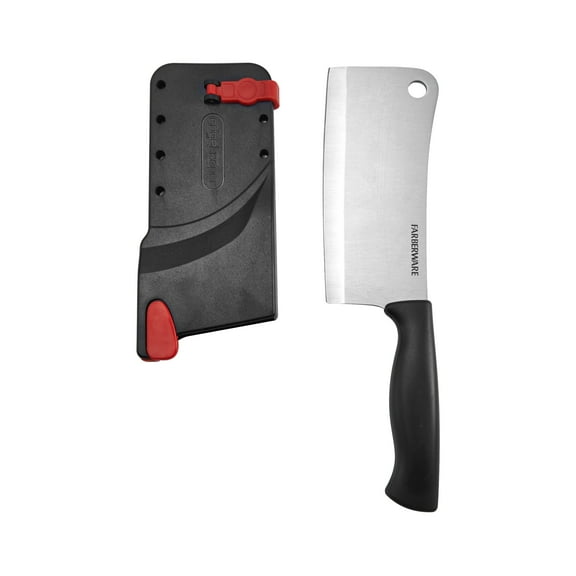
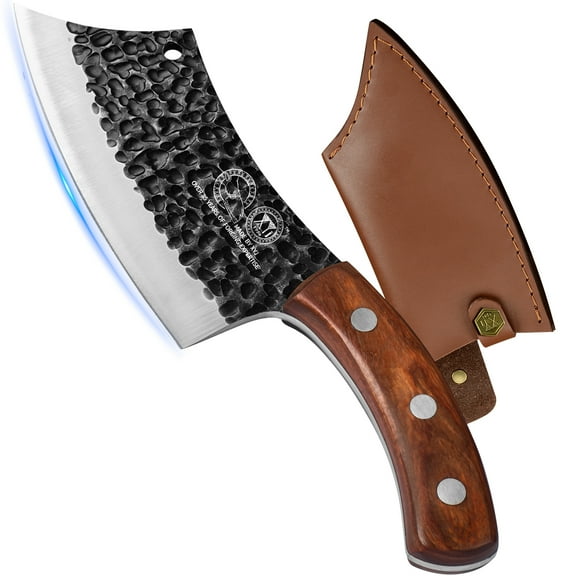
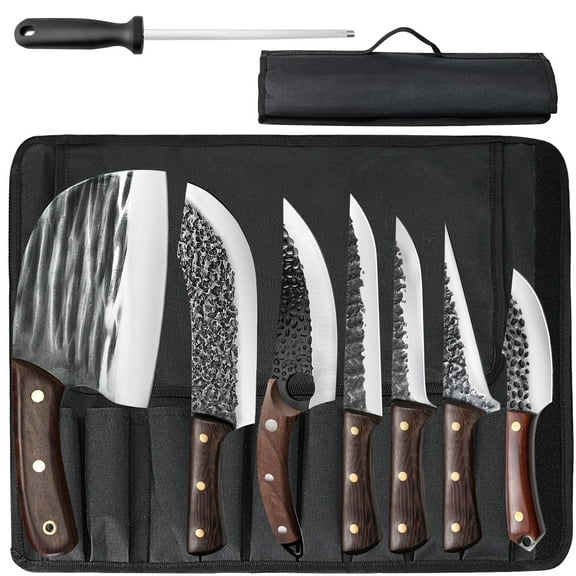
You should start with knife type because each shape supports a different cutting motion. You can use a cimeter for long slicing strokes, while your cleaver supports heavy chopping through dense ingredients.
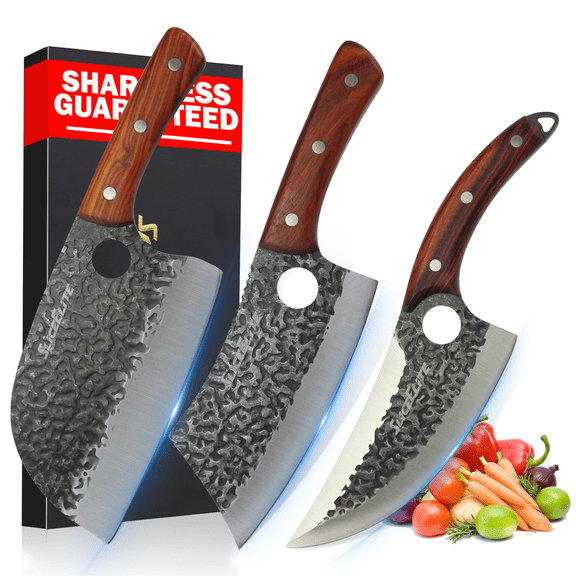
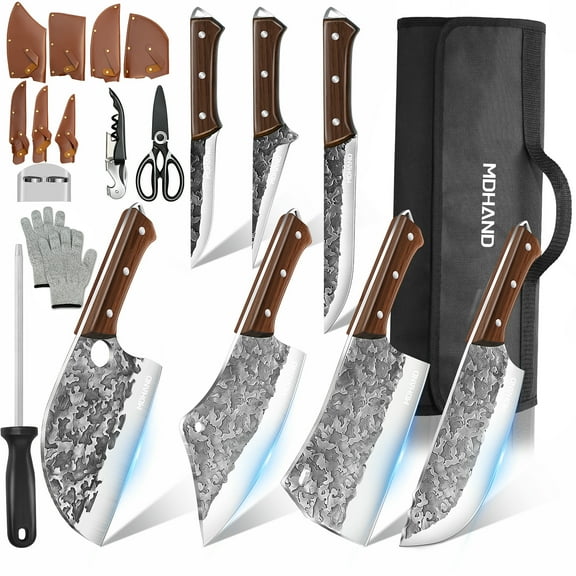
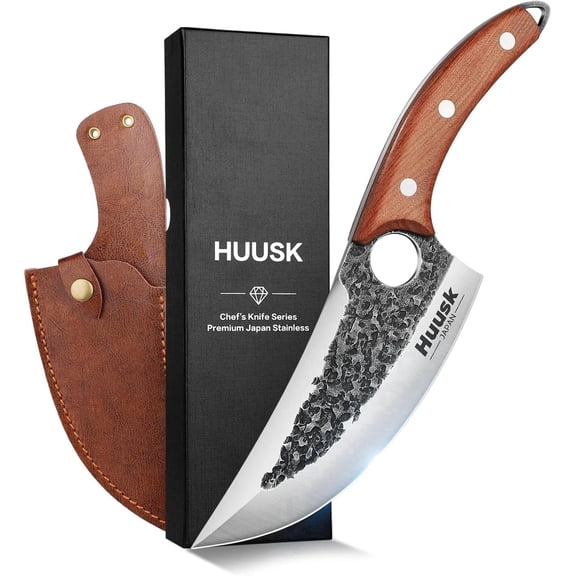
You may prefer a breaking knife when your goal is portioning primal cuts into smaller sections. You can reach for a boning knife when your work needs tighter control around joints, seams, and narrow spaces.
You should also compare how a butcher knife feels during repeated cuts. You’ll notice that a curved cimeter supports smooth slices, while your straighter blade can feel easier to guide on controlled trimming tasks.
Comparing butcher knife blade materials
You should compare blade material because it affects edge retention, sharpening habits, and day-to-day upkeep. You’ll often see high-carbon steel, stainless steel, damascus steel, and alloy steel across this category.
You may choose high-carbon steel when you want a sharp working edge and don’t mind regular care. You’ll often choose stainless steel when your routine calls for simpler cleanup and consistent kitchen use.
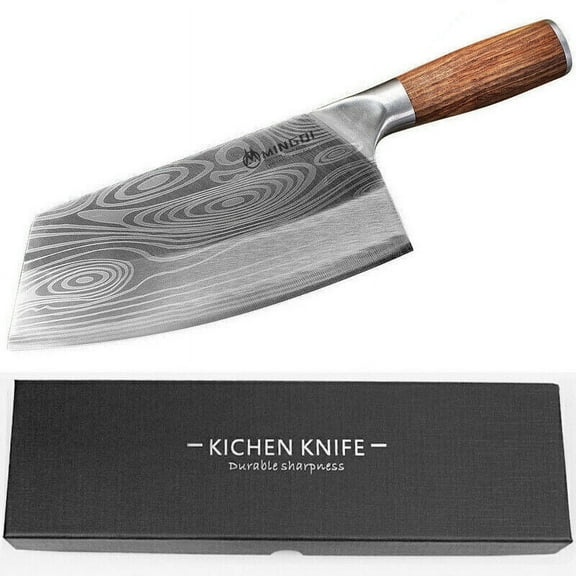
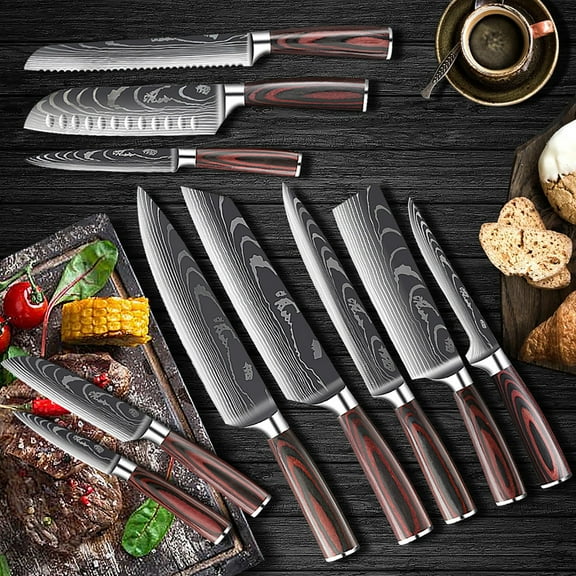
You can consider damascus steel when your priority includes layered steel construction and a distinctive blade pattern. You might choose alloy steel when you want a practical balance of durability and everyday cutting performance.
- You can use high-carbon steel for strong edge retention during repeated meat prep.
- You can choose stainless steel when your cleanup routine needs less fuss.
- You can compare alloy blends to match your sharpening habits and cutting frequency.
- You can look at blade finish and grind for smoother slicing and cleaner portions.
Choosing blade length for your cutting tasks
You should match blade length to the size of the cuts you handle most often. You’ll usually find 6 inch, 8 inch, 10 inch, and 12 inch options in this category.
You can use a 6 inch blade when your prep space is tighter and your cuts are smaller. You may prefer an 8 inch blade when you want a versatile size for trimming, slicing, and portioning.
You’ll often choose a 10 inch or 12 inch butcher knife for larger roasts, brisket, or full sections of meat. You can make longer strokes with fewer passes, which helps your slices look more even.
You should also check blade flexibility and cimeter curve before you decide. You’ll find that slight flex can help your blade follow contours, while a curved profile supports fluid slicing motion.
What to look for in handle materials
You should compare handle material because your grip affects control during longer prep sessions. You’ll commonly see wood, ergonomic polymer, fibrox, and stainless steel handles on meat knives.
You may like wood when you want a traditional look and a warm hand feel. You can choose ergonomic polymer or fibrox when your priority is a secure grip and reduced hand fatigue.
You should inspect handle shape, balance, and texture before you decide. You’ll notice that a contoured handle can feel steadier during repetitive slicing, especially when your hands are busy with active kitchen prep.
You can also compare full tang construction and bolster area for handling preference. You’ll often feel more control when your knife balances comfortably between the blade and handle.
Using butcher knives in real kitchen scenarios
You can use butcher knives for trimming fat caps, slicing roasts, portioning steaks, and separating large cuts into meal-sized pieces. You’ll also use meat knives when your freezer cooking routine includes bulk packs and batch prep.
You may pair a cimeter with brisket or ham because the curved blade supports long carving strokes. You can pair a breaking knife with larger sections when your goal is cleaner portions and efficient prep.
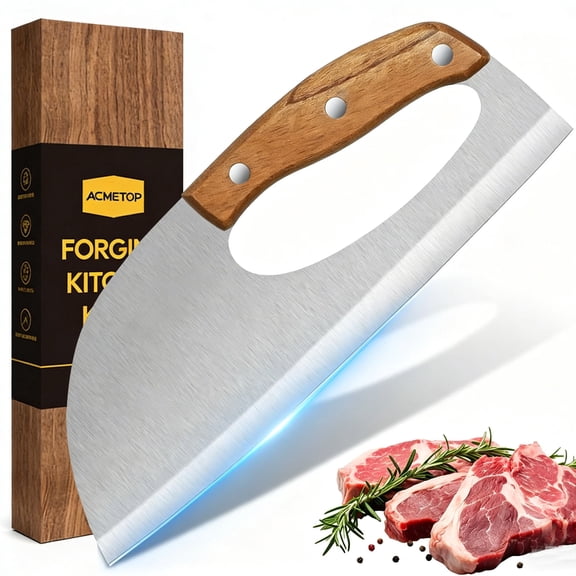
You should consider a boning knife when your cuts involve close work around bones and connective tissue. You may keep a cleaver nearby when your prep style includes firmer ingredients and heavier downward cuts.
You can also think about maintenance before choosing your butchers knife. You’ll want a blade that fits your sharpening routine, your storage setup, and how often you prep larger cuts at home.
You may search butcher knife near me or butchers knife near me when you want a faster path to the right style. You can use this category guidance to compare options online with more confidence before choosing your next kitchen tool.
How maintenance affects your decision
You should check how often your knife may need honing or sharpening based on steel type and use frequency. You’ll usually find that regular upkeep helps your cutting feel smoother and more predictable.
You can compare blade finishes, edge styles, and storage habits when narrowing your choice. You’ll get more consistent performance when your butcher knife matches your prep volume, cutting style, and maintenance routine.
You should choose with your actual cutting tasks in mind, not just appearance. You’ll end up with a knife that fits your workflow, handles larger cuts well, and supports cleaner slicing at home.