

Cash Boxes in Money Handling




























![Mini Cash Box with Key Lock Portable Petty Layered Partition Coin Banknote Classification Lockable Money Safe Security Tin Box for Household Office Shop[White]](https://i5.walmartimages.com/seo/Mini-Cash-Box-Key-Lock-Portable-Petty-Layered-Partition-Coin-Banknote-Classification-Lockable-Money-Safe-Security-Tin-Box-Household-Office-Shop-White_0e37bab2-7572-40cd-b646-8e86a8ae028b.2a934316e42f6a08e1232cb8df6d83d8.jpeg?odnHeight=576&odnWidth=576&odnBg=FFFFFF)

About Cash Boxes in Money Handling - Walmart.com
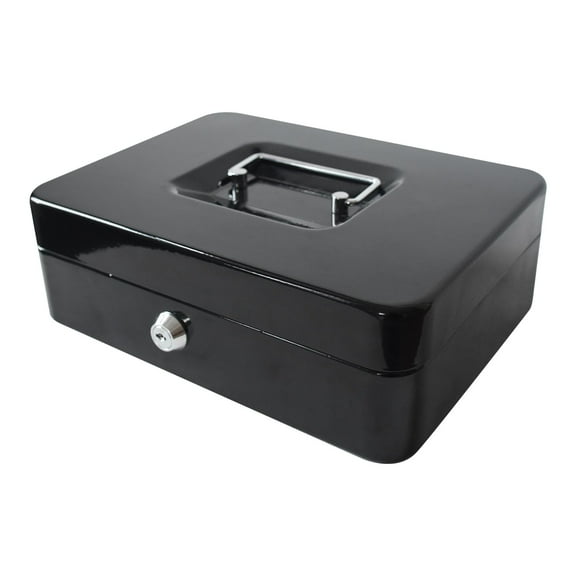
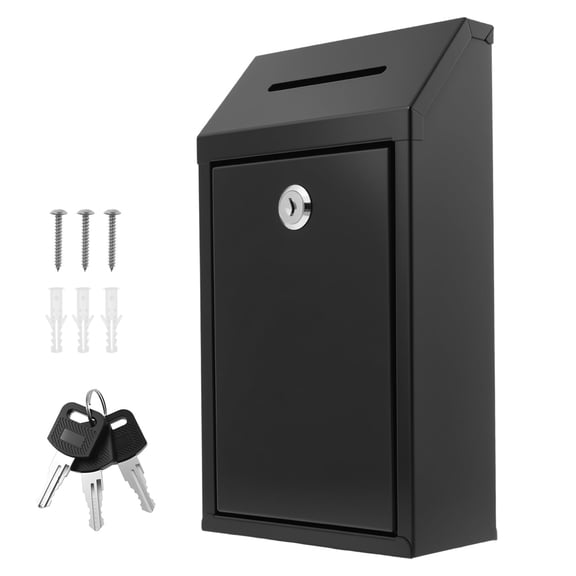
Cash boxes help you organize bills, coins, and receipts in one secure spot. You can compare lock types, tray layouts, and sizes that fit daily business use or occasional event needs.
How to choose cash boxes for your setup
When you compare cash boxes, you should start with how often you'll open and carry them. Your choice usually comes down to lock style, tray design, size, and metal construction.
If you run a register table, you may want faster bill access and clear coin sections. If you manage ticket sales or fundraisers, you may want compact storage that travels easily.
Choosing the right lock box for money
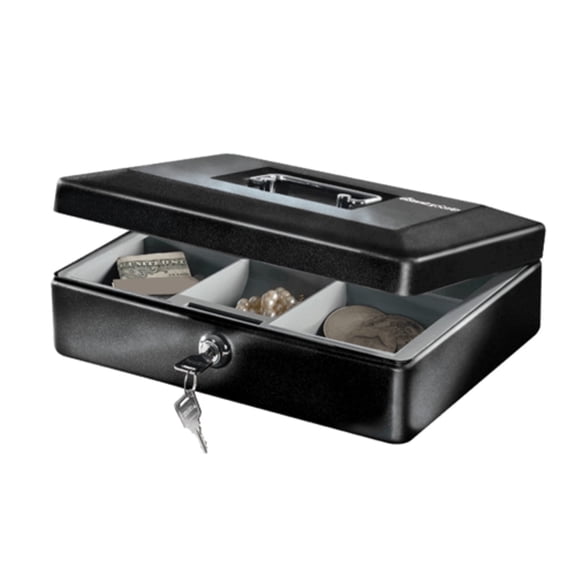
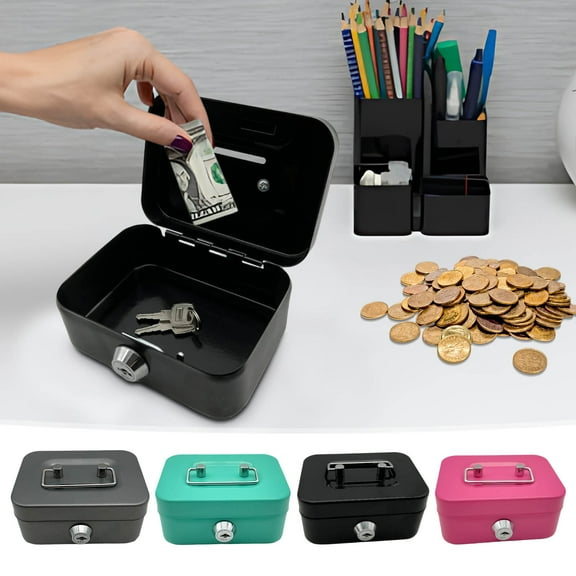
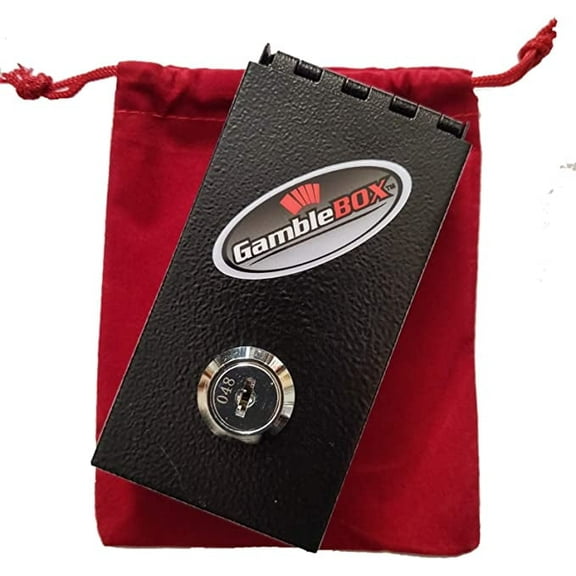
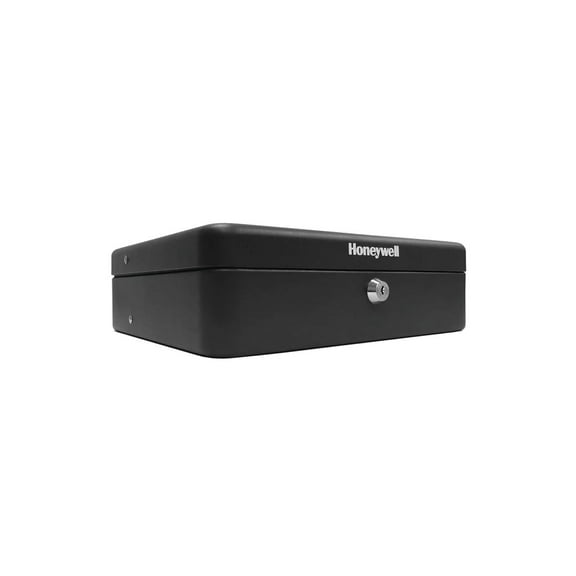
You should pick a key lock if you want simple access with a familiar design. You should pick a combination lock if you'd rather avoid carrying a separate key.
A cash box with key can work well when you assign one person to handle deposits. A combination lock cash box can suit shared teams when you want controlled access without spare keys.
If you prefer code entry, you may also compare digital electronic lock styles. You should check battery needs, keypad placement, and how quickly your staff can open the box.
Picking a cash box with money tray
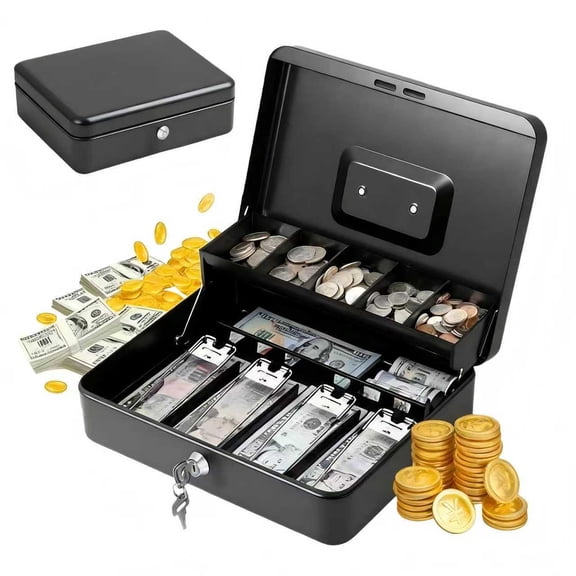
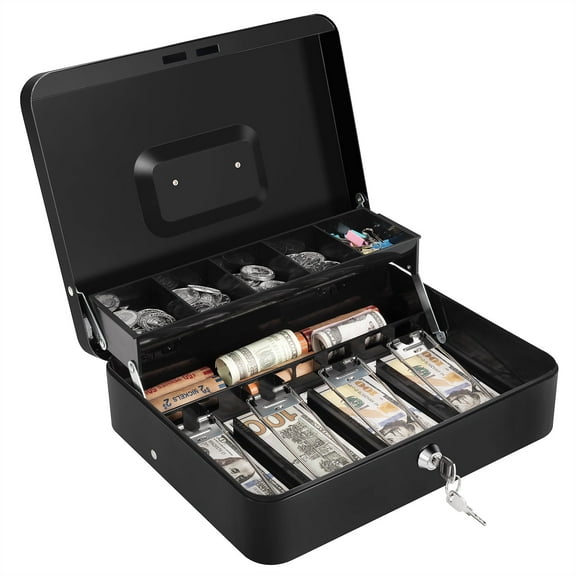
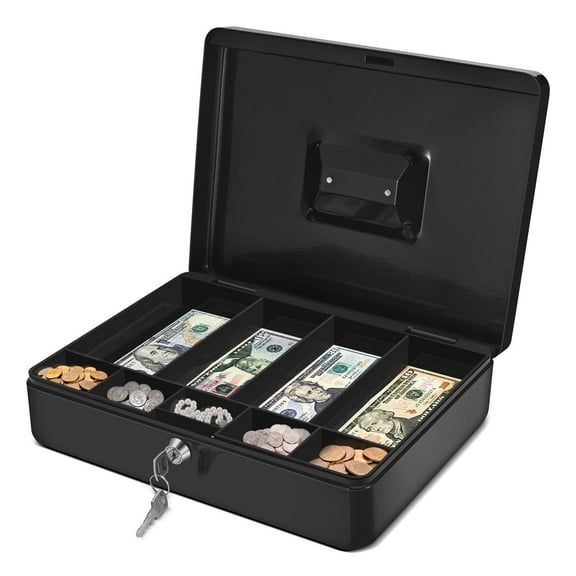
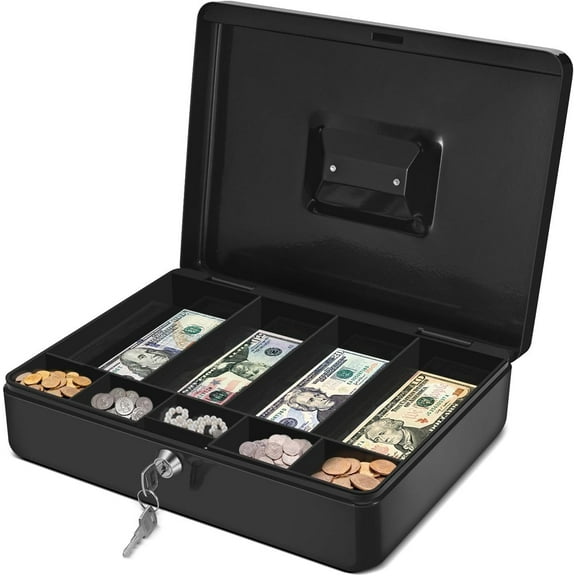
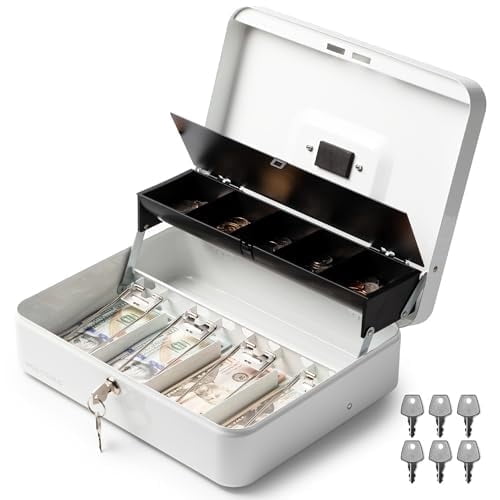
You should match tray configuration to how you count and sort cash during busy periods. A cash box with money tray helps you separate bills, coins, checks, and receipts without mixing everything together.
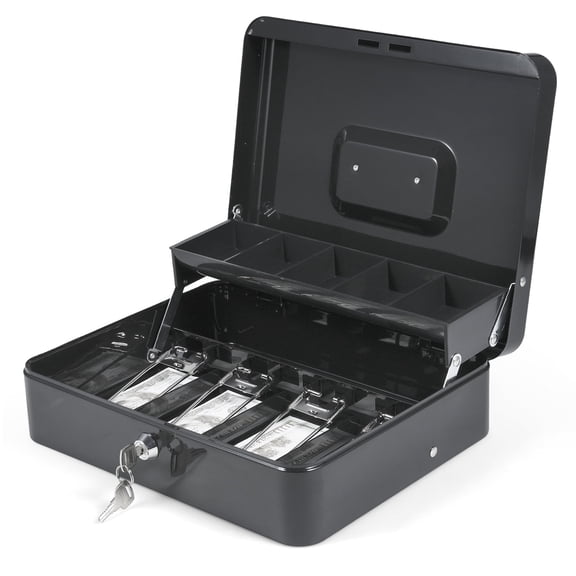
Cantilever trays lift open in layers, so you can view several sections at once. Removable trays let you lift out the organizer when you need full access to the lower compartment.
Tiered compartments can help you sort denominations for faster change making at concession stands or school events. Bill clips can hold paper currency flat, so your stack stays neater during repeated opening.
- You can use cantilever trays when you want quick visibility across several cash sections.
- You can choose removable trays when you need to clear the top organizer fast.
- You can look for bill clips when you handle folded bills throughout the day.
- You can pick tiered compartments when you sort coins and bills by denomination.
Choosing small cash box to extra-large capacity
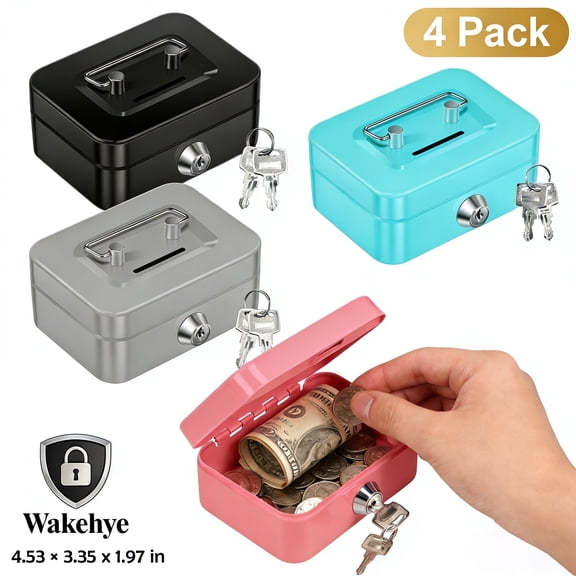
You should think about how much cash, paperwork, and backup rolls you store at one time. A small cash box can fit limited starting cash, while larger formats support longer shifts and higher volume.
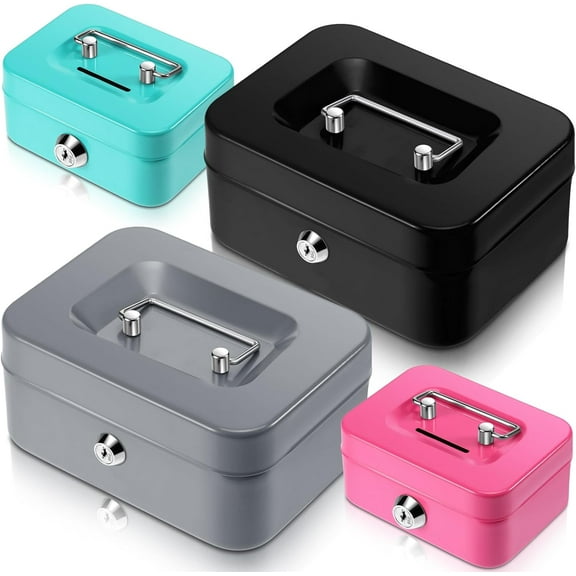
Small sizes work well when you need a compact unit for bake sales, classrooms, or reception desks. Medium and large boxes give you more room for coin rolls, checks, and bundled bills.
Extra-large capacity can make sense when your team collects payments at events with steady traffic. You should measure your counter, drawer, or transport bag before you choose a larger footprint.
Comparing metal cash box construction
You should compare build quality based on how often your box moves and how heavily it's used. A metal cash box can offer a more rigid feel for daily handling in offices, booths, and front desks.
Solid steel can suit frequent use when you want a sturdy body and dependable lid alignment. Heavy-duty metal can make sense when your cash box travels often between vehicles, counters, and storage shelves.
Double-walled steel may appeal to you when you want a more reinforced design. You should also check hinges, latch fit, and interior finish for smoother opening and consistent organization.
Deciding on a portable cash box handle style
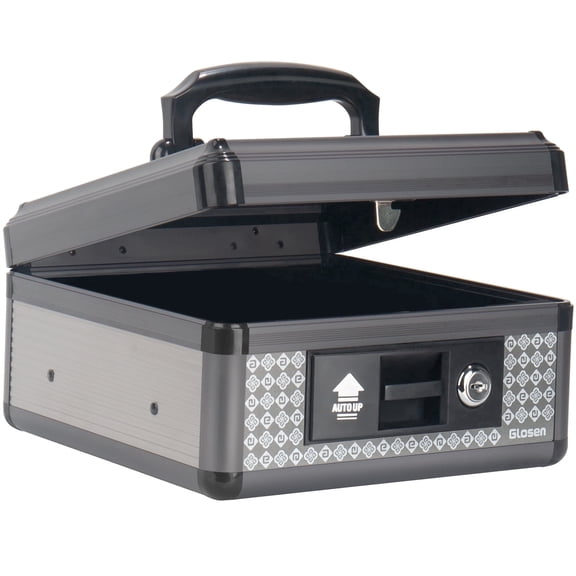
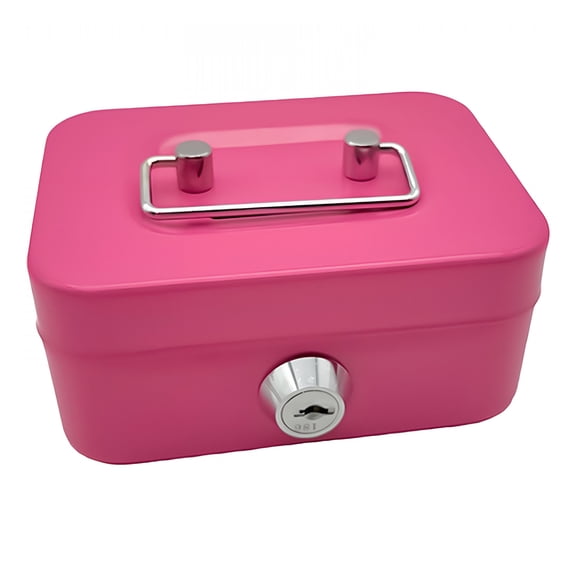
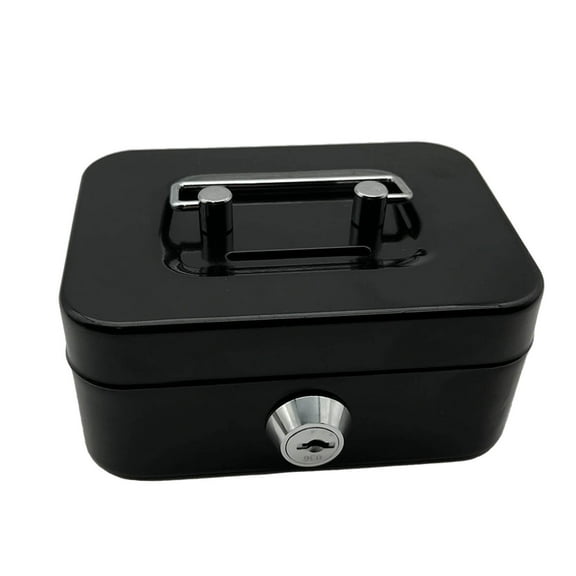
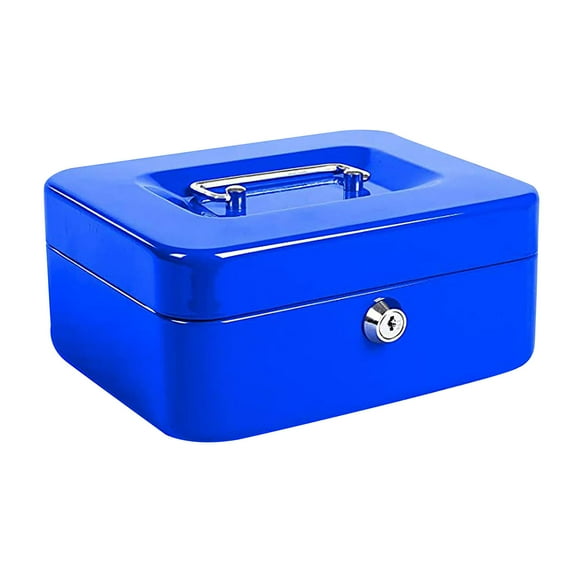
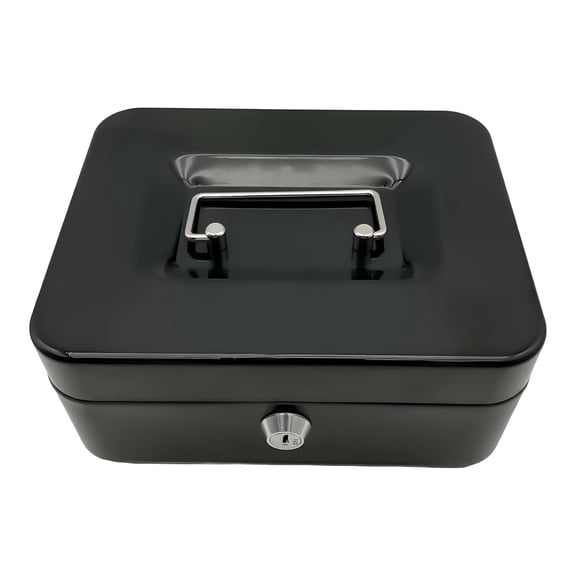
You should consider where you carry the box before you choose a handle design. A portable cash box with a carrying handle can feel straightforward for walking between rooms or event stations.
A recessed handle can sit flatter when you pack the box into a tote, cabinet, or supply cart. A fold-down handle can help you stack the box more neatly when it's not in your hand.
If you travel to craft fairs or ticket tables, you may prefer a compact profile and lower weight. If your box stays at a checkout counter, you may focus more on tray access than handle shape.
Matching cash boxes to real use cases
You can use a small cash box for club dues, church events, classroom activities, or pop-up sales. You may want a removable tray when you count cash later in a separate room.
You can choose a cash box with money tray for concession stands, school stores, and office reception areas. You may prefer bill clips and tiered sections when you make change often.
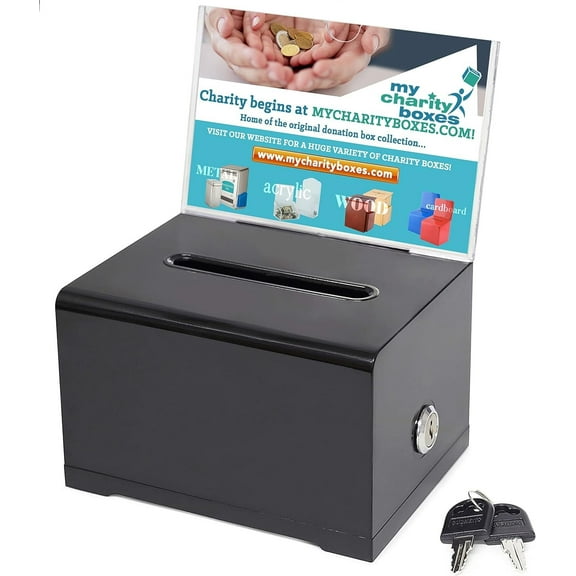
You can use a lock box for money at flea markets, mobile vendors, and temporary check-in tables. You may want a portable cash box with a recessed handle when packing space stays tight.
For daily commercial use, you should consider heavy-duty metal or solid steel construction with dependable hinges. For occasional events, you may prioritize lighter carrying and simple organization over larger capacity.
If several people handle the box, you should compare key control with shared code access. If one person manages the float, you may find a cash box with key easier to track.
You can also pair your choice with related office security storage for records and keys. You may compare nearby categories like safes, key cabinets, and office security when you need a fuller setup.
What to look for before you decide
You should review lock type, tray style, handle shape, and overall capacity before you choose. Those details help you match your cash boxes to everyday counting, transport, and storage needs.
When you select the right combination of size, tray layout, and metal build, you get cleaner organization and smoother cash handling. You also get a setup that fits your counter, routine, and carrying needs.