

Neurology Books in Medical Books


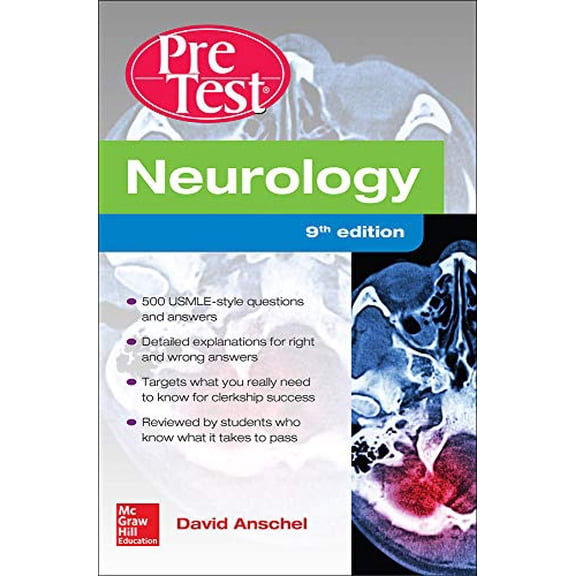



















About Neurology Books in Medical Books - Walmart.com
Neurology books help you study complex pathways, compare subspecialties, and match resources to your training stage. You can use this category for coursework, board preparation, and daily clinical reference.
If you're building a study shelf, you may want titles that explain localization, neuroanatomy, and diagnostic reasoning in clear language. You can also compare formats, specialty focus, and content types that fit your schedule.
How to choose neurology books for your goals
When you compare neurology books, you should start with your audience level and exam needs. If you're a medical student, you may want broad foundations before narrow subspecialty references.
If you're a resident, you may look for board preparation support, ABPN certification review, and RITE exam study tools. If you're a practicing neurologist, you may prefer quick reference manuals and case-based updates.
- You can match general overview texts to early coursework and rotation prep.
- You can choose board review formats when you need focused recall and exam-style organization.
- You can use case studies when you want practical clinical reasoning and real-world decision support.
- You can compare atlases and neuroimaging-heavy titles when you need stronger visual learning.
As a general reader, you may prefer accessible introductions that explain the brain, nerves, and neurologic topics without dense training language. You can narrow your search quickly when you know whether you need learning, review, or reference support.
Choosing neurology textbooks by format and content type
When you review neurology textbooks, you should compare textbook, hardcover, paperback, and e-book formats. A textbook format often gives you structured chapters, review tables, and topic sequencing for course study.
Hardcover editions may suit you if your reference stays on a desk or library shelf. Paperback options may work well if you carry your reading between class, clinic, and study spaces.
An e-book may help you search terms quickly, jump between chapters, and study across devices. You can also compare content type before you choose a format, since layout matters for dense medical reading.
Board review titles usually help you focus on exam alignment, concise summaries, and rapid recall. Case study books help you connect symptoms, findings, imaging, and next-step thinking in a practical way.
Atlases can support you when you need clear illustrations, labeled structures, and high-quality neuroimaging. Reference manuals may fit you if you want concise lookups during study sessions or clinical reading.
Comparing clinical neurology books and subspecialty topics
Clinical neurology books often help you move from theory to bedside reasoning with organized chapters and clinical examples. You may want these texts if your work or study depends on diagnosis patterns and management frameworks.
If you're selecting by specialty, you should compare clinical neurology, pediatric neurology, neuroanatomy, and neurosurgery coverage. Each subfield supports a different question set, so your choice should reflect your coursework or practice focus.
Pediatric neurology books can help you review age-specific presentations, developmental context, and child-focused case discussions. Neuroanatomy books may suit you when you need pathway mapping, labeled structures, and region-based organization.
Neurosurgery-focused resources may matter if you want operative context, neurologic localization, or anatomy tied to procedural planning. You can often build a comprehensive library when you pair one broad text with one narrow subspecialty reference.
You should also check whether an edition reflects current diagnostic guidelines and updated classification language. If your coursework references DSM-5 alignment or current standards, you may want recent editions that match those expectations.
What to look for in visuals, editions, and exam alignment
Clear visuals help you review dense topics when you study tracts, lesions, and cross-sectional anatomy. You may want books with readable diagrams, neuroimaging examples, and tables that simplify comparison.
If you're preparing for exams, you should check whether a title supports board preparation and organized review. Some texts fit broad coursework, while others align more closely with ABPN certification or RITE exam study.
Edition recency matters when you need terminology and diagnostic frameworks that match current learning standards. You can compare publication details to find books that reflect current guidelines and updated references.
Real-world case studies can help you connect textbook facts to practical scenarios and differential thinking. You may find that case-based chapters improve retention because you follow findings and interpretation in sequence.
When you need long-study comfort, you should consider page layout, chapter length, and indexing. A strong index, clear headings, and consistent tables can help you review efficiently before rounds, class, or exams.
Using neurology books in school, residency, and practice
If you're starting a course block, you may want one core textbook and one neuroanatomy reference. That combination can help you build foundations while giving you a faster path to visual review.
During residency, you may prefer clinical neurology books with concise summaries and real cases. You can use those titles to connect localization, testing, and management concepts during busy rotations.
If you're focused on pediatric training, you may look for pediatric neurology books with child-specific discussions and developmental context. Those resources can help you compare age-related presentations within one study plan.
If you're in practice, you may want reference manuals or updated editions that support quick topic refreshers. You can also keep an atlas nearby when you need to revisit anatomy, tracts, or imaging relationships.
For independent learning, you may choose an e-book for searchable access across multiple devices. You can then pair it with a paperback review guide for note-taking, highlighting, and repeated exam prep.
With the right mix of neurology books, you can build a library that supports classroom study, board review, and clinical reading. You gain clearer topic coverage when your format, subfield, and content type match your goals.