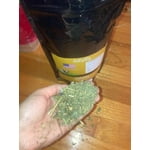
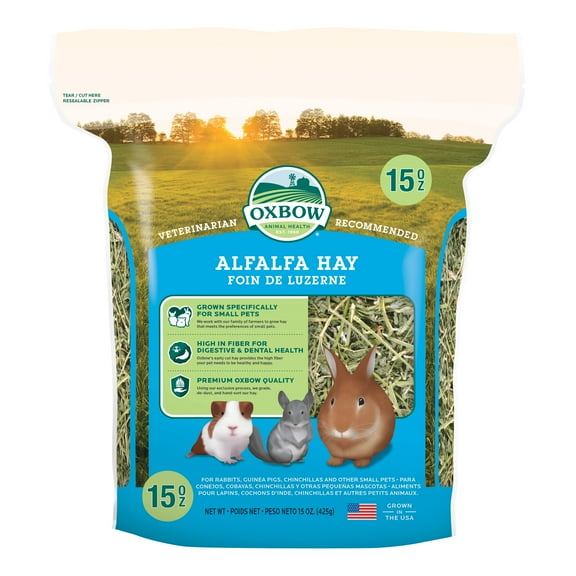
What is Ultra Premium Alfalfa Hay? Alfalfa Hay has a thicker stem and lots of elliptical leaves compared to the long thin leaves found on grass hays. The leaves run all along the thick and pliable stock. While it’s commonly referred to as Alfalfa Hay, it’s actually a legume (beanstalk). Full of protein and nutrients, it’s perfect for growing rabbits between the ages of 3 weeks and 7 months.
The 2022 Ultra Premium Alfalfa Hay we have in stock is currently a 9/10. This year's Alfalfa Hay is a near-perfect example of what Alfalfa Hay should be. example of what Alfalfa Hay should be. Click to read the full Alfalfa Hay Report.
At Rabbit Hole Hay, we are monitoring the RHDV2 virus closely and at this time it has NOT affected our area of the country (Northern California). While all our hay is now from the 2021/2022 growing season from Northern California, there have been NO reported cases affecting the area of the country where we source our hay. Click here to read more about what we are doing to ensure the safety of your small pet.
Mature rabbits can only eat a limited amount of Alfalfa due to the high levels of protein and calcium. Transition your 7 month old rabbit off of Alfalfa Hay and onto a grass hay (such as Timothy or Orchard). In limited amounts, Alfalfa Hay still makes a great treat for adult rabbits, guinea pigs, and chinchillas.
- Fresh Hay - We hand-pack every box so you get fresh, green & fragrant hay with little to no dust.
- Perfect For Young Pets - promotes growth in young rabbits, guinea pigs & chinchillas
- The Right Amount Of Fiber - Promotes digestive & dental health
- High Protein - Promotes the growth of young rabbits, guinea pigs, and chinchillas
- 100% Satisfaction Guaranteed - We provide the finest hay with industry leading customer service.
Importance of Transitioning From Alfalfa Hay Alfalfa Hay is perfect for:
- Rabbits younger than 7 months
- Guinea pigs younger than 6 months
- Chinchillas younger than 1 year
- Treats for adult rabbits, guinea pigs, and chinchillas
It’s crucial that you transition your small pet to a grass hay as soon as they are old enough, otherwise they’ll end up facing major health issues such as obesity, digestion and urinary tract issues, along with an increase risk of bladder stones.
Veterinarians recommend that in order to keep a healthy diet, adult rabbits and guinea pigs should have a diet consisting of 80% grass hay and adult chinchillas should have a diet consisting of 75% grass hay.
Feeding Your Rabbit Based on Their Age From birth until adulthood, it’s crucial that you feed your rabbit specific hays and other foods based on how old they are. Use the feeding timeline below to help guide you!
Birth – 3 weeks: Mother’s Milk
3 – 4 weeks: Mother’s Milk, nibbles of Alfalfa Hay and Pellets
4 – 7 weeks: Mother’s Milk, access to Alfalfa Hay and Pellets
7 weeks – 7 months: Unlimited Pellets and Alfalfa Hay (plus see 12 weeks below)
12 weeks: Introduce vegetables (one at a time, quantities under ½ oz.)
Once your rabbit is older than 6 months, start to transition them to a grass hay (such as Timothy or Orchard) and decrease pellets to ½ cup for every 6 pounds of body weight. You can also begin to slowly increase their green vegetables and give treats in moderation. The transitions will help keep your rabbit’s GI tract healthy and avoid obesity.
Stop Wasting Time & Money on Bad Hay Tired of wasting ti









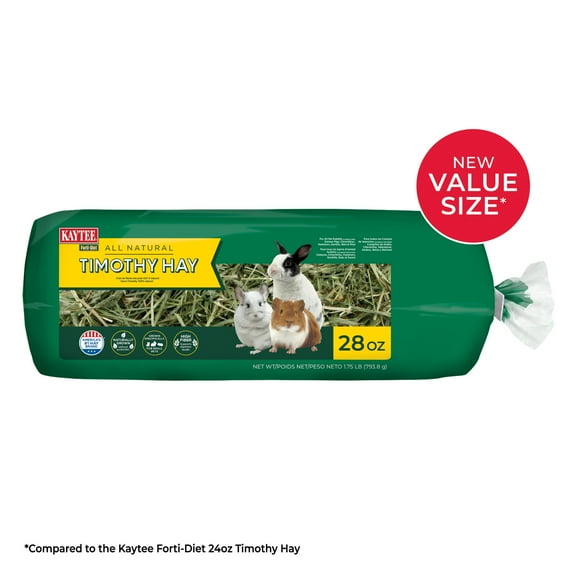
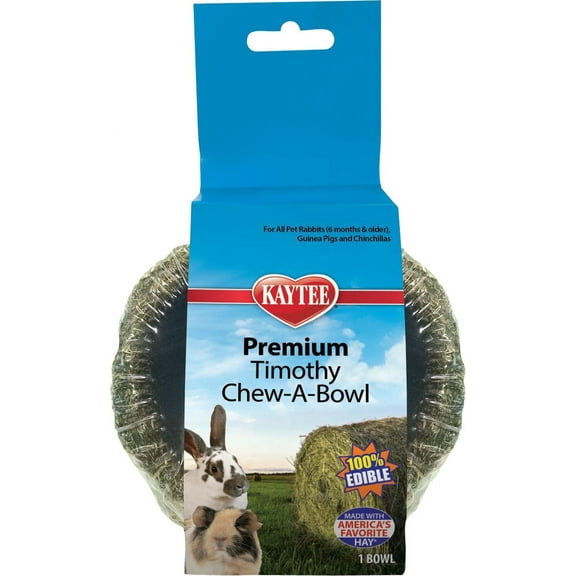
![Sunseed SunSations Natural Alfalfa Hay [Small Pet, Foods] 32 oz](https://i5.walmartimages.com/asr/e9026c19-5d50-41ca-98a7-20e647e6c69f.a628f3d7ad0dd4b0b0b39414c83df1ab.jpeg?odnHeight=576&odnWidth=576&odnBg=FFFFFF)