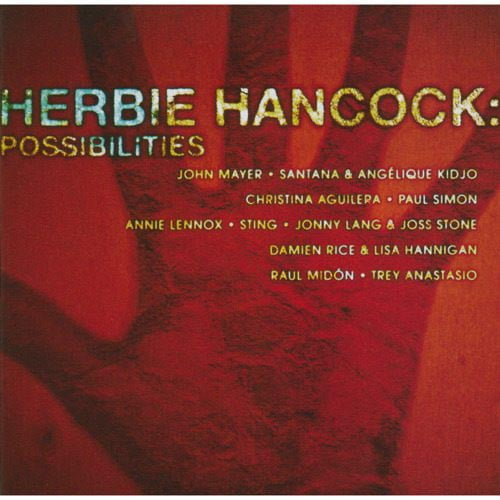
Lots of artists have crossover hits, and the "duet" format invites them. In fact, that's the whole point. Don't mistake Herbie Hancock's latest offering, Possibilities, for a sack of tunes in this bag. After reminding the world that he was the pianist who played "All Blues" on the Live At The Plugged Nickel dates with Miles by releasing a truly innovative, straight-ahead, hard driving jazz record, The New Standard, Hancock turned the page. The next part of the story is all pop, and all great.
Teamed with Joss Stone (remember what she did on the Alfie soundtrack?) and blues guitarist Jonny Lang, Hancock lays down some fierce blues lines. Covering B.B. King's hit, "When Love Comes To Town," Stone and Lang testify like they were scratchin' out life on the delta. The groove is tight and nasty, but it's the interplay of Lang's burnin' guitar and Herbie's piano that is remarkable. All these collaborative efforts can get pretty contrived and cute. There are lots of Hancock records you could buy. He's got hits already: "Chameleon," "Watermelon Man," and "Rockit." He's got cred; Miles and The Headhunters are plenty for any career. There are lots of other Herbie Hancock records you could buy. Buy this one.
Exactly how you hear it, is exactly how it all went down. John Mayer sings the line on the opening cut, but it's an apt metaphor for what goes on here. This is honest, effective, varied music masterminded by a master. Artists like Christina Aguliera, an incongruous partner for Hancock, sound natural, soulful, ideal. Context is everything in music, but a truly great keyboard player can bridge almost any stylistic gulf and make a soloist sound perfect. Herbie Hancock is a great keyboard player. On the first bridge of Leon Russell's "A Song For You," Christina sounds as if she's come home. She demonstrates technical and emotional range and control that is brilliant, and somewhat unexpected. On Paul Simon's touching and personal ballad, "I Do It For Your Love," magical things happen. In collaboration, Simon and Hancock put the tune in a minor key and slow the tempo to a jazz ballad pace. The vocal is mature and poignant, the support of the piano, elegant and stylish.
With artists like Santana and Sting, Hancock is completely at home. You get the feeling that making the limiting choices was the hardest process. On "Sister Moon," the insidious and ominous groove gives way to Sting's ethereal vocals. The inflection of Sting's phrasing and Hancock's harmonic choices meld beautifully. The texture is Donald Fagen, with Snows Of Kilimanjaro overtones. The instrumental work by Trey Anastasio is equally intriguing and textured. Herbie Hancock just makes it all sound so perfect, so easy and so soulful. This isn't a jazz record, it's a music record of unparalleled quality and charm.
By Dave Morgan