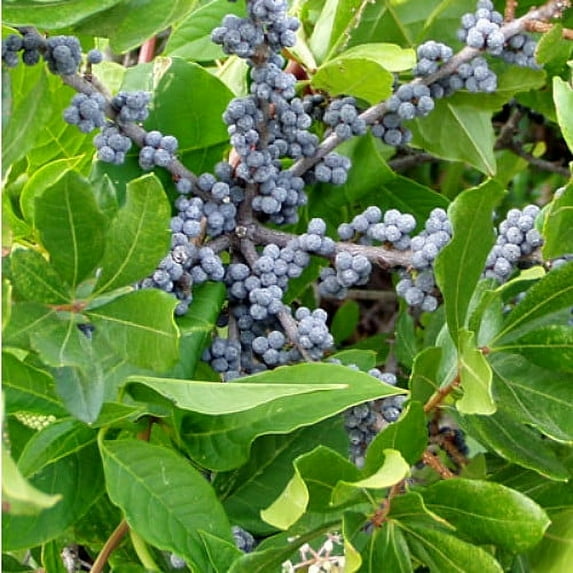
This North American coastal native exhibits quiet beauty and an easy-going habit. It grows to 10 feet tall, and spreads slowly to form colonies with glossy, semi-evergreen aromatic leaves. It looks equally at home as a hedge, in an herb garden, or in a natural meadow. Myricas are most effective en masse, for use in woodlands, meadows, borders, and formal areas. They have aromatic, dark green leaves and small flowers. The clustered fruits are small, bluish-black spheres encrusted with a whitish, waxy coating; plant at least one male to pollinate the female species. Many species were used for making bayberry candles, sealing wax, and soap. Some species are native to North America. Care: Grow in moist, humus-rich, preferably acidic soil in full sun to partial shade. They are tolerant of poor soils, drought, wet soils, and coastal conditions. There are separate male and female plants of Bayberry. The female plant bears the berries. You must have both plants to ensure cross pollination.