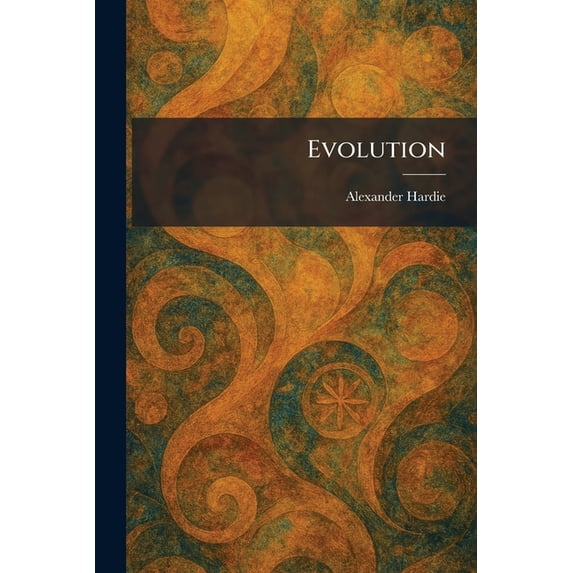
In "Evolution", Rev. Alexander Hardie presents a compelling and critical examination of evolutionary theory through the lens of early 20th-century theology. Written during a period of significant intellectual transition, this work explores the complex relationship between biological science and religious faith, focusing on the fundamental tensions between Darwinian concepts and traditional Christian doctrine. Hardie delves into the philosophical and moral implications of the evolutionary hypothesis, questioning its impact on the understanding of the human soul and the divine order of creation.
The text provides a detailed analysis of the arguments surrounding natural selection and the development of life, offering a perspective that reflects the clerical scholarship of the 1920s. By challenging materialist assumptions, Hardie seeks to preserve the essential tenets of faith while addressing the scientific inquiries of his contemporaries. "Evolution" serves as an important historical and intellectual document, capturing the discourse of a society navigating the integration of modern scientific discovery with ancient belief systems. This treatise is a valuable resource for readers interested in the history of science, the philosophy of religion, and the long-standing debate between creationism and evolutionary biology.
This work has been selected by scholars as being culturally important, and is part of the knowledge base of civilization as we know it. This work was reproduced from the original artifact, and remains as true to the original work as possible. Therefore, you may see the original copyright references, library stamps (as most of these works have been housed in our most important libraries around the world), and other notations in the work.
This work is in the public domain in the United States of America, and possibly other nations. Within the United States, you may freely copy and distribute this work, as no entity (individual or corporate) has a copyright on the body of the work.
As a reproduction of a historical artifact, this work may contain missing or blurred pages, poor pictures, errant marks, etc. Scholars believe, and we concur, that this work is important enough to be preserved, reproduced, and made generally available to the public. We appreciate your support of the preservation process, and thank you for being an important part of keeping this knowledge alive and relevant.