

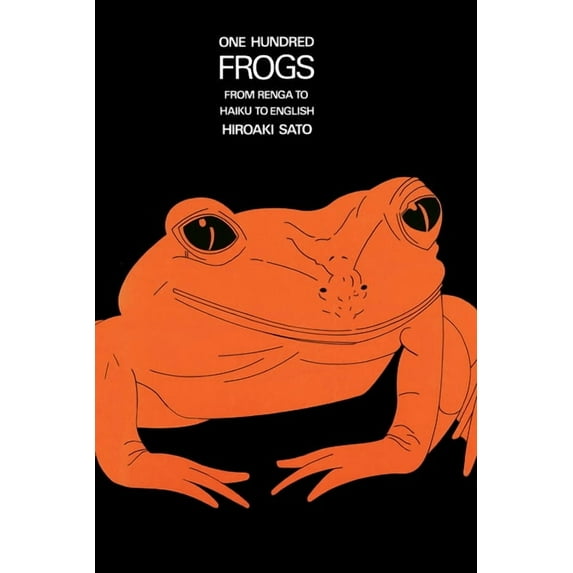
Hero image 0 of One Hundred Frogs : From Renga to Haiku to English (Paperback), 0 of 1
One Hundred Frogs : From Renga to Haiku to English (Paperback)
(No ratings yet)
Key item features
No other Asian poetic form has so intrigued and beguiled the English-speaking world as the Japanese haiku. Even before World War I such imagist poets as Ezra Pound, Amy Lowell, and John Gould Fletcher were experimenting with the form. At that time, Pound well described the haiku as "an intellectual and emotional complex in an instant of time." Indeed, it is the haiku's sense of immediacy and its precision that continue to appeal to poets and poetry lovers today.
In recent decades there has been an upsurge of interest in the haiku, leading to a number of critical studies of the form, studies that have now culminated in the present book. This insightful work not only considers the haiku itself but also the extremely important yet often ignored renga or linked-verse form, out of which the haiku grew. No deep understanding of the haiku is possible without familiarity with the renga.
One Hundred Frogs begins with a detailed history and description of the renga and haiku. Many renowned Japanese poets, most notably Basho, are represented in the wealth of translated poetry that illustrates the text. To bring this history up to date, a discussion of modern Japanese and Western haiku is included.
Next, the author discusses the craft of translating renga and haiku and explores recent developments in the two forms, offering a representative selection of modern works. To reveal the myriad choices open to translators of renga and haiku, the author provides an in-depth analysis of one of Japan's most famous haiku, Basho's poem about a frog in a pond, and presents a compilation of over one hundred translations and variations of the poem.
The book closes with short anthologies of English-language renga and haiku by contemporary Western poets that offer a tantalizing glimpse of the diversity of expression possible with these two forms.
An instructive celebration of the renga and haiku, this volume furnishes a new perspective on the work of some of Japan's outstanding poets of old and lays a foundation for the appreciation of the renga and haiku that are being written today.
In recent decades there has been an upsurge of interest in the haiku, leading to a number of critical studies of the form, studies that have now culminated in the present book. This insightful work not only considers the haiku itself but also the extremely important yet often ignored renga or linked-verse form, out of which the haiku grew. No deep understanding of the haiku is possible without familiarity with the renga.
One Hundred Frogs begins with a detailed history and description of the renga and haiku. Many renowned Japanese poets, most notably Basho, are represented in the wealth of translated poetry that illustrates the text. To bring this history up to date, a discussion of modern Japanese and Western haiku is included.
Next, the author discusses the craft of translating renga and haiku and explores recent developments in the two forms, offering a representative selection of modern works. To reveal the myriad choices open to translators of renga and haiku, the author provides an in-depth analysis of one of Japan's most famous haiku, Basho's poem about a frog in a pond, and presents a compilation of over one hundred translations and variations of the poem.
The book closes with short anthologies of English-language renga and haiku by contemporary Western poets that offer a tantalizing glimpse of the diversity of expression possible with these two forms.
An instructive celebration of the renga and haiku, this volume furnishes a new perspective on the work of some of Japan's outstanding poets of old and lays a foundation for the appreciation of the renga and haiku that are being written today.
Specs
- Book formatPaperback
- Fiction/nonfictionNon-Fiction
- GenreLiterature & Fiction
- Publication dateMay, 1995
- Pages264
- EditionFirst Edition
Current price is USD$21.42
Price when purchased online
- Free shipping
 Free 30-day returns
How do you want your item?
Columbus, 43215
Arrives by Mon, May 4
|
Sold and shipped by Alibris Books
4.566297076880784 stars out of 5, based on 10913 seller reviews(4.6)10913 seller reviews

Free 30-day returns - in store or online
More seller options (4)
Starting from $21.50
About this item
Product details
No other Asian poetic form has so intrigued and beguiled the English-speaking world as the Japanese haiku. Even before World War I such imagist poets as Ezra Pound, Amy Lowell, and John Gould Fletcher were experimenting with the form. At that time, Pound well described the haiku as "an intellectual and emotional complex in an instant of time." Indeed, it is the haiku's sense of immediacy and its precision that continue to appeal to poets and poetry lovers today. In recent decades there has been an upsurge of interest in the haiku, leading to a number of critical studies of the form, studies that have now culminated in the present book. This insightful work not only considers the haiku itself but also the extremely important yet often ignored renga or linked-verse form, out of which the haiku grew. No deep understanding of the haiku is possible without familiarity with the renga. One Hundred Frogs begins with a detailed history and description of the renga and haiku. Many renowned Japanese poets, most notably Basho, are represented in the wealth of translated poetry that illustrates the text. To bring this history up to date, a discussion of modern Japanese and Western haiku is included. Next, the author discusses the craft of translating renga and haiku and explores recent developments in the two forms, offering a representative selection of modern works. To reveal the myriad choices open to translators of renga and haiku, the author provides an in-depth analysis of one of Japan's most famous haiku, Basho's poem about a frog in a pond, and presents a compilation of over one hundred translations and variations of the poem. The book closes with short anthologies of English-language renga and haiku by contemporary Western poets that offer a tantalizing glimpse of the diversity of expression possible with these two forms. An instructive celebration of the renga and haiku, this volume furnishes a new perspective on the work of some of Japan's outstanding poets of old and lays a foundation for the appreciation of the renga and haiku that are being written today.
No other Asian poetic form has so intrigued and beguiled the English-speaking world as the Japanese haiku. Even before World War I such imagist poets as Ezra Pound, Amy Lowell, and John Gould Fletcher were experimenting with the form. At that time, Pound well described the haiku as "an intellectual and emotional complex in an instant of time." Indeed, it is the haiku's sense of immediacy and its precision that continue to appeal to poets and poetry lovers today.
In recent decades there has been an upsurge of interest in the haiku, leading to a number of critical studies of the form, studies that have now culminated in the present book. This insightful work not only considers the haiku itself but also the extremely important yet often ignored renga or linked-verse form, out of which the haiku grew. No deep understanding of the haiku is possible without familiarity with the renga.
One Hundred Frogs begins with a detailed history and description of the renga and haiku. Many renowned Japanese poets, most notably Basho, are represented in the wealth of translated poetry that illustrates the text. To bring this history up to date, a discussion of modern Japanese and Western haiku is included.
Next, the author discusses the craft of translating renga and haiku and explores recent developments in the two forms, offering a representative selection of modern works. To reveal the myriad choices open to translators of renga and haiku, the author provides an in-depth analysis of one of Japan's most famous haiku, Basho's poem about a frog in a pond, and presents a compilation of over one hundred translations and variations of the poem.
The book closes with short anthologies of English-language renga and haiku by contemporary Western poets that offer a tantalizing glimpse of the diversity of expression possible with these two forms.
An instructive celebration of the renga and haiku, this volume furnishes a new perspective on the work of some of Japan's outstanding poets of old and lays a foundation for the appreciation of the renga and haiku that are being written today.
In recent decades there has been an upsurge of interest in the haiku, leading to a number of critical studies of the form, studies that have now culminated in the present book. This insightful work not only considers the haiku itself but also the extremely important yet often ignored renga or linked-verse form, out of which the haiku grew. No deep understanding of the haiku is possible without familiarity with the renga.
One Hundred Frogs begins with a detailed history and description of the renga and haiku. Many renowned Japanese poets, most notably Basho, are represented in the wealth of translated poetry that illustrates the text. To bring this history up to date, a discussion of modern Japanese and Western haiku is included.
Next, the author discusses the craft of translating renga and haiku and explores recent developments in the two forms, offering a representative selection of modern works. To reveal the myriad choices open to translators of renga and haiku, the author provides an in-depth analysis of one of Japan's most famous haiku, Basho's poem about a frog in a pond, and presents a compilation of over one hundred translations and variations of the poem.
The book closes with short anthologies of English-language renga and haiku by contemporary Western poets that offer a tantalizing glimpse of the diversity of expression possible with these two forms.
An instructive celebration of the renga and haiku, this volume furnishes a new perspective on the work of some of Japan's outstanding poets of old and lays a foundation for the appreciation of the renga and haiku that are being written today.
info:
We aim to show you accurate product information. Manufacturers, suppliers and others provide what you see here, and we have not verified it.
Specifications
Book format
Paperback
Fiction/nonfiction
Non-Fiction
Genre
Literature & Fiction
Publication date
May, 1995
Warranty
Warranty information
Please be aware that the warranty terms on items offered for sale by third party Marketplace sellers may differ from those displayed in this section (if any). To confirm warranty terms on an item offered for sale by a third party Marketplace seller, please use the 'Contact seller' feature on the third party Marketplace seller's information page and request the item's warranty terms prior to purchase.
Similar items you might like
Based on what customers bought
The Forbidden Door: The Selected Poetry of Lasse Söderberg, (Paperback) $21.34 Was $24.00
 $2134current price $21.34, Was $24.00$24.00
The Forbidden Door: The Selected Poetry of Lasse Söderberg, (Paperback)
I Might Imagine Wild Things (A book of poetry), (Paperback) $17.99
 $1799current price $17.99
I Might Imagine Wild Things (A book of poetry), (Paperback)
15 out of 5 Stars. 1 reviewsHaiku 5, (Paperback) $16.99
 $1699current price $16.99
Haiku 5, (Paperback)
Hope Ablaze, (Paperback) $18.89
 $1889current price $18.89
Hope Ablaze, (Paperback)
Theory of Mind : New & Selected Poems (Paperback) $18.36
 $1836current price $18.36
Theory of Mind : New & Selected Poems (Paperback)
Sommergras 144: Vierteljahreszeitschrift der DHG (Paperback) $16.50
 $1650current price $16.50
Sommergras 144: Vierteljahreszeitschrift der DHG (Paperback)
D'ombe et d'utopie: Poésie, (Paperback) $13.90
 $1390current price $13.90
D'ombe et d'utopie: Poésie, (Paperback)
Haiku Wisdom, (Paperback) $14.95
 $1495current price $14.95
Haiku Wisdom, (Paperback)
Sommergras 133: Vierteljahreszeitschrift der DHG, (Paperback) $18.90
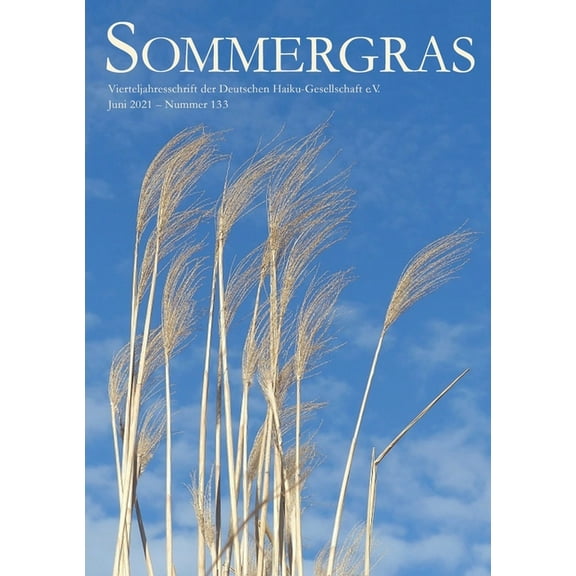 $1890current price $18.90
Sommergras 133: Vierteljahreszeitschrift der DHG, (Paperback)
Enter World: Poems, (Paperback) $16.99
 $1699current price $16.99
Enter World: Poems, (Paperback)
Sada-e-Teesha: (Poetry), (Paperback) $17.99
 $1799current price $17.99
Sada-e-Teesha: (Poetry), (Paperback)
Haiku 4, (Paperback) $16.99
 $1699current price $16.99
Haiku 4, (Paperback)
Rundes Schweigen: Ausgewählte Haiku 1982-2002, (Paperback) $17.65
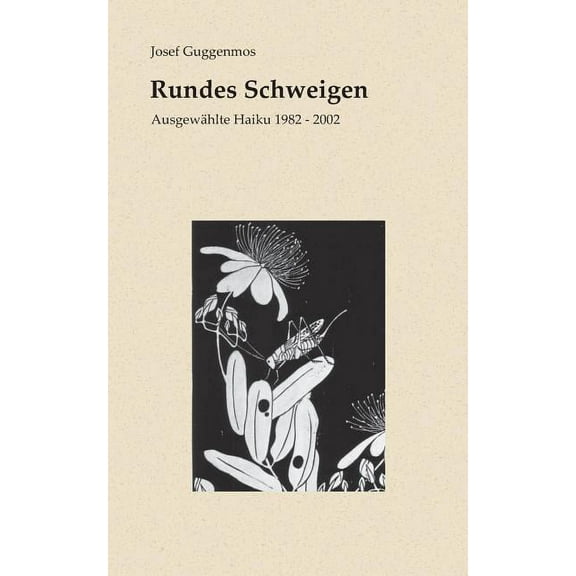 $1765current price $17.65
Rundes Schweigen: Ausgewählte Haiku 1982-2002, (Paperback)
water lily-haiku and senryu, (Paperback) $6.99
 $699current price $6.99
water lily-haiku and senryu, (Paperback)
Complete Poems (Paperback) $18.32
 $1832current price $18.32
Complete Poems (Paperback)
Haiku Evolution, (Paperback) $11.99
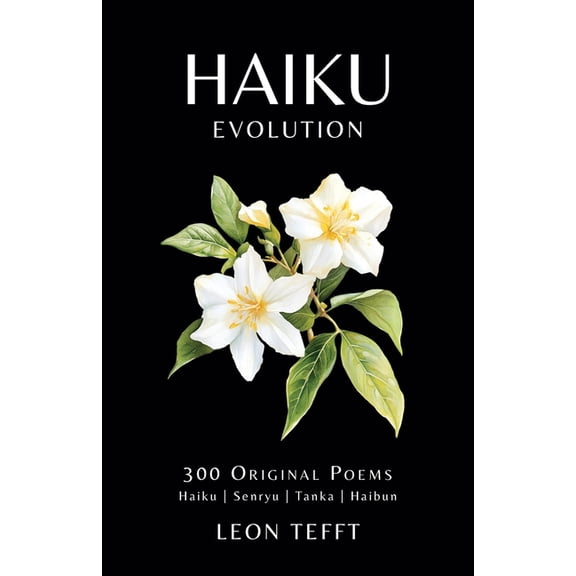 $1199current price $11.99
Haiku Evolution, (Paperback)
Forty Winks: Poetic Anthology, (Paperback) $12.33
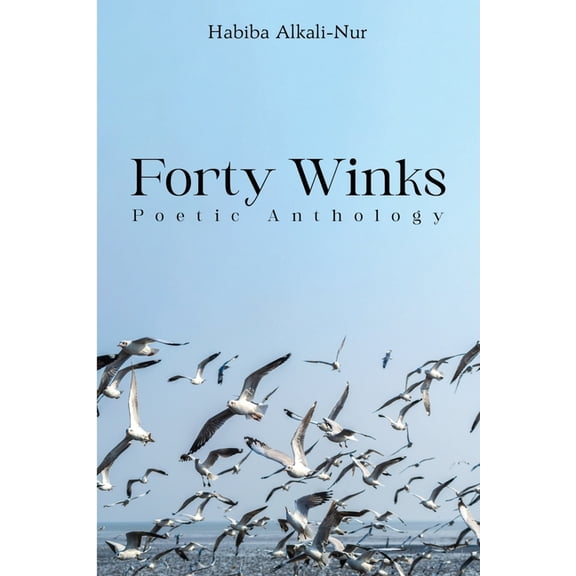 $1233current price $12.33
Forty Winks: Poetic Anthology, (Paperback)
Moliere's Les Fourberies De Scapin..., (Paperback) $17.95
 $1795current price $17.95
Moliere's Les Fourberies De Scapin..., (Paperback)
Haiku, Senryu, Tanka (Paperback) $20.59
 $2059current price $20.59
Haiku, Senryu, Tanka (Paperback)


Customer ratings & reviews
0 ratings|0 reviews
This item does not have any reviews yet
