

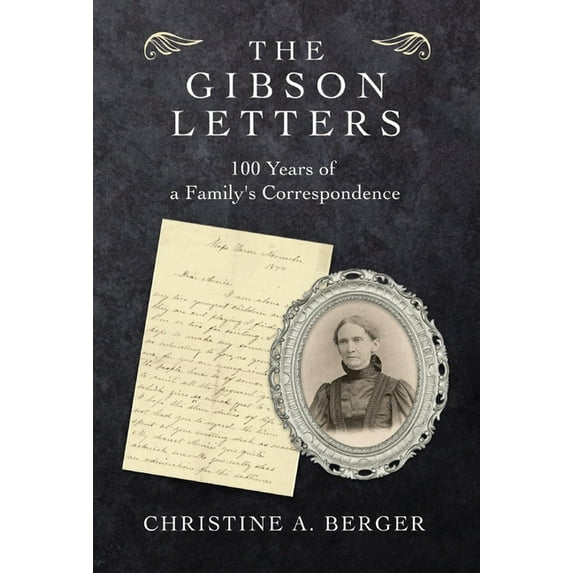
The Gibson Letters : 100 Years of a Family's Correspondence (Hardcover)
(No ratings yet)
Key item features
As a young wife, Mary Virginia Gibson (née Rice) was forced to leave her beloved Virginia after her husband deserted the Confederate Army and fled to Illinois, leaving his pregnant wife and young daughter. After giving birth to their second child, Mary Virginia followed him to Illinois in 1864, and then on to rural Moniteau County, Missouri. Refined and well-educated, Mary Virginia had few practical skills and found little companionship among her neighbors. She found solace in her 42-year correspondence with Annie Rector, her first cousin and lifelong confidant, who kept her letters and her secrets. After the death of Annie, the correspondence continued with letters to her children and after Mary Virginia's death, with the letters of her children to each other.
Mary Virginia read extensively and throughout the letters, she referenced many local and national current events, shared her views on raising children, freely expressed her political opinions, conveyed her passion for equal rights for women, and generously dispensed advice to her adult children. Her letters were forthright, irreverent, witty, sometimes heart-wrenching, and always interesting. They reflect Missouri life, set against the backdrop of some of the greatest events of the late 19th and early 20th centuries.
Having been privately tutored as a girl in Virginia, the education of Mary Virginia's eight children was an enormous priority for her. She made significant sacrifices so that all eight of her children were able to attain post-high school graduate educations, an exceptional achievement in the late 19th century. Her children chose widely varying career paths, many of which led to extensive travels and far-flung adventures. Around the turn of the century, one of her sons started a coffee plantation on the big island of Hawaii, while another one spent three years traveling by ship through the South Pacific. Mary Virginia had a son and a daughter that both panned for gold in the Nome Gold Rush of Alaska in 1901, and they were both later shipwrecked in Alaska, in separate incidents, ten years apart. All the while, Mary Virginia tried unsuccessfully to convince her children to move back to Missouri and settle down.
The letters of this remarkable family finally end in 1958 when the last two remaining siblings became too feeble to correspond.
Mary Virginia read extensively and throughout the letters, she referenced many local and national current events, shared her views on raising children, freely expressed her political opinions, conveyed her passion for equal rights for women, and generously dispensed advice to her adult children. Her letters were forthright, irreverent, witty, sometimes heart-wrenching, and always interesting. They reflect Missouri life, set against the backdrop of some of the greatest events of the late 19th and early 20th centuries.
Having been privately tutored as a girl in Virginia, the education of Mary Virginia's eight children was an enormous priority for her. She made significant sacrifices so that all eight of her children were able to attain post-high school graduate educations, an exceptional achievement in the late 19th century. Her children chose widely varying career paths, many of which led to extensive travels and far-flung adventures. Around the turn of the century, one of her sons started a coffee plantation on the big island of Hawaii, while another one spent three years traveling by ship through the South Pacific. Mary Virginia had a son and a daughter that both panned for gold in the Nome Gold Rush of Alaska in 1901, and they were both later shipwrecked in Alaska, in separate incidents, ten years apart. All the while, Mary Virginia tried unsuccessfully to convince her children to move back to Missouri and settle down.
The letters of this remarkable family finally end in 1958 when the last two remaining siblings became too feeble to correspond.
Specs
- Book formatHardcover
- Fiction/nonfictionNon-Fiction
- GenreBiography & Memoirs
- Pages692
- Reading levelGeneral (US: Trade)
- SubgenreHistorical
Current price is USD$43.48
Price when purchased online
Out of stock
How do you want your item?
Out of stock
About this item
Product details
As a young wife, Mary Virginia Gibson (née Rice) was forced to leave her beloved Virginia after her husband deserted the Confederate Army and fled to Illinois, leaving his pregnant wife and young daughter. After giving birth to their second child, Mary Virginia followed him to Illinois in 1864, and then on to rural Moniteau County, Missouri. Refined and well-educated, Mary Virginia had few practical skills and found little companionship among her neighbors. She found solace in her 42-year correspondence with Annie Rector, her first cousin and lifelong confidant, who kept her letters and her secrets. After the death of Annie, the correspondence continued with letters to her children and after Mary Virginia's death, with the letters of her children to each other.
Mary Virginia read extensively and throughout the letters, she referenced many local and national current events, shared her views on raising children, freely expressed her political opinions, conveyed her passion for equal rights for women, and generously dispensed advice to her adult children. Her letters were forthright, irreverent, witty, sometimes heart-wrenching, and always interesting. They reflect Missouri life, set against the backdrop of some of the greatest events of the late 19th and early 20th centuries.
Having been privately tutored as a girl in Virginia, the education of Mary Virginia's eight children was an enormous priority for her. She made significant sacrifices so that all eight of her children were able to attain post-high school graduate educations, an exceptional achievement in the late 19th century. Her children chose widely varying career paths, many of which led to extensive travels and far-flung adventures. All the while, Mary Virginia tried unsuccessfully to convince her children to move back to Missouri and settle down.
The letters of this remarkable family finally end in 1958 when the last two remaining siblings became too feeble to correspond.
Mary Virginia read extensively and throughout the letters, she referenced many local and national current events, shared her views on raising children, freely expressed her political opinions, conveyed her passion for equal rights for women, and generously dispensed advice to her adult children. Her letters were forthright, irreverent, witty, sometimes heart-wrenching, and always interesting. They reflect Missouri life, set against the backdrop of some of the greatest events of the late 19th and early 20th centuries.
Having been privately tutored as a girl in Virginia, the education of Mary Virginia's eight children was an enormous priority for her. She made significant sacrifices so that all eight of her children were able to attain post-high school graduate educations, an exceptional achievement in the late 19th century. Her children chose widely varying career paths, many of which led to extensive travels and far-flung adventures. All the while, Mary Virginia tried unsuccessfully to convince her children to move back to Missouri and settle down.
The letters of this remarkable family finally end in 1958 when the last two remaining siblings became too feeble to correspond.
As a young wife, Mary Virginia Gibson (née Rice) was forced to leave her beloved Virginia after her husband deserted the Confederate Army and fled to Illinois, leaving his pregnant wife and young daughter. After giving birth to their second child, Mary Virginia followed him to Illinois in 1864, and then on to rural Moniteau County, Missouri. Refined and well-educated, Mary Virginia had few practical skills and found little companionship among her neighbors. She found solace in her 42-year correspondence with Annie Rector, her first cousin and lifelong confidant, who kept her letters and her secrets. After the death of Annie, the correspondence continued with letters to her children and after Mary Virginia's death, with the letters of her children to each other.
Mary Virginia read extensively and throughout the letters, she referenced many local and national current events, shared her views on raising children, freely expressed her political opinions, conveyed her passion for equal rights for women, and generously dispensed advice to her adult children. Her letters were forthright, irreverent, witty, sometimes heart-wrenching, and always interesting. They reflect Missouri life, set against the backdrop of some of the greatest events of the late 19th and early 20th centuries.
Having been privately tutored as a girl in Virginia, the education of Mary Virginia's eight children was an enormous priority for her. She made significant sacrifices so that all eight of her children were able to attain post-high school graduate educations, an exceptional achievement in the late 19th century. Her children chose widely varying career paths, many of which led to extensive travels and far-flung adventures. Around the turn of the century, one of her sons started a coffee plantation on the big island of Hawaii, while another one spent three years traveling by ship through the South Pacific. Mary Virginia had a son and a daughter that both panned for gold in the Nome Gold Rush of Alaska in 1901, and they were both later shipwrecked in Alaska, in separate incidents, ten years apart. All the while, Mary Virginia tried unsuccessfully to convince her children to move back to Missouri and settle down.
The letters of this remarkable family finally end in 1958 when the last two remaining siblings became too feeble to correspond.
Mary Virginia read extensively and throughout the letters, she referenced many local and national current events, shared her views on raising children, freely expressed her political opinions, conveyed her passion for equal rights for women, and generously dispensed advice to her adult children. Her letters were forthright, irreverent, witty, sometimes heart-wrenching, and always interesting. They reflect Missouri life, set against the backdrop of some of the greatest events of the late 19th and early 20th centuries.
Having been privately tutored as a girl in Virginia, the education of Mary Virginia's eight children was an enormous priority for her. She made significant sacrifices so that all eight of her children were able to attain post-high school graduate educations, an exceptional achievement in the late 19th century. Her children chose widely varying career paths, many of which led to extensive travels and far-flung adventures. Around the turn of the century, one of her sons started a coffee plantation on the big island of Hawaii, while another one spent three years traveling by ship through the South Pacific. Mary Virginia had a son and a daughter that both panned for gold in the Nome Gold Rush of Alaska in 1901, and they were both later shipwrecked in Alaska, in separate incidents, ten years apart. All the while, Mary Virginia tried unsuccessfully to convince her children to move back to Missouri and settle down.
The letters of this remarkable family finally end in 1958 when the last two remaining siblings became too feeble to correspond.
info:
We aim to show you accurate product information. Manufacturers, suppliers and others provide what you see here, and we have not verified it.
Specifications
Book format
Hardcover
Fiction/nonfiction
Non-Fiction
Genre
Biography & Memoirs
Pages
692
Warranty
Warranty information
Please be aware that the warranty terms on items offered for sale by third party Marketplace sellers may differ from those displayed in this section (if any). To confirm warranty terms on an item offered for sale by a third party Marketplace seller, please use the 'Contact seller' feature on the third party Marketplace seller's information page and request the item's warranty terms prior to purchase.
Customer ratings & reviews
0 ratings|0 reviews
This item does not have any reviews yet

Related pages
- Your Name Poem
- Ornamentally You Poetry Book Subjects Themes
- Sentiment Example Magazines Newspapers Antiques Collectibles Books
- Getting Older Poem
- Memorial Poems Friends
- Family History Gifts
- Anecdotes & Quotations
- Family Poetry Books
- Humor Literary Criticism Books
- Manners & Etiquette Social Themes Teen & Young Adult Books
- Comedy Books
- Trivia