


Hero image 0 of Toward a Democratic Science : Scientific Narration and Civic Communication (Paperback), 0 of 1
Toward a Democratic Science : Scientific Narration and Civic Communication (Paperback)
(No ratings yet)
Key item features
In this important book, a leading authority in the field of social theory and communication shows how scientific practice is a rhetorical and narrative activity, a story well told. Richard Harvey Brown develops the idea of science as narration, casts various scientific disciplines as literary genres, and argues that expert knowledge of any kind is a form of power. He then explains how a narrative view of science can help integrate science within a democratic civic discourse.
Brown shows why social science knowledge is as much a rhetorical enterprise as is the social reality that it describes. He construes laboratory science, physics, ethnography, sociology, philosophy, and astronomy as genres, narratives, and other rhetorical practices, and thereby portrays science as a special kind of narrative discourse that generates theories and shapes their validity and significance. He next focuses on the political dimensions of science, including the politics of psychology in the United States, showing how power and knowledge shape, limit, and infuse each other. Brown argues that this linguistically and socially constructed character of knowledge does not undermine its truth value but rather reaffirms the moral status and political responsibilities of its practitioners. In one important chapter, written with Robert Brulle, he explores the movement for environmental justice in the United States, showing how ordinary people can use science as part of a larger civic narration. Brown concludes by discussing how the rationality of science can be preserved even as it is subsumed within a rational and moral civic discourse.
Brown shows why social science knowledge is as much a rhetorical enterprise as is the social reality that it describes. He construes laboratory science, physics, ethnography, sociology, philosophy, and astronomy as genres, narratives, and other rhetorical practices, and thereby portrays science as a special kind of narrative discourse that generates theories and shapes their validity and significance. He next focuses on the political dimensions of science, including the politics of psychology in the United States, showing how power and knowledge shape, limit, and infuse each other. Brown argues that this linguistically and socially constructed character of knowledge does not undermine its truth value but rather reaffirms the moral status and political responsibilities of its practitioners. In one important chapter, written with Robert Brulle, he explores the movement for environmental justice in the United States, showing how ordinary people can use science as part of a larger civic narration. Brown concludes by discussing how the rationality of science can be preserved even as it is subsumed within a rational and moral civic discourse.
Specs
- Book formatPaperback
- Fiction/nonfictionNon-Fiction
- Publication dateJanuary, 2014
- Pages304
- SubgenreSociology
- Series titleNo Series
Current price is USD$47.84
Price when purchased online
- Free shipping
 Free 30-day returns
How do you want your item?
Columbus, 43215
Arrives between May 1 - May 4
|
Sold and shipped by Alibris Books
4.566297076880784 stars out of 5, based on 10913 seller reviews(4.6)10913 seller reviews

Free 30-day returns - in store or online
More seller options (1)
Starting from $51.03
About this item
Product details
In this important book, a leading authority in the field of social theory and communication shows how scientific practice is a rhetorical and narrative activity, a story well told. Richard Harvey Brown develops the idea of science as narration, casts various scientific disciplines as literary genres, and argues that expert knowledge of any kind is a form of power. He then explains how a narrative view of science can help integrate science within a democratic civic discourse. Brown shows why social science knowledge is as much a rhetorical enterprise as is the social reality that it describes. He construes laboratory science, physics, ethnography, sociology, philosophy, and astronomy as genres, narratives, and other rhetorical practices, and thereby portrays science as a special kind of narrative discourse that generates theories and shapes their validity and significance. He next focuses on the political dimensions of science, including the politics of psychology in the United States, showing how power and knowledge shape, limit, and infuse each other. Brown argues that this linguistically and socially constructed character of knowledge does not undermine its truth value but rather reaffirms the moral status and political responsibilities of its practitioners. In one important chapter, written with Robert Brulle, he explores the movement for environmental justice in the United States, showing how ordinary people can use science as part of a larger civic narration. Brown concludes by discussing how the rationality of science can be preserved even as it is subsumed within a rational and moral civic discourse.
In this important book, a leading authority in the field of social theory and communication shows how scientific practice is a rhetorical and narrative activity, a story well told. Richard Harvey Brown develops the idea of science as narration, casts various scientific disciplines as literary genres, and argues that expert knowledge of any kind is a form of power. He then explains how a narrative view of science can help integrate science within a democratic civic discourse.
Brown shows why social science knowledge is as much a rhetorical enterprise as is the social reality that it describes. He construes laboratory science, physics, ethnography, sociology, philosophy, and astronomy as genres, narratives, and other rhetorical practices, and thereby portrays science as a special kind of narrative discourse that generates theories and shapes their validity and significance. He next focuses on the political dimensions of science, including the politics of psychology in the United States, showing how power and knowledge shape, limit, and infuse each other. Brown argues that this linguistically and socially constructed character of knowledge does not undermine its truth value but rather reaffirms the moral status and political responsibilities of its practitioners. In one important chapter, written with Robert Brulle, he explores the movement for environmental justice in the United States, showing how ordinary people can use science as part of a larger civic narration. Brown concludes by discussing how the rationality of science can be preserved even as it is subsumed within a rational and moral civic discourse.
Brown shows why social science knowledge is as much a rhetorical enterprise as is the social reality that it describes. He construes laboratory science, physics, ethnography, sociology, philosophy, and astronomy as genres, narratives, and other rhetorical practices, and thereby portrays science as a special kind of narrative discourse that generates theories and shapes their validity and significance. He next focuses on the political dimensions of science, including the politics of psychology in the United States, showing how power and knowledge shape, limit, and infuse each other. Brown argues that this linguistically and socially constructed character of knowledge does not undermine its truth value but rather reaffirms the moral status and political responsibilities of its practitioners. In one important chapter, written with Robert Brulle, he explores the movement for environmental justice in the United States, showing how ordinary people can use science as part of a larger civic narration. Brown concludes by discussing how the rationality of science can be preserved even as it is subsumed within a rational and moral civic discourse.
info:
We aim to show you accurate product information. Manufacturers, suppliers and others provide what you see here, and we have not verified it.
Specifications
Book format
Paperback
Fiction/nonfiction
Non-Fiction
Genre
Political & Social Sciences
Publication date
January, 2014
Warranty
Warranty information
Please be aware that the warranty terms on items offered for sale by third party Marketplace sellers may differ from those displayed in this section (if any). To confirm warranty terms on an item offered for sale by a third party Marketplace seller, please use the 'Contact seller' feature on the third party Marketplace seller's information page and request the item's warranty terms prior to purchase.
Similar items you might like
Based on what customers bought
The Lost Scientists of World War II, (Paperback) $38.00
 $3800current price $38.00
The Lost Scientists of World War II, (Paperback)
Narrative Experiments: The Discursive Authority of Science and Technology, (Paperback) $51.66
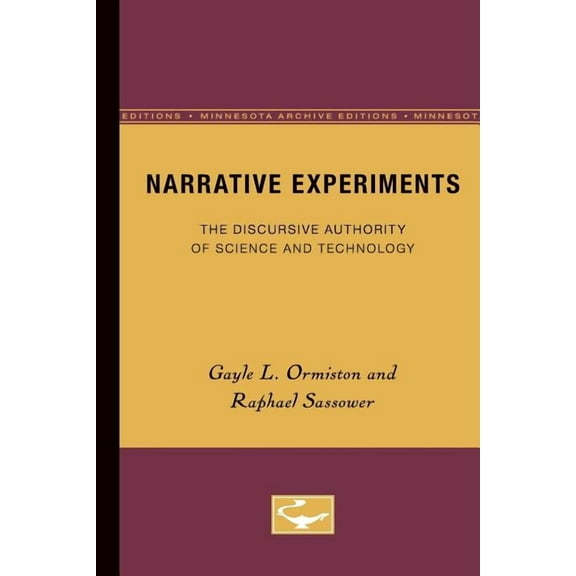 $5166current price $51.66
Narrative Experiments: The Discursive Authority of Science and Technology, (Paperback)
Contemporary Issues in Science Communica Race and Sociocultural Inclusion in Science Communication: Innovation, Decolonisation, and Transformation, (Paperback) $38.45
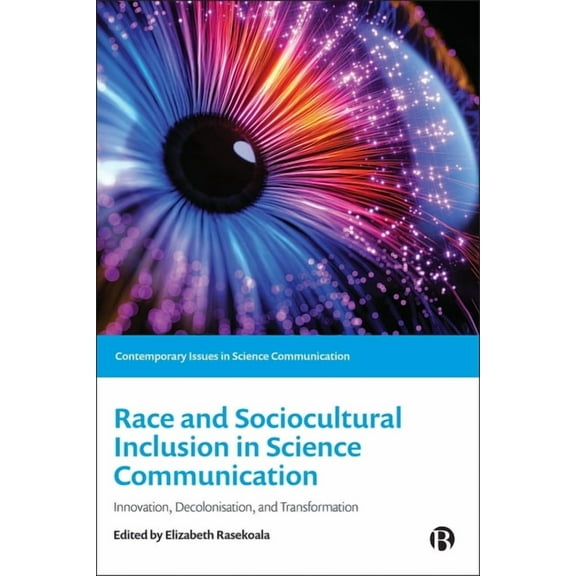 $3845current price $38.45
Contemporary Issues in Science Communica Race and Sociocultural Inclusion in Science Communication: Innovation, Decolonisation, and Transformation, (Paperback)
Scientific Values and Civic Virtues, (Paperback) $46.60
 $4660current price $46.60
Scientific Values and Civic Virtues, (Paperback)
Climate Change Science, (Paperback) $30.00
 $3000current price $30.00
Climate Change Science, (Paperback)
Logic and Computer Science, (Paperback) $42.02
 $4202current price $42.02
Logic and Computer Science, (Paperback)
The Science of Political Economy (Paperback) $23.38
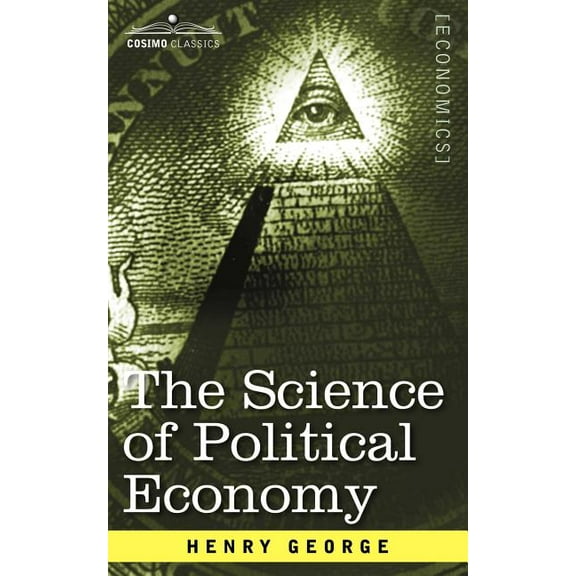 $2338current price $23.38
The Science of Political Economy (Paperback)
The Inquisition of Climate Science, (Paperback) $35.86
 $3586current price $35.86
The Inquisition of Climate Science, (Paperback)
Explaining Primary Science, (Paperback) $50.52
 $5052current price $50.52
Explaining Primary Science, (Paperback)
Sciences: Nouvelles Et Curiosités Scientifiques (Éd.1883) (Paperback) $27.85
 $2785current price $27.85
Sciences: Nouvelles Et Curiosités Scientifiques (Éd.1883) (Paperback)
Nature and Science; v.3, (Paperback) $25.37
 $2537current price $25.37
Nature and Science; v.3, (Paperback)
Talking Science, (Paperback) $27.88
 $2788current price $27.88
Talking Science, (Paperback)
A Space for Science (Paperback) $39.94
 $3994current price $39.94
A Space for Science (Paperback)
Sciences: Démonstration Scientifique de l'Existence de Dieu: Théonomie (Paperback) $25.84
 $2584current price $25.84
Sciences: Démonstration Scientifique de l'Existence de Dieu: Théonomie (Paperback)
Science and the modern world, (Paperback) $23.05
 $2305current price $23.05
Science and the modern world, (Paperback)
The Science of Being Great, (Paperback) $7.99
 $799current price $7.99
The Science of Being Great, (Paperback)
Pre-Owned Kingdoms in Conflict (Paperback) 0310397715 9780310397717 $6.36
 $636current price $6.36
Pre-Owned Kingdoms in Conflict (Paperback) 0310397715 9780310397717
Science And Its Background, (Paperback) $27.33
 $2733current price $27.33
Science And Its Background, (Paperback)
The Politics of Pure Science (Paperback) $13.28
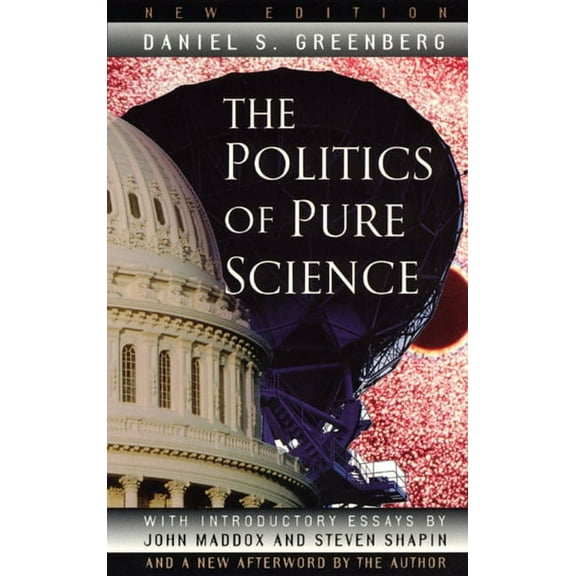 $1328current price $13.28
The Politics of Pure Science (Paperback)

Customer ratings & reviews
0 ratings|0 reviews
This item does not have any reviews yet

Related pages
- Real Cler Politics
- Professor Of Political And Social Theory Gianfranco Poggi
- Ts Nlp
- Extrapolation
- Jason Ryberg
- Cultural Hegemony
- Post-Structuralism Philosophy Movement Books
- Structuralism Philosophy Movement Books
- Political Philosophy Books
- Social Security Policy Books
- Humanism Philosophy Movement Books
- Media & Internet Political Process Books