

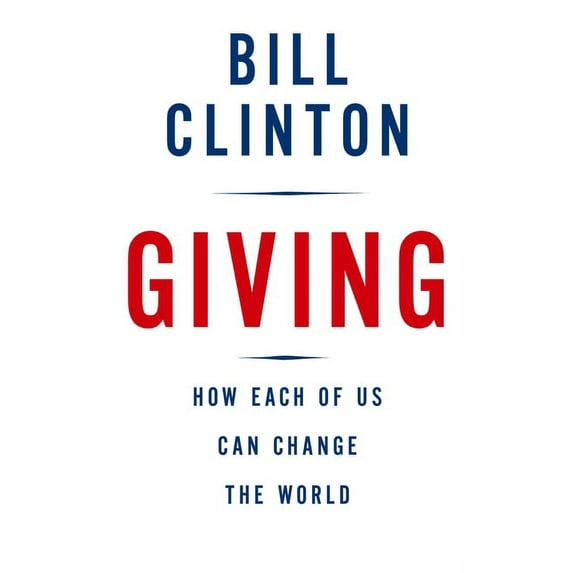
Hero image 0 of Giving: How Each of Us Can Change the World, (Hardcover), 0 of 1
Giving: How Each of Us Can Change the World, (Hardcover)
Key item features
Here, from Bill Clinton, is a call to action. Giving is an inspiring look at how each of us can change the world. First, it reveals the extraordinary and innovative efforts now being made by companies and organizations—and by individuals—to solve problems and save lives both “down the street and around the world.” Then it urges us to seek out what each of us, “regardless of income, available time, age, and skills,” can do to help, to give people a chance to live out their dreams.
Bill Clinton shares his own experiences and those of other givers, representing a global flood tide of nongovernmental, nonprofit activity. These remarkable stories demonstrate that gifts of time, skills, things, and ideas are as important and effective as contributions of money. From Bill and Melinda Gates to a six-year-old California girl named McKenzie Steiner, who organized and supervised drives to clean up the beach in her community, Clinton introduces us to both well-known and unknown heroes of giving. Among them:
Dr. Paul Farmer, who grew up living in the family bus in a trailer park, vowed to devote his life to giving high-quality medical care to the poor and has built innovative public health-care clinics first in Haiti and then in Rwanda;
a New York couple, in Africa for a wedding, who visited several schools in Zimbabwe and were appalled by the absence of textbooks and school supplies. They founded their own organization to gather and ship materials to thirty-five schools. After three years, the percentage of seventh-graders who pass reading tests increased from 5 percent to 60 percent;'
Oseola McCarty, who after seventy-five years of eking out a living by washing and ironing, gave $150,000 to the University of Southern Mississippi to endow a scholarship fund for African-American students;
Andre Agassi, who has created a college preparatory academy in the Las Vegas neighborhood with the city’s highest percentage of at-risk kids. “Tennis was a stepping-stone for me,” says Agassi. “Changing a child’s life is what I always wanted to do”;
Heifer International, which gave twelve goats to a Ugandan village. Within a year, Beatrice Biira’s mother had earned enough money selling goat’s milk to pay Beatrice’s school fees and eventually to send all her children to school—and, as required, to pass on a baby goat to another family, thus multiplying the impact of the gift.
Clinton writes about men and women who traded in their corporate careers, and the fulfillment they now experience through giving. He writes about energy-efficient practices, about progressive companies going green, about promoting fair wages and decent working conditions around the world. He shows us how one of the most important ways of giving can be an effort to change, improve, or protect a government policy. He outlines what we as individuals can do, the steps we can take, how much we should consider giving, and why our giving is so important.
Bill Clinton’s own actions in his post-presidential years have had an enormous impact on the lives of millions. Through his foundation and his work in the aftermath of the Asian tsunami and Hurricane Katrina, he has become an international spokesperson and model for the power of giving.
“We all have the capacity to do great things,” President Clinton says. “My hope is that the people and stories in this book will lift spirits, touch hearts, and demonstrate that citizen activism and service can be a powerful agent of change in the world.”
Bill Clinton shares his own experiences and those of other givers, representing a global flood tide of nongovernmental, nonprofit activity. These remarkable stories demonstrate that gifts of time, skills, things, and ideas are as important and effective as contributions of money. From Bill and Melinda Gates to a six-year-old California girl named McKenzie Steiner, who organized and supervised drives to clean up the beach in her community, Clinton introduces us to both well-known and unknown heroes of giving. Among them:
Dr. Paul Farmer, who grew up living in the family bus in a trailer park, vowed to devote his life to giving high-quality medical care to the poor and has built innovative public health-care clinics first in Haiti and then in Rwanda;
a New York couple, in Africa for a wedding, who visited several schools in Zimbabwe and were appalled by the absence of textbooks and school supplies. They founded their own organization to gather and ship materials to thirty-five schools. After three years, the percentage of seventh-graders who pass reading tests increased from 5 percent to 60 percent;'
Oseola McCarty, who after seventy-five years of eking out a living by washing and ironing, gave $150,000 to the University of Southern Mississippi to endow a scholarship fund for African-American students;
Andre Agassi, who has created a college preparatory academy in the Las Vegas neighborhood with the city’s highest percentage of at-risk kids. “Tennis was a stepping-stone for me,” says Agassi. “Changing a child’s life is what I always wanted to do”;
Heifer International, which gave twelve goats to a Ugandan village. Within a year, Beatrice Biira’s mother had earned enough money selling goat’s milk to pay Beatrice’s school fees and eventually to send all her children to school—and, as required, to pass on a baby goat to another family, thus multiplying the impact of the gift.
Clinton writes about men and women who traded in their corporate careers, and the fulfillment they now experience through giving. He writes about energy-efficient practices, about progressive companies going green, about promoting fair wages and decent working conditions around the world. He shows us how one of the most important ways of giving can be an effort to change, improve, or protect a government policy. He outlines what we as individuals can do, the steps we can take, how much we should consider giving, and why our giving is so important.
Bill Clinton’s own actions in his post-presidential years have had an enormous impact on the lives of millions. Through his foundation and his work in the aftermath of the Asian tsunami and Hurricane Katrina, he has become an international spokesperson and model for the power of giving.
“We all have the capacity to do great things,” President Clinton says. “My hope is that the people and stories in this book will lift spirits, touch hearts, and demonstrate that citizen activism and service can be a powerful agent of change in the world.”
Specs
- Manual & guide typeInstruction Manual
- Book formatHardcover
- Edition1
- Pages256
- LanguageEnglish
- BrandBill Clinton
Current price is USDNow $7.65
You save $1.03
was $8.68$8.68
You save$1.03
Price when purchased online
- Free shipping
 Free 30-day returns
How do you want your item?
Ships to
Arrives by Mon, May 18
|
Sold and shipped by Alibris Books
4.569115147177239 stars out of 5, based on 11177 seller reviews(4.6)11177 seller reviews

Free 30-day returns
About this item
Product details
Here, from Bill Clinton, is a call to action. Giving is an inspiring look at how each of us can change the world. First, it reveals the extraordinary and innovative efforts now being made by companies and organizations--and by individuals--to solve problems and save lives both "down the street and around the world." Then it urges us to seek out what each of us, "regardless of income, available time, age, and skills," can do to help, to give people a chance to live out their dreams. Bill Clinton shares his own experiences and those of other givers, representing a global flood tide of nongovernmental, nonprofit activity. These remarkable stories demonstrate that gifts of time, skills, things, and ideas are as important and effective as contributions of money. From Bill and Melinda Gates to a six-year-old California girl named McKenzie Steiner, who organized and supervised drives to clean up the beach in her community, Clinton introduces us to both well-known and unknown heroes of giving. Among them: Dr. Paul Farmer, who grew up living in the family bus in a trailer park, vowed to devote his life to giving high-quality medical care to the poor and has built innovative public health-care clinics first in Haiti and then in Rwanda;
a New York couple, in Africa for a wedding, who visited several schools in Zimbabwe and were appalled by the absence of textbooks and school supplies. They founded their own organization to gather and ship materials to thirty-five schools. After three years, the percentage of seventh-graders who pass reading tests increased from 5 percent to 60 percent;'
Oseola McCarty, who after seventy-five years of eking out a living by washing and ironing, gave $150,000 to the University of Southern Mississippi to endow a scholarship fund for African-American students;
Andre Agassi, who has created a college preparatory academy in the Las Vegas neighborhood with the city's highest percentage of at-risk kids. "Tennis was a stepping-stone for me," says Agassi. "Changing a child's life is what I always wanted to do";
Heifer International, which gave twelve goats to a Ugandan village. Within a year, Beatrice Biira's mother had earned enough money selling goat's milk to pay Beatrice's school fees and eventually to send all her children to school--and, as required, to pass on a baby goat to another family, thus multiplying the impact of the gift. Clinton writes about men and women who traded in their corporate careers, and the fulfillment they now experience through giving. He writes about energy-efficient practices, about progressive companies going green, about promoting fair wages and decent working conditions around the world. He shows us how one of the most important ways of giving can be an effort to change, improve, or protect a government policy. He outlines what we as individuals can do, the steps we can take, how much we should consider giving, and why our giving is so important. Bill Clinton's own actions in his post-presidential years have had an enormous impact on the lives of millions. Through his foundation and his work in the aftermath of the Asian tsunami and Hurricane Katrina, he has become an international spokesperson and model for the power of giving. "We all have the capacity to do great things," President Clinton says. "My hope is that the people and stories in this book will lift spirits, touch hearts, and demonstrate that citizen activism and service can be a powerful agent of change in the world."
a New York couple, in Africa for a wedding, who visited several schools in Zimbabwe and were appalled by the absence of textbooks and school supplies. They founded their own organization to gather and ship materials to thirty-five schools. After three years, the percentage of seventh-graders who pass reading tests increased from 5 percent to 60 percent;'
Oseola McCarty, who after seventy-five years of eking out a living by washing and ironing, gave $150,000 to the University of Southern Mississippi to endow a scholarship fund for African-American students;
Andre Agassi, who has created a college preparatory academy in the Las Vegas neighborhood with the city's highest percentage of at-risk kids. "Tennis was a stepping-stone for me," says Agassi. "Changing a child's life is what I always wanted to do";
Heifer International, which gave twelve goats to a Ugandan village. Within a year, Beatrice Biira's mother had earned enough money selling goat's milk to pay Beatrice's school fees and eventually to send all her children to school--and, as required, to pass on a baby goat to another family, thus multiplying the impact of the gift. Clinton writes about men and women who traded in their corporate careers, and the fulfillment they now experience through giving. He writes about energy-efficient practices, about progressive companies going green, about promoting fair wages and decent working conditions around the world. He shows us how one of the most important ways of giving can be an effort to change, improve, or protect a government policy. He outlines what we as individuals can do, the steps we can take, how much we should consider giving, and why our giving is so important. Bill Clinton's own actions in his post-presidential years have had an enormous impact on the lives of millions. Through his foundation and his work in the aftermath of the Asian tsunami and Hurricane Katrina, he has become an international spokesperson and model for the power of giving. "We all have the capacity to do great things," President Clinton says. "My hope is that the people and stories in this book will lift spirits, touch hearts, and demonstrate that citizen activism and service can be a powerful agent of change in the world."
Here, from Bill Clinton, is a call to action. Giving is an inspiring look at how each of us can change the world. First, it reveals the extraordinary and innovative efforts now being made by companies and organizations—and by individuals—to solve problems and save lives both “down the street and around the world.” Then it urges us to seek out what each of us, “regardless of income, available time, age, and skills,” can do to help, to give people a chance to live out their dreams.
Bill Clinton shares his own experiences and those of other givers, representing a global flood tide of nongovernmental, nonprofit activity. These remarkable stories demonstrate that gifts of time, skills, things, and ideas are as important and effective as contributions of money. From Bill and Melinda Gates to a six-year-old California girl named McKenzie Steiner, who organized and supervised drives to clean up the beach in her community, Clinton introduces us to both well-known and unknown heroes of giving. Among them:
Dr. Paul Farmer, who grew up living in the family bus in a trailer park, vowed to devote his life to giving high-quality medical care to the poor and has built innovative public health-care clinics first in Haiti and then in Rwanda;
a New York couple, in Africa for a wedding, who visited several schools in Zimbabwe and were appalled by the absence of textbooks and school supplies. They founded their own organization to gather and ship materials to thirty-five schools. After three years, the percentage of seventh-graders who pass reading tests increased from 5 percent to 60 percent;'
Oseola McCarty, who after seventy-five years of eking out a living by washing and ironing, gave $150,000 to the University of Southern Mississippi to endow a scholarship fund for African-American students;
Andre Agassi, who has created a college preparatory academy in the Las Vegas neighborhood with the city’s highest percentage of at-risk kids. “Tennis was a stepping-stone for me,” says Agassi. “Changing a child’s life is what I always wanted to do”;
Heifer International, which gave twelve goats to a Ugandan village. Within a year, Beatrice Biira’s mother had earned enough money selling goat’s milk to pay Beatrice’s school fees and eventually to send all her children to school—and, as required, to pass on a baby goat to another family, thus multiplying the impact of the gift.
Clinton writes about men and women who traded in their corporate careers, and the fulfillment they now experience through giving. He writes about energy-efficient practices, about progressive companies going green, about promoting fair wages and decent working conditions around the world. He shows us how one of the most important ways of giving can be an effort to change, improve, or protect a government policy. He outlines what we as individuals can do, the steps we can take, how much we should consider giving, and why our giving is so important.
Bill Clinton’s own actions in his post-presidential years have had an enormous impact on the lives of millions. Through his foundation and his work in the aftermath of the Asian tsunami and Hurricane Katrina, he has become an international spokesperson and model for the power of giving.
“We all have the capacity to do great things,” President Clinton says. “My hope is that the people and stories in this book will lift spirits, touch hearts, and demonstrate that citizen activism and service can be a powerful agent of change in the world.”
Bill Clinton shares his own experiences and those of other givers, representing a global flood tide of nongovernmental, nonprofit activity. These remarkable stories demonstrate that gifts of time, skills, things, and ideas are as important and effective as contributions of money. From Bill and Melinda Gates to a six-year-old California girl named McKenzie Steiner, who organized and supervised drives to clean up the beach in her community, Clinton introduces us to both well-known and unknown heroes of giving. Among them:
Dr. Paul Farmer, who grew up living in the family bus in a trailer park, vowed to devote his life to giving high-quality medical care to the poor and has built innovative public health-care clinics first in Haiti and then in Rwanda;
a New York couple, in Africa for a wedding, who visited several schools in Zimbabwe and were appalled by the absence of textbooks and school supplies. They founded their own organization to gather and ship materials to thirty-five schools. After three years, the percentage of seventh-graders who pass reading tests increased from 5 percent to 60 percent;'
Oseola McCarty, who after seventy-five years of eking out a living by washing and ironing, gave $150,000 to the University of Southern Mississippi to endow a scholarship fund for African-American students;
Andre Agassi, who has created a college preparatory academy in the Las Vegas neighborhood with the city’s highest percentage of at-risk kids. “Tennis was a stepping-stone for me,” says Agassi. “Changing a child’s life is what I always wanted to do”;
Heifer International, which gave twelve goats to a Ugandan village. Within a year, Beatrice Biira’s mother had earned enough money selling goat’s milk to pay Beatrice’s school fees and eventually to send all her children to school—and, as required, to pass on a baby goat to another family, thus multiplying the impact of the gift.
Clinton writes about men and women who traded in their corporate careers, and the fulfillment they now experience through giving. He writes about energy-efficient practices, about progressive companies going green, about promoting fair wages and decent working conditions around the world. He shows us how one of the most important ways of giving can be an effort to change, improve, or protect a government policy. He outlines what we as individuals can do, the steps we can take, how much we should consider giving, and why our giving is so important.
Bill Clinton’s own actions in his post-presidential years have had an enormous impact on the lives of millions. Through his foundation and his work in the aftermath of the Asian tsunami and Hurricane Katrina, he has become an international spokesperson and model for the power of giving.
“We all have the capacity to do great things,” President Clinton says. “My hope is that the people and stories in this book will lift spirits, touch hearts, and demonstrate that citizen activism and service can be a powerful agent of change in the world.”
info:
We aim to show you accurate product information. Manufacturers, suppliers and others provide what you see here, and we have not verified it.
Specifications
Manual & guide type
Instruction Manual
Book format
Hardcover
Edition
1
Pages
256
Warranty
Warranty information
Please be aware that the warranty terms on items offered for sale by third party Marketplace sellers may differ from those displayed in this section (if any). To confirm warranty terms on an item offered for sale by a third party Marketplace seller, please use the 'Contact seller' feature on the third party Marketplace seller's information page and request the item's warranty terms prior to purchase.
Warnings
State Chemical Disclosure
None
Similar items you might like
Based on what customers bought
The Next Pandemic : On the Front Lines Against Humankind¿s Gravest Dangers (Paperback) $20.71
 $2071current price $20.71
The Next Pandemic : On the Front Lines Against Humankind¿s Gravest Dangers (Paperback)
A Heart Blown Open: The Life and Practice of Junpo Denis Kelly Roshi (revised, 2020), (Paperback) $18.14
 $1814current price $18.14
A Heart Blown Open: The Life and Practice of Junpo Denis Kelly Roshi (revised, 2020), (Paperback)
The Warburgs: The Twentieth-Century Odyssey of a Remarkable Jewish Family, (Paperback) $13.99
 $1399current price $13.99
The Warburgs: The Twentieth-Century Odyssey of a Remarkable Jewish Family, (Paperback)
Character Matters : And Other Life Lessons from George H. W. Bush (Hardcover) $12.62
 $1262current price $12.62
Character Matters : And Other Life Lessons from George H. W. Bush (Hardcover)
35 out of 5 Stars. 3 reviewsJack Ma & Alibaba: A Business and Life Biography (Paperback) $15.41
 $1541current price $15.41
Jack Ma & Alibaba: A Business and Life Biography (Paperback)
The Call to Serve: The Life of an American President, George Herbert Walker Bush: a Visual Biography (Hardcover) $15.07
 $1507current price $15.07
The Call to Serve: The Life of an American President, George Herbert Walker Bush: a Visual Biography (Hardcover)
25 out of 5 Stars. 2 reviewsHospital and Haven: The Life and Work of Grafton and Clara Burke in Northern Alaska, (Hardcover) $19.90
 $1990current price $19.90
Hospital and Haven: The Life and Work of Grafton and Clara Burke in Northern Alaska, (Hardcover)
A Touchstone of Impact: The Life of Linda Eatmon-Jones, (Paperback) $26.82
 $2682current price $26.82
A Touchstone of Impact: The Life of Linda Eatmon-Jones, (Paperback)
Enterprise The Associates: Four Capitalists Who Created California, Book 0, (Hardcover) $8.78 Was $10.24
 $878current price $8.78, Was $10.24$10.24
Enterprise The Associates: Four Capitalists Who Created California, Book 0, (Hardcover)
Fifty-four Years in Advertising : From the Mailroom to the Boardroom $13.99
 $1399current price $13.99
Fifty-four Years in Advertising : From the Mailroom to the Boardroom
Trump Revealed : The Definitive Biography of the 45th President (Paperback) $11.07 $12.17/lb
 $1107current price $11.07$12.17/lb
Trump Revealed : The Definitive Biography of the 45th President (Paperback)
Preston Tucker and His Battle to Build the Car of Tomorrow (Paperback) $13.58 $14.76/lb
 $1358current price $13.58$14.76/lb
Preston Tucker and His Battle to Build the Car of Tomorrow (Paperback)
25 out of 5 Stars. 2 reviewsOvercoming: My Fight Against Fgm, (Paperback) $17.24
 $1724current price $17.24
Overcoming: My Fight Against Fgm, (Paperback)
Bunkie (Paperback) $15.92
 $1592current price $15.92
Bunkie (Paperback)
Abraham Lincoln: The Practical Mystic, (Paperback) $11.23 Was $13.33
 $1123current price $11.23, Was $13.33$13.33
Abraham Lincoln: The Practical Mystic, (Paperback)
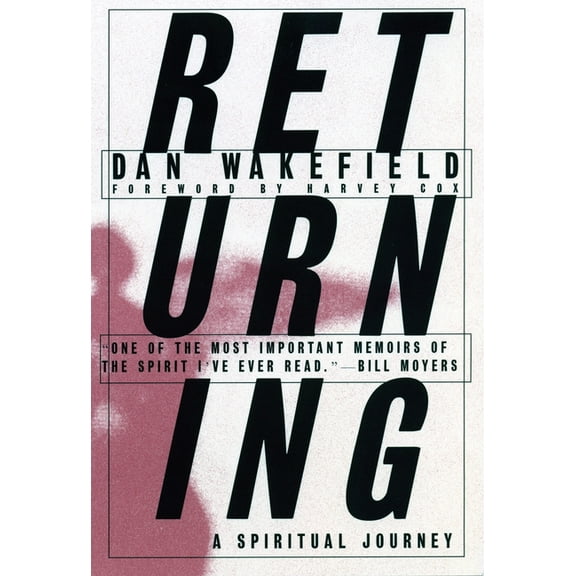
Returning : A Spiritual Journey (Paperback) $20.72
 $2072current price $20.72
Returning : A Spiritual Journey (Paperback)
Travels with a Primate: Around the World with Robert Runcie, (Paperback) $14.98
 $1498current price $14.98
Travels with a Primate: Around the World with Robert Runcie, (Paperback)

Customer ratings & reviews
5 out of 5
5 out of 5 starsstars1 rating|0 reviews
How item rating is calculated
- 5 stars100% (1)
- 4 stars0% (0)
- 3 stars0% (0)
- 2 stars0% (0)
- 1 star0% (0)
Filtered and sorted results would be available on the new 'Customer ratings & reviews' page.
Sort by |
This item does not have any reviews yet

Related pages
- Conservative Comedian
- 30 President
- Biography Obama
- Made America Bill Bryson
- Celebrity Speeches
- We Americans
- Educators Biographies & Memoirs
- Political Biographies & Memoirs
- Presidents & Heads of State Biographies & Memoirs
- Literary Collections - Speeches
- Editors, Journalists & Publishers Biographies & Memoirs
- Environmentalists & Naturalists Biographies & Memoirs