


Hero image 0 of Dissident American Thought Today Series: Homo Americanus : The Rise of Totalitarian Democracy in America (Paperback), 0 of 1
Dissident American Thought Today Series: Homo Americanus : The Rise of Totalitarian Democracy in America (Paperback)
(No ratings yet)
Key item features
What is the man who cannot be known apart from his socio-political environment? As Zbigniew Janowski asserts, one does not ask who this man is, for he does not even know himself. This man is suppressed and separated, and not by Fascism or Communism. In present-day America this has been accomplished by democracy.
“Only someone shortsighted, or someone who values equality more than freedom, would deny that today’s citizens enjoy little or no freedom, particularly freedom of speech, and even less the ability to express openly or publicly the opinions that are not in conformity with what the majority considers acceptable at a given moment. It may sound paradoxical to contemporary ears, but a fight against totalitarianism must also mean a fight against the expansion of democracy.”
Janowski all at once brazen and out of bounds states what he calls the obvious and unthinkable truth: In the United States, we are already living in a totalitarian reality. The American citizen, the Homo Americanus, is an ideological being who is no longer good or bad, reasonable or irrational, proper or improper except when measured against the objectives of the dominating egalitarian mentality that American democracy has successfully incubated. American democracy has done what other despotic regimes have likewise achieved––namely, taken hold of the individual and forced him to renounce (or forget) his greatness, pursuit of virtue and his orientation toward history and Tradition.
Homo Americanus, Janowski argues, has no mind or soul and he cannot tolerate diversity and indeed he now censors himself. Democracy is not benign, and we should fear its principles come by and applied ad hoc. It is deeply troublesome that in the way democracy moves today it gives critics no real insight into any trajectory of reason behind its motion, which is erratic and unmappable. The Homo Americanus is an ideological entity whose thought and even morality are forbidden from universal abstraction.
Janowski mounts the offensive against what the American holds most sacred, and he does so in order to save him. After exposing the danger and the damage done, Janowski makes another startling proposal. It is a “diseased collective mind” that is the source of this ideology, the liberal anti-perspective that presses man into the image of the Homo Americanus, and its grip can only be broken through the recovery of instinct. Homo Americanus cannot be free again until he is himself again. That is, until the shadow that belongs only to him is restored, and he is thereby no longer alienated from others. Despite the condemnation Janowski seems to be levying on the citizen of the United States, he betrays a great hope and confidence that the means to shake ourselves awake from the bad dream are nevertheless in hand.
Janowski’s work is the next title in St. Augustine’s Press Dissident American Thought Today Series. It occupies a controversial overlapping terrain between the philosophical descriptions of liberalism as a tradition, psychology and the fundamentally influential critiques of democracy offered by Thucydides, Jefferson, Franklin, Tocqueville, Mill, Burke and more. More anecdotal than analytical, Janowski offers the contemporary proof that the reader is right to be scandalized by democracy and his or her own likeness of the Homo Americanus. Once upon a time it was the despicable Homo Sovieticus fruit of tyranny, but now we fear democratic society too might fall and all its citizens never be found again.
“Only someone shortsighted, or someone who values equality more than freedom, would deny that today’s citizens enjoy little or no freedom, particularly freedom of speech, and even less the ability to express openly or publicly the opinions that are not in conformity with what the majority considers acceptable at a given moment. It may sound paradoxical to contemporary ears, but a fight against totalitarianism must also mean a fight against the expansion of democracy.”
Janowski all at once brazen and out of bounds states what he calls the obvious and unthinkable truth: In the United States, we are already living in a totalitarian reality. The American citizen, the Homo Americanus, is an ideological being who is no longer good or bad, reasonable or irrational, proper or improper except when measured against the objectives of the dominating egalitarian mentality that American democracy has successfully incubated. American democracy has done what other despotic regimes have likewise achieved––namely, taken hold of the individual and forced him to renounce (or forget) his greatness, pursuit of virtue and his orientation toward history and Tradition.
Homo Americanus, Janowski argues, has no mind or soul and he cannot tolerate diversity and indeed he now censors himself. Democracy is not benign, and we should fear its principles come by and applied ad hoc. It is deeply troublesome that in the way democracy moves today it gives critics no real insight into any trajectory of reason behind its motion, which is erratic and unmappable. The Homo Americanus is an ideological entity whose thought and even morality are forbidden from universal abstraction.
Janowski mounts the offensive against what the American holds most sacred, and he does so in order to save him. After exposing the danger and the damage done, Janowski makes another startling proposal. It is a “diseased collective mind” that is the source of this ideology, the liberal anti-perspective that presses man into the image of the Homo Americanus, and its grip can only be broken through the recovery of instinct. Homo Americanus cannot be free again until he is himself again. That is, until the shadow that belongs only to him is restored, and he is thereby no longer alienated from others. Despite the condemnation Janowski seems to be levying on the citizen of the United States, he betrays a great hope and confidence that the means to shake ourselves awake from the bad dream are nevertheless in hand.
Janowski’s work is the next title in St. Augustine’s Press Dissident American Thought Today Series. It occupies a controversial overlapping terrain between the philosophical descriptions of liberalism as a tradition, psychology and the fundamentally influential critiques of democracy offered by Thucydides, Jefferson, Franklin, Tocqueville, Mill, Burke and more. More anecdotal than analytical, Janowski offers the contemporary proof that the reader is right to be scandalized by democracy and his or her own likeness of the Homo Americanus. Once upon a time it was the despicable Homo Sovieticus fruit of tyranny, but now we fear democratic society too might fall and all its citizens never be found again.
Specs
- Book formatPaperback
- Fiction/nonfictionNon-Fiction
- GenreNonfiction
- Publication dateApril, 2021
- Pages250
- SubgenrePolitical
Current price is USD$33.78
Price when purchased online
- Free shipping
 Free 30-day returns
How do you want your item?
Ships to
Arrives between May 22 - May 28
|
Sold and shipped by newbookdeals
4.55861365953109 stars out of 5, based on 1962 seller reviews(4.6)1962 seller reviews

Free 30-day returns
More seller options (1)
Starting from $35.96
About this item
Product details
What is the man who cannot be known apart from his socio-political environment? As Zbigniew Janowski asserts, one does not ask who this man is, for he does not even know himself. This man is suppressed and separated, and not by Fascism or Communism. In present-day America this has been accomplished by democracy. "Only someone shortsighted, or someone who values equality more than freedom, would deny that today's citizens enjoy little or no freedom, particularly freedom of speech, and even less the ability to express openly or publicly the opinions that are not in conformity with what the majority considers acceptable at a given moment. It may sound paradoxical to contemporary ears, but a fight against totalitarianism must also mean a fight against the expansion of democracy." Janowski all at once brazen and out of bounds states what he calls the obvious and unthinkable truth: In the United States, we are already living in a totalitarian reality. The American citizen, the Homo Americanus, is an ideological being who is no longer good or bad, reasonable or irrational, proper or improper except when measured against the objectives of the dominating egalitarian mentality that American democracy has successfully incubated. American democracy has done what other despotic regimes have likewise achieved--namely, taken hold of the individual and forced him to renounce (or forget) his greatness, pursuit of virtue and his orientation toward history and Tradition. Homo Americanus, Janowski argues, has no mind or soul and he cannot tolerate diversity and indeed he now censors himself. Democracy is not benign, and we should fear its principles come by and applied ad hoc. It is deeply troublesome that in the way democracy moves today it gives critics no real insight into any trajectory of reason behind its motion, which is erratic and unmappable. The Homo Americanus is an ideological entity whose thought and even morality are forbidden from universal abstraction. Janowski mounts the offensive against what the American holds most sacred, and he does so in order to save him. After exposing the danger and the damage done, Janowski makes another startling proposal. It is a "diseased collective mind" that is the source of this ideology, the liberal anti-perspective that presses man into the image of the Homo Americanus, and its grip can only be broken through the recovery of instinct. Homo Americanus cannot be free again until he is himself again. That is, until the shadow that belongs only to him is restored, and he is thereby no longer alienated from others. Despite the condemnation Janowski seems to be levying on the citizen of the United States, he betrays a great hope and confidence that the means to shake ourselves awake from the bad dream are nevertheless in hand. Janowski's work is the next title in St. Augustine's Press Dissident American Thought Today Series. It occupies a controversial overlapping terrain between the philosophical descriptions of liberalism as a tradition, psychology and the fundamentally influential critiques of democracy offered by Thucydides, Jefferson, Franklin, Tocqueville, Mill, Burke and more. More anecdotal than analytical, Janowski offers the contemporary proof that the reader is right to be scandalized by democracy and his or her own likeness of the Homo Americanus. Once upon a time it was the despicable Homo Sovieticus fruit of tyranny, but now we fear democratic society too might fall and all its citizens never be found again.
What is the man who cannot be known apart from his socio-political environment? As Zbigniew Janowski asserts, one does not ask who this man is, for he does not even know himself. This man is suppressed and separated, and not by Fascism or Communism. In present-day America this has been accomplished by democracy.
“Only someone shortsighted, or someone who values equality more than freedom, would deny that today’s citizens enjoy little or no freedom, particularly freedom of speech, and even less the ability to express openly or publicly the opinions that are not in conformity with what the majority considers acceptable at a given moment. It may sound paradoxical to contemporary ears, but a fight against totalitarianism must also mean a fight against the expansion of democracy.”
Janowski all at once brazen and out of bounds states what he calls the obvious and unthinkable truth: In the United States, we are already living in a totalitarian reality. The American citizen, the Homo Americanus, is an ideological being who is no longer good or bad, reasonable or irrational, proper or improper except when measured against the objectives of the dominating egalitarian mentality that American democracy has successfully incubated. American democracy has done what other despotic regimes have likewise achieved––namely, taken hold of the individual and forced him to renounce (or forget) his greatness, pursuit of virtue and his orientation toward history and Tradition.
Homo Americanus, Janowski argues, has no mind or soul and he cannot tolerate diversity and indeed he now censors himself. Democracy is not benign, and we should fear its principles come by and applied ad hoc. It is deeply troublesome that in the way democracy moves today it gives critics no real insight into any trajectory of reason behind its motion, which is erratic and unmappable. The Homo Americanus is an ideological entity whose thought and even morality are forbidden from universal abstraction.
Janowski mounts the offensive against what the American holds most sacred, and he does so in order to save him. After exposing the danger and the damage done, Janowski makes another startling proposal. It is a “diseased collective mind” that is the source of this ideology, the liberal anti-perspective that presses man into the image of the Homo Americanus, and its grip can only be broken through the recovery of instinct. Homo Americanus cannot be free again until he is himself again. That is, until the shadow that belongs only to him is restored, and he is thereby no longer alienated from others. Despite the condemnation Janowski seems to be levying on the citizen of the United States, he betrays a great hope and confidence that the means to shake ourselves awake from the bad dream are nevertheless in hand.
Janowski’s work is the next title in St. Augustine’s Press Dissident American Thought Today Series. It occupies a controversial overlapping terrain between the philosophical descriptions of liberalism as a tradition, psychology and the fundamentally influential critiques of democracy offered by Thucydides, Jefferson, Franklin, Tocqueville, Mill, Burke and more. More anecdotal than analytical, Janowski offers the contemporary proof that the reader is right to be scandalized by democracy and his or her own likeness of the Homo Americanus. Once upon a time it was the despicable Homo Sovieticus fruit of tyranny, but now we fear democratic society too might fall and all its citizens never be found again.
“Only someone shortsighted, or someone who values equality more than freedom, would deny that today’s citizens enjoy little or no freedom, particularly freedom of speech, and even less the ability to express openly or publicly the opinions that are not in conformity with what the majority considers acceptable at a given moment. It may sound paradoxical to contemporary ears, but a fight against totalitarianism must also mean a fight against the expansion of democracy.”
Janowski all at once brazen and out of bounds states what he calls the obvious and unthinkable truth: In the United States, we are already living in a totalitarian reality. The American citizen, the Homo Americanus, is an ideological being who is no longer good or bad, reasonable or irrational, proper or improper except when measured against the objectives of the dominating egalitarian mentality that American democracy has successfully incubated. American democracy has done what other despotic regimes have likewise achieved––namely, taken hold of the individual and forced him to renounce (or forget) his greatness, pursuit of virtue and his orientation toward history and Tradition.
Homo Americanus, Janowski argues, has no mind or soul and he cannot tolerate diversity and indeed he now censors himself. Democracy is not benign, and we should fear its principles come by and applied ad hoc. It is deeply troublesome that in the way democracy moves today it gives critics no real insight into any trajectory of reason behind its motion, which is erratic and unmappable. The Homo Americanus is an ideological entity whose thought and even morality are forbidden from universal abstraction.
Janowski mounts the offensive against what the American holds most sacred, and he does so in order to save him. After exposing the danger and the damage done, Janowski makes another startling proposal. It is a “diseased collective mind” that is the source of this ideology, the liberal anti-perspective that presses man into the image of the Homo Americanus, and its grip can only be broken through the recovery of instinct. Homo Americanus cannot be free again until he is himself again. That is, until the shadow that belongs only to him is restored, and he is thereby no longer alienated from others. Despite the condemnation Janowski seems to be levying on the citizen of the United States, he betrays a great hope and confidence that the means to shake ourselves awake from the bad dream are nevertheless in hand.
Janowski’s work is the next title in St. Augustine’s Press Dissident American Thought Today Series. It occupies a controversial overlapping terrain between the philosophical descriptions of liberalism as a tradition, psychology and the fundamentally influential critiques of democracy offered by Thucydides, Jefferson, Franklin, Tocqueville, Mill, Burke and more. More anecdotal than analytical, Janowski offers the contemporary proof that the reader is right to be scandalized by democracy and his or her own likeness of the Homo Americanus. Once upon a time it was the despicable Homo Sovieticus fruit of tyranny, but now we fear democratic society too might fall and all its citizens never be found again.
info:
We aim to show you accurate product information. Manufacturers, suppliers and others provide what you see here, and we have not verified it.
Specifications
Book format
Paperback
Fiction/nonfiction
Non-Fiction
Genre
Nonfiction
Publication date
April, 2021
Warranty
Warranty information
Please be aware that the warranty terms on items offered for sale by third party Marketplace sellers may differ from those displayed in this section (if any). To confirm warranty terms on an item offered for sale by a third party Marketplace seller, please use the 'Contact seller' feature on the third party Marketplace seller's information page and request the item's warranty terms prior to purchase.
Similar items you might like
Based on what customers bought
Rhetoric and Democratic Deliberation The Problematic Public, (Paperback) $34.99
 $3499current price $34.99
Rhetoric and Democratic Deliberation The Problematic Public, (Paperback)
Before Stalinism: The Rise and Fall of Soviet Democracy, (Paperback) $22.90
 $2290current price $22.90
Before Stalinism: The Rise and Fall of Soviet Democracy, (Paperback)
Red America: Greek Communists in the United States, 1920-1950, (Paperback) $34.95
 $3495current price $34.95
Red America: Greek Communists in the United States, 1920-1950, (Paperback)
Freedom Is an Endless Meeting: Democracy in American Social Movements, (Paperback) $28.49
 $2849current price $28.49
Freedom Is an Endless Meeting: Democracy in American Social Movements, (Paperback)
New World Diasporas Dominican-Americans and the Politics of Empowerment, (Paperback) $32.62
 $3262current price $32.62
New World Diasporas Dominican-Americans and the Politics of Empowerment, (Paperback)
The Breach: Iran-Contra and the Assault on American Democracy, (Paperback) $24.62
 $2462current price $24.62
The Breach: Iran-Contra and the Assault on American Democracy, (Paperback)
American Political Thought The Counterrevolutionary Shadow: Race, Democracy, and the Making of the American People, (Paperback) $23.63 Was $26.26
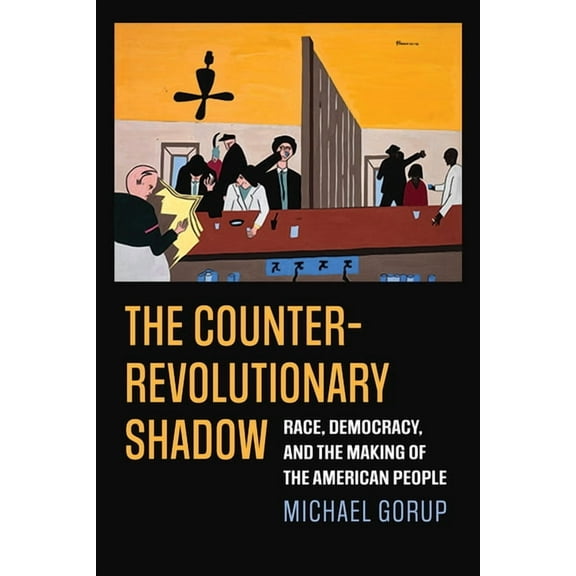 $2363current price $23.63, Was $26.26$26.26
American Political Thought The Counterrevolutionary Shadow: Race, Democracy, and the Making of the American People, (Paperback)
Pelican Books National Populism: The Revolt Against Liberal Democracy, (Paperback) $17.27
 $1727current price $17.27
Pelican Books National Populism: The Revolt Against Liberal Democracy, (Paperback)
Rationalizing Capitalist Democracy : The Cold War Origins of Rational Choice Liberalism (Paperback) $37.66
 $3766current price $37.66
Rationalizing Capitalist Democracy : The Cold War Origins of Rational Choice Liberalism (Paperback)
Revolución de la Libertad/ Revolution of Freedom, (Paperback) $16.82
 $1682current price $16.82
Revolución de la Libertad/ Revolution of Freedom, (Paperback)
The Liberal Consensus Reconsidered: American Politics and Society in the Postwar Era, (Paperback) $34.64
 $3464current price $34.64
The Liberal Consensus Reconsidered: American Politics and Society in the Postwar Era, (Paperback)
History of American Thought and Culture American Socialists and Evolutionary Thought, 1870-1920, (Paperback) $14.49
 $1449current price $14.49
History of American Thought and Culture American Socialists and Evolutionary Thought, 1870-1920, (Paperback)
U.S. Government and Politics Simplified: A Comprehensive Guide to the American Political System, (Paperback) $20.05
 $2005current price $20.05
U.S. Government and Politics Simplified: A Comprehensive Guide to the American Political System, (Paperback)
The Whole of Their Lives; Communism in America--a Personal History and Intimate Portrayal of Its Leaders, (Paperback) $26.78
 $2678current price $26.78
The Whole of Their Lives; Communism in America--a Personal History and Intimate Portrayal of Its Leaders, (Paperback)
The Battle Over Hetch Hetchy: America's Most Controversial Dam and the Birth of Modern Environmentalism, (Paperback) $44.57
 $4457current price $44.57
The Battle Over Hetch Hetchy: America's Most Controversial Dam and the Birth of Modern Environmentalism, (Paperback)
Thank God They're on Our Side: The United States and Right-Wing Dictatorships, 1921-1965, (Paperback) $44.42
 $4442current price $44.42
Thank God They're on Our Side: The United States and Right-Wing Dictatorships, 1921-1965, (Paperback)
Employing Nietzsche's Sociological Imagination: How to Understand Totalitarian Democracy, (Paperback) $28.33
 $2833current price $28.33
Employing Nietzsche's Sociological Imagination: How to Understand Totalitarian Democracy, (Paperback)
American Democracy in Peril: The Economic Enslavement of the American People, (Paperback) $14.99
 $1499current price $14.99
American Democracy in Peril: The Economic Enslavement of the American People, (Paperback)
Washington Papers Cracks in the Consensus: Debating the Democracy Agenda in U.S. Foreign Policy, (Paperback) $34.02
 $3402current price $34.02
Washington Papers Cracks in the Consensus: Debating the Democracy Agenda in U.S. Foreign Policy, (Paperback)
Progressive Psychology Political Plasticity: The Future of Democracy and Dictatorship, (Paperback) $34.15
 $3415current price $34.15
Progressive Psychology Political Plasticity: The Future of Democracy and Dictatorship, (Paperback)
Customer ratings & reviews
0 ratings|0 reviews
This item does not have any reviews yet

Related pages
- Deculturalization Struggle Equality
- Anarchism Political Ideology Books
- Population 11 Conservatism Liberalism Political Ideologies Books
- Best Sellers In Political Philosophy
- Radicalism Political Ideology Books
- Conservatism & Liberalism Political Ideologies Books
- Raymond Schweitzer
- Symbol Democracy
- Cultural Gap
- Democracy Political Ideology Books
- General Political Ideology Books
- Political Advocacy Process Books