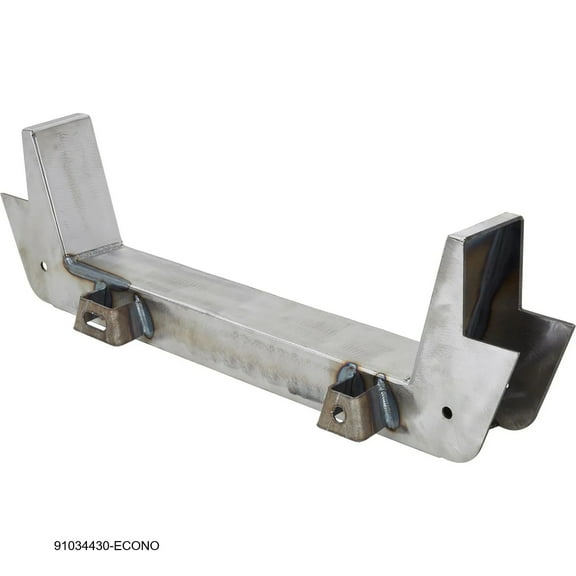
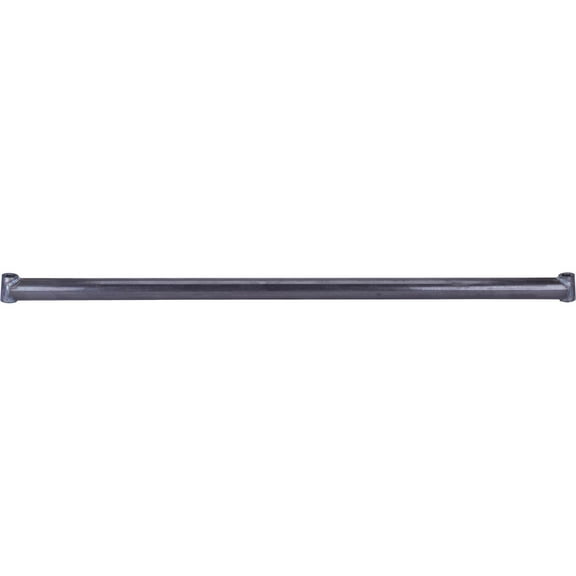
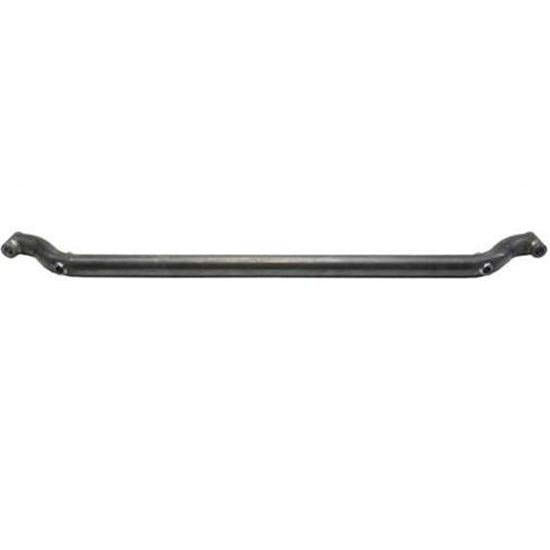
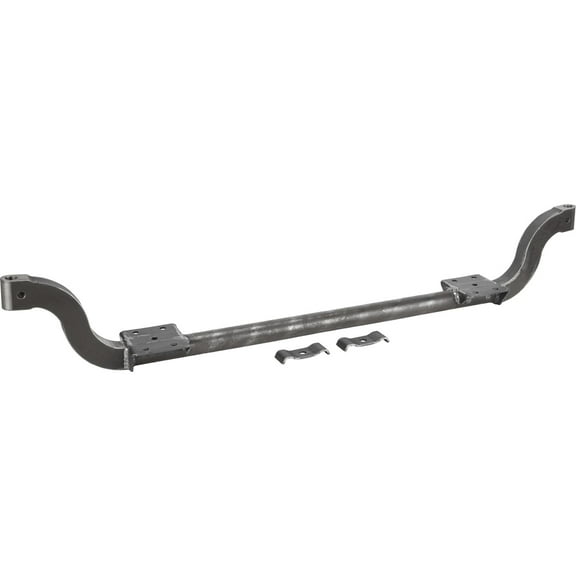
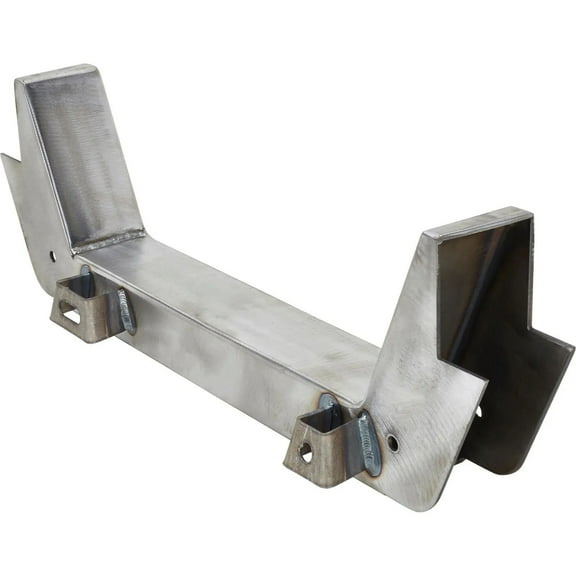
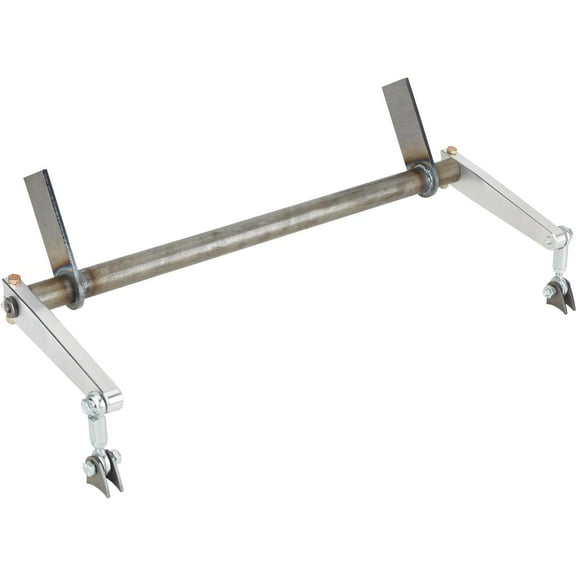
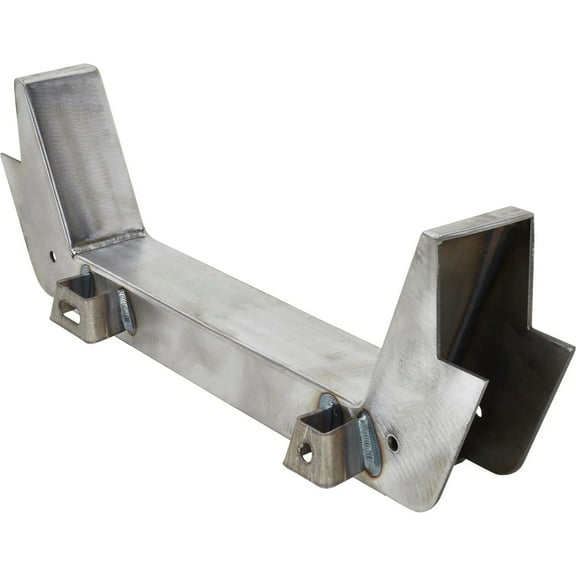
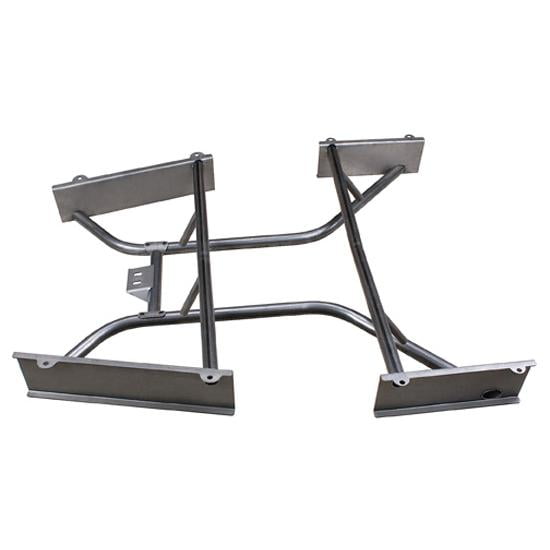
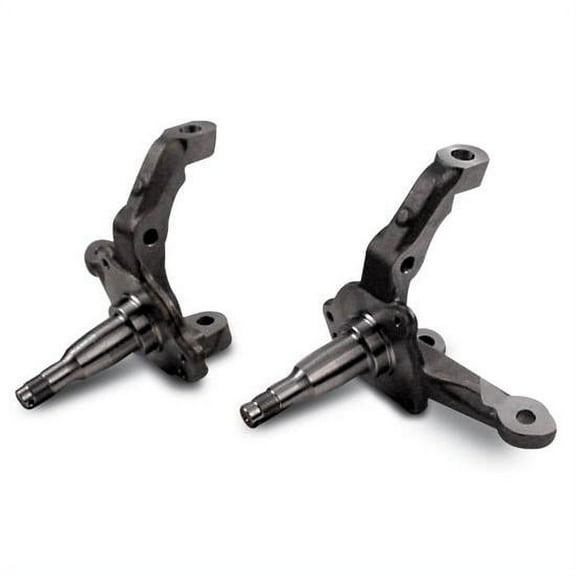
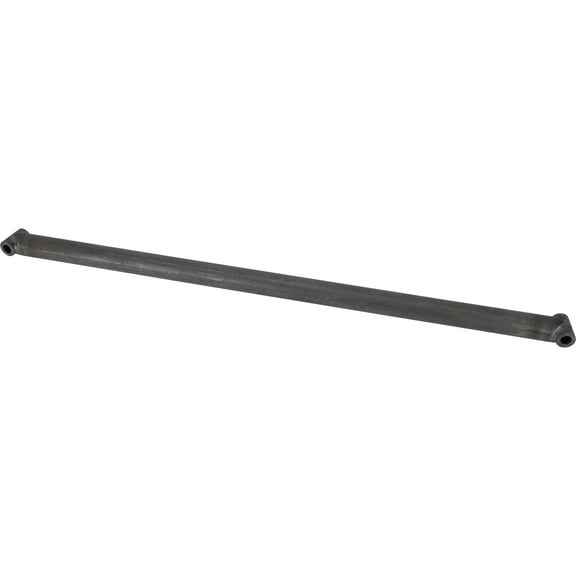
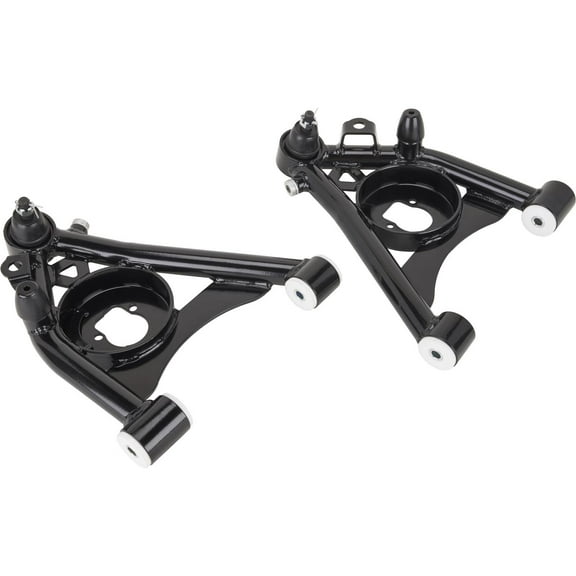
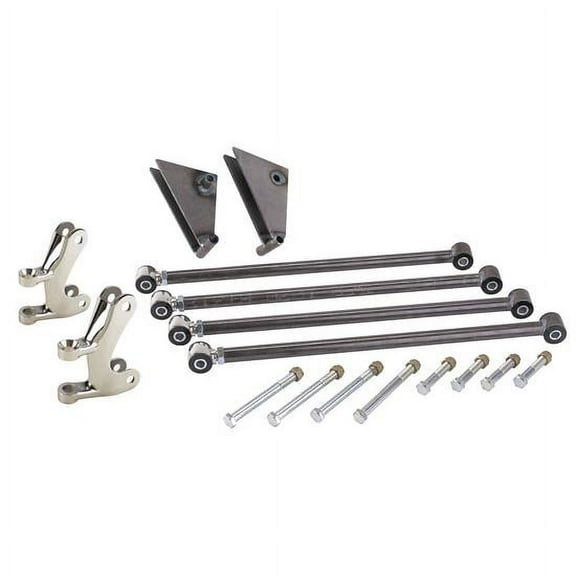
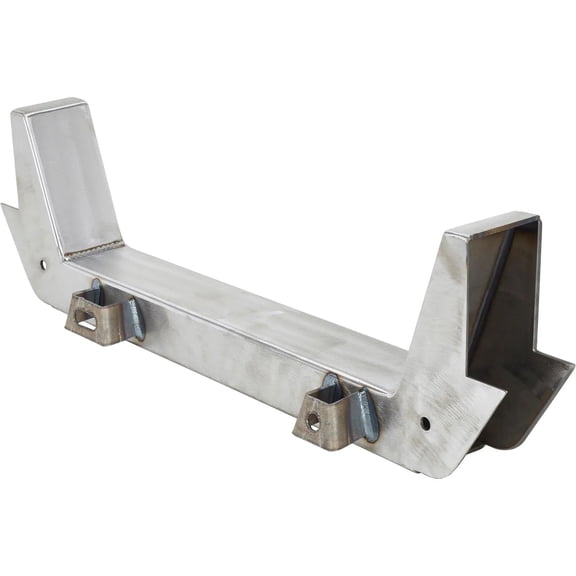
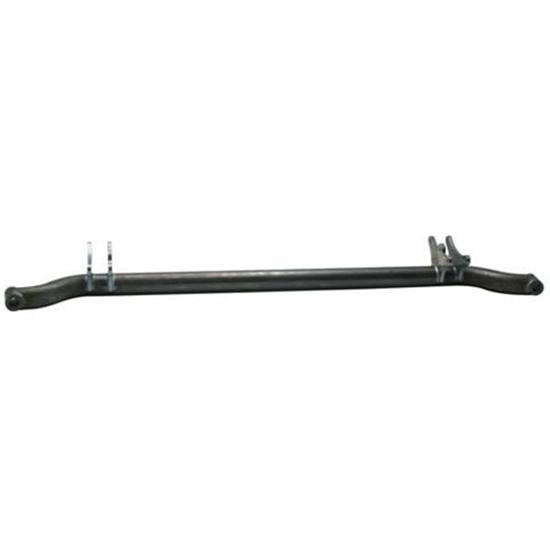
Vastly improved handling when compared to original suspension. Front steer rack-and-pinion steering provides greater steering feel. Complete weld-in assembly made from 3/16-inch steel adds strength. Vertical inner uprights provide a strong design with twice the weld area. Application specific crossmember and spring towers pre-welded to save installation time. Allows for numerous control arm and disc brake kit upgrade options. Compatible with manual or power rack-and-pinion steering systems. Compatible with stock stamped steel control arms as well as tubular control arms. Stock style control arms will require strut rod brackets or tubular strut rod kit. Rack-and-pinion mounting points rotated rearward 20 degrees for steering shaft clearance. Built-in anti-dive and bump steer correction mounting points. Lower control arm pivot tubes and corner gussets not included. Accepts stock Mustang II spindles or aftermarket drop spindles. All welds ground smooth, saving you time and energy during installation. Drastically Improve Your ’37-’48 Chevy’s Handling with A Mustang II IFS Crossmember Much like the advent of hydraulic, or “juice” brakes, became an industry standard, so has independent front suspension (IFS). You’ll find IFS on just about every production car and light duty truck sold in America due to its inherent improvement in ride quality, handling, and the ability to provide better control at higher road speeds. These updates are what can turn a long drive at highway speed in your ’37-’48 Chevy hot rod from sketchy to serene simply by replacing the outdated IFS suspension and its kingpins and unique upper control arm/knee action shock absorber amalgamation for a well-engineered weld-in IFS solution utilizing the tried and true suspension geometry that debuted on the 1974 Mustang II. Built Strong to Handle the Road Ahead and Look Good Doing It While GM’s later IFS front suspension was an improvement over the previous Dubonnet “Knee-action-ride” setup, it isn’t without its own issues, including bulky control arm, spring, and shock packaging, along with an extremely large crossmember and rear steer configuration that is not conducive to later engine swaps. On top of that you’re limited in spring rate and shock choices for modern handling and the steering linkage setup with bushed kingpins creates some hair raising steering feel, or lack thereof, when you get up to highway speed. Of course, there is always the effect of alignment on a front suspension and sourcing the correct tie rods and end links for the front end to be aligned is no small chore on these suspensions. Converting your ’37-’48 Chevy’s chassis to the Mustang II front suspension design with our crossmember kit brings you a whole different driving experience, one that will have you looking for any excuse to get out on the open road and take long trips to events you never attended before due to your Chevy’s poor handling at modern highway speeds. Beginning with our 7 gauge steel (that’s a full 3/16 of an inch thick) boxed Mustang 2 front suspension crossmember that is fully welded with extended vertical uprights we have designed in anti-dive geometry to our crossmember and spring towers. We even include frame boxing plates for increased strength. Suspension travel, which yields a better ride, is upwards of five inches with our IFS and aligning the IFS can be handled easily by any competent alignment shop. Rack-and-pinion steering provides a quick and crisp steering effort at any road speed, and we have designed our rack mounting tabs to not only be optimized to eliminate bump steer but lay the steering rack back at a 20 degree angle to facilitate a lower steering shaft angle. This helps with exhaust manifold/header and overall engine clearance. The mounts accept both 15-1/2-inch and 16-inch on center rack mount spacing for use with manual or power steering assemblies. Stock height Mustang II spindles will result in a typical 3-4-inch drop in ride height



 WARNING: