


Hero image 0 of Far from Suitable?: Haig, Gough and Passchendaele: A Reappraisal (Paperback), 0 of 1
Far from Suitable?: Haig, Gough and Passchendaele: A Reappraisal (Paperback)
(No ratings yet)
Key item features
Far from Suitable?: Haig, Gough and Passchendaele: A Reappraisal (Paperback)
Specs
- Book formatPaperback
- Fiction/nonfictionNon-Fiction
- GenreHistory
- Pages360
- Reading levelGeneral
- EditionStandard Edition
Current price is USDNow $35.54
You save $24.41
was $59.95$59.95
You save$24.41
Price when purchased online
Out of stock
How do you want your item?
Out of stock
About this item
Product details
Passchendaele, until in recent decades eclipsed by the Somme, stood as the representative image of First World War frightfulness and futility. After the War, the memory of its frightfulness arose from the dissemination of traumatic personal experience; the tradition of futility largely from the condemnation in the 1930s of the military historian, Basil Liddell Hart, and, rather ironically, the Prime Minister who authorized it, Mr. David Lloyd George. The former wrote of it 'so fruitless in its results, so depressing in its direction was [it] that Passchendaele has come to be...a synonym for military failure- a name black-bordered in the records of the British Army'.
The frightfulness has never been doubted. The first month, failing to achieve, or come near, the objectives set for the first day, and the last month, struggling to reach what was originally delineated as the first stage, took place in shocking conditions of rain and mud, sufficient to render difficult existence and movement, let alone fighting. Nor has the attempt by the Official Historian to claim the battle as largely successful engaged much traction or dented the impression of futility.
It is therefore unsurprising that historical writing on the subject gravitates toward the issue of responsibility: responsibility for fighting the battle at the time and in the place chosen, responsibility for the failure of the first month and responsibility for continuing the battle into November when it became clear that the original object of clearing the Belgian coast could not be achieved. This book is about responsibility for the failure of the first month and the relationship between the Commander-in-Chief, Sir Douglas Haig, and the man who bears the brunt of modern criticism, Sir Hubert Gough, the Commander of Fifth Army at Passchendaele.
This book is not a narrative history: it is a detailed examination of how and by whom the plans for the opening of the battle were made; whether they were deficient, negligent or, as often alleged, reckless; and whether they caused needless loss. It further considers the conduct of the battle for the remainder of the first month's fighting, up to the point where the primary role in the battle was transferred to General Sir Herbert Plumer at the end of August 1917.
This book challenges the account given in the Official History and questions the assumptions behind the current consensus built on that account, and the interpretation of the evidence on which it is based. While skeptical of the uniform tendency to blame Gough, almost to the exclusion of Haig, for the planning of the battle and for its execution in the first month, it does not attempt to replace Gough with Haig as the lightning rod for failure and loss or to suggest that Gough was without responsibility. It is an attempt fairly to consider what happened, and why. It suggests that the oft-repeated story of Gough's errors and failings owes more to tradition than to the evidence, which in fact reveals a much more complicated and different reality.
The frightfulness has never been doubted. The first month, failing to achieve, or come near, the objectives set for the first day, and the last month, struggling to reach what was originally delineated as the first stage, took place in shocking conditions of rain and mud, sufficient to render difficult existence and movement, let alone fighting. Nor has the attempt by the Official Historian to claim the battle as largely successful engaged much traction or dented the impression of futility.
It is therefore unsurprising that historical writing on the subject gravitates toward the issue of responsibility: responsibility for fighting the battle at the time and in the place chosen, responsibility for the failure of the first month and responsibility for continuing the battle into November when it became clear that the original object of clearing the Belgian coast could not be achieved. This book is about responsibility for the failure of the first month and the relationship between the Commander-in-Chief, Sir Douglas Haig, and the man who bears the brunt of modern criticism, Sir Hubert Gough, the Commander of Fifth Army at Passchendaele.
This book is not a narrative history: it is a detailed examination of how and by whom the plans for the opening of the battle were made; whether they were deficient, negligent or, as often alleged, reckless; and whether they caused needless loss. It further considers the conduct of the battle for the remainder of the first month's fighting, up to the point where the primary role in the battle was transferred to General Sir Herbert Plumer at the end of August 1917.
This book challenges the account given in the Official History and questions the assumptions behind the current consensus built on that account, and the interpretation of the evidence on which it is based. While skeptical of the uniform tendency to blame Gough, almost to the exclusion of Haig, for the planning of the battle and for its execution in the first month, it does not attempt to replace Gough with Haig as the lightning rod for failure and loss or to suggest that Gough was without responsibility. It is an attempt fairly to consider what happened, and why. It suggests that the oft-repeated story of Gough's errors and failings owes more to tradition than to the evidence, which in fact reveals a much more complicated and different reality.
Far from Suitable?: Haig, Gough and Passchendaele: A Reappraisal (Paperback)
info:
We aim to show you accurate product information. Manufacturers, suppliers and others provide what you see here, and we have not verified it.
Specifications
Book format
Paperback
Fiction/nonfiction
Non-Fiction
Genre
History
Pages
360
Warranty
Warranty information
Please be aware that the warranty terms on items offered for sale by third party Marketplace sellers may differ from those displayed in this section (if any). To confirm warranty terms on an item offered for sale by a third party Marketplace seller, please use the 'Contact seller' feature on the third party Marketplace seller's information page and request the item's warranty terms prior to purchase.
Similar items you might like
Based on what customers bought
On the Front Line, (Paperback) $29.99
 $2999current price $29.99
On the Front Line, (Paperback)
The Battle Cruisers at the Action of the Falkland Islands, (Paperback) $25.99
 $2599current price $25.99
The Battle Cruisers at the Action of the Falkland Islands, (Paperback)
Great-Uncle Harry: A Tale of War and Empire, (Paperback) $11.50 Was $13.28
 $1150current price $11.50, Was $13.28$13.28
Great-Uncle Harry: A Tale of War and Empire, (Paperback)
Halt! Who Goes There? (Paperback) $17.95
 $1795current price $17.95
Halt! Who Goes There? (Paperback)
The European War, (Hardcover) $34.95
 $3495current price $34.95
The European War, (Hardcover)
Les Débris De La Guerre... (Hardcover) $33.95
 $3395current price $33.95
Les Débris De La Guerre... (Hardcover)
Une Expédition Avec Le Négous Ménélik, (Paperback) $20.95
 $2095current price $20.95
Une Expédition Avec Le Négous Ménélik, (Paperback)
On the Eastern Front 1914: Meine Kriegserinnerungen, (Paperback) $14.95
 $1495current price $14.95
On the Eastern Front 1914: Meine Kriegserinnerungen, (Paperback)
Battlefield Trails: Soldiers on the Western Front, (Paperback) $23.59
 $2359current price $23.59
Battlefield Trails: Soldiers on the Western Front, (Paperback)
Gordon Highlanders in the First World War (Paperback) $29.40
 $2940current price $29.40
Gordon Highlanders in the First World War (Paperback)
Legacies of War The World War I Memoirs of Robert P. Patterson: A Captain in the Great War, (Paperback) $19.95
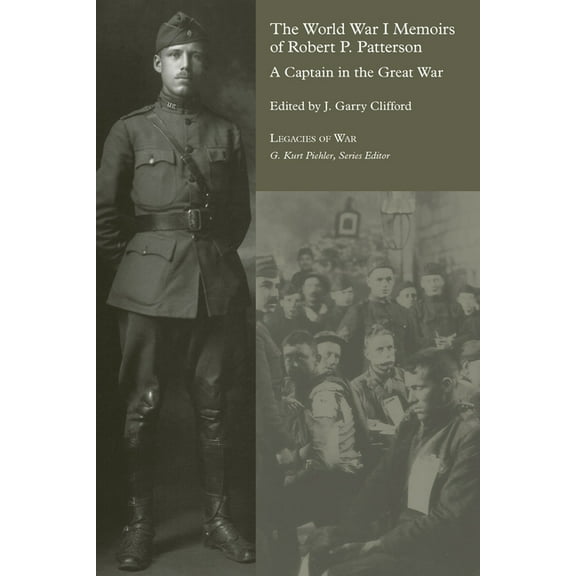 $1995current price $19.95
Legacies of War The World War I Memoirs of Robert P. Patterson: A Captain in the Great War, (Paperback)
War, (Paperback) $17.95
 $1795current price $17.95
War, (Paperback)
The Lusitania: Unravelling the Mysteries, (Paperback) $18.90
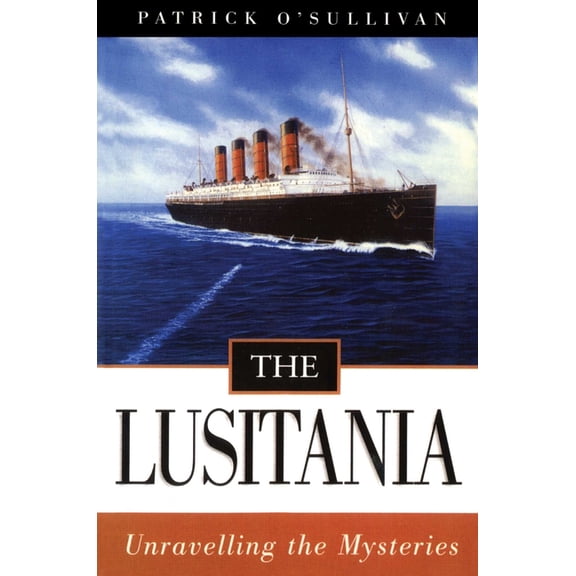 $1890current price $18.90
The Lusitania: Unravelling the Mysteries, (Paperback)
World War I and the Cultures of Modernity, (Paperback) $27.49 Was $35.00
 $2749current price $27.49, Was $35.00$35.00
World War I and the Cultures of Modernity, (Paperback)
Treitschke and the Great War [microform] (Paperback) $22.95
![Treitschke and the Great War [microform] (Paperback)](https://i5.walmartimages.com/asr/f8cf4621-9d06-4168-8cf2-30d9ac3da033.f73d81631bedc32d8202448be6eec649.jpeg?odnHeight=576&odnWidth=576&odnBg=FFFFFF) $2295current price $22.95
$2295current price $22.95Treitschke and the Great War [microform] (Paperback)
Pre-Owned The Great Halifax Explosion: A World War I Story of Treachery, Tragedy, and Extraordinary Heroism (Paperback) 0062666541 9780062666543 $17.81
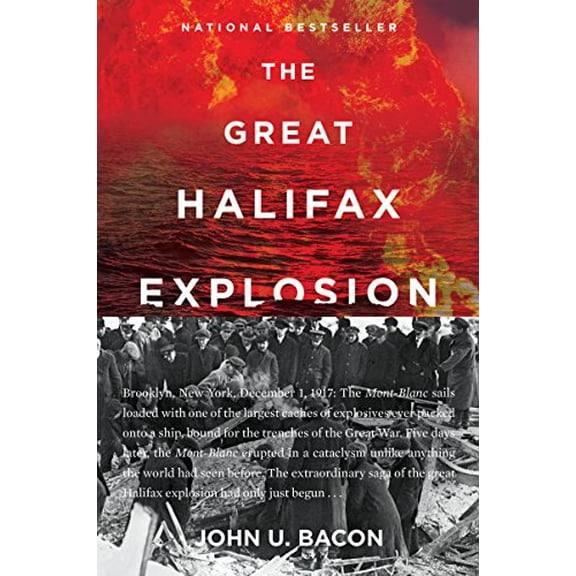 3 optionsAvailable in additional 3 options$1781current price $17.81
Pre-Owned The Great Halifax Explosion: A World War I Story of Treachery, Tragedy, and Extraordinary Heroism (Paperback) 0062666541 9780062666543
A Marine Tells It to You, (Paperback) $24.95
 $2495current price $24.95
A Marine Tells It to You, (Paperback)


Customer ratings & reviews
0 ratings|0 reviews
This item does not have any reviews yet

Related pages
- Civil War Cannonball
- Colonel Civil War
- Chicago War
- Win War Independence
- Corpsman Navy
- Gettysburg Civil War Battlefields
- Afghan War Military History Books
- War of 1812 Military History Books
- Vietnam War Military History Books
- General Military History Books
- World War I Military History Books
- General Biographies & Memoirs