

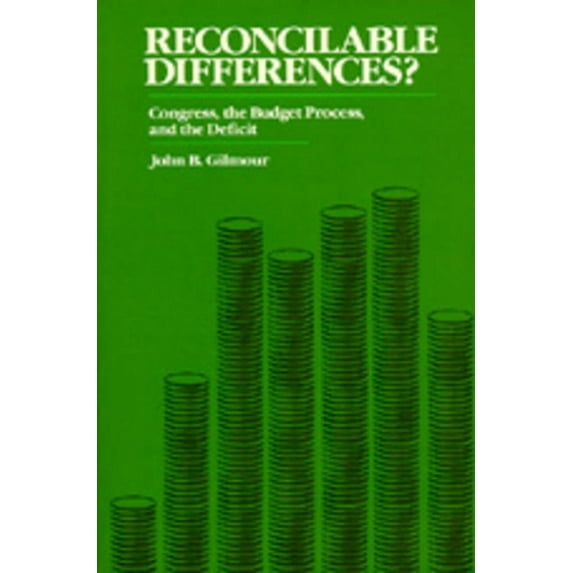
Hero image 0 of Reconcilable Differences? : Congress, the Budget Process, and the Deficit (Edition 1) (Paperback), 0 of 1
Reconcilable Differences? : Congress, the Budget Process, and the Deficit (Edition 1) (Paperback)
(No ratings yet)
Key item features
Gilmour traces the development of the congressional budget process from its origin through the emergence of reconcilliation and Gramm-Rudman-Hollings. He shows how changes in process have brought about far-reaching shifts in congressional power, and explains why they have failed to control the explosion of budget deficits.
Throughout the last decade budgetary issues have dominated the national political agenda as the deficit has skyrocketed to previously unimaginable levels. In this important book, John Gilmour traces the continuing quest of Congress over the last fifteen years to reform its budgeting system in the hope of producing better policy. He shows that the enactment of the Congressional Budget Act of 1974 and the introduction of the reconciliation procedure in 1980 have produced a budgetary system in which congressional majorities can get what they want, provided only that they can agree on a comprehensive budget policy. From his thorough analysis, Gilmour concludes that, while the reforms have not produced balanced budgets, they have eliminated procedural obstructions to the adoption of a coherent budget.
New budget procedures have transformed the way Congress works. Before the reforms of 1974 and 1980, Congress had an extremely fragmented, disintegrated budgetary system in which the budget emerged almost haphazardly from the independent actions of numerous committees. Gilmour shows that reconciliation procedures in the budget process makes total revenue, total expenditures, and the size of the deficit matters of deliberate choice, consolidating decisionmaking to an extent unprecedented in the history of the modern Congress.
Yet, despite the striking structural and procedural changes, and despite its highly majoritarian features, the budget process has failed to reduce dissatisfaction with congressional handling of money. Deficits have been larger, not smaller, and overall spending has gone up. Gilmour deftly shows that the massive budget deficits of the Reagan years were due primarily to the failure of the House, the Senate, and the President to agree on how to reduce spending or increase taxes enough to eliminate the deficit. Responsibility for budgetary failure, he argues, must rest with Congress and its inability to reach consensus, not on the new budget process, which, given what we can expect from procedural change, has been quite successful.
Throughout the last decade budgetary issues have dominated the national political agenda as the deficit has skyrocketed to previously unimaginable levels. In this important book, John Gilmour traces the continuing quest of Congress over the last fifteen years to reform its budgeting system in the hope of producing better policy. He shows that the enactment of the Congressional Budget Act of 1974 and the introduction of the reconciliation procedure in 1980 have produced a budgetary system in which congressional majorities can get what they want, provided only that they can agree on a comprehensive budget policy. From his thorough analysis, Gilmour concludes that, while the reforms have not produced balanced budgets, they have eliminated procedural obstructions to the adoption of a coherent budget.
New budget procedures have transformed the way Congress works. Before the reforms of 1974 and 1980, Congress had an extremely fragmented, disintegrated budgetary system in which the budget emerged almost haphazardly from the independent actions of numerous committees. Gilmour shows that reconciliation procedures in the budget process makes total revenue, total expenditures, and the size of the deficit matters of deliberate choice, consolidating decisionmaking to an extent unprecedented in the history of the modern Congress.
Yet, despite the striking structural and procedural changes, and despite its highly majoritarian features, the budget process has failed to reduce dissatisfaction with congressional handling of money. Deficits have been larger, not smaller, and overall spending has gone up. Gilmour deftly shows that the massive budget deficits of the Reagan years were due primarily to the failure of the House, the Senate, and the President to agree on how to reduce spending or increase taxes enough to eliminate the deficit. Responsibility for budgetary failure, he argues, must rest with Congress and its inability to reach consensus, not on the new budget process, which, given what we can expect from procedural change, has been quite successful.
Specs
- Book formatPaperback
- Fiction/nonfictionNon-Fiction
- Pub date19900606
- Pages272
- SubgenrePublic Policy
- Series titleNo Series
Current price is USD$36.74
Price when purchased online
- Free shipping
 Free 30-day returns
How do you want your item?
Columbus, 43215
Arrives between Apr 30 - May 4
|
Sold and shipped by Prepbooks
4.724425887265136 stars out of 5, based on 479 seller reviews(4.7)479 seller reviews

Free 30-day returns
Other sellers
$36.00
+ $7.98 shippingShipping, arrives by Tue, Apr 28 to Columbus, 43215
Sold and shipped by Best Prices & Service
Free 30-day returns
About this item
Product details
Gilmour traces the development of the congressional budget process from its origin through the emergence of reconcilliation and Gramm-Rudman-Hollings. He shows how changes in process have brought about far-reaching shifts in congressional power, and explains why they have failed to control the explosion of budget deficits.
Throughout the last decade budgetary issues have dominated the national political agenda as the deficit has skyrocketed to previously unimaginable levels. In this important book, John Gilmour traces the continuing quest of Congress over the last fifteen years to reform its budgeting system in the hope of producing better policy. He shows that the enactment of the Congressional Budget Act of 1974 and the introduction of the reconciliation procedure in 1980 have produced a budgetary system in which congressional majorities can get what they want, provided only that they can agree on a comprehensive budget policy. From his thorough analysis, Gilmour concludes that, while the reforms have not produced balanced budgets, they have eliminated procedural obstructions to the adoption of a coherent budget.
New budget procedures have transformed the way Congress works. Before the reforms of 1974 and 1980, Congress had an extremely fragmented, disintegrated budgetary system in which the budget emerged almost haphazardly from the independent actions of numerous committees. Gilmour shows that reconciliation procedures in the budget process makes total revenue, total expenditures, and the size of the deficit matters of deliberate choice, consolidating decisionmaking to an extent unprecedented in the history of the modern Congress.
Yet, despite the striking structural and procedural changes, and despite its highly majoritarian features, the budget process has failed to reduce dissatisfaction with congressional handling of money. Deficits have been larger, not smaller, and overall spending has gone up. Gilmour deftly shows that the massive budget deficits of the Reagan years were due primarily to the failure of the House, the Senate, and the President to agree on how to reduce spending or increase taxes enough to eliminate the deficit. Responsibility for budgetary failure, he argues, must rest with Congress and its inability to reach consensus, not on the new budget process, which, given what we can expect from procedural change, has been quite successful.
Throughout the last decade budgetary issues have dominated the national political agenda as the deficit has skyrocketed to previously unimaginable levels. In this important book, John Gilmour traces the continuing quest of Congress over the last fifteen years to reform its budgeting system in the hope of producing better policy. He shows that the enactment of the Congressional Budget Act of 1974 and the introduction of the reconciliation procedure in 1980 have produced a budgetary system in which congressional majorities can get what they want, provided only that they can agree on a comprehensive budget policy. From his thorough analysis, Gilmour concludes that, while the reforms have not produced balanced budgets, they have eliminated procedural obstructions to the adoption of a coherent budget.
New budget procedures have transformed the way Congress works. Before the reforms of 1974 and 1980, Congress had an extremely fragmented, disintegrated budgetary system in which the budget emerged almost haphazardly from the independent actions of numerous committees. Gilmour shows that reconciliation procedures in the budget process makes total revenue, total expenditures, and the size of the deficit matters of deliberate choice, consolidating decisionmaking to an extent unprecedented in the history of the modern Congress.
Yet, despite the striking structural and procedural changes, and despite its highly majoritarian features, the budget process has failed to reduce dissatisfaction with congressional handling of money. Deficits have been larger, not smaller, and overall spending has gone up. Gilmour deftly shows that the massive budget deficits of the Reagan years were due primarily to the failure of the House, the Senate, and the President to agree on how to reduce spending or increase taxes enough to eliminate the deficit. Responsibility for budgetary failure, he argues, must rest with Congress and its inability to reach consensus, not on the new budget process, which, given what we can expect from procedural change, has been quite successful.
Gilmour traces the development of the congressional budget process from its origin through the emergence of reconcilliation and Gramm-Rudman-Hollings. He shows how changes in process have brought about far-reaching shifts in congressional power, and explains why they have failed to control the explosion of budget deficits.
Throughout the last decade budgetary issues have dominated the national political agenda as the deficit has skyrocketed to previously unimaginable levels. In this important book, John Gilmour traces the continuing quest of Congress over the last fifteen years to reform its budgeting system in the hope of producing better policy. He shows that the enactment of the Congressional Budget Act of 1974 and the introduction of the reconciliation procedure in 1980 have produced a budgetary system in which congressional majorities can get what they want, provided only that they can agree on a comprehensive budget policy. From his thorough analysis, Gilmour concludes that, while the reforms have not produced balanced budgets, they have eliminated procedural obstructions to the adoption of a coherent budget.
New budget procedures have transformed the way Congress works. Before the reforms of 1974 and 1980, Congress had an extremely fragmented, disintegrated budgetary system in which the budget emerged almost haphazardly from the independent actions of numerous committees. Gilmour shows that reconciliation procedures in the budget process makes total revenue, total expenditures, and the size of the deficit matters of deliberate choice, consolidating decisionmaking to an extent unprecedented in the history of the modern Congress.
Yet, despite the striking structural and procedural changes, and despite its highly majoritarian features, the budget process has failed to reduce dissatisfaction with congressional handling of money. Deficits have been larger, not smaller, and overall spending has gone up. Gilmour deftly shows that the massive budget deficits of the Reagan years were due primarily to the failure of the House, the Senate, and the President to agree on how to reduce spending or increase taxes enough to eliminate the deficit. Responsibility for budgetary failure, he argues, must rest with Congress and its inability to reach consensus, not on the new budget process, which, given what we can expect from procedural change, has been quite successful.
Throughout the last decade budgetary issues have dominated the national political agenda as the deficit has skyrocketed to previously unimaginable levels. In this important book, John Gilmour traces the continuing quest of Congress over the last fifteen years to reform its budgeting system in the hope of producing better policy. He shows that the enactment of the Congressional Budget Act of 1974 and the introduction of the reconciliation procedure in 1980 have produced a budgetary system in which congressional majorities can get what they want, provided only that they can agree on a comprehensive budget policy. From his thorough analysis, Gilmour concludes that, while the reforms have not produced balanced budgets, they have eliminated procedural obstructions to the adoption of a coherent budget.
New budget procedures have transformed the way Congress works. Before the reforms of 1974 and 1980, Congress had an extremely fragmented, disintegrated budgetary system in which the budget emerged almost haphazardly from the independent actions of numerous committees. Gilmour shows that reconciliation procedures in the budget process makes total revenue, total expenditures, and the size of the deficit matters of deliberate choice, consolidating decisionmaking to an extent unprecedented in the history of the modern Congress.
Yet, despite the striking structural and procedural changes, and despite its highly majoritarian features, the budget process has failed to reduce dissatisfaction with congressional handling of money. Deficits have been larger, not smaller, and overall spending has gone up. Gilmour deftly shows that the massive budget deficits of the Reagan years were due primarily to the failure of the House, the Senate, and the President to agree on how to reduce spending or increase taxes enough to eliminate the deficit. Responsibility for budgetary failure, he argues, must rest with Congress and its inability to reach consensus, not on the new budget process, which, given what we can expect from procedural change, has been quite successful.
info:
We aim to show you accurate product information. Manufacturers, suppliers and others provide what you see here, and we have not verified it.
Specifications
Book format
Paperback
Fiction/nonfiction
Non-Fiction
Genre
Political & Social Sciences
Pub date
19900606
Warranty
Warranty information
Please be aware that the warranty terms on items offered for sale by third party Marketplace sellers may differ from those displayed in this section (if any). To confirm warranty terms on an item offered for sale by a third party Marketplace seller, please use the 'Contact seller' feature on the third party Marketplace seller's information page and request the item's warranty terms prior to purchase.
Similar items you might like
Based on what customers bought
Legislative Effectiveness in the United States Congress, (Paperback) $20.93
 $2093current price $20.93
Legislative Effectiveness in the United States Congress, (Paperback)
Roundhouse: Joe Berke and the 1967 Congress on the Dialectics of Liberation (Paperback) $33.99
 $3399current price $33.99
Roundhouse: Joe Berke and the 1967 Congress on the Dialectics of Liberation (Paperback)
Self-directed Behavior Change (Hardcover) $29.95
 $2995current price $29.95
Self-directed Behavior Change (Hardcover)
Habits: How Small Changes Make a Big Difference, (Paperback) $17.99
 $1799current price $17.99
Habits: How Small Changes Make a Big Difference, (Paperback)
Fasti Sacerdotum P. R. Publicorum Aetatis Imperatoriae (Paperback) $31.00
 $3100current price $31.00
Fasti Sacerdotum P. R. Publicorum Aetatis Imperatoriae (Paperback)
Heritage A Theory of the Expenditure Budgetary Process, (Paperback) $24.88 Was $28.53
 $2488current price $24.88, Was $28.53$28.53
Heritage A Theory of the Expenditure Budgetary Process, (Paperback)
A Survey of Branching Processes., (Paperback) $17.95
 $1795current price $17.95
A Survey of Branching Processes., (Paperback)
Studies in Reading, by J.W. Searson and George E. Martin, Book 1, (Paperback) $29.29
 $2929current price $29.29
Studies in Reading, by J.W. Searson and George E. Martin, Book 1, (Paperback)
Political Economy of Institutions and De Spending to Win, (Paperback) $21.59 Was $27.19
 $2159current price $21.59, Was $27.19$27.19
Political Economy of Institutions and De Spending to Win, (Paperback)
Les Évolutions Pathologiques de la Digestion Stomacale (Paperback) $21.95
 $2195current price $21.95
Les Évolutions Pathologiques de la Digestion Stomacale (Paperback)
Debt, Taxes and Corporate Restructuring, (Paperback) $25.00
 $2500current price $25.00
Debt, Taxes and Corporate Restructuring, (Paperback)
Congress at the Grassroots: Representational Change in the South, 1970-1998, (Paperback) $42.02
 $4202current price $42.02
Congress at the Grassroots: Representational Change in the South, 1970-1998, (Paperback)
Appreciative Inquiry: A Positive Revolution in Change (16pt Large Print Edition), (Paperback) $29.99
 $2999current price $29.99
Appreciative Inquiry: A Positive Revolution in Change (16pt Large Print Edition), (Paperback)
Financing the 2000 Election, (Paperback) $27.95
 $2795current price $27.95
Financing the 2000 Election, (Paperback)
The Two Tariff Systems Compared : A Plain Statement of Results... (Paperback) $25.75
 $2575current price $25.75
The Two Tariff Systems Compared : A Plain Statement of Results... (Paperback)
The Economics of Prohibition (Paperback) $21.98
 $2198current price $21.98
The Economics of Prohibition (Paperback)
Deficit Delusion: Why Everything Left, Right, and Supply-Side Tells You about the National Debt Is Wrong, (Hardcover) $22.30 Was $26.24
 $2230current price $22.30, Was $26.24$26.24
Deficit Delusion: Why Everything Left, Right, and Supply-Side Tells You about the National Debt Is Wrong, (Hardcover)
The Money Chase: Congressional Campaign Finance Reform, (Paperback) $32.35
 $3235current price $32.35
The Money Chase: Congressional Campaign Finance Reform, (Paperback)
Let's Talk About Money: The no-nonsense guide to managing and maximising your financial independence, (Paperback) $20.99
 $2099current price $20.99
Let's Talk About Money: The no-nonsense guide to managing and maximising your financial independence, (Paperback)
The Last Hurrah?: Soft Money and Issue Advocacy in the 2002 Congressional Elections, (Paperback) $35.67
 $3567current price $35.67
The Last Hurrah?: Soft Money and Issue Advocacy in the 2002 Congressional Elections, (Paperback)
Customer ratings & reviews
0 ratings|0 reviews
This item does not have any reviews yet
