


Hero image 0 of Gonzo Wall Street : RIOTS,RADICALS,RACISM AND REVOLUTION: How the Go-Go Bankers of the 1960s Crashed the Financial System and Bamboozled Washington (Hardcover), 0 of 1
Gonzo Wall Street : RIOTS,RADICALS,RACISM AND REVOLUTION: How the Go-Go Bankers of the 1960s Crashed the Financial System and Bamboozled Washington (Hardcover)
(No ratings yet)
Key item features
The long-hidden history of how the corrupt Wall Street investment banks of the 1960s held Congress over a barrel and got an outrageous taxpayer-funded bailout of what they owed their customers—and how little Congress and the SEC got from Wall Street in return. This set the precedent for the bailouts of the 2008 Financial Crisis—and the next Wall Street bailout. A story of corruption and financial malfeasance, it unfolds throughout the tumultuous 1960s, during the administrations of Kennedy, Johnson, and Nixon with a surprising cast of famous and infamous characters playing roles: Abbie Hoffman, Roy Cohn, Ross Perot, Donald Regan, Michael Bloomberg, Felix Rohaytn, Sandy Weill, Ken Langone, and many others.
In the 1960s, the fabric of American society was torn apart by deep divisions over the Vietnam War, violence in our cities, and the senseless assassinations of President John F. Kennedy, Martin Luther King Jr., and Senator Robert Kennedy. Civil rights, as well as women’s and gay liberation movements, were challenging America. Music, literature, fashion, and “substances” were transforming the culture and upending conventional morality and manners. The public, the media, and politicians, preoccupied with these dramatic changes, paid little attention to Wall Street, where a crisis was brewing that would cause more investment banks to fail than during the Great Depression.
The year 1968 should have been the best of times on Wall Street. It was the greatest bull market since the Roaring ’20s. The Dow was breaking records. Trading volume was exploding. A hot IPO market for high-flying technology companies was defying gravity. And a swashbuckling mergers and acquisitions wave was generating enormous profits. Despite how flush Wall Street firms looked to outsiders, in truth, they were not a thundering herd but one in need of culling.
Hidden from view was the fact that many of the best-known firms on Wall Street were in very precarious financial positions. Rather than investing in desperately needed state-of-the-art computer systems, the executives of these firms overpaid themselves, leaving them overextended and overleveraged. When business exploded in 1968, they were so overwhelmed by the stacks of stock certificates piled from floor to ceiling that their antiquated back offices were unable to process them.
The New York Stock Exchange (NYSE), under the oversight of the Securities and Exchange Commission (SEC), was the principal regulator of the Wall Street firms at the time. The NYSE still had many of the vestiges of the private club it was prior to the Depression-era laws that created the SEC and brought Wall Street under the control of the federal government. The NYSE even referred to itself as the “Club,” controlled by an old guard of firms that were among the most overleveraged. Through means legal, and likely illegal, this old guard kept many insolvent firms open while keeping the SEC and Congress in the dark until it was too late. With a systemic financial crisis at hand, the boom turned to bust and they went, hat in hand, to Washington for a bailout.
This is the long-hidden history of how the Wall Street investment banks held Congress over a barrel and got a taxpayer-funded guarantee of what they owed their customers—and how little Congress and the SEC got from Wall Street in return. More than anything else, this set the precedent for the bailouts of the 2008 Financial Crisis—and the next Wall Street bailout.
In a story that unfolds throughout the tumultuous 1960s, during the administrations of Kennedy, Johnson, and Nixon, a surprising cast of famous and infamous characters play roles: Abbie Hoffman, Roy Cohn, Ross Perot, Donald Regan, Michael Bloomberg, Felix Rohaytn, Sandy Weill, Ken Langone, and many others.
The stranger than fiction stories include:
—Tino De Angelis, the Salad Oil Swindler who took down a prominent investment bank on the day President Kennedy was assassinated—and nearly took down many more.
—John Coleman, the most powerful man on Wall Street in the twentieth century that you have never heard of—and why he liked it that way.
—Francine Gottfried, the humble heroine whose dignity in the face of cruel mistreatment as a result of her voluptuous figure inspired a revolution for women on Wall Street.
—The Hard Hat Riot of blue-collar builders of the World Trade Center who turned on the antiwar protestors and ushered in the backlash.
—The last IPO of the Go-Go Era—and perhaps the most outrageous offering in history—was of the magazine that discovered Hunter Thompson and gave birth to Gonzo Journalism.
In the 1960s, the fabric of American society was torn apart by deep divisions over the Vietnam War, violence in our cities, and the senseless assassinations of President John F. Kennedy, Martin Luther King Jr., and Senator Robert Kennedy. Civil rights, as well as women’s and gay liberation movements, were challenging America. Music, literature, fashion, and “substances” were transforming the culture and upending conventional morality and manners. The public, the media, and politicians, preoccupied with these dramatic changes, paid little attention to Wall Street, where a crisis was brewing that would cause more investment banks to fail than during the Great Depression.
The year 1968 should have been the best of times on Wall Street. It was the greatest bull market since the Roaring ’20s. The Dow was breaking records. Trading volume was exploding. A hot IPO market for high-flying technology companies was defying gravity. And a swashbuckling mergers and acquisitions wave was generating enormous profits. Despite how flush Wall Street firms looked to outsiders, in truth, they were not a thundering herd but one in need of culling.
Hidden from view was the fact that many of the best-known firms on Wall Street were in very precarious financial positions. Rather than investing in desperately needed state-of-the-art computer systems, the executives of these firms overpaid themselves, leaving them overextended and overleveraged. When business exploded in 1968, they were so overwhelmed by the stacks of stock certificates piled from floor to ceiling that their antiquated back offices were unable to process them.
The New York Stock Exchange (NYSE), under the oversight of the Securities and Exchange Commission (SEC), was the principal regulator of the Wall Street firms at the time. The NYSE still had many of the vestiges of the private club it was prior to the Depression-era laws that created the SEC and brought Wall Street under the control of the federal government. The NYSE even referred to itself as the “Club,” controlled by an old guard of firms that were among the most overleveraged. Through means legal, and likely illegal, this old guard kept many insolvent firms open while keeping the SEC and Congress in the dark until it was too late. With a systemic financial crisis at hand, the boom turned to bust and they went, hat in hand, to Washington for a bailout.
This is the long-hidden history of how the Wall Street investment banks held Congress over a barrel and got a taxpayer-funded guarantee of what they owed their customers—and how little Congress and the SEC got from Wall Street in return. More than anything else, this set the precedent for the bailouts of the 2008 Financial Crisis—and the next Wall Street bailout.
In a story that unfolds throughout the tumultuous 1960s, during the administrations of Kennedy, Johnson, and Nixon, a surprising cast of famous and infamous characters play roles: Abbie Hoffman, Roy Cohn, Ross Perot, Donald Regan, Michael Bloomberg, Felix Rohaytn, Sandy Weill, Ken Langone, and many others.
The stranger than fiction stories include:
—Tino De Angelis, the Salad Oil Swindler who took down a prominent investment bank on the day President Kennedy was assassinated—and nearly took down many more.
—John Coleman, the most powerful man on Wall Street in the twentieth century that you have never heard of—and why he liked it that way.
—Francine Gottfried, the humble heroine whose dignity in the face of cruel mistreatment as a result of her voluptuous figure inspired a revolution for women on Wall Street.
—The Hard Hat Riot of blue-collar builders of the World Trade Center who turned on the antiwar protestors and ushered in the backlash.
—The last IPO of the Go-Go Era—and perhaps the most outrageous offering in history—was of the magazine that discovered Hunter Thompson and gave birth to Gonzo Journalism.
Specs
- Book formatHardcover
- Fiction/nonfictionNon-Fiction
- GenreHistory
- Publication dateOctober, 2022
- Pages400
- Reading levelGeneral
More seller options (3)
Starting from $34.60
About this item
Product details
The long-hidden history of how the corrupt Wall Street investment banks of the 1960s held Congress over a barrel and got an outrageous taxpayer-funded bailout of what they owed their customers--and how little Congress and the SEC got from Wall Street in return. This set the precedent for the bailouts of the 2008 Financial Crisis--and the next Wall Street bailout. A story of corruption and financial malfeasance, it unfolds throughout the tumultuous 1960s, during the administrations of Kennedy, Johnson, and Nixon with a surprising cast of famous and infamous characters playing roles: Abbie Hoffman, Roy Cohn, Ross Perot, Donald Regan, Michael Bloomberg, Felix Rohaytn, Sandy Weill, Ken Langone, and many others. In the 1960s, the fabric of American society was torn apart by deep divisions over the Vietnam War, violence in our cities, and the senseless assassinations of President John F. Kennedy, Martin Luther King Jr., and Senator Robert Kennedy. Civil rights, as well as women's and gay liberation movements, were challenging America. Music, literature, fashion, and "substances" were transforming the culture and upending conventional morality and manners. The public, the media, and politicians, preoccupied with these dramatic changes, paid little attention to Wall Street, where a crisis was brewing that would cause more investment banks to fail than during the Great Depression. The year 1968 should have been the best of times on Wall Street. It was the greatest bull market since the Roaring '20s. The Dow was breaking records. Trading volume was exploding. A hot IPO market for high-flying technology companies was defying gravity. And a swashbuckling mergers and acquisitions wave was generating enormous profits. Despite how flush Wall Street firms looked to outsiders, in truth, they were not a thundering herd but one in need of culling. Hidden from view was the fact that many of the best-known firms on Wall Street were in very precarious financial positions. Rather than investing in desperately needed state-of-the-art computer systems, the executives of these firms overpaid themselves, leaving them overextended and overleveraged. When business exploded in 1968, they were so overwhelmed by the stacks of stock certificates piled from floor to ceiling that their antiquated back offices were unable to process them. The New York Stock Exchange (NYSE), under the oversight of the Securities and Exchange Commission (SEC), was the principal regulator of the Wall Street firms at the time. The NYSE still had many of the vestiges of the private club it was prior to the Depression-era laws that created the SEC and brought Wall Street under the control of the federal government. The NYSE even referred to itself as the "Club," controlled by an old guard of firms that were among the most overleveraged. Through means legal, and likely illegal, this old guard kept many insolvent firms open while keeping the SEC and Congress in the dark until it was too late. With a systemic financial crisis at hand, the boom turned to bust and they went, hat in hand, to Washington for a bailout. This is the long-hidden history of how the Wall Street investment banks held Congress over a barrel and got a taxpayer-funded guarantee of what they owed their customers--and how little Congress and the SEC got from Wall Street in return. More than anything else, this set the precedent for the bailouts of the 2008 Financial Crisis--and the next Wall Street bailout. In a story that unfolds throughout the tumultuous 1960s, during the administrations of Kennedy, Johnson, and Nixon, a surprising cast of famous and infamous characters play roles: Abbie Hoffman, Roy Cohn, Ross Perot, Donald Regan, Michael Bloomberg, Felix Rohaytn, Sandy Weill, Ken Langone, and many others. The stranger than fiction stories include: --Tino De Angelis, the Salad Oil Swindler who took down a prominent investment bank on the day President K
The long-hidden history of how the corrupt Wall Street investment banks of the 1960s held Congress over a barrel and got an outrageous taxpayer-funded bailout of what they owed their customers—and how little Congress and the SEC got from Wall Street in return. This set the precedent for the bailouts of the 2008 Financial Crisis—and the next Wall Street bailout. A story of corruption and financial malfeasance, it unfolds throughout the tumultuous 1960s, during the administrations of Kennedy, Johnson, and Nixon with a surprising cast of famous and infamous characters playing roles: Abbie Hoffman, Roy Cohn, Ross Perot, Donald Regan, Michael Bloomberg, Felix Rohaytn, Sandy Weill, Ken Langone, and many others.
In the 1960s, the fabric of American society was torn apart by deep divisions over the Vietnam War, violence in our cities, and the senseless assassinations of President John F. Kennedy, Martin Luther King Jr., and Senator Robert Kennedy. Civil rights, as well as women’s and gay liberation movements, were challenging America. Music, literature, fashion, and “substances” were transforming the culture and upending conventional morality and manners. The public, the media, and politicians, preoccupied with these dramatic changes, paid little attention to Wall Street, where a crisis was brewing that would cause more investment banks to fail than during the Great Depression.
The year 1968 should have been the best of times on Wall Street. It was the greatest bull market since the Roaring ’20s. The Dow was breaking records. Trading volume was exploding. A hot IPO market for high-flying technology companies was defying gravity. And a swashbuckling mergers and acquisitions wave was generating enormous profits. Despite how flush Wall Street firms looked to outsiders, in truth, they were not a thundering herd but one in need of culling.
Hidden from view was the fact that many of the best-known firms on Wall Street were in very precarious financial positions. Rather than investing in desperately needed state-of-the-art computer systems, the executives of these firms overpaid themselves, leaving them overextended and overleveraged. When business exploded in 1968, they were so overwhelmed by the stacks of stock certificates piled from floor to ceiling that their antiquated back offices were unable to process them.
The New York Stock Exchange (NYSE), under the oversight of the Securities and Exchange Commission (SEC), was the principal regulator of the Wall Street firms at the time. The NYSE still had many of the vestiges of the private club it was prior to the Depression-era laws that created the SEC and brought Wall Street under the control of the federal government. The NYSE even referred to itself as the “Club,” controlled by an old guard of firms that were among the most overleveraged. Through means legal, and likely illegal, this old guard kept many insolvent firms open while keeping the SEC and Congress in the dark until it was too late. With a systemic financial crisis at hand, the boom turned to bust and they went, hat in hand, to Washington for a bailout.
This is the long-hidden history of how the Wall Street investment banks held Congress over a barrel and got a taxpayer-funded guarantee of what they owed their customers—and how little Congress and the SEC got from Wall Street in return. More than anything else, this set the precedent for the bailouts of the 2008 Financial Crisis—and the next Wall Street bailout.
In a story that unfolds throughout the tumultuous 1960s, during the administrations of Kennedy, Johnson, and Nixon, a surprising cast of famous and infamous characters play roles: Abbie Hoffman, Roy Cohn, Ross Perot, Donald Regan, Michael Bloomberg, Felix Rohaytn, Sandy Weill, Ken Langone, and many others.
The stranger than fiction stories include:
—Tino De Angelis, the Salad Oil Swindler who took down a prominent investment bank on the day President Kennedy was assassinated—and nearly took down many more.
—John Coleman, the most powerful man on Wall Street in the twentieth century that you have never heard of—and why he liked it that way.
—Francine Gottfried, the humble heroine whose dignity in the face of cruel mistreatment as a result of her voluptuous figure inspired a revolution for women on Wall Street.
—The Hard Hat Riot of blue-collar builders of the World Trade Center who turned on the antiwar protestors and ushered in the backlash.
—The last IPO of the Go-Go Era—and perhaps the most outrageous offering in history—was of the magazine that discovered Hunter Thompson and gave birth to Gonzo Journalism.
In the 1960s, the fabric of American society was torn apart by deep divisions over the Vietnam War, violence in our cities, and the senseless assassinations of President John F. Kennedy, Martin Luther King Jr., and Senator Robert Kennedy. Civil rights, as well as women’s and gay liberation movements, were challenging America. Music, literature, fashion, and “substances” were transforming the culture and upending conventional morality and manners. The public, the media, and politicians, preoccupied with these dramatic changes, paid little attention to Wall Street, where a crisis was brewing that would cause more investment banks to fail than during the Great Depression.
The year 1968 should have been the best of times on Wall Street. It was the greatest bull market since the Roaring ’20s. The Dow was breaking records. Trading volume was exploding. A hot IPO market for high-flying technology companies was defying gravity. And a swashbuckling mergers and acquisitions wave was generating enormous profits. Despite how flush Wall Street firms looked to outsiders, in truth, they were not a thundering herd but one in need of culling.
Hidden from view was the fact that many of the best-known firms on Wall Street were in very precarious financial positions. Rather than investing in desperately needed state-of-the-art computer systems, the executives of these firms overpaid themselves, leaving them overextended and overleveraged. When business exploded in 1968, they were so overwhelmed by the stacks of stock certificates piled from floor to ceiling that their antiquated back offices were unable to process them.
The New York Stock Exchange (NYSE), under the oversight of the Securities and Exchange Commission (SEC), was the principal regulator of the Wall Street firms at the time. The NYSE still had many of the vestiges of the private club it was prior to the Depression-era laws that created the SEC and brought Wall Street under the control of the federal government. The NYSE even referred to itself as the “Club,” controlled by an old guard of firms that were among the most overleveraged. Through means legal, and likely illegal, this old guard kept many insolvent firms open while keeping the SEC and Congress in the dark until it was too late. With a systemic financial crisis at hand, the boom turned to bust and they went, hat in hand, to Washington for a bailout.
This is the long-hidden history of how the Wall Street investment banks held Congress over a barrel and got a taxpayer-funded guarantee of what they owed their customers—and how little Congress and the SEC got from Wall Street in return. More than anything else, this set the precedent for the bailouts of the 2008 Financial Crisis—and the next Wall Street bailout.
In a story that unfolds throughout the tumultuous 1960s, during the administrations of Kennedy, Johnson, and Nixon, a surprising cast of famous and infamous characters play roles: Abbie Hoffman, Roy Cohn, Ross Perot, Donald Regan, Michael Bloomberg, Felix Rohaytn, Sandy Weill, Ken Langone, and many others.
The stranger than fiction stories include:
—Tino De Angelis, the Salad Oil Swindler who took down a prominent investment bank on the day President Kennedy was assassinated—and nearly took down many more.
—John Coleman, the most powerful man on Wall Street in the twentieth century that you have never heard of—and why he liked it that way.
—Francine Gottfried, the humble heroine whose dignity in the face of cruel mistreatment as a result of her voluptuous figure inspired a revolution for women on Wall Street.
—The Hard Hat Riot of blue-collar builders of the World Trade Center who turned on the antiwar protestors and ushered in the backlash.
—The last IPO of the Go-Go Era—and perhaps the most outrageous offering in history—was of the magazine that discovered Hunter Thompson and gave birth to Gonzo Journalism.
info:
We aim to show you accurate product information. Manufacturers, suppliers and others provide what you see here, and we have not verified it.
Specifications
Book format
Hardcover
Fiction/nonfiction
Non-Fiction
Genre
History
Publication date
October, 2022
Warranty
Warranty information
Please be aware that the warranty terms on items offered for sale by third party Marketplace sellers may differ from those displayed in this section (if any). To confirm warranty terms on an item offered for sale by a third party Marketplace seller, please use the 'Contact seller' feature on the third party Marketplace seller's information page and request the item's warranty terms prior to purchase.
Similar items you might like
Based on what customers bought
Drop Dead : How a Coterie of Corrupt Politicians, Bankers, Lawyers, Spinmeisters, and Mobsters Bankrupted New York, Got Bailed Out, Blamed the President, and Went Back to Business as Usual (And It Might Be Happening Again) (Hardcover) $18.04
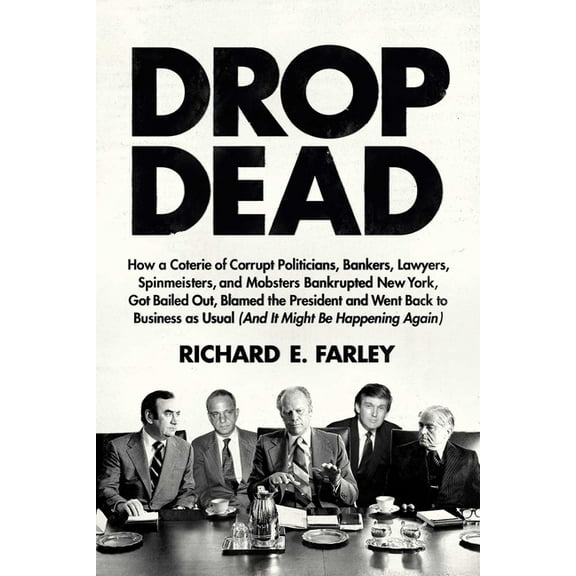 $1804current price $18.04
Drop Dead : How a Coterie of Corrupt Politicians, Bankers, Lawyers, Spinmeisters, and Mobsters Bankrupted New York, Got Bailed Out, Blamed the President, and Went Back to Business as Usual (And It Might Be Happening Again) (Hardcover)
The Roots of Urban Renaissance: Gentrification and the Struggle Over Harlem, (Hardcover) $40.99
 $4099current price $40.99
The Roots of Urban Renaissance: Gentrification and the Struggle Over Harlem, (Hardcover)
Politics and Culture in Modern America This Is My Jail: Local Politics and the Rise of Mass Incarceration, (Hardcover) $30.73
 $3073current price $30.73
Politics and Culture in Modern America This Is My Jail: Local Politics and the Rise of Mass Incarceration, (Hardcover)
Best seller 1929: Inside the Greatest Crash in Wall Street History--And How It Shattered a Nation (Hardcover) $20.59
Best seller $2059current price $20.59
1929: Inside the Greatest Crash in Wall Street History--And How It Shattered a Nation (Hardcover)
434.8 out of 5 Stars. 43 reviewsNorton Essays in American History The Great Bull Market: Wall Street in the 1920s, Book 0, (Paperback) $27.67
 $2767current price $27.67
Norton Essays in American History The Great Bull Market: Wall Street in the 1920s, Book 0, (Paperback)
25 out of 5 Stars. 2 reviewsDirtiest, Filthiest, Rottenest, Crookedest Business in the World : That Cesspool Called Wall Street $33.69
 $3369current price $33.69
Dirtiest, Filthiest, Rottenest, Crookedest Business in the World : That Cesspool Called Wall Street
Morningside Book People, Plans, and Policies: Essays on Poverty, Racism, and Other National Urban Problems, (Paperback) $29.00
 $2900current price $29.00
Morningside Book People, Plans, and Policies: Essays on Poverty, Racism, and Other National Urban Problems, (Paperback)
Chain of Title: How Three Ordinary Americans Uncovered Wall Street's Great Foreclosure Fraud, (Paperback) $16.37
 $1637current price $16.37
Chain of Title: How Three Ordinary Americans Uncovered Wall Street's Great Foreclosure Fraud, (Paperback)
America's Black Wall Street, (Hardcover) $25.00
 $2500current price $25.00
America's Black Wall Street, (Hardcover)
Pre-Owned They Came Before Columbus: The African Presence in Ancient America (Hardcover) 0394402456 9780394402451 $18.99 Was $28.82
 2 optionsAvailable in additional 2 options$1899current price $18.99, Was $28.82$28.82
Pre-Owned They Came Before Columbus: The African Presence in Ancient America (Hardcover) 0394402456 9780394402451
Pre-Owned Liar's Poker: Rising Through the Wreckage on Wall Street (Hardcover) 0393246108 9780393246100 $11.71
 3 optionsAvailable in additional 3 options$1171current price $11.71
Pre-Owned Liar's Poker: Rising Through the Wreckage on Wall Street (Hardcover) 0393246108 9780393246100
Winning America's Second Civil War: Progressivism's Authoritarian Threat, Where It Came From, and How to Defeat It, (Hardcover) $15.80
 $1580current price $15.80
Winning America's Second Civil War: Progressivism's Authoritarian Threat, Where It Came From, and How to Defeat It, (Hardcover)
America's First Great Depression: Economic Crisis and Political Disorder After the Panic of 1837, (Hardcover) $54.90
 $5490current price $54.90
America's First Great Depression: Economic Crisis and Political Disorder After the Panic of 1837, (Hardcover)
Demand Transparency: Stop Wall Street Greed and Rising Taxes From Destroying Your Wealth (Hardcover) $19.50 Was $23.56
 $1950current price $19.50, Was $23.56$23.56
Demand Transparency: Stop Wall Street Greed and Rising Taxes From Destroying Your Wealth (Hardcover)
How to Fight Discrimination in America KNOW YOUR RIGHTS!, (Paperback) $27.95
 $2795current price $27.95
How to Fight Discrimination in America KNOW YOUR RIGHTS!, (Paperback)
The Midas Paradox : Financial Markets, Government Policy Shocks, and the Great Depression (Hardcover) $30.08
 $3008current price $30.08
The Midas Paradox : Financial Markets, Government Policy Shocks, and the Great Depression (Hardcover)
The Vanishing American Dream: A Frank Look at the Economic Realities Facing Middle- And Lower-Income Americans, (Hardcover) $26.57
 $2657current price $26.57
The Vanishing American Dream: A Frank Look at the Economic Realities Facing Middle- And Lower-Income Americans, (Hardcover)
Pre-Occupy-Ed: How the Occupy Wall Street Movement Will Economically Destroy America, (Paperback) $18.81
 $1881current price $18.81
Pre-Occupy-Ed: How the Occupy Wall Street Movement Will Economically Destroy America, (Paperback)
The People Can Fly: American Promise, Black Prodigies, and the Greatest Miracle of All Time, (Hardcover) $25.74
 $2574current price $25.74
The People Can Fly: American Promise, Black Prodigies, and the Greatest Miracle of All Time, (Hardcover)
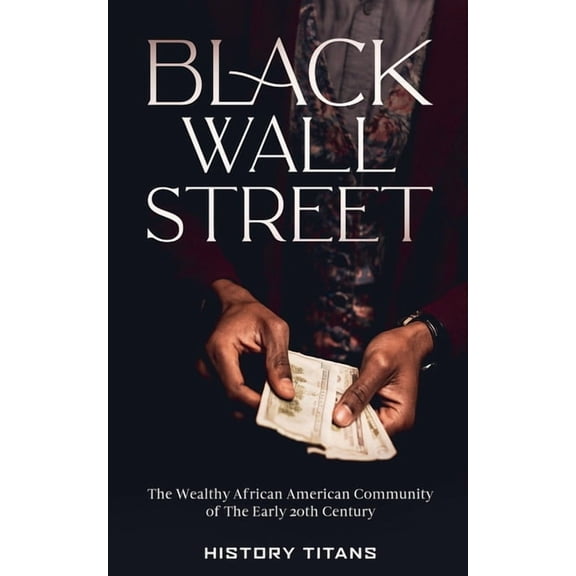
Black Wall Street: The Wealthy African American Community of the Early 20th Century, (Paperback) $9.99
 $999current price $9.99
Black Wall Street: The Wealthy African American Community of the Early 20th Century, (Paperback)
15 out of 5 Stars. 1 reviews
Customer ratings & reviews
0 ratings|0 reviews
This item does not have any reviews yet
