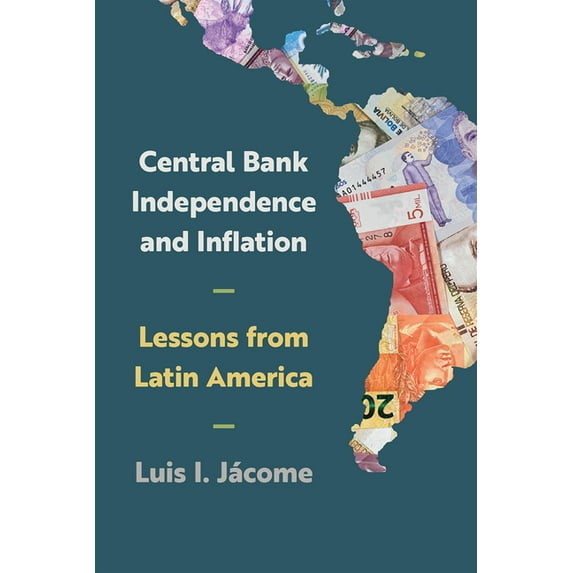
"The most important economic reform of our time is, arguably, granting central banks independence to make them apolitical, state-owned institutions. After years of macroeconomic instability, central bank independence (CBI) has played a pivotal role in achieving low inflation in most countries worldwide, but in some nations--including the United States, Hungary, Turkey, Brazil, Colombia, and Mexico--central banks have been blamed for focusing on fighting inflation at the expense of economic growth. However, complaints about CBI rest on a false premise. Loose monetary policy does not secure economic growth. Instead, price stability is a necessary-although not sufficient-condition for long-run economic growth and, hence, for improving living standards. The author, an Ecuadorian economist and adjunct professor at the Walsh School of Foreign Service, argues that countries should support central banks' political independence and, specifically, avoid requiring central banks to print money to finance fiscal deficits if they want to keep inflation in check. Deeply grounded in history, the book analyzes the evolution of CBI in Latin America and distills lessons from the often dire consequences of weakening this institutional arrangement, including hyperinflation and exchange rate instability"-- Provided by publisher.
A history of the institutional reform of monetary policy in Latin America, with lessons for today
After years of macroeconomic instability, central bank independence (CBI) is playing a pivotal role in achieving low inflation worldwide. But in some nations-including Brazil, Colombia, Hungary, India, Mexico, Tüuuml;rkiye, and the United States-- central banks have been blamed for focusing only on fighting inflation at the expense of economic growth.
Central Bank Independence and Inflation argues that countries must continue supporting the independence of central banks to keep inflation in check and hence promote long-run economic growth. Jáaacute;come analyzes the evolution of CBI in Latin America from its creation in the 1920s to the present day. He warns against requiring central banks to print money to finance fiscal deficits, because it hinders economic growth. He creates a database of central bank independence to track its evolution and provides empirical evidence of a negative correlation with inflation.
Deeply grounded in history, Central Bank Independence and Inflation warns against the consequences of weakening this institutional arrangement. It is the first book to provide a historical account of Latin America's CBI and will be a valuable resource for those interested in monetary policy.