

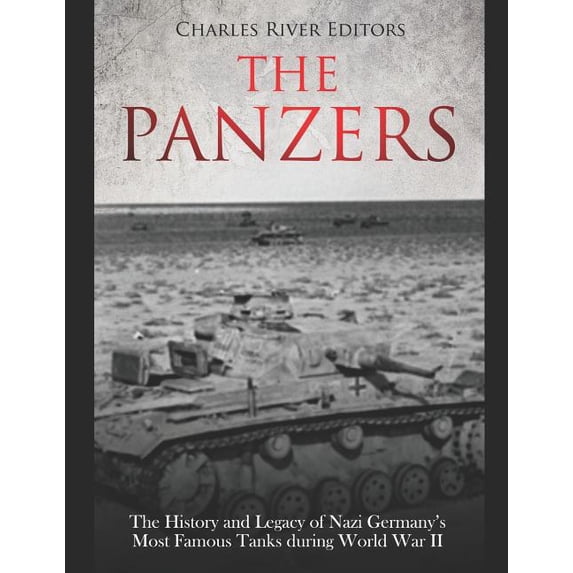
The Panzers : The History and Legacy of Nazi Germany's Most Famous Tanks during World War II (Paperback)
(No ratings yet)
Key item features
The Panzers (Paperback)
Specs
- Book formatPaperback
- Fiction/nonfictionNon-Fiction
- GenreHistory
- Pages122
- SubgenreHistory
- Original languagesEnglish
Current price is USD$11.24
Price when purchased online
 Free 30-day returns
How do you want your item?
Columbus, 43215
Arrives by Tue, Apr 21
|Shipping fee $7.98

Sold and shipped by Best Prices & Service
4.344827586206897 stars out of 5, based on 232 seller reviews(4.3)232 seller reviews

Free 30-day returns - in store or online
About this item
Product details
*Includes pictures
*Includes online resources and a bibliography for further reading
World War II was the culmination of a quarter century of tank development, and it would also be the first major test of tanks in mobile warfare, during which they had to face other tanks. However, many of the tanks were constructed with the static warfare of the Western Front in mind and were thus slow and had short operational ranges. Others were too light to face opposing tanks or the new generation of anti-tank weapons that hadn't existed in World War I. The unsuitability of these tank models for this new kind of warfare was quickly recognized, and the belligerent powers scrambled to create better designs. As each new, improved model came off the assembly lines, the opposing powers rushed to create a tank that could beat it. In that regard, World War II was also a war between rival engineers.
At the same time, German military officials were at the forefront of developing new ideologies when it came to utilizing their tanks to maximum effect. Heinz Guderian even published a book on the topic before becoming one of the Third Reich's most effective tank commanders. Moreover, during the German invasion of Poland, Nazi forces gained experience they would use across Europe and in Russia. After all, it was in Poland that the Wehrmacht saw action for the first time, conducting what was not only an invasion but also a trial run of its new equipment and tactics. The Polish invasion proved invaluable in providing the German high command with a low-risk, high-value live fire exercise for their newly minted war machine, while the actual combat experience highlighted the remaining flaws in the system. During the campaign, the Germans honed tactics and weapon systems for the massive struggle with the Soviets, British, and United States that loomed on the horizon.
The beginning of World War II found the major powers developing tanks to some extent, but lingering ideas from World War I affected the development of tanks during the Interwar period. As a result, aside from the blitzkrieg doctrine developed by the Nazis, tanks were still used in terms of infantry support, and there were few wars during this period to give strategists the chance to develop better uses for the new armored vehicles before World War II started. Commanders soon found that many of the tanks fielded in the campaigns of 1939-1941 lacked the necessary armor, guns, and designs.
Inevitably, tactics evolved throughout the war. The Germans were early leaders in tank tactics, as their successes from Poland through the opening phases of Operation Barbarossa demonstrated. The main German tank tactic was the so-called Schwerpunkt ("center of gravity"), in which a concentration of tanks achieved a local superiority, broke through, and drove deep behind enemy lines, carving up frontline enemy forces that could then be surrounded and taken out by support tanks, infantry, and artillery. This is why German tanks were built for speed while maintaining good armor and weaponry.
Germany's first great victories against Poland and France were due more to the shortcomings of their enemies than the preparedness of their own military, and this was especially the case with the Panzerwaffe, the armored arm of the German forces. At the outbreak of war, their tank designs lagged behind Russia and even France, both of which had superior heavy tanks. The medium-sized Panzerkampfwagen III and IV models were already in production, but delays meant that relatively few saw frontline combat in the opening campaigns. Thus, the bulk of the effort had to be taken on by light Panzer I, which had never been intended for combat service, and the slightly more powerful Panzer II. The Germans strengthened their tank corps with captured Czech models and, later, French tanks.
*Includes online resources and a bibliography for further reading
World War II was the culmination of a quarter century of tank development, and it would also be the first major test of tanks in mobile warfare, during which they had to face other tanks. However, many of the tanks were constructed with the static warfare of the Western Front in mind and were thus slow and had short operational ranges. Others were too light to face opposing tanks or the new generation of anti-tank weapons that hadn't existed in World War I. The unsuitability of these tank models for this new kind of warfare was quickly recognized, and the belligerent powers scrambled to create better designs. As each new, improved model came off the assembly lines, the opposing powers rushed to create a tank that could beat it. In that regard, World War II was also a war between rival engineers.
At the same time, German military officials were at the forefront of developing new ideologies when it came to utilizing their tanks to maximum effect. Heinz Guderian even published a book on the topic before becoming one of the Third Reich's most effective tank commanders. Moreover, during the German invasion of Poland, Nazi forces gained experience they would use across Europe and in Russia. After all, it was in Poland that the Wehrmacht saw action for the first time, conducting what was not only an invasion but also a trial run of its new equipment and tactics. The Polish invasion proved invaluable in providing the German high command with a low-risk, high-value live fire exercise for their newly minted war machine, while the actual combat experience highlighted the remaining flaws in the system. During the campaign, the Germans honed tactics and weapon systems for the massive struggle with the Soviets, British, and United States that loomed on the horizon.
The beginning of World War II found the major powers developing tanks to some extent, but lingering ideas from World War I affected the development of tanks during the Interwar period. As a result, aside from the blitzkrieg doctrine developed by the Nazis, tanks were still used in terms of infantry support, and there were few wars during this period to give strategists the chance to develop better uses for the new armored vehicles before World War II started. Commanders soon found that many of the tanks fielded in the campaigns of 1939-1941 lacked the necessary armor, guns, and designs.
Inevitably, tactics evolved throughout the war. The Germans were early leaders in tank tactics, as their successes from Poland through the opening phases of Operation Barbarossa demonstrated. The main German tank tactic was the so-called Schwerpunkt ("center of gravity"), in which a concentration of tanks achieved a local superiority, broke through, and drove deep behind enemy lines, carving up frontline enemy forces that could then be surrounded and taken out by support tanks, infantry, and artillery. This is why German tanks were built for speed while maintaining good armor and weaponry.
Germany's first great victories against Poland and France were due more to the shortcomings of their enemies than the preparedness of their own military, and this was especially the case with the Panzerwaffe, the armored arm of the German forces. At the outbreak of war, their tank designs lagged behind Russia and even France, both of which had superior heavy tanks. The medium-sized Panzerkampfwagen III and IV models were already in production, but delays meant that relatively few saw frontline combat in the opening campaigns. Thus, the bulk of the effort had to be taken on by light Panzer I, which had never been intended for combat service, and the slightly more powerful Panzer II. The Germans strengthened their tank corps with captured Czech models and, later, French tanks.
The Panzers (Paperback)
info:
We aim to show you accurate product information. Manufacturers, suppliers and others provide what you see here, and we have not verified it.
Specifications
Book format
Paperback
Fiction/nonfiction
Non-Fiction
Genre
History
Pages
122
Warranty
Warranty information
Please be aware that the warranty terms on items offered for sale by third party Marketplace sellers may differ from those displayed in this section (if any). To confirm warranty terms on an item offered for sale by a third party Marketplace seller, please use the 'Contact seller' feature on the third party Marketplace seller's information page and request the item's warranty terms prior to purchase.
Customer ratings & reviews
0 ratings|0 reviews
This item does not have any reviews yet
