

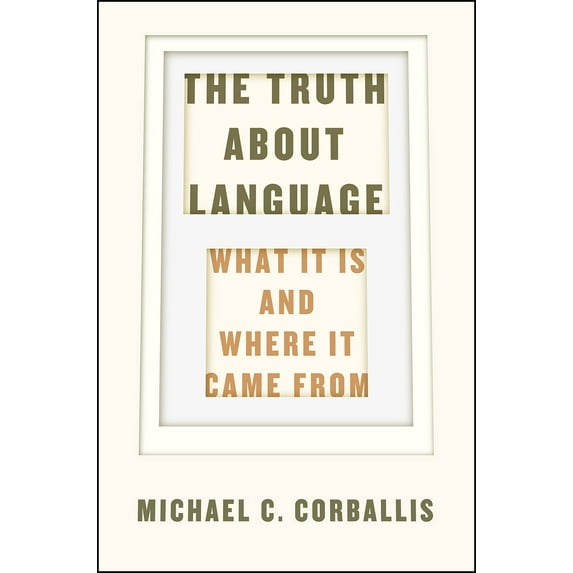
Hero image 0 of The Truth about Language : What It Is and Where It Came From (Hardcover), 0 of 1
The Truth about Language : What It Is and Where It Came From (Hardcover)
(No ratings yet)
Key item features
Evolutionary science has long viewed language as, basically, a fortunate accident—a crossing of wires that happened to be extraordinarily useful, setting humans apart from other animals and onto a trajectory that would see their brains (and the products of those brains) become increasingly complex.
But as Michael C. Corballis shows in The Truth about Language, it’s time to reconsider those assumptions. Language, he argues, is not the product of some “big bang” 60,000 years ago, but rather the result of a typically slow process of evolution with roots in elements of grammatical language found much farther back in our evolutionary history. Language, Corballis explains, evolved as a way to share thoughts—and, crucially for human development, to connect our own “mental time travel,” our imagining of events and people that are not right in front of us, to that of other people. We share that ability with other animals, but it was the development of language that made it powerful: it led to our ability to imagine other perspectives, to imagine ourselves in the minds of others, a development that, by easing social interaction, proved to be an extraordinary evolutionary advantage.
Even as his thesis challenges such giants as Chomsky and Stephen Jay Gould, Corballis writes accessibly and wittily, filling his account with unforgettable anecdotes and fascinating historical examples. The result is a book that’s perfect both for deep engagement and as brilliant fodder for that lightest of all forms of language, cocktail party chatter.
But as Michael C. Corballis shows in The Truth about Language, it’s time to reconsider those assumptions. Language, he argues, is not the product of some “big bang” 60,000 years ago, but rather the result of a typically slow process of evolution with roots in elements of grammatical language found much farther back in our evolutionary history. Language, Corballis explains, evolved as a way to share thoughts—and, crucially for human development, to connect our own “mental time travel,” our imagining of events and people that are not right in front of us, to that of other people. We share that ability with other animals, but it was the development of language that made it powerful: it led to our ability to imagine other perspectives, to imagine ourselves in the minds of others, a development that, by easing social interaction, proved to be an extraordinary evolutionary advantage.
Even as his thesis challenges such giants as Chomsky and Stephen Jay Gould, Corballis writes accessibly and wittily, filling his account with unforgettable anecdotes and fascinating historical examples. The result is a book that’s perfect both for deep engagement and as brilliant fodder for that lightest of all forms of language, cocktail party chatter.
Specs
- Manual & guide typeInstruction Manual
- Book formatHardcover
- Edition1
- Pages288
- LanguageEnglish
- Pub date2017-03-29
Current price is USD$29.85
Price when purchased online
- Free shipping
 Free 30-day returns
How do you want your item?
Columbus, 43215
Arrives between May 12 - May 18
|
Sold and shipped by newbookdeals
4.5602910602910605 stars out of 5, based on 1924 seller reviews(4.6)1924 seller reviews

Free 30-day returns - in store or online
About this item
Product details
Evolutionary science has long viewed language as, basically, a fortunate accident--a crossing of wires that happened to be extraordinarily useful, setting humans apart from other animals and onto a trajectory that would see their brains (and the products of those brains) become increasingly complex. But as Michael C. Corballis shows in The Truth about Language, it's time to reconsider those assumptions. Language, he argues, is not the product of some "big bang" 60,000 years ago, but rather the result of a typically slow process of evolution with roots in elements of grammatical language found much farther back in our evolutionary history. Language, Corballis explains, evolved as a way to share thoughts--and, crucially for human development, to connect our own "mental time travel," our imagining of events and people that are not right in front of us, to that of other people. We share that ability with other animals, but it was the development of language that made it powerful: it led to our ability to imagine other perspectives, to imagine ourselves in the minds of others, a development that, by easing social interaction, proved to be an extraordinary evolutionary advantage.
Even as his thesis challenges such giants as Chomsky and Stephen Jay Gould, Corballis writes accessibly and wittily, filling his account with unforgettable anecdotes and fascinating historical examples. The result is a book that's perfect both for deep engagement and as brilliant fodder for that lightest of all forms of language, cocktail party chatter.
Even as his thesis challenges such giants as Chomsky and Stephen Jay Gould, Corballis writes accessibly and wittily, filling his account with unforgettable anecdotes and fascinating historical examples. The result is a book that's perfect both for deep engagement and as brilliant fodder for that lightest of all forms of language, cocktail party chatter.
Evolutionary science has long viewed language as, basically, a fortunate accident—a crossing of wires that happened to be extraordinarily useful, setting humans apart from other animals and onto a trajectory that would see their brains (and the products of those brains) become increasingly complex.
But as Michael C. Corballis shows in The Truth about Language, it’s time to reconsider those assumptions. Language, he argues, is not the product of some “big bang” 60,000 years ago, but rather the result of a typically slow process of evolution with roots in elements of grammatical language found much farther back in our evolutionary history. Language, Corballis explains, evolved as a way to share thoughts—and, crucially for human development, to connect our own “mental time travel,” our imagining of events and people that are not right in front of us, to that of other people. We share that ability with other animals, but it was the development of language that made it powerful: it led to our ability to imagine other perspectives, to imagine ourselves in the minds of others, a development that, by easing social interaction, proved to be an extraordinary evolutionary advantage.
Even as his thesis challenges such giants as Chomsky and Stephen Jay Gould, Corballis writes accessibly and wittily, filling his account with unforgettable anecdotes and fascinating historical examples. The result is a book that’s perfect both for deep engagement and as brilliant fodder for that lightest of all forms of language, cocktail party chatter.
But as Michael C. Corballis shows in The Truth about Language, it’s time to reconsider those assumptions. Language, he argues, is not the product of some “big bang” 60,000 years ago, but rather the result of a typically slow process of evolution with roots in elements of grammatical language found much farther back in our evolutionary history. Language, Corballis explains, evolved as a way to share thoughts—and, crucially for human development, to connect our own “mental time travel,” our imagining of events and people that are not right in front of us, to that of other people. We share that ability with other animals, but it was the development of language that made it powerful: it led to our ability to imagine other perspectives, to imagine ourselves in the minds of others, a development that, by easing social interaction, proved to be an extraordinary evolutionary advantage.
Even as his thesis challenges such giants as Chomsky and Stephen Jay Gould, Corballis writes accessibly and wittily, filling his account with unforgettable anecdotes and fascinating historical examples. The result is a book that’s perfect both for deep engagement and as brilliant fodder for that lightest of all forms of language, cocktail party chatter.
info:
We aim to show you accurate product information. Manufacturers, suppliers and others provide what you see here, and we have not verified it.
Specifications
Manual & guide type
Instruction Manual
Book format
Hardcover
Edition
1
Pages
288
Warranty
Warranty information
Please be aware that the warranty terms on items offered for sale by third party Marketplace sellers may differ from those displayed in this section (if any). To confirm warranty terms on an item offered for sale by a third party Marketplace seller, please use the 'Contact seller' feature on the third party Marketplace seller's information page and request the item's warranty terms prior to purchase.
Warnings
State Chemical Disclosure
None
Similar items you might like
Based on what customers bought
The Banquet of Wit (Hardcover) $30.10
 $3010current price $30.10
The Banquet of Wit (Hardcover)
Hymns for Children (Hardcover) $30.10
 $3010current price $30.10
Hymns for Children (Hardcover)
Using Corpora to Analyze Gender, (Paperback) $52.95
 $5295current price $52.95
Using Corpora to Analyze Gender, (Paperback)
Dilworth's Spelling-book, Improved: a New Guide to the English Tongue ..., (Hardcover) $30.95
 $3095current price $30.95
Dilworth's Spelling-book, Improved: a New Guide to the English Tongue ..., (Hardcover)
Grundriss Der Vergleichenden Grammatik Der Indogermanischen Sprachen, (Paperback) $40.00
 $4000current price $40.00
Grundriss Der Vergleichenden Grammatik Der Indogermanischen Sprachen, (Paperback)
Mouton Reader Cognitive Linguistics - Key Topics, (Paperback) $34.66
 $3466current price $34.66
Mouton Reader Cognitive Linguistics - Key Topics, (Paperback)
Handbuch Der Zendsprache : Altbactrisches Woerterbuch. Grammatik. Chrestomathie (Paperback) $33.88
 $3388current price $33.88
Handbuch Der Zendsprache : Altbactrisches Woerterbuch. Grammatik. Chrestomathie (Paperback)
Studies in Eighteenth and Nineteenth Cen Forms of Speech in Victorian Fiction, (Paperback) $29.99
 $2999current price $29.99
Studies in Eighteenth and Nineteenth Cen Forms of Speech in Victorian Fiction, (Paperback)
Comparative Vocabularies of Bushman Languages, (Paperback) $27.99
 $2799current price $27.99
Comparative Vocabularies of Bushman Languages, (Paperback)
Interpreting and technology (Hardcover) $33.70 Was $40.40
 $3370current price $33.70, Was $40.40$40.40
Interpreting and technology (Hardcover)
Death: A Poetical Essay. By Beilby Porteus, ... The Second Edition (Hardcover) $26.95
 $2695current price $26.95
Death: A Poetical Essay. By Beilby Porteus, ... The Second Edition (Hardcover)
Moving Boundaries in Translation Studies, (Paperback) $64.60
 $6460current price $64.60
Moving Boundaries in Translation Studies, (Paperback)
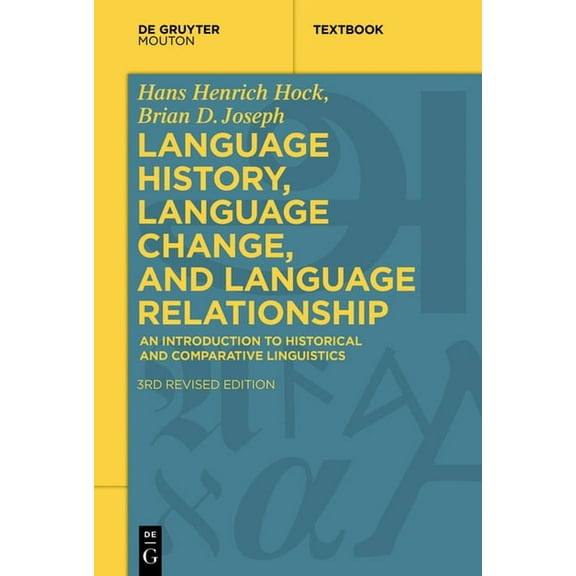
Mouton Textbook Language History, Language Change, and Language Relationship: An Introduction to Historical and Comparative Linguistics, (Paperback) $37.97
 $3797current price $37.97
Mouton Textbook Language History, Language Change, and Language Relationship: An Introduction to Historical and Comparative Linguistics, (Paperback)
Methode French Kids 11 --Kids 11 Book Kit, (Paperback) $31.90
 $3190current price $31.90
Methode French Kids 11 --Kids 11 Book Kit, (Paperback)
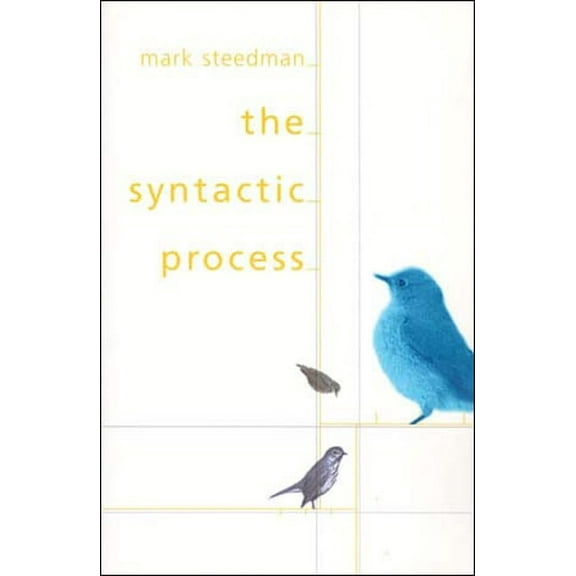
Language, Speech, and Communication The Syntactic Process, (Paperback) $50.12
 $5012current price $50.12
Language, Speech, and Communication The Syntactic Process, (Paperback)
Conversation Analysis (Paperback) $30.00
 $3000current price $30.00
Conversation Analysis (Paperback)
A Student's Guide to the Ma TESOL, (Paperback) $27.49 Was $54.99
 $2749current price $27.49, Was $54.99$54.99
A Student's Guide to the Ma TESOL, (Paperback)
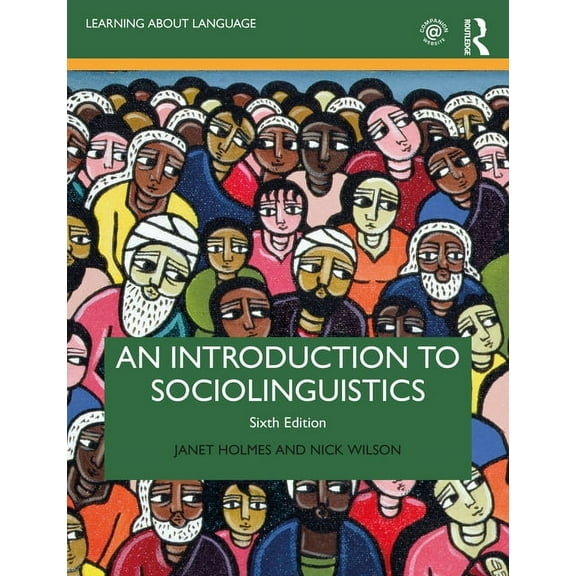
Learning about Language An Introduction to Sociolinguistics, (Paperback) $27.64
 $2764current price $27.64
Learning about Language An Introduction to Sociolinguistics, (Paperback)

Customer ratings & reviews
0 ratings|0 reviews
This item does not have any reviews yet
