

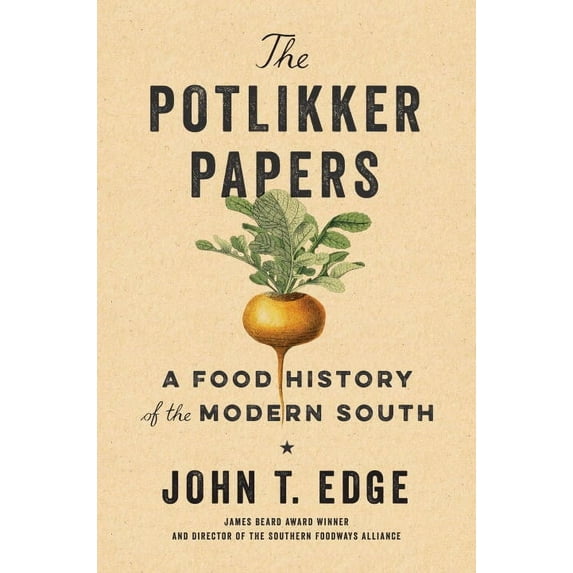
Hero image 0 of The Potlikker Papers, 0 of 1
The Potlikker Papers
(No ratings yet)
Book Format:Hardcover-Out of stock
Key item features
“The one food book you must read this year."
—Southern Living
One of Christopher Kimball’s Six Favorite Books About Food
A people’s history that reveals how Southerners shaped American culinary identity and how race relations impacted Southern food culture over six revolutionary decades
Like great provincial dishes around the world, potlikker is a salvage food. During the antebellum era, slave owners ate the greens from the pot and set aside the leftover potlikker broth for the enslaved, unaware that the broth, not the greens, was nutrient rich. After slavery, potlikker sustained the working poor, both black and white. In the South of today, potlikker has taken on new meanings as chefs have reclaimed it. Potlikker is a quintessential Southern dish, and The Potlikker Papers is a people’s history of the modern South, told through its food. Beginning with the pivotal role cooks and waiters played in the civil rights movement, noted authority John T. Edge narrates the South’s fitful journey from a hive of racism to a hotbed of American immigration. He shows why working-class Southern food has become a vital driver of contemporary American cuisine.
Food access was a battleground issue during the 1950s and 1960s. Ownership of culinary traditions has remained a central contention on the long march toward equality. The Potlikker Papers tracks pivotal moments in Southern history, from the back-to-the-land movement of the 1970s to the rise of fast and convenience foods modeled on rural staples. Edge narrates the gentrification that gained traction in the restaurants of the 1980s and the artisanal renaissance that began to reconnect farmers and cooks in the 1990s. He reports as a newer South came into focus in the 2000s and 2010s, enriched by the arrival of immigrants from Mexico to Vietnam and many points in between. Along the way, Edge profiles extraordinary figures in Southern food, including Fannie Lou Hamer, Colonel Sanders, Mahalia Jackson, Edna Lewis, Paul Prudhomme, Craig Claiborne, and Sean Brock.
Over the last three generations, wrenching changes have transformed the South. The Potlikker Papers tells the story of that dynamism—and reveals how Southern food has become a shared culinary language for the nation.
—Southern Living
One of Christopher Kimball’s Six Favorite Books About Food
A people’s history that reveals how Southerners shaped American culinary identity and how race relations impacted Southern food culture over six revolutionary decades
Like great provincial dishes around the world, potlikker is a salvage food. During the antebellum era, slave owners ate the greens from the pot and set aside the leftover potlikker broth for the enslaved, unaware that the broth, not the greens, was nutrient rich. After slavery, potlikker sustained the working poor, both black and white. In the South of today, potlikker has taken on new meanings as chefs have reclaimed it. Potlikker is a quintessential Southern dish, and The Potlikker Papers is a people’s history of the modern South, told through its food. Beginning with the pivotal role cooks and waiters played in the civil rights movement, noted authority John T. Edge narrates the South’s fitful journey from a hive of racism to a hotbed of American immigration. He shows why working-class Southern food has become a vital driver of contemporary American cuisine.
Food access was a battleground issue during the 1950s and 1960s. Ownership of culinary traditions has remained a central contention on the long march toward equality. The Potlikker Papers tracks pivotal moments in Southern history, from the back-to-the-land movement of the 1970s to the rise of fast and convenience foods modeled on rural staples. Edge narrates the gentrification that gained traction in the restaurants of the 1980s and the artisanal renaissance that began to reconnect farmers and cooks in the 1990s. He reports as a newer South came into focus in the 2000s and 2010s, enriched by the arrival of immigrants from Mexico to Vietnam and many points in between. Along the way, Edge profiles extraordinary figures in Southern food, including Fannie Lou Hamer, Colonel Sanders, Mahalia Jackson, Edna Lewis, Paul Prudhomme, Craig Claiborne, and Sean Brock.
Over the last three generations, wrenching changes have transformed the South. The Potlikker Papers tells the story of that dynamism—and reveals how Southern food has become a shared culinary language for the nation.
Specs
- Book formatHardcover
- Fiction/nonfictionNon-Fiction
- Publication dateMay, 2017
- Pages384
- EditionStandard Edition
- PublisherPenguin Publishing Group
Price when purchased online
Not Available
How do you want your item?
Not available
About this item
Product details
"The one food book you must read this year."
--Southern Living One of Christopher Kimball's Six Favorite Books About Food A people's history that reveals how Southerners shaped American culinary identity and how race relations impacted Southern food culture over six revolutionary decades Like great provincial dishes around the world, potlikker is a salvage food. During the antebellum era, slave owners ate the greens from the pot and set aside the leftover potlikker broth for the enslaved, unaware that the broth, not the greens, was nutrient rich. After slavery, potlikker sustained the working poor, both black and white. In the South of today, potlikker has taken on new meanings as chefs have reclaimed it. Potlikker is a quintessential Southern dish, and The Potlikker Papers is a people's history of the modern South, told through its food. Beginning with the pivotal role cooks and waiters played in the civil rights movement, noted authority John T. Edge narrates the South's fitful journey from a hive of racism to a hotbed of American immigration. He shows why working-class Southern food has become a vital driver of contemporary American cuisine. Food access was a battleground issue during the 1950s and 1960s. Ownership of culinary traditions has remained a central contention on the long march toward equality. The Potlikker Papers tracks pivotal moments in Southern history, from the back-to-the-land movement of the 1970s to the rise of fast and convenience foods modeled on rural staples. Edge narrates the gentrification that gained traction in the restaurants of the 1980s and the artisanal renaissance that began to reconnect farmers and cooks in the 1990s. He reports as a newer South came into focus in the 2000s and 2010s, enriched by the arrival of immigrants from Mexico to Vietnam and many points in between. Along the way, Edge profiles extraordinary figures in Southern food, including Fannie Lou Hamer, Colonel Sanders, Mahalia Jackson, Edna Lewis, Paul Prudhomme, Craig Claiborne, and Sean Brock. Over the last three generations, wrenching changes have transformed the South. The Potlikker Papers tells the story of that dynamism--and reveals how Southern food has become a shared culinary language for the nation.
--Southern Living One of Christopher Kimball's Six Favorite Books About Food A people's history that reveals how Southerners shaped American culinary identity and how race relations impacted Southern food culture over six revolutionary decades Like great provincial dishes around the world, potlikker is a salvage food. During the antebellum era, slave owners ate the greens from the pot and set aside the leftover potlikker broth for the enslaved, unaware that the broth, not the greens, was nutrient rich. After slavery, potlikker sustained the working poor, both black and white. In the South of today, potlikker has taken on new meanings as chefs have reclaimed it. Potlikker is a quintessential Southern dish, and The Potlikker Papers is a people's history of the modern South, told through its food. Beginning with the pivotal role cooks and waiters played in the civil rights movement, noted authority John T. Edge narrates the South's fitful journey from a hive of racism to a hotbed of American immigration. He shows why working-class Southern food has become a vital driver of contemporary American cuisine. Food access was a battleground issue during the 1950s and 1960s. Ownership of culinary traditions has remained a central contention on the long march toward equality. The Potlikker Papers tracks pivotal moments in Southern history, from the back-to-the-land movement of the 1970s to the rise of fast and convenience foods modeled on rural staples. Edge narrates the gentrification that gained traction in the restaurants of the 1980s and the artisanal renaissance that began to reconnect farmers and cooks in the 1990s. He reports as a newer South came into focus in the 2000s and 2010s, enriched by the arrival of immigrants from Mexico to Vietnam and many points in between. Along the way, Edge profiles extraordinary figures in Southern food, including Fannie Lou Hamer, Colonel Sanders, Mahalia Jackson, Edna Lewis, Paul Prudhomme, Craig Claiborne, and Sean Brock. Over the last three generations, wrenching changes have transformed the South. The Potlikker Papers tells the story of that dynamism--and reveals how Southern food has become a shared culinary language for the nation.
“The one food book you must read this year."
—Southern Living
One of Christopher Kimball’s Six Favorite Books About Food
A people’s history that reveals how Southerners shaped American culinary identity and how race relations impacted Southern food culture over six revolutionary decades
Like great provincial dishes around the world, potlikker is a salvage food. During the antebellum era, slave owners ate the greens from the pot and set aside the leftover potlikker broth for the enslaved, unaware that the broth, not the greens, was nutrient rich. After slavery, potlikker sustained the working poor, both black and white. In the South of today, potlikker has taken on new meanings as chefs have reclaimed it. Potlikker is a quintessential Southern dish, and The Potlikker Papers is a people’s history of the modern South, told through its food. Beginning with the pivotal role cooks and waiters played in the civil rights movement, noted authority John T. Edge narrates the South’s fitful journey from a hive of racism to a hotbed of American immigration. He shows why working-class Southern food has become a vital driver of contemporary American cuisine.
Food access was a battleground issue during the 1950s and 1960s. Ownership of culinary traditions has remained a central contention on the long march toward equality. The Potlikker Papers tracks pivotal moments in Southern history, from the back-to-the-land movement of the 1970s to the rise of fast and convenience foods modeled on rural staples. Edge narrates the gentrification that gained traction in the restaurants of the 1980s and the artisanal renaissance that began to reconnect farmers and cooks in the 1990s. He reports as a newer South came into focus in the 2000s and 2010s, enriched by the arrival of immigrants from Mexico to Vietnam and many points in between. Along the way, Edge profiles extraordinary figures in Southern food, including Fannie Lou Hamer, Colonel Sanders, Mahalia Jackson, Edna Lewis, Paul Prudhomme, Craig Claiborne, and Sean Brock.
Over the last three generations, wrenching changes have transformed the South. The Potlikker Papers tells the story of that dynamism—and reveals how Southern food has become a shared culinary language for the nation.
—Southern Living
One of Christopher Kimball’s Six Favorite Books About Food
A people’s history that reveals how Southerners shaped American culinary identity and how race relations impacted Southern food culture over six revolutionary decades
Like great provincial dishes around the world, potlikker is a salvage food. During the antebellum era, slave owners ate the greens from the pot and set aside the leftover potlikker broth for the enslaved, unaware that the broth, not the greens, was nutrient rich. After slavery, potlikker sustained the working poor, both black and white. In the South of today, potlikker has taken on new meanings as chefs have reclaimed it. Potlikker is a quintessential Southern dish, and The Potlikker Papers is a people’s history of the modern South, told through its food. Beginning with the pivotal role cooks and waiters played in the civil rights movement, noted authority John T. Edge narrates the South’s fitful journey from a hive of racism to a hotbed of American immigration. He shows why working-class Southern food has become a vital driver of contemporary American cuisine.
Food access was a battleground issue during the 1950s and 1960s. Ownership of culinary traditions has remained a central contention on the long march toward equality. The Potlikker Papers tracks pivotal moments in Southern history, from the back-to-the-land movement of the 1970s to the rise of fast and convenience foods modeled on rural staples. Edge narrates the gentrification that gained traction in the restaurants of the 1980s and the artisanal renaissance that began to reconnect farmers and cooks in the 1990s. He reports as a newer South came into focus in the 2000s and 2010s, enriched by the arrival of immigrants from Mexico to Vietnam and many points in between. Along the way, Edge profiles extraordinary figures in Southern food, including Fannie Lou Hamer, Colonel Sanders, Mahalia Jackson, Edna Lewis, Paul Prudhomme, Craig Claiborne, and Sean Brock.
Over the last three generations, wrenching changes have transformed the South. The Potlikker Papers tells the story of that dynamism—and reveals how Southern food has become a shared culinary language for the nation.
info:
We aim to show you accurate product information. Manufacturers, suppliers and others provide what you see here, and we have not verified it.
Specifications
Book format
Hardcover
Fiction/nonfiction
Non-Fiction
Genre
Social Science/Agriculture & Food
Publication date
May, 2017
Similar items you might like
Based on what customers bought
The Book With No Name, (Paperback) $23.64
 $2364current price $23.64
The Book With No Name, (Paperback)
Best seller Holy Bible: The New Testament (Hardcover) $1.98
Best seller $198current price $1.98
Holy Bible: The New Testament (Hardcover)
1664.3 out of 5 Stars. 166 reviewsAssynt And Lochinver $28.10
 $2810current price $28.10
Assynt And Lochinver
Adrift $25.37
 $2537current price $25.37
Adrift
It'S Tough At The Top $31.68
 $3168current price $31.68
It'S Tough At The Top
Warning $10.98 Was $33.32
 $1098current price $10.98, Was $33.32$33.32
Warning
Hillwalking $34.69
 $3469current price $34.69
Hillwalking
9781846236433 $41.73
 $4173current price $41.73
9781846236433
Okehampton $22.80
 $2280current price $22.80
Okehampton
-NA- $34.95
 $3495current price $34.95
-NA-
Living Within the Truth $21.46
 $2146current price $21.46
Living Within the Truth
Bookbindings, (Paperback) $21.93
 $2193current price $21.93
Bookbindings, (Paperback)
Fraserburgh, Peterhead & Ellon $22.80
 $2280current price $22.80
Fraserburgh, Peterhead & Ellon
You Can't Go Back, (Paperback) $9.99
 $999current price $9.99
You Can't Go Back, (Paperback)
Thurso & Dunbeath $22.80
 $2280current price $22.80
Thurso & Dunbeath
Faces $19.98
 $1998current price $19.98
Faces
Less $17.76
 $1776current price $17.76
Less
The Ottomans in Europe: Or, Turkey in the present crisis, with the secret societies' maps, (Paperback) $34.50
 $3450current price $34.50
The Ottomans in Europe: Or, Turkey in the present crisis, with the secret societies' maps, (Paperback)
Witterung: A5 Jagdtagebuch $7.77
 $777current price $7.77
Witterung: A5 Jagdtagebuch

Customer ratings & reviews
0 ratings|0 reviews
This item does not have any reviews yet
