

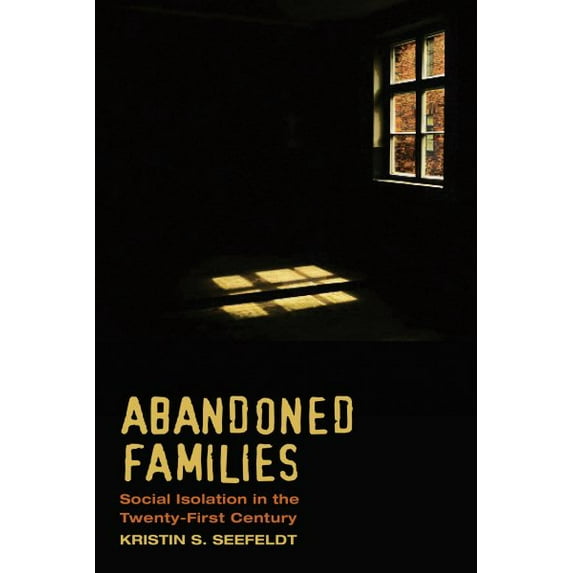
Abandoned Families : Social Isolation in the Twenty-First Century (Paperback)
(No ratings yet)
Key item features
Choosing whom to marry involves more than emotion, as racial politics, cultural mores, and local demographics all shape romantic choices. In Marriage Vows and Racial Choices, sociologist Jessica Vasquez-Tokos explores the decisions of Latinos who marry either within or outside of their racial and ethnic groups. Drawing from in-depth interviews with nearly 50 couples, she examines their marital choices and how these unions influence their identities as Americans.
Vasquez-Tokos finds that their experiences in childhood, adolescence, and young adulthood shape their perceptions of race, which in turn influence their romantic expectations. Most Latinos marry other Latinos, but those who intermarry tend to marry whites. She finds that some Latina women who had domineering fathers assumed that most Latino men shared this trait and gravitated toward white men who differed from their fathers. Other Latina respondents who married white men fused ideas of race and class and perceived whites as higher status and considered themselves to be “marrying up.” Latinos who married non-Latino minorities—African Americans, Asian Americans, and Native Americans—often sought out non-white partners because they shared similar experiences of racial marginalization. Latinos who married Latinos of a different national origin expressed a desire for shared cultural commonalities with their partners, but—like those who married whites—often associated their own national-origin groups with oppressive gender roles.
Vasquez-Tokos also investigates how racial and cultural identities are maintained or altered for the respondents’ children. Within Latino-white marriages, biculturalism—in contrast with Latinos adopting a white “American” identity—is likely to emerge. For instance, white women who married Latino men often embraced aspects of Latino culture and passed it along to their children. Yet, for these children, upholding Latino cultural ties depended on their proximity to other Latinos, particularly extended family members. Both location and family relationships shape how parents and children from interracial families understand themselves culturally.
As interracial marriages become more common, Marriage Vows and Racial Choices shows how race, gender, and class influence our marital choices and personal lives.
Vasquez-Tokos finds that their experiences in childhood, adolescence, and young adulthood shape their perceptions of race, which in turn influence their romantic expectations. Most Latinos marry other Latinos, but those who intermarry tend to marry whites. She finds that some Latina women who had domineering fathers assumed that most Latino men shared this trait and gravitated toward white men who differed from their fathers. Other Latina respondents who married white men fused ideas of race and class and perceived whites as higher status and considered themselves to be “marrying up.” Latinos who married non-Latino minorities—African Americans, Asian Americans, and Native Americans—often sought out non-white partners because they shared similar experiences of racial marginalization. Latinos who married Latinos of a different national origin expressed a desire for shared cultural commonalities with their partners, but—like those who married whites—often associated their own national-origin groups with oppressive gender roles.
Vasquez-Tokos also investigates how racial and cultural identities are maintained or altered for the respondents’ children. Within Latino-white marriages, biculturalism—in contrast with Latinos adopting a white “American” identity—is likely to emerge. For instance, white women who married Latino men often embraced aspects of Latino culture and passed it along to their children. Yet, for these children, upholding Latino cultural ties depended on their proximity to other Latinos, particularly extended family members. Both location and family relationships shape how parents and children from interracial families understand themselves culturally.
As interracial marriages become more common, Marriage Vows and Racial Choices shows how race, gender, and class influence our marital choices and personal lives.
Specs
- Book formatPaperback
- Fiction/nonfictionNon-Fiction
- Publication dateDecember, 2016
- Pages232
- Age range0 - 99 Years
- Edition1st Edition
Current price is USD$36.35
Price when purchased online
- Free shipping
 Free 30-day returns
How do you want your item?
Columbus, 43215
Arrives between May 6 - May 12
|
Sold and shipped by newbookdeals
4.559833506763788 stars out of 5, based on 1922 seller reviews(4.6)1922 seller reviews

Free 30-day returns
About this item
Product details
Choosing whom to marry involves more than emotion, as racial politics, cultural mores, and local demographics all shape romantic choices. In Marriage Vows and Racial Choices, sociologist Jessica Vasquez-Tokos explores the decisions of Latinos who marry either within or outside of their racial and ethnic groups. Drawing from in-depth interviews with nearly 50 couples, she examines their marital choices and how these unions influence their identities as Americans.
Vasquez-Tokos finds that their experiences in childhood, adolescence, and young adulthood shape their perceptions of race, which in turn influence their romantic expectations. Most Latinos marry other Latinos, but those who intermarry tend to marry whites. She finds that some Latina women who had domineering fathers assumed that most Latino men shared this trait and gravitated toward white men who differed from their fathers. Other Latina respondents who married white men fused ideas of race and class and perceived whites as higher status and considered themselves to be “marrying up.” Latinos who married non-Latino minorities—African Americans, Asian Americans, and Native Americans—often sought out non-white partners because they shared similar experiences of racial marginalization. Latinos who married Latinos of a different national origin expressed a desire for shared cultural commonalities with their partners, but—like those who married whites—often associated their own national-origin groups with oppressive gender roles.
Vasquez-Tokos also investigates how racial and cultural identities are maintained or altered for the respondents’ children. Within Latino-white marriages, biculturalism—in contrast with Latinos adopting a white “American” identity—is likely to emerge. For instance, white women who married Latino men often embraced aspects of Latino culture and passed it along to their children. Yet, for these children, upholding Latino cultural ties depended on their proximity to other Latinos, particularly extended family members. Both location and family relationships shape how parents and children from interracial families understand themselves culturally.
As interracial marriages become more common, Marriage Vows and Racial Choices shows how race, gender, and class influence our marital choices and personal lives.
Vasquez-Tokos finds that their experiences in childhood, adolescence, and young adulthood shape their perceptions of race, which in turn influence their romantic expectations. Most Latinos marry other Latinos, but those who intermarry tend to marry whites. She finds that some Latina women who had domineering fathers assumed that most Latino men shared this trait and gravitated toward white men who differed from their fathers. Other Latina respondents who married white men fused ideas of race and class and perceived whites as higher status and considered themselves to be “marrying up.” Latinos who married non-Latino minorities—African Americans, Asian Americans, and Native Americans—often sought out non-white partners because they shared similar experiences of racial marginalization. Latinos who married Latinos of a different national origin expressed a desire for shared cultural commonalities with their partners, but—like those who married whites—often associated their own national-origin groups with oppressive gender roles.
Vasquez-Tokos also investigates how racial and cultural identities are maintained or altered for the respondents’ children. Within Latino-white marriages, biculturalism—in contrast with Latinos adopting a white “American” identity—is likely to emerge. For instance, white women who married Latino men often embraced aspects of Latino culture and passed it along to their children. Yet, for these children, upholding Latino cultural ties depended on their proximity to other Latinos, particularly extended family members. Both location and family relationships shape how parents and children from interracial families understand themselves culturally.
As interracial marriages become more common, Marriage Vows and Racial Choices shows how race, gender, and class influence our marital choices and personal lives.
info:
We aim to show you accurate product information. Manufacturers, suppliers and others provide what you see here, and we have not verified it.
Specifications
Book format
Paperback
Fiction/nonfiction
Non-Fiction
Genre
Political & Social Sciences
Publication date
December, 2016
Warranty
Warranty information
Please be aware that the warranty terms on items offered for sale by third party Marketplace sellers may differ from those displayed in this section (if any). To confirm warranty terms on an item offered for sale by a third party Marketplace seller, please use the 'Contact seller' feature on the third party Marketplace seller's information page and request the item's warranty terms prior to purchase.
Similar items you might like
Based on what customers bought
Brassinosteroids: A Half Century of Progress (1970 -2020), (Paperback) $31.69 Was $35.71
 $3169current price $31.69, Was $35.71$35.71
Brassinosteroids: A Half Century of Progress (1970 -2020), (Paperback)
Celebrated Friendships, Volume II (Paperback) $31.75
 $3175current price $31.75
Celebrated Friendships, Volume II (Paperback)
The Uprising of Women in Philanthropy, (Paperback) $35.24
 $3524current price $35.24
The Uprising of Women in Philanthropy, (Paperback)
Lucta Intima : Drama Original Em 4 Actos... (Paperback) $17.95
 $1795current price $17.95
Lucta Intima : Drama Original Em 4 Actos... (Paperback)
Cartulaire De La Famille Schlumberger, 1769-1798. Tome 3 $34.95
 $3495current price $34.95
Cartulaire De La Famille Schlumberger, 1769-1798. Tome 3
Troublemakers: The Construction of 'Troubled Families' as a Social Problem, (Paperback) $36.08
 $3608current price $36.08
Troublemakers: The Construction of 'Troubled Families' as a Social Problem, (Paperback)
La guerre au vingtième siècle (Paperback) by Robida-A $16.47
 $1647current price $16.47
La guerre au vingtième siècle (Paperback) by Robida-A
The COVID-19 Crisis: Social Perspectives, (Paperback) $66.68
 $6668current price $66.68
The COVID-19 Crisis: Social Perspectives, (Paperback)
Studies in the Social and Cultural Histo Survivors, (Paperback) $31.85
 $3185current price $31.85
Studies in the Social and Cultural Histo Survivors, (Paperback)
Impossible Purities: Blackness, Femininity, and Victorian Culture, (Paperback) $37.32
 $3732current price $37.32
Impossible Purities: Blackness, Femininity, and Victorian Culture, (Paperback)
Ãtica y DeontologÃa Forense para Peritos Sociales, (Paperback) $35.50
 $3550current price $35.50
Ãtica y DeontologÃa Forense para Peritos Sociales, (Paperback)
The Social Question in the Twenty-First Century: A Global View, (Paperback) $42.02
 $4202current price $42.02
The Social Question in the Twenty-First Century: A Global View, (Paperback)
Media and Society into the 21st Century, (Paperback) $74.02
 $7402current price $74.02
Media and Society into the 21st Century, (Paperback)
Social Theory in the Twentieth Century, (Paperback) $40.72
 $4072current price $40.72
Social Theory in the Twentieth Century, (Paperback)
Middelalder-romaner I: Kristin Lavransdatter - Kransen, (Paperback) $39.00
 $3900current price $39.00
Middelalder-romaner I: Kristin Lavransdatter - Kransen, (Paperback)
Evolutionary Theory and Victorian Culture, (Paperback) $36.65
 $3665current price $36.65
Evolutionary Theory and Victorian Culture, (Paperback)
It's time to clean the Basement again, (Paperback) $21.62
 $2162current price $21.62
It's time to clean the Basement again, (Paperback)
Craun Family in America and Its Connection With Other Families ..., (Paperback) $25.91
 $2591current price $25.91
Craun Family in America and Its Connection With Other Families ..., (Paperback)
Action and Inaction in a Social World, (Paperback) $35.00
 $3500current price $35.00
Action and Inaction in a Social World, (Paperback)
Princeton Legacy Library Farm Trouble, Book 2184, (Paperback) $39.00
 $3900current price $39.00
Princeton Legacy Library Farm Trouble, Book 2184, (Paperback)
Customer ratings & reviews
0 ratings|0 reviews
This item does not have any reviews yet

Related pages
- Subversively
- Being Left
- Blacks Attacking Whites
- Racism Trial
- Douglum Adam Panic
- Unspeakable Co
- Politics & Government Teen & Young Adult Books
- Politics & Government Teen & Young Adult Books
- Business & Economics Teen & Young Adult Books
- Slavery Books
- Emigration & Immigration Social Themes Teen & Young Adult Books
- Bullying Social Themes Teen & Young Adult Books