

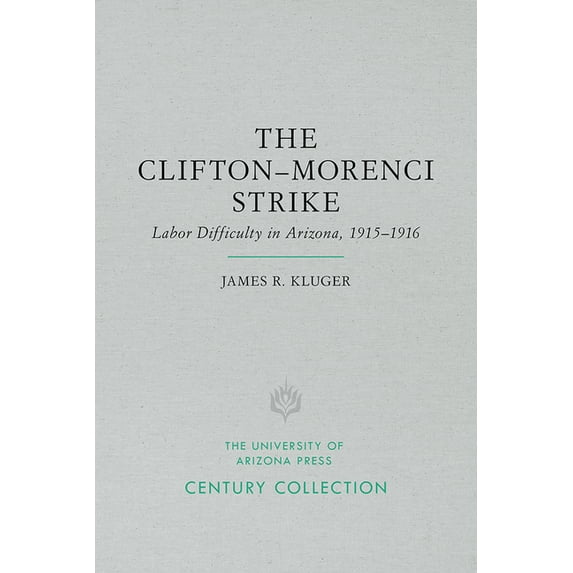
Century Collection: The Clifton-Morenci Strike : Labor Difficulty in Arizona, 1915–1916 (Paperback)
(No ratings yet)
Key item features
The strike that paralyzed the mining camps of Clifton and Morenci during 1915–16 and gained nationwide attention was one of the most remarkable that ever occurred in the West. During an era when physical violence, death, and property destruction were almost accepted elements of Western labor difficulties, this walkout was peaceful. With few exceptions, law and order continually predominated. This, then, is the seldom-seen side, a positive side, to a state's labor history.
Coming at a time when western labor was purging itself of radicalism and recharting its goals, the Clifton-Morenci strike may well have been that "milestone" in organized labor's groping for recognition in the West. Violence did not erupt—this notable absence of bloodshed thereby making the strike unique in that time of industrial turbulence.
Kluger's answer to the question of why and how peace prevailed is significant reading. Strikers and managers hurled charges at each other, but both sides showed restraint when it came to action. When negotiations reached an impasse, Governor George W. P. Hunt moved to prevent the managers from importing strike-breakers. At the same time, the Department of Labor entered the situation, and the rise in copper prices and loss of wages made a settlement desirable for both sides.
When the mine whistles blew on January 26, 1916, to signal the end of the strike, the repercussions of the events of 1915 were still to be felt. Author Kluger traces how the strike affected working conditions, wages, and the cause of unionism in the district. Overall, he provides insight into feelings concerning the fears of management regarding unionism, and labor's manner of making itself heard during these years.
Western historians, labor historians, and all those concerned with labor relations will recognize the importance of this highly readable work.
Coming at a time when western labor was purging itself of radicalism and recharting its goals, the Clifton-Morenci strike may well have been that "milestone" in organized labor's groping for recognition in the West. Violence did not erupt—this notable absence of bloodshed thereby making the strike unique in that time of industrial turbulence.
Kluger's answer to the question of why and how peace prevailed is significant reading. Strikers and managers hurled charges at each other, but both sides showed restraint when it came to action. When negotiations reached an impasse, Governor George W. P. Hunt moved to prevent the managers from importing strike-breakers. At the same time, the Department of Labor entered the situation, and the rise in copper prices and loss of wages made a settlement desirable for both sides.
When the mine whistles blew on January 26, 1916, to signal the end of the strike, the repercussions of the events of 1915 were still to be felt. Author Kluger traces how the strike affected working conditions, wages, and the cause of unionism in the district. Overall, he provides insight into feelings concerning the fears of management regarding unionism, and labor's manner of making itself heard during these years.
Western historians, labor historians, and all those concerned with labor relations will recognize the importance of this highly readable work.
Specs
- Book formatPaperback
- Fiction/nonfictionNon-Fiction
- GenreHistory
- Publication dateOctober, 2016
- Pages94
- Series titleCentury Collection
Current price is USD$26.92
Price when purchased online
Out of stock
How do you want your item?
Out of stock
About this item
Product details
The strike that paralyzed the mining camps of Clifton and Morenci during 1915-16 and gained nationwide attention was one of the most remarkable that ever occurred in the West. During an era when physical violence, death, and property destruction were almost accepted elements of Western labor difficulties, this walkout was peaceful. With few exceptions, law and order continually predominated. This, then, is the seldom-seen side, a positive side, to a state's labor history. Coming at a time when western labor was purging itself of radicalism and recharting its goals, the Clifton-Morenci strike may well have been that "milestone" in organized labor's groping for recognition in the West. Violence did not erupt--this notable absence of bloodshed thereby making the strike unique in that time of industrial turbulence. Kluger's answer to the question of why and how peace prevailed is significant reading. Strikers and managers hurled charges at each other, but both sides showed restraint when it came to action. When negotiations reached an impasse, Governor George W. P. Hunt moved to prevent the managers from importing strike-breakers. At the same time, the Department of Labor entered the situation, and the rise in copper prices and loss of wages made a settlement desirable for both sides. When the mine whistles blew on January 26, 1916, to signal the end of the strike, the repercussions of the events of 1915 were still to be felt. Author Kluger traces how the strike affected working conditions, wages, and the cause of unionism in the district. Overall, he provides insight into feelings concerning the fears of management regarding unionism, and labor's manner of making itself heard during these years. Western historians, labor historians, and all those concerned with labor relations will recognize the importance of this highly readable work.
The strike that paralyzed the mining camps of Clifton and Morenci during 1915–16 and gained nationwide attention was one of the most remarkable that ever occurred in the West. During an era when physical violence, death, and property destruction were almost accepted elements of Western labor difficulties, this walkout was peaceful. With few exceptions, law and order continually predominated. This, then, is the seldom-seen side, a positive side, to a state's labor history.
Coming at a time when western labor was purging itself of radicalism and recharting its goals, the Clifton-Morenci strike may well have been that "milestone" in organized labor's groping for recognition in the West. Violence did not erupt—this notable absence of bloodshed thereby making the strike unique in that time of industrial turbulence.
Kluger's answer to the question of why and how peace prevailed is significant reading. Strikers and managers hurled charges at each other, but both sides showed restraint when it came to action. When negotiations reached an impasse, Governor George W. P. Hunt moved to prevent the managers from importing strike-breakers. At the same time, the Department of Labor entered the situation, and the rise in copper prices and loss of wages made a settlement desirable for both sides.
When the mine whistles blew on January 26, 1916, to signal the end of the strike, the repercussions of the events of 1915 were still to be felt. Author Kluger traces how the strike affected working conditions, wages, and the cause of unionism in the district. Overall, he provides insight into feelings concerning the fears of management regarding unionism, and labor's manner of making itself heard during these years.
Western historians, labor historians, and all those concerned with labor relations will recognize the importance of this highly readable work.
Coming at a time when western labor was purging itself of radicalism and recharting its goals, the Clifton-Morenci strike may well have been that "milestone" in organized labor's groping for recognition in the West. Violence did not erupt—this notable absence of bloodshed thereby making the strike unique in that time of industrial turbulence.
Kluger's answer to the question of why and how peace prevailed is significant reading. Strikers and managers hurled charges at each other, but both sides showed restraint when it came to action. When negotiations reached an impasse, Governor George W. P. Hunt moved to prevent the managers from importing strike-breakers. At the same time, the Department of Labor entered the situation, and the rise in copper prices and loss of wages made a settlement desirable for both sides.
When the mine whistles blew on January 26, 1916, to signal the end of the strike, the repercussions of the events of 1915 were still to be felt. Author Kluger traces how the strike affected working conditions, wages, and the cause of unionism in the district. Overall, he provides insight into feelings concerning the fears of management regarding unionism, and labor's manner of making itself heard during these years.
Western historians, labor historians, and all those concerned with labor relations will recognize the importance of this highly readable work.
info:
We aim to show you accurate product information. Manufacturers, suppliers and others provide what you see here, and we have not verified it.
Specifications
Book format
Paperback
Fiction/nonfiction
Non-Fiction
Genre
History
Publication date
October, 2016
Warranty
Warranty information
Please be aware that the warranty terms on items offered for sale by third party Marketplace sellers may differ from those displayed in this section (if any). To confirm warranty terms on an item offered for sale by a third party Marketplace seller, please use the 'Contact seller' feature on the third party Marketplace seller's information page and request the item's warranty terms prior to purchase.
Similar items you might like
Based on what customers bought
The Great Steel Strike and its Lessons, (Paperback) $22.85
 $2285current price $22.85
The Great Steel Strike and its Lessons, (Paperback)
American Renaissance: Our Life at the Turn of the 21st Century, (Paperback) $24.30 Was $28.00
 $2430current price $24.30, Was $28.00$28.00
American Renaissance: Our Life at the Turn of the 21st Century, (Paperback)
The Century of Revolution 1603-1704 (Paperback) $24.95
 $2495current price $24.95
The Century of Revolution 1603-1704 (Paperback)
Urban Warfare in the Twenty-First Century, (Paperback) $26.95
 $2695current price $26.95
Urban Warfare in the Twenty-First Century, (Paperback)
Labor and Capital in 19th Century Baseball (Paperback) $28.45
 $2845current price $28.45
Labor and Capital in 19th Century Baseball (Paperback)
Ars Dicendi Priscorum Potissimum Praeceptis Et Exemplis..., (Paperback) $25.37
 $2537current price $25.37
Ars Dicendi Priscorum Potissimum Praeceptis Et Exemplis..., (Paperback)
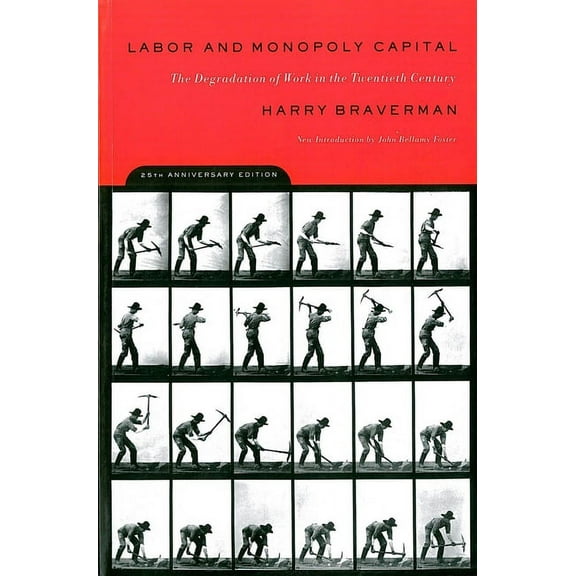
Labor and Monopoly Capital: The Degradation of Work in the Twentieth Century, (Paperback) $19.99 Was $23.77
 $1999current price $19.99, Was $23.77$23.77
Labor and Monopoly Capital: The Degradation of Work in the Twentieth Century, (Paperback)
Hiking Arizona and Beyond, (Paperback) $25.95
 $2595current price $25.95
Hiking Arizona and Beyond, (Paperback)
The Nature of Existence (Paperback) $23.95
 $2395current price $23.95
The Nature of Existence (Paperback)
Dominoes 2e 2 Turn of the Screw New Artwork, (Paperback) $8.94
 $894current price $8.94
Dominoes 2e 2 Turn of the Screw New Artwork, (Paperback)
After a Century and a Quarter; Lonikand Then and Now, (Paperback) $18.95 Was $24.67
 $1895current price $18.95, Was $24.67$24.67
After a Century and a Quarter; Lonikand Then and Now, (Paperback)
Bouse Arizona Then and Now, (Paperback) $20.00
 $2000current price $20.00
Bouse Arizona Then and Now, (Paperback)
The Next Upsurge: Labor and the New Social Movements, (Paperback) $44.16
 $4416current price $44.16
The Next Upsurge: Labor and the New Social Movements, (Paperback)
The Manufacture Of Iron, In All Its Various Branches (Paperback) $27.95
 $2795current price $27.95
The Manufacture Of Iron, In All Its Various Branches (Paperback)
What Manner of Men; Forgotten Heroes of the American Revolution, (Paperback) $26.79 Was $29.83
 $2679current price $26.79, Was $29.83$29.83
What Manner of Men; Forgotten Heroes of the American Revolution, (Paperback)
Pre-Owned The 48 Laws of Power Paperback $11.21
 $1121current price $11.21
Pre-Owned The 48 Laws of Power Paperback
Les Confréries Anti-Esclavagistes Du Xviie Siècle (Paperback) $13.08
 $1308current price $13.08
Les Confréries Anti-Esclavagistes Du Xviie Siècle (Paperback)
Fighting Immigration Anarchy (Paperback) $18.61
 $1861current price $18.61
Fighting Immigration Anarchy (Paperback)
General Idea of the Revolution in the Nineteenth Century (Paperback) $23.38
 $2338current price $23.38
General Idea of the Revolution in the Nineteenth Century (Paperback)
Customer ratings & reviews
0 ratings|0 reviews
This item does not have any reviews yet

Related pages
- Maryland Campaign
- American United
- Norristown Pa 19403
- Fredericksburg Va 22401
- Republican Club Of The City Of New York
- Henry O Forbes
- Literary Collections - Speeches
- Political Biographies & Memoirs
- Presidents & Heads of State Biographies & Memoirs
- Law Enforcement Biographies & Memoirs
- Presidents & First Families Teen & Young Adult Books
- Canadian Political Books