

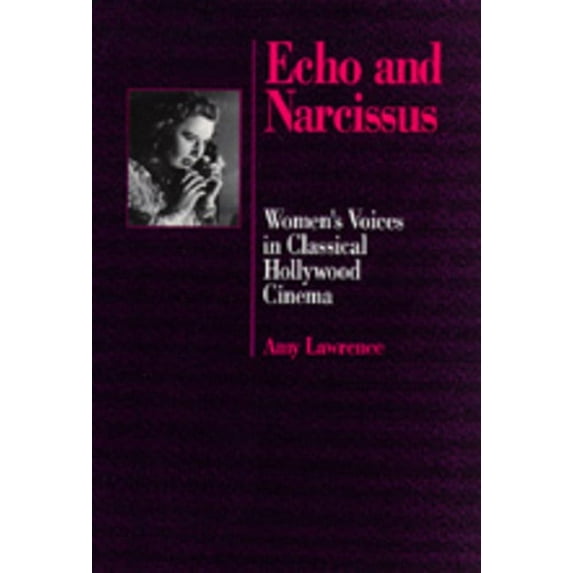
Hero image 0 of Echo and Narcissus: Women's Voices in Classical Hollywood Cinema, (Paperback), 0 of 1
Echo and Narcissus: Women's Voices in Classical Hollywood Cinema, (Paperback)
(No ratings yet)
Key item features
Do women in classical Hollywood cinema ever truly speak for themselves? In Echo and Narcissus, Amy Lawrence examines eight classic films to show how women's speech is repeatedly constructed as a "problem," an affront to male authority. This book expands feminist studies of the representation of women in film, enabling us to see individual films in new ways, and to ask new questions of other films.
Using Sadie Thompson (1928), Blackmail (1929), Rain (1932), The Spiral Staircase, Sorry,Wrong Number, Notorious, Sunset Boulevard (1950) and To Kill a Mockingbird (1962), Lawrence illustrates how women's voices are positioned within narratives that require their submission to patriarchal roles and how their attempts to speak provoke increasingly severe repression. She also shows how women's natural ability to speak is interrupted, made difficult, or conditioned to a suffocating degree by sound technology itself. Telephones, phonographs, voice-overs, and dubbing are foregrounded, called upon to silence women and to restore the primacy of the image.
Unlike the usage of "voice" by feminist and literary critics to discuss broad issues of authorship and point of view, in film studies the physical voice itself is a primary focus. Echo and Narcissus shows how assumptions about the "deficiencies" of women's voices and speech are embedded in sound's history, technology, uses, and marketing. Moreover, the construction of the woman's voice is inserted into the ideologically loaded cinematic and narrative conventions governing the representation of women in Hollywood film.
Using Sadie Thompson (1928), Blackmail (1929), Rain (1932), The Spiral Staircase, Sorry,Wrong Number, Notorious, Sunset Boulevard (1950) and To Kill a Mockingbird (1962), Lawrence illustrates how women's voices are positioned within narratives that require their submission to patriarchal roles and how their attempts to speak provoke increasingly severe repression. She also shows how women's natural ability to speak is interrupted, made difficult, or conditioned to a suffocating degree by sound technology itself. Telephones, phonographs, voice-overs, and dubbing are foregrounded, called upon to silence women and to restore the primacy of the image.
Unlike the usage of "voice" by feminist and literary critics to discuss broad issues of authorship and point of view, in film studies the physical voice itself is a primary focus. Echo and Narcissus shows how assumptions about the "deficiencies" of women's voices and speech are embedded in sound's history, technology, uses, and marketing. Moreover, the construction of the woman's voice is inserted into the ideologically loaded cinematic and narrative conventions governing the representation of women in Hollywood film.
Specs
- Book formatPaperback
- Fiction/nonfictionNon-Fiction
- Pub date1991-08-05
- Pages218
- Reading levelPreschool
- SubgenreFilm
Current price is USD$21.77
Price when purchased online
 Free 90-day returns
How do you want your item?
Try 30 days of Free Shipping with Walmart+! Choose plan at checkout.
Columbus, 43215
Arrives by Tue, Apr 21
Sold and shipped by Walmart.com

Free 90-day returns

This item is gift eligible
More seller options (3)
Starting from $38.80

Get free delivery, shipping and more*
*Restrictions apply Try Walmart+ now
About this item
Product details
Do women in classical Hollywood cinema ever truly speak for themselves? In Echo and Narcissus, Amy Lawrence examines eight classic films to show how women's speech is repeatedly constructed as a "problem," an affront to male authority. This book expands feminist studies of the representation of women in film, enabling us to see individual films in new ways, and to ask new questions of other films.
Using Sadie Thompson (1928), Blackmail (1929), Rain (1932), The Spiral Staircase, Sorry, Wrong Number, Notorious, Sunset Boulevard (1950) and To Kill a Mockingbird (1962), Lawrence illustrates how women's voices are positioned within narratives that require their submission to patriarchal roles and how their attempts to speak provoke increasingly severe repression. She also shows how women's natural ability to speak is interrupted, made difficult, or conditioned to a suffocating degree by sound technology itself. Telephones, phonographs, voice-overs, and dubbing are foregrounded, called upon to silence women and to restore the primacy of the image.
Unlike the usage of "voice" by feminist and literary critics to discuss broad issues of authorship and point of view, in film studies the physical voice itself is a primary focus. Echo and Narcissus shows how assumptions about the "deficiencies" of women's voices and speech are embedded in sound's history, technology, uses, and marketing. Moreover, the construction of the woman's voice is inserted into the ideologically loaded cinematic and narrative conventions governing the representation of women in Hollywood film.
Using Sadie Thompson (1928), Blackmail (1929), Rain (1932), The Spiral Staircase, Sorry, Wrong Number, Notorious, Sunset Boulevard (1950) and To Kill a Mockingbird (1962), Lawrence illustrates how women's voices are positioned within narratives that require their submission to patriarchal roles and how their attempts to speak provoke increasingly severe repression. She also shows how women's natural ability to speak is interrupted, made difficult, or conditioned to a suffocating degree by sound technology itself. Telephones, phonographs, voice-overs, and dubbing are foregrounded, called upon to silence women and to restore the primacy of the image.
Unlike the usage of "voice" by feminist and literary critics to discuss broad issues of authorship and point of view, in film studies the physical voice itself is a primary focus. Echo and Narcissus shows how assumptions about the "deficiencies" of women's voices and speech are embedded in sound's history, technology, uses, and marketing. Moreover, the construction of the woman's voice is inserted into the ideologically loaded cinematic and narrative conventions governing the representation of women in Hollywood film.
Do women in classical Hollywood cinema ever truly speak for themselves? In Echo and Narcissus, Amy Lawrence examines eight classic films to show how women's speech is repeatedly constructed as a "problem," an affront to male authority. This book expands feminist studies of the representation of women in film, enabling us to see individual films in new ways, and to ask new questions of other films.
Using Sadie Thompson (1928), Blackmail (1929), Rain (1932), The Spiral Staircase, Sorry,Wrong Number, Notorious, Sunset Boulevard (1950) and To Kill a Mockingbird (1962), Lawrence illustrates how women's voices are positioned within narratives that require their submission to patriarchal roles and how their attempts to speak provoke increasingly severe repression. She also shows how women's natural ability to speak is interrupted, made difficult, or conditioned to a suffocating degree by sound technology itself. Telephones, phonographs, voice-overs, and dubbing are foregrounded, called upon to silence women and to restore the primacy of the image.
Unlike the usage of "voice" by feminist and literary critics to discuss broad issues of authorship and point of view, in film studies the physical voice itself is a primary focus. Echo and Narcissus shows how assumptions about the "deficiencies" of women's voices and speech are embedded in sound's history, technology, uses, and marketing. Moreover, the construction of the woman's voice is inserted into the ideologically loaded cinematic and narrative conventions governing the representation of women in Hollywood film.
Using Sadie Thompson (1928), Blackmail (1929), Rain (1932), The Spiral Staircase, Sorry,Wrong Number, Notorious, Sunset Boulevard (1950) and To Kill a Mockingbird (1962), Lawrence illustrates how women's voices are positioned within narratives that require their submission to patriarchal roles and how their attempts to speak provoke increasingly severe repression. She also shows how women's natural ability to speak is interrupted, made difficult, or conditioned to a suffocating degree by sound technology itself. Telephones, phonographs, voice-overs, and dubbing are foregrounded, called upon to silence women and to restore the primacy of the image.
Unlike the usage of "voice" by feminist and literary critics to discuss broad issues of authorship and point of view, in film studies the physical voice itself is a primary focus. Echo and Narcissus shows how assumptions about the "deficiencies" of women's voices and speech are embedded in sound's history, technology, uses, and marketing. Moreover, the construction of the woman's voice is inserted into the ideologically loaded cinematic and narrative conventions governing the representation of women in Hollywood film.
info:
We aim to show you accurate product information. Manufacturers, suppliers and others provide what you see here, and we have not verified it.
Specifications
Book format
Paperback
Fiction/nonfiction
Non-Fiction
Genre
Art, Music, and Photography
Pub date
1991-08-05
Warranty
Warranty information
Please be aware that the warranty terms on items offered for sale by third party Marketplace sellers may differ from those displayed in this section (if any). To confirm warranty terms on an item offered for sale by a third party Marketplace seller, please use the 'Contact seller' feature on the third party Marketplace seller's information page and request the item's warranty terms prior to purchase.
Similar items you might like
Based on what customers bought
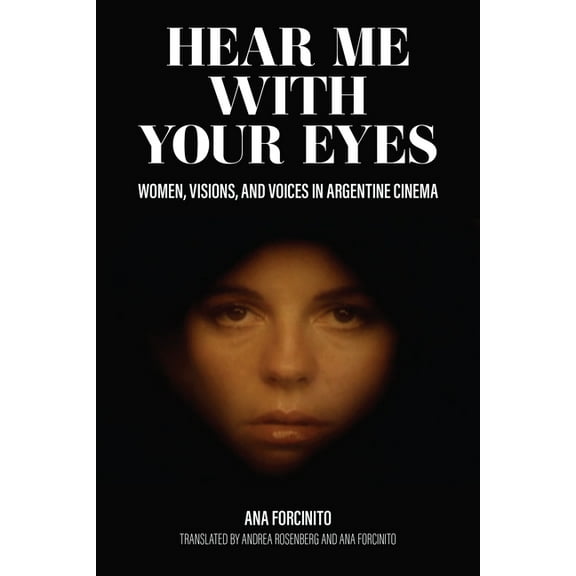
Hear Me with Your Eyes: Women, Visions, and Voices in Argentine Cinema, (Paperback) $32.67
 $3267current price $32.67
Hear Me with Your Eyes: Women, Visions, and Voices in Argentine Cinema, (Paperback)
Only in America: Al Jolson and the Jazz Singer, (Hardcover) $13.66
 $1366current price $13.66
Only in America: Al Jolson and the Jazz Singer, (Hardcover)
Women Scientists in Fifties Science Fiction Films, (Paperback) $28.45 Was $32.71
 $2845current price $28.45, Was $32.71$32.71
Women Scientists in Fifties Science Fiction Films, (Paperback)
The Elements of Cinema, (Paperback) $17.74
 $1774current price $17.74
The Elements of Cinema, (Paperback)
Routledge Focus on Film Studies Con Artists in Cinema: Self-Knowledge, Female Power, and Love, (Paperback) $20.79
 $2079current price $20.79
Routledge Focus on Film Studies Con Artists in Cinema: Self-Knowledge, Female Power, and Love, (Paperback)
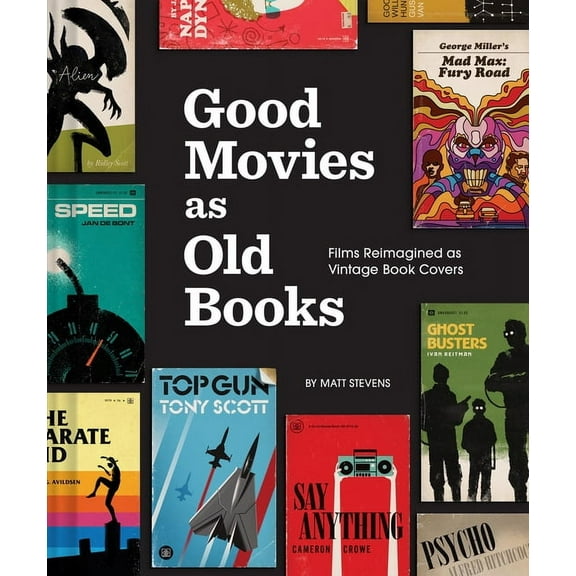
Good Movies as Old Books: Films Reimagined as Vintage Book Covers, (Hardcover) $17.40
 $1740current price $17.40
Good Movies as Old Books: Films Reimagined as Vintage Book Covers, (Hardcover)
Steve Buscemi: Top Ten Movies (Paperback) $18.00
 $1800current price $18.00
Steve Buscemi: Top Ten Movies (Paperback)
The Passion of Montgomery Clift (Edition 1) (Paperback) $26.68
 $2668current price $26.68
The Passion of Montgomery Clift (Edition 1) (Paperback)
Myrna Loy : The Only Good Girl in Hollywood (Edition 1) (Paperback) $17.64
 $1764current price $17.64
Myrna Loy : The Only Good Girl in Hollywood (Edition 1) (Paperback)
The Little Guide to Keanu Reeves: The Nicest Guy in Hollywood, (Hardcover) $8.32
 $832current price $8.32
The Little Guide to Keanu Reeves: The Nicest Guy in Hollywood, (Hardcover)
25 out of 5 Stars. 2 reviewsShort Cuts: Feminist Film Studies: Writing the Woman Into Cinema (Paperback) $20.94
 $2094current price $20.94
Short Cuts: Feminist Film Studies: Writing the Woman Into Cinema (Paperback)
Joan Crawford: A Woman's Face, (Hardcover) $18.13
 $1813current price $18.13
Joan Crawford: A Woman's Face, (Hardcover)
15 out of 5 Stars. 1 reviewsQuick Takes: Movies and Popular Culture Black Women Directors, (Paperback) $19.69
 $1969current price $19.69
Quick Takes: Movies and Popular Culture Black Women Directors, (Paperback)
Sex and the Cinema (Paperback) $21.71
 $2171current price $21.71
Sex and the Cinema (Paperback)
Variety (September 1926); 84, (Paperback) $18.95
 $1895current price $18.95
Variety (September 1926); 84, (Paperback)
Pre-Owned 100 Science Fiction Films (Paperback) 1844574571 9781844574575 $15.70
 $1570current price $15.70
Pre-Owned 100 Science Fiction Films (Paperback) 1844574571 9781844574575
Clint: The Man and the Movies, (Hardcover) $14.03
 $1403current price $14.03
Clint: The Man and the Movies, (Hardcover)
Theories of Representation and Differenc Acoustic Mirror: The Female Voice in Psychoanalysis and Cinema, (Paperback) $21.00
 $2100current price $21.00
Theories of Representation and Differenc Acoustic Mirror: The Female Voice in Psychoanalysis and Cinema, (Paperback)
The James Bond Archives. the Complete Films, (Hardcover) $20.00
 $2000current price $20.00
The James Bond Archives. the Complete Films, (Hardcover)
Customer ratings & reviews
0 ratings|0 reviews
This item does not have any reviews yet

Related pages
- Hollywood Studio
- E Elisabeth Shue Actor Actress
- Emanuelle Bangkok
- Alida Chaney
- D Ursula Andress Actor Actress
- Comedy Film Books
- T Millicent Martin Actor Actress
- Direction & Production Film Books
- Film Performing Arts Teen & Young Adult Books
- Theater & Musicals Teen & Young Adult Books
- Film Monologues & Scenes Books
- Historical Film Books