

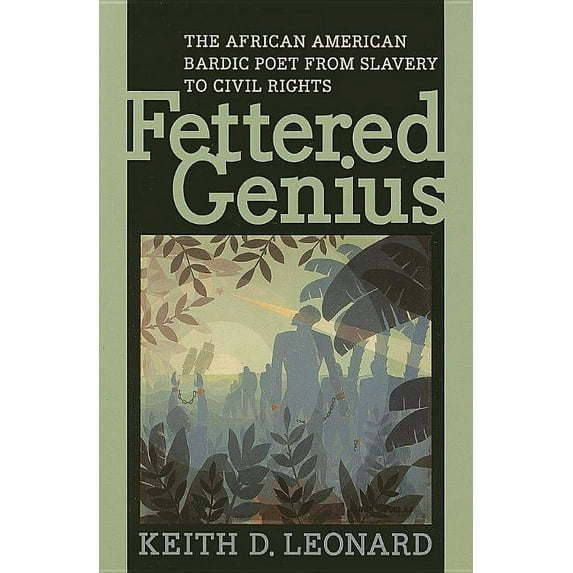
Fettered Genius : The African American Bardic Poet from Slavery to Civil Rights (Paperback)
Key item features
In Fettered Genius, Keith D. Leonard identifies how African American poets’ use and revision of traditional poetics constituted an antiracist political agency. Comparing this practice to the use of poetic mastery by the ancient Celtic bards to resist British imperialism, Leonard shows how traditional poetics enable African American poets to insert racial experience, racial protest, and African American culture into public discourse by making them features of validated artistic expression. As with the Celtic bards, these poets’ artistry testified to their marginalized people’s capacity for imagination and reason within and against the terms of the dominant culture.
In an ambitious survey that moves from slavery to the cultural nationalism of the 1960s, Leonard examines numerous poets, placing each in the context of his or her time to demonstrate the antiracist meaning of their accomplishments. The book offers new insight on the conservatism of Phillis Wheatley, Paul Laurence Dunbar, and the genteel members of the Harlem Renaissance, how their rage for assimilation functioned to refute racist notions of difference and, paradoxically, to affirm a distinctive racial experience as valid material for poetry. Leonard also demonstrates how the more progressive and ethnically distinctive poetics of Langston Hughes, Sterling Brown, Gwendolyn Brooks, Robert Hayden, and Melvin B. Tolson share some of the same ambivalence about cultural achievement as those of the earlier poets. They also have in common the self-conscious pursuit of an affirmation of the African American self through the substitution of African American vernacular language and cultural forms for traditional poetic themes and forms. The evolution of these poetics parallels the emergence of notions of ethnic identity over racial identity and, indeed, in some ways even motivated this shift.
Leonard recognizes poetic mastery as the African American bardic poet’s most powerful claim of ethnic tradition and of social belonging and clarifies the full hybrid complexity of African American identity that makes possible this political self-assertion. The development that is traced in Fettered Genius illustrates nothing less than the defining artistic coherence and political significance of the African American poetic tradition.
Specs
- Book formatPaperback
- Fiction/nonfictionNon-Fiction
- GenreLiterary Criticism/Poetry
- Publication dateDecember, 2005
- Pages256
- Reading levelUndergraduate
How do you want your item?
About this item
Product details
In Fettered Genius, Keith D. Leonard identifies how African American poets' use and revision of traditional poetics constituted an antiracist political agency. Comparing this practice to the use of poetic mastery by the ancient Celtic bards to resist British imperialism, Leonard shows how traditional poetics enable African American poets to insert racial experience, racial protest, and African American culture into public discourse by making them features of validated artistic expression. As with the Celtic bards, these poets' artistry testified to their marginalized people's capacity for imagination and reason within and against the terms of the dominant culture.
In an ambitious survey that moves from slavery to the cultural nationalism of the 1960s, Leonard examines numerous poets, placing each in the context of his or her time to demonstrate the antiracist meaning of their accomplishments. The book offers new insight on the conservatism of Phillis Wheatley, Paul Laurence Dunbar, and the genteel members of the Harlem Renaissance, how their rage for assimilation functioned to refute racist notions of difference and, paradoxically, to affirm a distinctive racial experience as valid material for poetry. Leonard also demonstrates how the more progressive and ethnically distinctive poetics of Langston Hughes, Sterling Brown, Gwendolyn Brooks, Robert Hayden, and Melvin B. Tolson share some of the same ambivalence about cultural achievement as those of the earlier poets. They also have in common the self-conscious pursuit of an affirmation of the African American self through the substitution of African American vernacular language and cultural forms for traditional poetic themes and forms. The evolution of these poetics parallels the emergence of notions of ethnic identity over racial identity and, indeed, in some ways even motivated this shift.
Leonard recognizes poetic mastery as the African American bardic poet's most powerful claim of ethnic tradition and of social belonging and clarifies the full hybrid complexity of African American identity that makes possible this political self-assertion. The development that is traced in Fettered Genius illustrates nothing less than the defining artistic coherence and political significance of the African American poetic tradition.
In Fettered Genius, Keith D. Leonard identifies how African American poets’ use and revision of traditional poetics constituted an antiracist political agency. Comparing this practice to the use of poetic mastery by the ancient Celtic bards to resist British imperialism, Leonard shows how traditional poetics enable African American poets to insert racial experience, racial protest, and African American culture into public discourse by making them features of validated artistic expression. As with the Celtic bards, these poets’ artistry testified to their marginalized people’s capacity for imagination and reason within and against the terms of the dominant culture.
In an ambitious survey that moves from slavery to the cultural nationalism of the 1960s, Leonard examines numerous poets, placing each in the context of his or her time to demonstrate the antiracist meaning of their accomplishments. The book offers new insight on the conservatism of Phillis Wheatley, Paul Laurence Dunbar, and the genteel members of the Harlem Renaissance, how their rage for assimilation functioned to refute racist notions of difference and, paradoxically, to affirm a distinctive racial experience as valid material for poetry. Leonard also demonstrates how the more progressive and ethnically distinctive poetics of Langston Hughes, Sterling Brown, Gwendolyn Brooks, Robert Hayden, and Melvin B. Tolson share some of the same ambivalence about cultural achievement as those of the earlier poets. They also have in common the self-conscious pursuit of an affirmation of the African American self through the substitution of African American vernacular language and cultural forms for traditional poetic themes and forms. The evolution of these poetics parallels the emergence of notions of ethnic identity over racial identity and, indeed, in some ways even motivated this shift.
Leonard recognizes poetic mastery as the African American bardic poet’s most powerful claim of ethnic tradition and of social belonging and clarifies the full hybrid complexity of African American identity that makes possible this political self-assertion. The development that is traced in Fettered Genius illustrates nothing less than the defining artistic coherence and political significance of the African American poetic tradition.
Specifications
Book format
Fiction/nonfiction
Genre
Publication date
Warranty
Warranty information
Similar items you might like
Based on what customers bought
History Of The Negro Race In America Vol. 2, (Paperback) $31.24
 $3124current price $31.24
History Of The Negro Race In America Vol. 2, (Paperback)
Worse Than a Lie: A Beau Lee Cooper Novel, (Paperback) $20.19 Was $29.82
 $2019current price $20.19, Was $29.82$29.82
Worse Than a Lie: A Beau Lee Cooper Novel, (Paperback)
Worse Than a Lie: A Beau Lee Cooper Novel, (Hardcover) $17.98 Was $28.59
 $1798current price $17.98, Was $28.59$28.59
Worse Than a Lie: A Beau Lee Cooper Novel, (Hardcover)
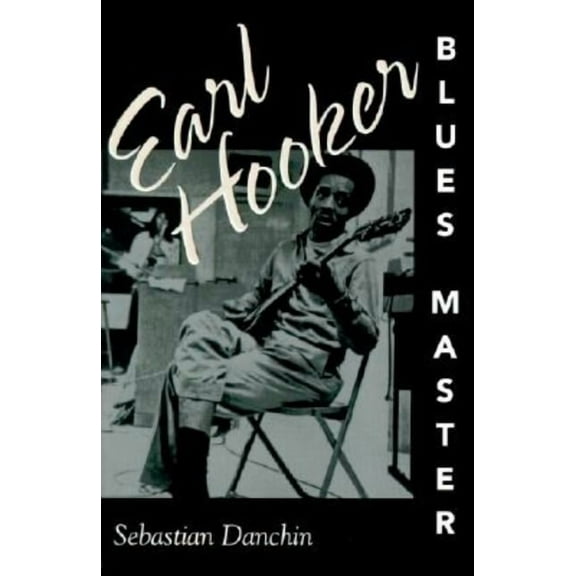
American Made Music Earl Hooker, Blues Master, (Paperback) $33.22
 $3322current price $33.22
American Made Music Earl Hooker, Blues Master, (Paperback)
Harlem Rhapsody (Paperback) $14.25 Was $19.01
 $1425current price $14.25, Was $19.01$19.01
Harlem Rhapsody (Paperback)
Inventions: Black Philosophy, Politics, Engendering Blackness: Slavery and the Ontology of Sexual Violence, (Paperback) $32.00
 $3200current price $32.00
Inventions: Black Philosophy, Politics, Engendering Blackness: Slavery and the Ontology of Sexual Violence, (Paperback)
Queen of Hearts, (Paperback) $17.26
 $1726current price $17.26
Queen of Hearts, (Paperback)
Burn Down Master's House, (Hardcover) $25.00
 $2500current price $25.00
Burn Down Master's House, (Hardcover)
25 out of 5 Stars. 2 reviewsAmerican Slavery Distinguished From The Slavery Of The English Theorists $35.78
 $3578current price $35.78
American Slavery Distinguished From The Slavery Of The English Theorists
Making the Modern South Jim Crow's Counterculture: The Blues and Black Southerners, 1890-1945, (Paperback) $18.63
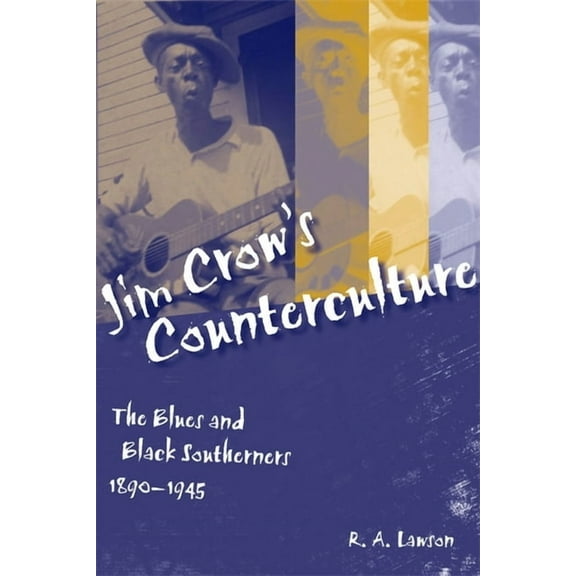 $1863current price $18.63
Making the Modern South Jim Crow's Counterculture: The Blues and Black Southerners, 1890-1945, (Paperback)
Allan Rohan Crite: Neighborhood Liturgy, (Hardcover) $33.81 Was $39.77
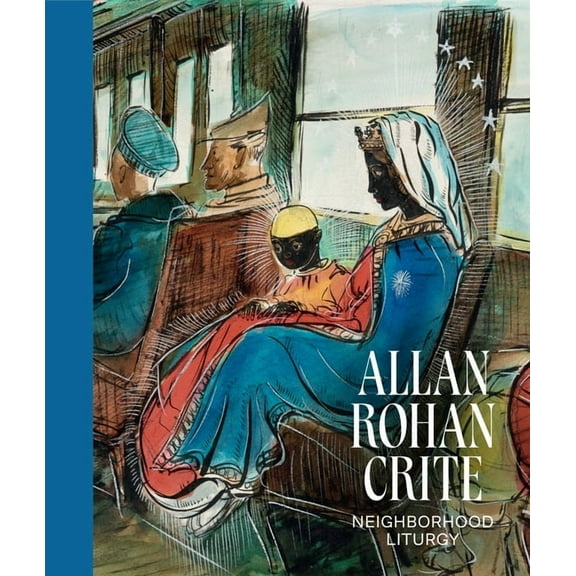 $3381current price $33.81, Was $39.77$39.77
Allan Rohan Crite: Neighborhood Liturgy, (Hardcover)
Black Romantic Revolution : Abolitionist Poets at the End of Slavery $21.12
 $2112current price $21.12
Black Romantic Revolution : Abolitionist Poets at the End of Slavery
New Negro, Old Left: African-American Writing and Communism Between the Wars, (Paperback) $40.99
 $4099current price $40.99
New Negro, Old Left: African-American Writing and Communism Between the Wars, (Paperback)
King of Ashes, (Paperback) $18.99
 $1899current price $18.99
King of Ashes, (Paperback)
The Revelation of Dionne Daphne, (Paperback) $32.00
 $3200current price $32.00
The Revelation of Dionne Daphne, (Paperback)
Slaves Without Masters: The Free Negro in the Antebellum South, (Paperback) $24.00
 $2400current price $24.00
Slaves Without Masters: The Free Negro in the Antebellum South, (Paperback)
African American Intellectual History This World Is Not My Home: A Critical Biography of African American Writer Charles Wright, (Paperback) $33.95
 $3395current price $33.95
African American Intellectual History This World Is Not My Home: A Critical Biography of African American Writer Charles Wright, (Paperback)
Nostrof University Volume 1, (Paperback) $34.24
 $3424current price $34.24
Nostrof University Volume 1, (Paperback)
If I Ruled the World, (Hardcover) $24.24
 $2424current price $24.24
If I Ruled the World, (Hardcover)
15 out of 5 Stars. 1 reviews
Customer ratings & reviews

Related pages
- Best Sellers In African American Studies
- Groups Africa
- Africa Occidental
- African White Population
- African American Chemist
- Black People Iceland
- African American Studies Books
- Africa People & Places Teen & Young Adult Books
- African American Poetry Books
- West African History Books
- African American Literary Criticism Books
- Sexual Abuse Kids' Books