

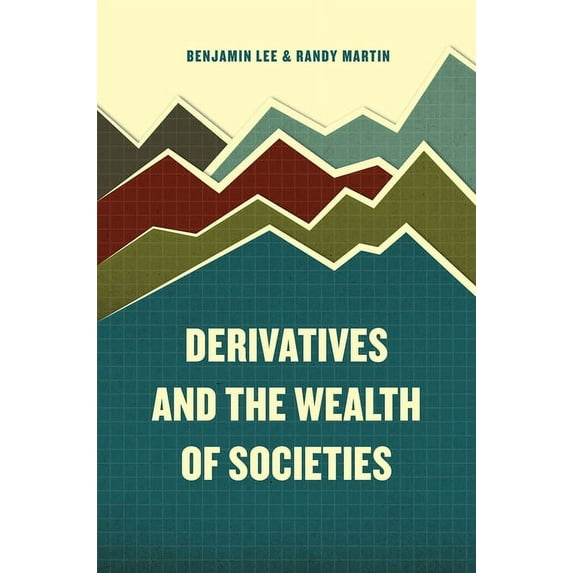
Hero image 0 of Derivatives and the Wealth of Societies (Paperback), 0 of 1
Derivatives and the Wealth of Societies (Paperback)
(No ratings yet)
Key item features
Derivatives were responsible for one of the worst financial meltdowns in history, one from which we have not yet fully recovered. However, they are likewise capable of generating some of the most incredible wealth we have ever seen. This book asks how we might ensure the latter while avoiding the former. Looking past the usual arguments for the regulation or abolition of derivative finance, it asks a more probing question: what kinds of social institutions and policies would we need to put in place to both avail ourselves of the derivative’s wealth production and make sure that production benefits all of us?
To answer that question, the contributors to this book draw upon their deep backgrounds in finance, social science, art, and the humanities to create a new way of understanding derivative finance that does justice to its social and cultural dimensions. They offer a two-pronged analysis. First, they develop a social understanding of the derivative that casts it in the light of anthropological concepts such as the gift, ritual, play, dividuality, and performativity. Second, they develop a derivative understanding of the social, using financial concepts such as risk, hedging, optionality, and arbitrage to uncover new dimensions of contemporary social reality. In doing so, they construct a necessary, renewed vision of derivative finance as a deeply embedded aspect not just of our economics but our culture.
To answer that question, the contributors to this book draw upon their deep backgrounds in finance, social science, art, and the humanities to create a new way of understanding derivative finance that does justice to its social and cultural dimensions. They offer a two-pronged analysis. First, they develop a social understanding of the derivative that casts it in the light of anthropological concepts such as the gift, ritual, play, dividuality, and performativity. Second, they develop a derivative understanding of the social, using financial concepts such as risk, hedging, optionality, and arbitrage to uncover new dimensions of contemporary social reality. In doing so, they construct a necessary, renewed vision of derivative finance as a deeply embedded aspect not just of our economics but our culture.
Specs
- Book formatPaperback
- Fiction/nonfictionNon-Fiction
- GenreBusiness & Investing
- Publication dateNovember, 2016
- Pages312
- Edition1
Current price is USD$37.66
Price when purchased online
- Free shipping
 Free 30-day returns
How do you want your item?
Ships to
Arrives between May 8 - May 14
|
Sold and shipped by newbookdeals
4.5602910602910605 stars out of 5, based on 1924 seller reviews(4.6)1924 seller reviews

Free 30-day returns
About this item
Product details
Derivatives were responsible for one of the worst financial meltdowns in history, one from which we have not yet fully recovered. However, they are likewise capable of generating some of the most incredible wealth we have ever seen. This book asks how we might ensure the latter while avoiding the former. Looking past the usual arguments for the regulation or abolition of derivative finance, it asks a more probing question: what kinds of social institutions and policies would we need to put in place to both avail ourselves of the derivative's wealth production and make sure that production benefits all of us? To answer that question, the contributors to this book draw upon their deep backgrounds in finance, social science, art, and the humanities to create a new way of understanding derivative finance that does justice to its social and cultural dimensions. They offer a two-pronged analysis. First, they develop a social understanding of the derivative that casts it in the light of anthropological concepts such as the gift, ritual, play, dividuality, and performativity. Second, they develop a derivative understanding of the social, using financial concepts such as risk, hedging, optionality, and arbitrage to uncover new dimensions of contemporary social reality. In doing so, they construct a necessary, renewed vision of derivative finance as a deeply embedded aspect not just of our economics but our culture.
Derivatives were responsible for one of the worst financial meltdowns in history, one from which we have not yet fully recovered. However, they are likewise capable of generating some of the most incredible wealth we have ever seen. This book asks how we might ensure the latter while avoiding the former. Looking past the usual arguments for the regulation or abolition of derivative finance, it asks a more probing question: what kinds of social institutions and policies would we need to put in place to both avail ourselves of the derivative’s wealth production and make sure that production benefits all of us?
To answer that question, the contributors to this book draw upon their deep backgrounds in finance, social science, art, and the humanities to create a new way of understanding derivative finance that does justice to its social and cultural dimensions. They offer a two-pronged analysis. First, they develop a social understanding of the derivative that casts it in the light of anthropological concepts such as the gift, ritual, play, dividuality, and performativity. Second, they develop a derivative understanding of the social, using financial concepts such as risk, hedging, optionality, and arbitrage to uncover new dimensions of contemporary social reality. In doing so, they construct a necessary, renewed vision of derivative finance as a deeply embedded aspect not just of our economics but our culture.
To answer that question, the contributors to this book draw upon their deep backgrounds in finance, social science, art, and the humanities to create a new way of understanding derivative finance that does justice to its social and cultural dimensions. They offer a two-pronged analysis. First, they develop a social understanding of the derivative that casts it in the light of anthropological concepts such as the gift, ritual, play, dividuality, and performativity. Second, they develop a derivative understanding of the social, using financial concepts such as risk, hedging, optionality, and arbitrage to uncover new dimensions of contemporary social reality. In doing so, they construct a necessary, renewed vision of derivative finance as a deeply embedded aspect not just of our economics but our culture.
info:
We aim to show you accurate product information. Manufacturers, suppliers and others provide what you see here, and we have not verified it.
Specifications
Book format
Paperback
Fiction/nonfiction
Non-Fiction
Genre
Business & Investing
Publication date
November, 2016
Warranty
Warranty information
Please be aware that the warranty terms on items offered for sale by third party Marketplace sellers may differ from those displayed in this section (if any). To confirm warranty terms on an item offered for sale by a third party Marketplace seller, please use the 'Contact seller' feature on the third party Marketplace seller's information page and request the item's warranty terms prior to purchase.
Warnings
State Chemical Disclosure
None
Similar items you might like
Based on what customers bought
Fitter 3-In-1 Trade Theory (NSQF 5), (Paperback) $40.70
 $4070current price $40.70
Fitter 3-In-1 Trade Theory (NSQF 5), (Paperback)
The Moralizing Corporation: The Rise and Fall of Corporate Carewashing, (Paperback) $38.95
 $3895current price $38.95
The Moralizing Corporation: The Rise and Fall of Corporate Carewashing, (Paperback)
To the Peril of my Life, (Paperback) $12.42 Was $16.99
 $1242current price $12.42, Was $16.99$16.99
To the Peril of my Life, (Paperback)
A History of Rohingyas to 1948, (Paperback) $38.42
 $3842current price $38.42
A History of Rohingyas to 1948, (Paperback)
Public Planet Books Financial Derivatives and the Globalization of Risk, (Paperback) $29.36
 $2936current price $29.36
Public Planet Books Financial Derivatives and the Globalization of Risk, (Paperback)
Politicizing Business, (Paperback) $38.00
 $3800current price $38.00
Politicizing Business, (Paperback)
Corporate Development, (Paperback) $37.98
 $3798current price $37.98
Corporate Development, (Paperback)
Best seller The Psychology of Money: Timeless Lessons on Wealth, Greed, and Happiness (Paperback) $10.99 Was $14.99
Best seller $1099current price $10.99, Was $14.99$14.99
The Psychology of Money: Timeless Lessons on Wealth, Greed, and Happiness (Paperback)
1404.5 out of 5 Stars. 140 reviewsLifetimes, (Paperback) $13.12 Was $14.99
 $1312current price $13.12, Was $14.99$14.99
Lifetimes, (Paperback)
Riqueza 360 / Wealth 360, (Paperback) $14.35
 $1435current price $14.35
Riqueza 360 / Wealth 360, (Paperback)
Money, Credit & Commerce (Paperback) $25.91
 $2591current price $25.91
Money, Credit & Commerce (Paperback)
Le bourgeois, (Paperback) $20.25
 $2025current price $20.25
Le bourgeois, (Paperback)
Consumers' Co-Operative Societies (Paperback) $28.95
 $2895current price $28.95
Consumers' Co-Operative Societies (Paperback)
The New York Stock Exchange (Paperback) $26.84
 $2684current price $26.84
The New York Stock Exchange (Paperback)
The Elements of Political Economy, (Paperback) $32.90
 $3290current price $32.90
The Elements of Political Economy, (Paperback)
Foundations of Potential Theory, (Paperback) $36.98
 $3698current price $36.98
Foundations of Potential Theory, (Paperback)
Some account of the worshipful Company of ironmongers, (Paperback) $52.29
 $5229current price $52.29
Some account of the worshipful Company of ironmongers, (Paperback)
Creating Wealth (Paperback) $32.81
 $3281current price $32.81
Creating Wealth (Paperback)
The Theory of Linear Economic Models (Paperback) $37.00
 $3700current price $37.00
The Theory of Linear Economic Models (Paperback)
Vartegar: The Merchant, (Paperback) $40.55
 $4055current price $40.55
Vartegar: The Merchant, (Paperback)
Customer ratings & reviews
0 ratings|0 reviews
This item does not have any reviews yet
