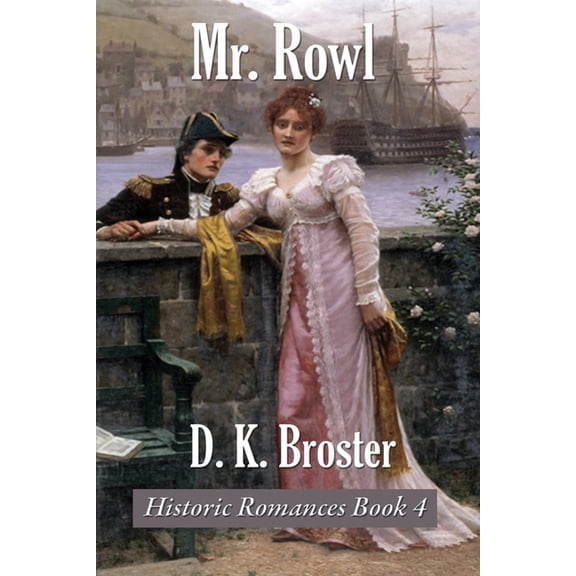
First published in 1927, Mr. Row is a psychological historical novel by D. K. Broster, set amid the moral complexities of eighteenth-century England.
Best known for her Jacobite novels, Broster here turns her attention to a subtler study of character and conscience. The enigmatic Mr. Row moves through a society defined by rigid codes of honour, religious tension, and private ambition. Beneath the surface of social propriety lies a drama of inner conflict, restraint, and moral reckoning.
Broster's prose is measured and exact, attentive to atmosphere and historical nuance without sacrificing narrative momentum. Mr. Row stands as a compelling example of interwar historical fiction-serious in tone, finely observed, and concerned less with spectacle than with the intricate operations of motive and choice. For readers of early twentieth-century British fiction, the novel offers both historical immersion and psychological depth.
"...a wholly charming romance... A French prisoner of war in England seems to present material for pity, for fun, for excitement. Miss Broster uses all these elements in her story... but it is a romance as delicately finished as a piece of Dresden china."-- Westminster Gazett