


Hero image 0 of The Shipwrecked Mind (Paperback), 0 of 1
The Shipwrecked Mind (Paperback)
(No ratings yet)
Book Format:Paperback
Key item features
We don’t understand the reactionary mind. As a result, argues Mark Lilla in this timely book, the ideas and passions that shape today’s political dramas are unintelligible to us.
The reactionary is anything but a conservative. He is as radical and modern a figure as the revolutionary, someone shipwrecked in the rapidly changing present, and suffering from nostalgia for an idealized past and an apocalyptic fear that history is rushing toward catastrophe. And like the revolutionary his political engagements are motivated by highly developed ideas.
Lilla begins with three twentieth-century philosophers—Franz Rosenzweig, Eric Voegelin, and Leo Strauss—who attributed the problems of modern society to a break in the history of ideas and promoted a return to earlier modes of thought. He then examines the enduring power of grand historical narratives of betrayal to shape political outlooks since the French Revolution, and shows how these narratives are employed in the writings of Europe’s right-wing cultural pessimists and Maoist neocommunists, American theoconservatives fantasizing about the harmony of medieval Catholic society and radical Islamists seeking to restore a vanished Muslim caliphate.
The revolutionary spirit that inspired political movements across the world for two centuries may have died out. But the spirit of reaction that rose to meet it has survived and is proving just as formidable a historical force. We live in an age when the tragicomic nostalgia of Don Quixote for a lost golden age has been transformed into a potent and sometimes deadly weapon. Mark Lilla helps us to understand why.
The reactionary is anything but a conservative. He is as radical and modern a figure as the revolutionary, someone shipwrecked in the rapidly changing present, and suffering from nostalgia for an idealized past and an apocalyptic fear that history is rushing toward catastrophe. And like the revolutionary his political engagements are motivated by highly developed ideas.
Lilla begins with three twentieth-century philosophers—Franz Rosenzweig, Eric Voegelin, and Leo Strauss—who attributed the problems of modern society to a break in the history of ideas and promoted a return to earlier modes of thought. He then examines the enduring power of grand historical narratives of betrayal to shape political outlooks since the French Revolution, and shows how these narratives are employed in the writings of Europe’s right-wing cultural pessimists and Maoist neocommunists, American theoconservatives fantasizing about the harmony of medieval Catholic society and radical Islamists seeking to restore a vanished Muslim caliphate.
The revolutionary spirit that inspired political movements across the world for two centuries may have died out. But the spirit of reaction that rose to meet it has survived and is proving just as formidable a historical force. We live in an age when the tragicomic nostalgia of Don Quixote for a lost golden age has been transformed into a potent and sometimes deadly weapon. Mark Lilla helps us to understand why.
Specs
- Book formatPaperback
- Fiction/nonfictionNon-Fiction
- Publication dateSeptember, 2016
- Pages168
- EditionMain
- PublisherNew York Review of Books
Current price is USD$14.85
Price when purchased online
- Free shipping
 Free 30-day returns
How do you want your item?
Columbus, 43215
Arrives between May 9 - May 12
|
Sold and shipped by RAREWAVES-USA
4.580082135523614 stars out of 5, based on 2922 seller reviews(4.6)2922 seller reviews

Free 30-day returns
Other sellers
$13.35
+Free shippingShipping, arrives by Sat, May 9 to Columbus, 43215
Sold and shipped by BooksXpress
Free 30-day returns
About this item
Product details
We don't understand the reactionary mind. As a result, argues Mark Lilla in this timely book, the ideas and passions that shape today's political dramas are unintelligible to us. The reactionary is anything but a conservative. He is as radical and modern a figure as the revolutionary, someone shipwrecked in the rapidly changing present, and suffering from nostalgia for an idealized past and an apocalyptic fear that history is rushing toward catastrophe. And like the revolutionary his political engagements are motivated by highly developed ideas. Lilla begins with three twentieth-century philosophers--Franz Rosenzweig, Eric Voegelin, and Leo Strauss--who attributed the problems of modern society to a break in the history of ideas and promoted a return to earlier modes of thought. He then examines the enduring power of grand historical narratives of betrayal to shape political outlooks since the French Revolution, and shows how these narratives are employed in the writings of Europe's right-wing cultural pessimists and Maoist neocommunists, American theoconservatives fantasizing about the harmony of medieval Catholic society and radical Islamists seeking to restore a vanished Muslim caliphate. The revolutionary spirit that inspired political movements across the world for two centuries may have died out. But the spirit of reaction that rose to meet it has survived and is proving just as formidable a historical force. We live in an age when the tragicomic nostalgia of Don Quixote for a lost golden age has been transformed into a potent and sometimes deadly weapon. Mark Lilla helps us to understand why.
We don’t understand the reactionary mind. As a result, argues Mark Lilla in this timely book, the ideas and passions that shape today’s political dramas are unintelligible to us.
The reactionary is anything but a conservative. He is as radical and modern a figure as the revolutionary, someone shipwrecked in the rapidly changing present, and suffering from nostalgia for an idealized past and an apocalyptic fear that history is rushing toward catastrophe. And like the revolutionary his political engagements are motivated by highly developed ideas.
Lilla begins with three twentieth-century philosophers—Franz Rosenzweig, Eric Voegelin, and Leo Strauss—who attributed the problems of modern society to a break in the history of ideas and promoted a return to earlier modes of thought. He then examines the enduring power of grand historical narratives of betrayal to shape political outlooks since the French Revolution, and shows how these narratives are employed in the writings of Europe’s right-wing cultural pessimists and Maoist neocommunists, American theoconservatives fantasizing about the harmony of medieval Catholic society and radical Islamists seeking to restore a vanished Muslim caliphate.
The revolutionary spirit that inspired political movements across the world for two centuries may have died out. But the spirit of reaction that rose to meet it has survived and is proving just as formidable a historical force. We live in an age when the tragicomic nostalgia of Don Quixote for a lost golden age has been transformed into a potent and sometimes deadly weapon. Mark Lilla helps us to understand why.
The reactionary is anything but a conservative. He is as radical and modern a figure as the revolutionary, someone shipwrecked in the rapidly changing present, and suffering from nostalgia for an idealized past and an apocalyptic fear that history is rushing toward catastrophe. And like the revolutionary his political engagements are motivated by highly developed ideas.
Lilla begins with three twentieth-century philosophers—Franz Rosenzweig, Eric Voegelin, and Leo Strauss—who attributed the problems of modern society to a break in the history of ideas and promoted a return to earlier modes of thought. He then examines the enduring power of grand historical narratives of betrayal to shape political outlooks since the French Revolution, and shows how these narratives are employed in the writings of Europe’s right-wing cultural pessimists and Maoist neocommunists, American theoconservatives fantasizing about the harmony of medieval Catholic society and radical Islamists seeking to restore a vanished Muslim caliphate.
The revolutionary spirit that inspired political movements across the world for two centuries may have died out. But the spirit of reaction that rose to meet it has survived and is proving just as formidable a historical force. We live in an age when the tragicomic nostalgia of Don Quixote for a lost golden age has been transformed into a potent and sometimes deadly weapon. Mark Lilla helps us to understand why.
info:
We aim to show you accurate product information. Manufacturers, suppliers and others provide what you see here, and we have not verified it.
Specifications
Book format
Paperback
Fiction/nonfiction
Non-Fiction
Genre
Political & Social Sciences
Publication date
September, 2016
Warranty
Warranty information
Please be aware that the warranty terms on items offered for sale by third party Marketplace sellers may differ from those displayed in this section (if any). To confirm warranty terms on an item offered for sale by a third party Marketplace seller, please use the 'Contact seller' feature on the third party Marketplace seller's information page and request the item's warranty terms prior to purchase.
Similar items you might like
Based on what customers bought
ΑΡΧΑΙΟΙ ΕΛΛΗΝΕΣ Σωκράτης (470, ή 469 - 399 π.Χ.): Σειρ& $12.00
 $1200current price $12.00
ΑΡΧΑΙΟΙ ΕΛΛΗΝΕΣ Σωκράτης (470, ή 469 - 399 π.Χ.): Σειρ&
The Disparate Ones: Essays On Being in the World but Not of the World, (Paperback) $5.27
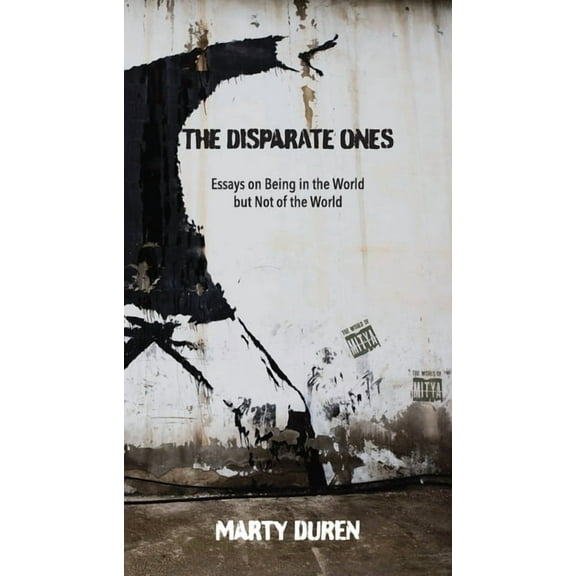 $527current price $5.27
The Disparate Ones: Essays On Being in the World but Not of the World, (Paperback)
Religion and Its Others Global Secularisms in a Post-Secular Age, Book 2, (Paperback) $14.61
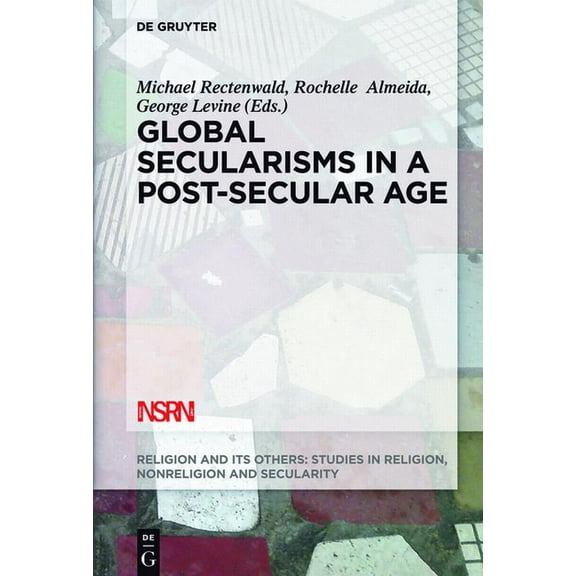 $1461current price $14.61
Religion and Its Others Global Secularisms in a Post-Secular Age, Book 2, (Paperback)
Pre-Owned God Is Not Great: How Religion Poisons Everything (Hardcover) 077104142X 9780771041426 $7.70
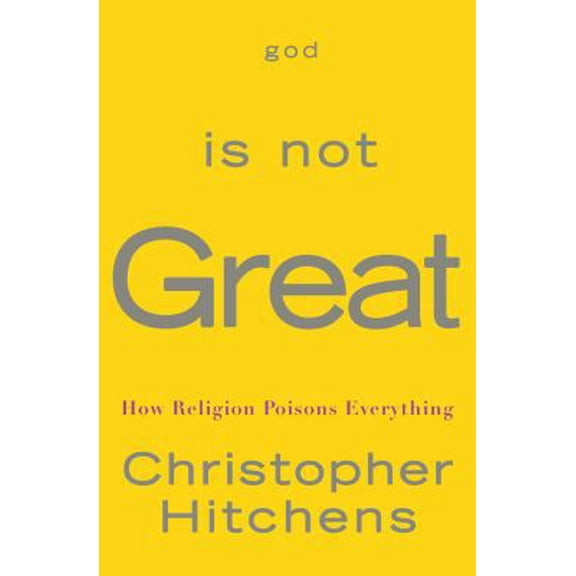 $770current price $7.70
Pre-Owned God Is Not Great: How Religion Poisons Everything (Hardcover) 077104142X 9780771041426
Pre-Owned Kingdoms in Conflict (Paperback) 0310397715 9780310397717 $6.36
 $636current price $6.36
Pre-Owned Kingdoms in Conflict (Paperback) 0310397715 9780310397717
The God of Peace (Paperback) $25.42
 $2542current price $25.42
The God of Peace (Paperback)
The Bodhisattva's Embrace: Dispatches from Engaged's Buddhism's Front Lines, (Paperback) $16.57
 $1657current price $16.57
The Bodhisattva's Embrace: Dispatches from Engaged's Buddhism's Front Lines, (Paperback)
Faith Deconstruction for Dummies, (Paperback) $13.99
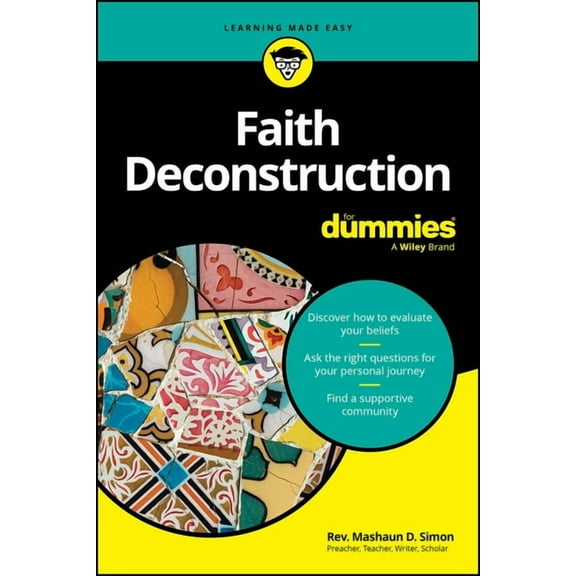 $1399current price $13.99
Faith Deconstruction for Dummies, (Paperback)
Comeback, (Paperback) $14.99
 $1499current price $14.99
Comeback, (Paperback)
Επιστημονική Φιλοσοφία: Σειρά ΦΙΛΟΣΟ] $15.00
![Επιστημονική Φιλοσοφία: Σειρά ΦΙΛΟΣΟ]](https://i5.walmartimages.com/asr/2c828da5-4e9a-45b2-b660-9d65bef68109.5cb51c3ac3a3899467b86e4f9e4f41cd.jpeg?odnHeight=576&odnWidth=576&odnBg=FFFFFF) $1500current price $15.00
$1500current price $15.00Επιστημονική Φιλοσοφία: Σειρά ΦΙΛΟΣΟ]
Pre-Owned God Is Not Great How Religion Poisons Everything Paperback $6.35
 $635current price $6.35
Pre-Owned God Is Not Great How Religion Poisons Everything Paperback
Pre-Owned The Consequences of Ideas: Understanding the Concepts That Shaped Our World (Paperback) 1433563770 9781433563775 $13.49
 3 optionsAvailable in additional 3 options$1349current price $13.49
Pre-Owned The Consequences of Ideas: Understanding the Concepts That Shaped Our World (Paperback) 1433563770 9781433563775
Understanding Theologiocracy, (Paperback) $14.53 Was $17.99
 $1453current price $14.53, Was $17.99$17.99
Understanding Theologiocracy, (Paperback)
One Nation Under God, (Paperback) $21.49
 $2149current price $21.49
One Nation Under God, (Paperback)
Day of Perdition : We Almost Stopped Him (Paperback) $14.95
 $1495current price $14.95
Day of Perdition : We Almost Stopped Him (Paperback)
Kashmir's Thin Red Lines, (Paperback) $13.33
 $1333current price $13.33
Kashmir's Thin Red Lines, (Paperback)
Reformed Ecclesiology in an Age of Denominationalism, (Paperback) $19.94
 $1994current price $19.94
Reformed Ecclesiology in an Age of Denominationalism, (Paperback)
Beyond Personages, (Paperback) $20.49
 $2049current price $20.49
Beyond Personages, (Paperback)
Customer ratings & reviews
0 ratings|0 reviews
This item does not have any reviews yet
