

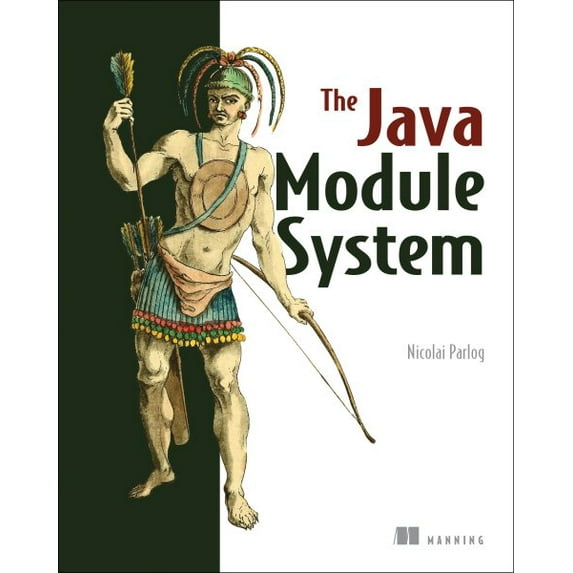
The Java Module System (Edition 1) (Paperback)
(No ratings yet)
Key item features
Summary
Java's much-awaited "Project Jigsaw" is finally here! Java 11 includes a built-in modularity framework, and The Java Module System is your guide to discovering it. In this new book, you'll learn how the module system improves reliability and maintainability, and how it can be used to reduce tight coupling of system components.
Foreword by Kevlin Henney.
Purchase of the print book includes a free eBook in PDF, Kindle, and ePub formats from Manning Publications. You'll find registration instructions inside the print book.
About the Technology
Packaging code into neat, well-defined units makes it easier to deliver safe and reliable applications. The Java Platform Module System is a language standard for creating these units. With modules, you can closely control how JARs interact and easily identify any missing dependencies at startup. This shift in design is so fundamental that starting with Java 9, all core Java APIs are distributed as modules, and libraries, frameworks, and applications will benefit from doing the same.
About the Book
The Java Module System is your in-depth guide to creating and using Java modules. With detailed examples and easy-to-understand diagrams, you'll learn the anatomy of a modular Java application. Along the way, you'll master best practices for designing with modules, debugging your modular app, and deploying to production.
What's inside
About the Reader
Perfect for developers with some Java experience.
About the Author
Nicolai Parlog is a developer, author, speaker, and trainer. His home is codefx.org.
Table of Contents
Java's much-awaited "Project Jigsaw" is finally here! Java 11 includes a built-in modularity framework, and The Java Module System is your guide to discovering it. In this new book, you'll learn how the module system improves reliability and maintainability, and how it can be used to reduce tight coupling of system components.
Foreword by Kevlin Henney.
Purchase of the print book includes a free eBook in PDF, Kindle, and ePub formats from Manning Publications. You'll find registration instructions inside the print book.
About the Technology
Packaging code into neat, well-defined units makes it easier to deliver safe and reliable applications. The Java Platform Module System is a language standard for creating these units. With modules, you can closely control how JARs interact and easily identify any missing dependencies at startup. This shift in design is so fundamental that starting with Java 9, all core Java APIs are distributed as modules, and libraries, frameworks, and applications will benefit from doing the same.
About the Book
The Java Module System is your in-depth guide to creating and using Java modules. With detailed examples and easy-to-understand diagrams, you'll learn the anatomy of a modular Java application. Along the way, you'll master best practices for designing with modules, debugging your modular app, and deploying to production.
What's inside
- The anatomy of a modular Java app
- Building modules from source to JAR
- Migrating to modular Java
- Decoupling dependencies and refining APIs
- Handling reflection and versioning
- Customizing runtime images
- Updated for Java 11
About the Reader
Perfect for developers with some Java experience.
About the Author
Nicolai Parlog is a developer, author, speaker, and trainer. His home is codefx.org.
Table of Contents
- First piece of the puzzle
- Anatomy of a modular application
- Defining modules and their properties
- Building modules from source to JAR
- Running and debugging modular applications
- Compatibility challenges when moving to Java 9 or later
- Recurring challenges when running on Java 9 or later
- Incremental modularization of existing projects
- Migration and modularization strategies
- Using services to decouple modules
- Refining dependencies and APIs
- Reflection in a modular world
- Module versions: What's possible and what's not
- Customizing runtime images with jlink
- Putting the pieces together
PART 1 - Hello, modules
PART 2 - Adapting real-world projects
PART 3 - Advanced module system features
Specs
- Book formatPaperback
- Fiction/nonfictionNon-Fiction
- GenreComputing & Internet
- Publication dateJuly, 2019
- Pages440
- Edition1
Current price is USD$89.69
Price when purchased online
- Free shipping
 Free 30-day returns
How do you want your item?
Columbus, 43215
Arrives between May 2 - May 5
|
Sold and shipped by RAREWAVES-USA
4.578856749311295 stars out of 5, based on 2904 seller reviews(4.6)2904 seller reviews

Free 30-day returns - in store or online
About this item
Product details
Summary Java's much-awaited "Project Jigsaw" is finally here! Java 11 includes a built-in modularity framework, and The Java Module System is your guide to discovering it. In this new book, you'll learn how the module system improves reliability and maintainability, and how it can be used to reduce tight coupling of system components. Foreword by Kevlin Henney. Purchase of the print book includes a free eBook in PDF, Kindle, and ePub formats from Manning Publications. You'll find registration instructions inside the print book. About the Technology Packaging code into neat, well-defined units makes it easier to deliver safe and reliable applications. The Java Platform Module System is a language standard for creating these units. With modules, you can closely control how JARs interact and easily identify any missing dependencies at startup. This shift in design is so fundamental that starting with Java 9, all core Java APIs are distributed as modules, and libraries, frameworks, and applications will benefit from doing the same. About the Book The Java Module System is your in-depth guide to creating and using Java modules. With detailed examples and easy-to-understand diagrams, you'll learn the anatomy of a modular Java application. Along the way, you'll master best practices for designing with modules, debugging your modular app, and deploying to production. What's inside
About the Reader Perfect for developers with some Java experience. About the Author Nicolai Parlog is a developer, author, speaker, and trainer. His home is codefx.org. Table of Contents
- The anatomy of a modular Java app
- Building modules from source to JAR
- Migrating to modular Java
- Decoupling dependencies and refining APIs
- Handling reflection and versioning
- Customizing runtime images
- Updated for Java 11
About the Reader Perfect for developers with some Java experience. About the Author Nicolai Parlog is a developer, author, speaker, and trainer. His home is codefx.org. Table of Contents
- PART 1 - Hello, modules
- First piece of the puzzle
- Anatomy of a modular application
- Defining modules and their properties
- Building modules from source to JAR
- Running and debugging modular applications PART 2 - Adapting real-world projects
- Compatibility challenges when moving to Java 9 or later
- Recurring challenges when running on Java 9 or later
- Incremental modularization of existing projects
- Migration and modularization strategies PART 3 - Advanced module system features
- Using services to decouple modules
- Refining dependencies and APIs
- Reflection in a modular world
- Module versions: What's possible and what's not
- Customizing runtime images with jlink
- Putting the pieces together
Summary
Java's much-awaited "Project Jigsaw" is finally here! Java 11 includes a built-in modularity framework, and The Java Module System is your guide to discovering it. In this new book, you'll learn how the module system improves reliability and maintainability, and how it can be used to reduce tight coupling of system components.
Foreword by Kevlin Henney.
Purchase of the print book includes a free eBook in PDF, Kindle, and ePub formats from Manning Publications. You'll find registration instructions inside the print book.
About the Technology
Packaging code into neat, well-defined units makes it easier to deliver safe and reliable applications. The Java Platform Module System is a language standard for creating these units. With modules, you can closely control how JARs interact and easily identify any missing dependencies at startup. This shift in design is so fundamental that starting with Java 9, all core Java APIs are distributed as modules, and libraries, frameworks, and applications will benefit from doing the same.
About the Book
The Java Module System is your in-depth guide to creating and using Java modules. With detailed examples and easy-to-understand diagrams, you'll learn the anatomy of a modular Java application. Along the way, you'll master best practices for designing with modules, debugging your modular app, and deploying to production.
What's inside
About the Reader
Perfect for developers with some Java experience.
About the Author
Nicolai Parlog is a developer, author, speaker, and trainer. His home is codefx.org.
Table of Contents
Java's much-awaited "Project Jigsaw" is finally here! Java 11 includes a built-in modularity framework, and The Java Module System is your guide to discovering it. In this new book, you'll learn how the module system improves reliability and maintainability, and how it can be used to reduce tight coupling of system components.
Foreword by Kevlin Henney.
Purchase of the print book includes a free eBook in PDF, Kindle, and ePub formats from Manning Publications. You'll find registration instructions inside the print book.
About the Technology
Packaging code into neat, well-defined units makes it easier to deliver safe and reliable applications. The Java Platform Module System is a language standard for creating these units. With modules, you can closely control how JARs interact and easily identify any missing dependencies at startup. This shift in design is so fundamental that starting with Java 9, all core Java APIs are distributed as modules, and libraries, frameworks, and applications will benefit from doing the same.
About the Book
The Java Module System is your in-depth guide to creating and using Java modules. With detailed examples and easy-to-understand diagrams, you'll learn the anatomy of a modular Java application. Along the way, you'll master best practices for designing with modules, debugging your modular app, and deploying to production.
What's inside
- The anatomy of a modular Java app
- Building modules from source to JAR
- Migrating to modular Java
- Decoupling dependencies and refining APIs
- Handling reflection and versioning
- Customizing runtime images
- Updated for Java 11
About the Reader
Perfect for developers with some Java experience.
About the Author
Nicolai Parlog is a developer, author, speaker, and trainer. His home is codefx.org.
Table of Contents
- First piece of the puzzle
- Anatomy of a modular application
- Defining modules and their properties
- Building modules from source to JAR
- Running and debugging modular applications
- Compatibility challenges when moving to Java 9 or later
- Recurring challenges when running on Java 9 or later
- Incremental modularization of existing projects
- Migration and modularization strategies
- Using services to decouple modules
- Refining dependencies and APIs
- Reflection in a modular world
- Module versions: What's possible and what's not
- Customizing runtime images with jlink
- Putting the pieces together
PART 1 - Hello, modules
PART 2 - Adapting real-world projects
PART 3 - Advanced module system features
info:
We aim to show you accurate product information. Manufacturers, suppliers and others provide what you see here, and we have not verified it.
Specifications
Book format
Paperback
Fiction/nonfiction
Non-Fiction
Genre
Computing & Internet
Publication date
July, 2019
Warranty
Warranty information
Please be aware that the warranty terms on items offered for sale by third party Marketplace sellers may differ from those displayed in this section (if any). To confirm warranty terms on an item offered for sale by a third party Marketplace seller, please use the 'Contact seller' feature on the third party Marketplace seller's information page and request the item's warranty terms prior to purchase.
Similar items you might like
Based on what customers bought
A Functional Approach to Java: Augmenting Object-Oriented Java Code with Functional Principles, (Paperback) $50.10
 $5010current price $50.10
A Functional Approach to Java: Augmenting Object-Oriented Java Code with Functional Principles, (Paperback)
Modular Programming with JavaScript, (Paperback) $46.57
 $4657current price $46.57
Modular Programming with JavaScript, (Paperback)
Java Testing with Spock (Edition 1) (Paperback) $49.82
 $4982current price $49.82
Java Testing with Spock (Edition 1) (Paperback)
Java leicht gemacht, (Paperback) $42.67
 $4267current price $42.67
Java leicht gemacht, (Paperback)
Pentaho Reporting 3.5 for Java Developers, (Paperback) $46.57
 $4657current price $46.57
Pentaho Reporting 3.5 for Java Developers, (Paperback)
Handbook of Computer Programming with Python, (Paperback) $47.99
 $4799current price $47.99
Handbook of Computer Programming with Python, (Paperback)
Multimedia Introduction to Programming Using Java, (Paperback) $49.82
 $4982current price $49.82
Multimedia Introduction to Programming Using Java, (Paperback)
What's your Purpose?, (Paperback) $15.80
 $1580current price $15.80
What's your Purpose?, (Paperback)
Un siècle d'antiféminisme, (Paperback) $47.95
 $4795current price $47.95
Un siècle d'antiféminisme, (Paperback)
The Curriculum: Whose Internationalization?, (Paperback) $65.04
 $6504current price $65.04
The Curriculum: Whose Internationalization?, (Paperback)
Fichtes Beben Berte and Behre (Paperback) $45.22
 $4522current price $45.22
Fichtes Beben Berte and Behre (Paperback)
Junit in Action, Third Edition, (Paperback) $51.67
 $5167current price $51.67
Junit in Action, Third Edition, (Paperback)
Data Structures in Java, (Paperback) $43.40
 $4340current price $43.40
Data Structures in Java, (Paperback)
Decompiling Java, (Paperback) $37.85
 $3785current price $37.85
Decompiling Java, (Paperback)
Developing Middleware in Java EE 8, (Paperback) $46.57
 $4657current price $46.57
Developing Middleware in Java EE 8, (Paperback)
Java Server pages, (Paperback) $24.06
 $2406current price $24.06
Java Server pages, (Paperback)
Solr Cookbook - Third Edition, (Paperback) $51.72
 $5172current price $51.72
Solr Cookbook - Third Edition, (Paperback)


Customer ratings & reviews
0 ratings|0 reviews
This item does not have any reviews yet
