


Revolutionary War Series: The Papers of George Washington : May-June 1778 (Series #15) (Hardcover)
Key item features
Volume 19 of the Revolutionary War Series documents Washington's activities during the winter and early spring of 1779, when the bulk of his army was encamped at Middlebrook, New Jersey, strategically situated where the Watchung Mountains rise from the coastal plain in the middle of the state. Washington took advantage of the relative quiet of this period to consult with a congressional committee of conference in Philadelphia. He returned to Middlebrook in early February and devoted himself yet again to reorganizing and reinvigorating the Continental Army. Recruitment problems, disputes among officers over rank, and compensation woes had grown old, but Washington corresponded at length with state officials and Congress in order to keep an effective fighting force in the field.
Winter camp also allowed Washington to consider future military operations. Emphasis fell on planning a punitive expedition against Indians of the Six Nations and Loyalists whose raids had terrorized settlers along the Pennsylvania--New York frontier. Washington's most immediate challenge was simply understanding the geography of this largely unknown region, and he sought information from anybody who had direct experience with the terrain and the Indian inhabitants, a group that included army officers, prisoners, land surveyors, interpreters, traders, and missionaries. Washington carefully sifted through these reports, observations, and opinions. To aid analysis, he consolidated the most pertinent materials, in his own handwriting, into a comparative table, and appended significant related items. His final plan called for the main force to cross the Susquehanna River at or near Wyoming, Pennsylvania, and strike into the heart of the border region while a supporting column advanced from near Albany, New York. After Maj. Gen. Horatio Gates declined Washington's offer to command this expedition, citing health reasons, it was accepted by Maj. Gen. John Sullivan, who left his post at Providence, Rhode Island, to begin preparations at Middlebrook.
In a late-February reply to Mount Vernon manager Lund Washington's question about selling slaves, the general expressed his confidence in the eventual success of the American struggle for independence as well as his personal resolve, saying, "if we should ultimately prove unsuccessful (of which I am under no apprehension unless it falls on us as a punishment for our want of public, & indeed private virtue) it would be a matter of very little consequence to me, whether my property is in Negroes, or loan office Certificates, as I shall neither ask for, nor expect any favor from his most gracious Majesty, nor any person acting under his authority." By every measure, Washington remained indispensable to the Revolutionary cause.
Specs
- Book formatHardcover
- Fiction/nonfictionNon-Fiction
- GenreHistory
- Publication dateMay, 2006
- Pages832
- Reading levelGeneral (US: Trade)
- Free shipping
 Free 90-day returns
How do you want your item?


More seller options (5)

Get free delivery, shipping and more*
About this item
Product details
Volume 19 of the Revolutionary War Series documents Washington's activities during the winter and early spring of 1779, when the bulk of his army was encamped at Middlebrook, New Jersey, strategically situated where the Watchung Mountains rise from the coastal plain in the middle of the state. Washington took advantage of the relative quiet of this period to consult with a congressional committee of conference in Philadelphia. He returned to Middlebrook in early February and devoted himself yet again to reorganizing and reinvigorating the Continental Army. Recruitment problems, disputes among officers over rank, and compensation woes had grown old, but Washington corresponded at length with state officials and Congress in order to keep an effective fighting force in the field.
Winter camp also allowed Washington to consider future military operations. Emphasis fell on planning a punitive expedition against Indians of the Six Nations and Loyalists whose raids had terrorized settlers along the Pennsylvania--New York frontier. Washington's most immediate challenge was simply understanding the geography of this largely unknown region, and he sought information from anybody who had direct experience with the terrain and the Indian inhabitants, a group that included army officers, prisoners, land surveyors, interpreters, traders, and missionaries. Washington carefully sifted through these reports, observations, and opinions. To aid analysis, he consolidated the most pertinent materials, in his own handwriting, into a comparative table, and appended significant related items. His final plan called for the main force to cross the Susquehanna River at or near Wyoming, Pennsylvania, and strike into the heart of the border region while a supporting column advanced from near Albany, New York. After Maj. Gen. Horatio Gates declined Washington's offer to command this expedition, citing health reasons, it was accepted by Maj. Gen. John Sullivan, who left his post at Providence, Rhode Island, to begin preparations at Middlebrook.
In a late-February reply to Mount Vernon manager Lund Washington's question about selling slaves, the general expressed his confidence in the eventual success of the American struggle for independence as well as his personal resolve, saying, "if we should ultimately prove unsuccessful (of which I am under no apprehension unless it falls on us as a punishment for our want of public, & indeed private virtue) it would be a matter of very little consequence to me, whether my property is in Negroes, or loan office Certificates, as I shall neither ask for, nor expect any favor from his most gracious Majesty, nor any person acting under his authority." By every measure, Washington remained indispensable to the Revolutionary cause.
Volume 19 of the Revolutionary War Series documents Washington's activities during the winter and early spring of 1779, when the bulk of his army was encamped at Middlebrook, New Jersey, strategically situated where the Watchung Mountains rise from the coastal plain in the middle of the state. Washington took advantage of the relative quiet of this period to consult with a congressional committee of conference in Philadelphia. He returned to Middlebrook in early February and devoted himself yet again to reorganizing and reinvigorating the Continental Army. Recruitment problems, disputes among officers over rank, and compensation woes had grown old, but Washington corresponded at length with state officials and Congress in order to keep an effective fighting force in the field.
Winter camp also allowed Washington to consider future military operations. Emphasis fell on planning a punitive expedition against Indians of the Six Nations and Loyalists whose raids had terrorized settlers along the Pennsylvania--New York frontier. Washington's most immediate challenge was simply understanding the geography of this largely unknown region, and he sought information from anybody who had direct experience with the terrain and the Indian inhabitants, a group that included army officers, prisoners, land surveyors, interpreters, traders, and missionaries. Washington carefully sifted through these reports, observations, and opinions. To aid analysis, he consolidated the most pertinent materials, in his own handwriting, into a comparative table, and appended significant related items. His final plan called for the main force to cross the Susquehanna River at or near Wyoming, Pennsylvania, and strike into the heart of the border region while a supporting column advanced from near Albany, New York. After Maj. Gen. Horatio Gates declined Washington's offer to command this expedition, citing health reasons, it was accepted by Maj. Gen. John Sullivan, who left his post at Providence, Rhode Island, to begin preparations at Middlebrook.
In a late-February reply to Mount Vernon manager Lund Washington's question about selling slaves, the general expressed his confidence in the eventual success of the American struggle for independence as well as his personal resolve, saying, "if we should ultimately prove unsuccessful (of which I am under no apprehension unless it falls on us as a punishment for our want of public, & indeed private virtue) it would be a matter of very little consequence to me, whether my property is in Negroes, or loan office Certificates, as I shall neither ask for, nor expect any favor from his most gracious Majesty, nor any person acting under his authority." By every measure, Washington remained indispensable to the Revolutionary cause.
Specifications
Book format
Fiction/nonfiction
Genre
Publication date
Warranty
Warranty information
Similar items you might like
Based on what customers bought
The Diaries of George Washington : July 1786–December 1789 (Hardcover) $97.98
 $9798current price $97.98
The Diaries of George Washington : July 1786–December 1789 (Hardcover)
Revolutionary War Series: The Papers of George Washington : June-August 1777 (Series #10) (Hardcover) $114.95
 $11495current price $114.95
Revolutionary War Series: The Papers of George Washington : June-August 1777 (Series #10) (Hardcover)
Revolutionary War Series: The Papers of George Washington : October 1776-January 1777 (Series #7) (Hardcover) $110.86
 $11086current price $110.86
Revolutionary War Series: The Papers of George Washington : October 1776-January 1777 (Series #7) (Hardcover)
The Diaries of George Washington : 1784–June 1786 (Hardcover) $92.91
$9291current price $92.91The Diaries of George Washington : 1784–June 1786 (Hardcover)
The Writings of George Washington (Hardcover) $44.99
 $4499current price $44.99
The Writings of George Washington (Hardcover)
Presidential Series: The Papers of George Washington : January-May 1793 (Series #12) (Hardcover) $114.99
 $11499current price $114.99
Presidential Series: The Papers of George Washington : January-May 1793 (Series #12) (Hardcover)
THE PAPERS OF GEORGE WASHINGTON [9780813910406] $115.00
$11500current price $115.00THE PAPERS OF GEORGE WASHINGTON [9780813910406]
Revolutionary War Series: The Papers of George Washington : 10 March–23 May 1782 (Series #36) (Hardcover) $114.99
$11499current price $114.99Revolutionary War Series: The Papers of George Washington : 10 March–23 May 1782 (Series #36) (Hardcover)
The Diaries of George Washington : January 1790-December 1799 (Hardcover) $80.20 Was $98.00
$8020current price $80.20, Was $98.00$98.00The Diaries of George Washington : January 1790-December 1799 (Hardcover)
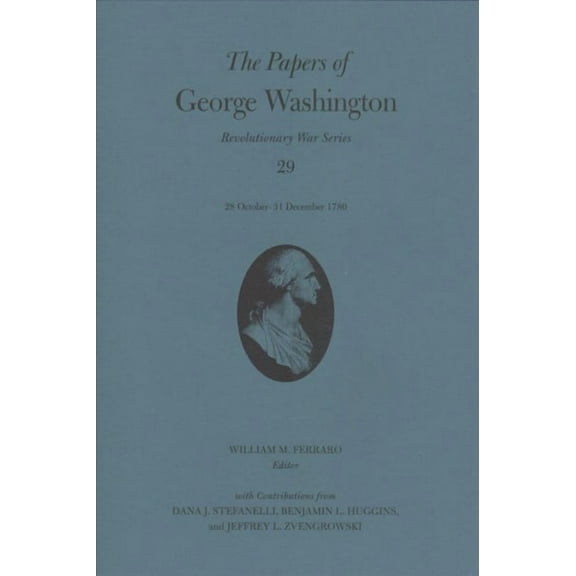
Revolutionary War Series: The Papers of George Washington : 28 October–31 December 1780 (Series #29) (Hardcover) $111.92
 $11192current price $111.92
Revolutionary War Series: The Papers of George Washington : 28 October–31 December 1780 (Series #29) (Hardcover)
The Writings of George Washington; Volume IV (Hardcover) $39.95
 $3995current price $39.95
The Writings of George Washington; Volume IV (Hardcover)
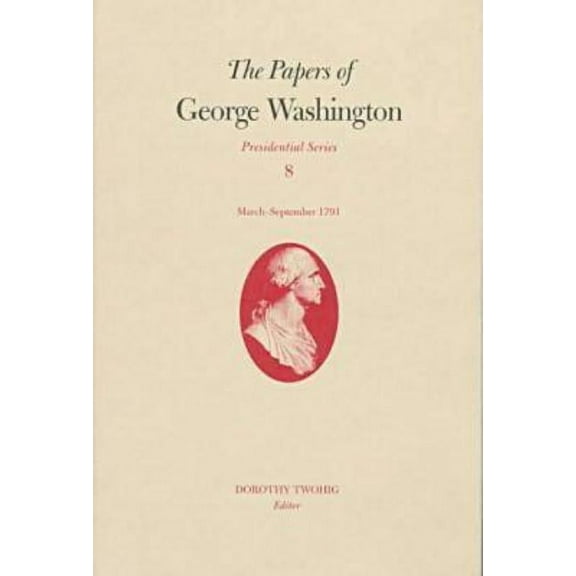
Presidential Series: The Papers of George Washington : March-September 1791 (Series #8) (Hardcover) $114.99
 $11499current price $114.99
Presidential Series: The Papers of George Washington : March-September 1791 (Series #8) (Hardcover)
Revolutionary War Series: The Papers of George Washington : 8 September–20 November 1781 (Series #34) (Hardcover) $115.00
 $11500current price $115.00
Revolutionary War Series: The Papers of George Washington : 8 September–20 November 1781 (Series #34) (Hardcover)
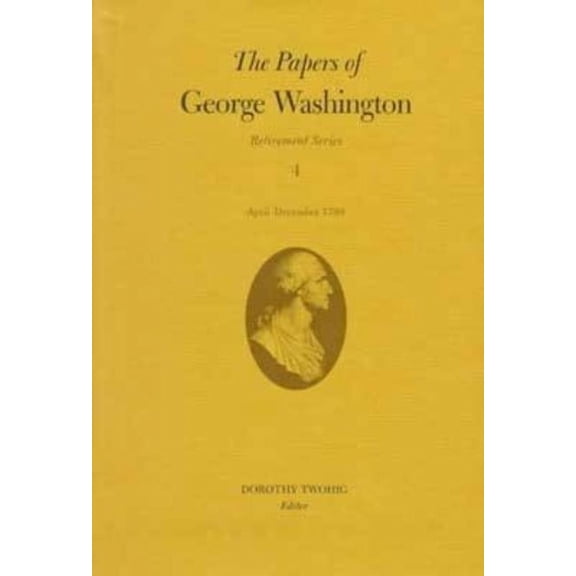
Retirement Series: The Papers of George Washington : April-December 1799 (Series #4) (Hardcover) $120.31
 $12031current price $120.31
Retirement Series: The Papers of George Washington : April-December 1799 (Series #4) (Hardcover)
Presidential Series: The Papers of George Washington : January-June 1790 (Series #5) (Hardcover) $111.96
 $11196current price $111.96
Presidential Series: The Papers of George Washington : January-June 1790 (Series #5) (Hardcover)
Revolutionary War Series: The Papers of George Washington : 5 July–27 August 1780 (Series #27) (Hardcover) $120.31
$12031current price $120.31Revolutionary War Series: The Papers of George Washington : 5 July–27 August 1780 (Series #27) (Hardcover)
Revolutionary War Series: The Papers of George Washington : 28 August–27 October 1780 (Series #28) (Hardcover) $114.99
 $11499current price $114.99
Revolutionary War Series: The Papers of George Washington : 28 August–27 October 1780 (Series #28) (Hardcover)
Colonial Series: The Papers of George Washington : March 1774-June 1775 with Cumulative Index (Series #10) (Hardcover) $114.99
 $11499current price $114.99
Colonial Series: The Papers of George Washington : March 1774-June 1775 with Cumulative Index (Series #10) (Hardcover)
Revolutionary War Series: The Papers of George Washington : 21 November 1781–9 March 1782 (Series #35) (Hardcover) $100.87 Was $114.62
$10087current price $100.87, Was $114.62$114.62Revolutionary War Series: The Papers of George Washington : 21 November 1781–9 March 1782 (Series #35) (Hardcover)
Presidential Series: The Papers of George Washington : 1 April–21 September 1796 (Series #20) (Hardcover) $99.25
$9925current price $99.25Presidential Series: The Papers of George Washington : 1 April–21 September 1796 (Series #20) (Hardcover)
Customer ratings & reviews

Related pages
- Arthur Wellesley Wellington; John Gurwood
- Victorian Era Great Britain History Books
- Kaiser Wilhelm Ii
- Stratford Streets
- Middle Ages Great Britain History Books
- Great Britain Parliament; William Cobbett; Thomas Curson Hansard
- Washington Irving; Benjamin Louis Eulalie De Bonneville
- Britannia History
- Tudor & Elizabethan Era Great Britain History Books
- Stuart Era Great Britain History Books
- Georgian Era Great Britain History Books
- 20th Century Great Britain History Books