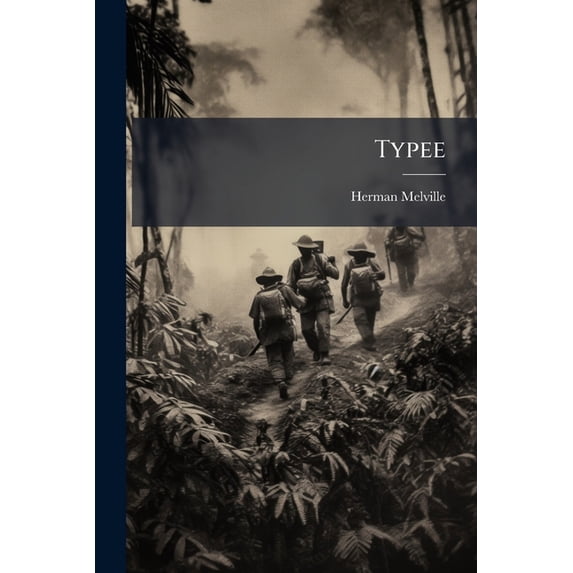
"Typee: A Narrative of a Four Months' Residence Among the Natives of a Valley of the Marquesas Islands" recounts Herman Melville's captivating experiences as a young sailor who jumps ship in the remote Marquesas Islands of the South Pacific. Seeking adventure, Melville and a companion find themselves among the Typee, a tribe initially perceived as cannibals. His narrative offers a vivid and detailed portrait of their culture, customs, and way of life, challenging the conventional views of civilization and savagery prevalent in the 19th century.
Melville's lyrical prose and keen observations bring the exotic landscape and its inhabitants to life, painting a picture of both idyllic beauty and underlying tension. This early work established Melville as a major literary figure and remains a timeless exploration of cultural encounter, adventure, and the complexities of human nature. "Typee" continues to resonate with readers, offering a fascinating glimpse into a world far removed from our own and prompting reflection on the nature of civilization itself.
This work has been selected by scholars as being culturally important, and is part of the knowledge base of civilization as we know it. This work was reproduced from the original artifact, and remains as true to the original work as possible. Therefore, you will see the original copyright references, library stamps (as most of these works have been housed in our most important libraries around the world), and other notations in the work.
This work is in the public domain in the United States of America, and possibly other nations. Within the United States, you may freely copy and distribute this work, as no entity (individual or corporate) has a copyright on the body of the work.
As a reproduction of a historical artifact, this work may contain missing or blurred pages, poor pictures, errant marks, etc. Scholars believe, and we concur, that this work is important enough to be preserved, reproduced, and made generally available to the public. We appreciate your support of the preservation process, and thank you for being an important part of keeping this knowledge alive and relevant.