

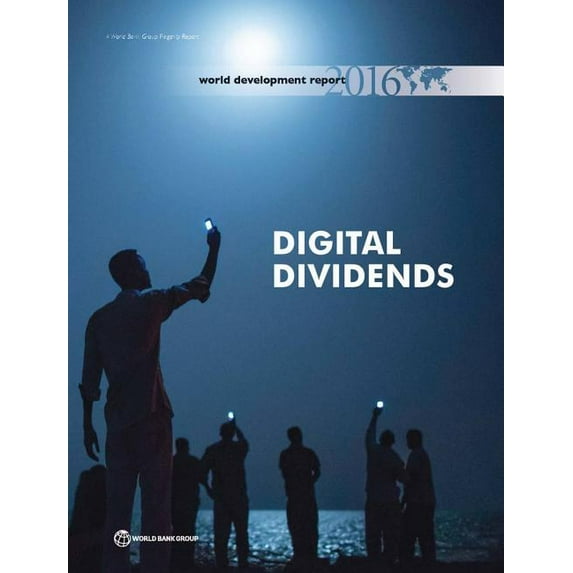
World Development Report: World Development Report 2016 : Digital Dividends (Paperback)
(No ratings yet)
Key item features
Digital technologies are spreading rapidly, but digital dividends--the broader benefits of faster growth, more jobs, and better services--are not. If more than 40 percent of adults in East Africa pay their utility bills using a mobile phone, why can’t others around the world do the same? If 8 million entrepreneurs in China--one third of them women--can use an e-commerce platform to export goods to 120 countries, why can’t entrepreneurs elsewhere achieve the same global reach? And if India can provide unique digital identification to 1 billion people in five years, and thereby reduce corruption by billions of dollars, why can’t other countries replicate its success? Indeed, what’s holding back countries from realizing the profound and transformational effects that digital technologies are supposed to deliver? Two main reasons. First, nearly 60 percent of the world’s population are still offline and can’t participate in the digital economy in any meaningful way. Second, and more important, the benefits of digital technologies can be offset by growing risks. Startups can disrupt incumbents, but not when vested interests and regulatory uncertainty obstruct competition and the entry of new firms. Employment opportunities may be greater, but not when the labor market is polarized. The internet can be a platform for universal empowerment, but not when it becomes a tool for state control and elite capture. The World Development Report 2016 shows that while the digital revolution has forged ahead, its 'analog complements'--the regulations that promote entry and competition, the skills that enable workers to access and then leverage the new economy, and the institutions that are accountable to citizens--have not kept pace. And when these analog complements to digital investments are absent, the development impact can be disappointing. What, then, should countries do? They should formulate digital development strategies that are much broader than current information and communication technology (ICT) strategies. They should create a policy and institutional environment for technology that fosters the greatest benefits. In short, they need to build a strong analog foundation to deliver digital dividends to everyone, everywhere.
Specs
- Book formatPaperback
- Fiction/nonfictionNon-Fiction
- GenreNonfiction
- Publication dateJanuary, 2016
- Pages376
- Series titleWorld Development Report
Current price is USD$40.59
Price when purchased online
- Free shipping
 Free 30-day returns
How do you want your item?
Columbus, 43215
Arrives between May 8 - May 13
|
Sold and shipped by newbookdeals
4.5602910602910605 stars out of 5, based on 1924 seller reviews(4.6)1924 seller reviews

Free 30-day returns
About this item
Product details
"This Report aims to inspire and guide the researchers and practitioners who can help advance a new set of development approaches based on a fuller consideration of psychological and social influences." - p. 2 Digital technologies are spreading rapidly, but digital dividends--the broader benefits of faster growth, more jobs, and better services--are not. If more than 40 percent of adults in East Africa pay their utility bills using a mobile phone, why can't others around the world do the same? If 8 million entrepreneurs in China--one third of them women--can use an e-commerce platform to export goods to 120 countries, why can't entrepreneurs elsewhere achieve the same global reach? And if India can provide unique digital identification to 1 billion people in five years, and thereby reduce corruption by billions of dollars, why can't other countries replicate its success? Indeed, what's holding back countries from realizing the profound and transformational effects that digital technologies are supposed to deliver? Two main reasons. First, nearly 60 percent of the world's population are still offline and can't participate in the digital economy in any meaningful way. Second, and more important, the benefits of digital technologies can be offset by growing risks. Startups can disrupt incumbents, but not when vested interests and regulatory uncertainty obstruct competition and the entry of new firms. Employment opportunities may be greater, but not when the labor market is polarized. The internet can be a platform for universal empowerment, but not when it becomes a tool for state control and elite capture. The World Development Report 2016 shows that while the digital revolution has forged ahead, its 'analog complements'--the regulations that promote entry and competition, the skills that enable workers to access and then leverage the new economy, and the institutions that are accountable to citizens--have not kept pace. And when these analog complements to digital investments are absent, the development impact can be disappointing. What, then, should countries do? They should formulate digital development strategies that are much broader than current information and communication technology (ICT) strategies. They should create a policy and institutional environment for technology that fosters the greatest benefits. In short, they need to build a strong analog foundation to deliver digital dividends to everyone, everywhere.
Digital technologies are spreading rapidly, but digital dividends--the broader benefits of faster growth, more jobs, and better services--are not. If more than 40 percent of adults in East Africa pay their utility bills using a mobile phone, why can’t others around the world do the same? If 8 million entrepreneurs in China--one third of them women--can use an e-commerce platform to export goods to 120 countries, why can’t entrepreneurs elsewhere achieve the same global reach? And if India can provide unique digital identification to 1 billion people in five years, and thereby reduce corruption by billions of dollars, why can’t other countries replicate its success? Indeed, what’s holding back countries from realizing the profound and transformational effects that digital technologies are supposed to deliver? Two main reasons. First, nearly 60 percent of the world’s population are still offline and can’t participate in the digital economy in any meaningful way. Second, and more important, the benefits of digital technologies can be offset by growing risks. Startups can disrupt incumbents, but not when vested interests and regulatory uncertainty obstruct competition and the entry of new firms. Employment opportunities may be greater, but not when the labor market is polarized. The internet can be a platform for universal empowerment, but not when it becomes a tool for state control and elite capture. The World Development Report 2016 shows that while the digital revolution has forged ahead, its 'analog complements'--the regulations that promote entry and competition, the skills that enable workers to access and then leverage the new economy, and the institutions that are accountable to citizens--have not kept pace. And when these analog complements to digital investments are absent, the development impact can be disappointing. What, then, should countries do? They should formulate digital development strategies that are much broader than current information and communication technology (ICT) strategies. They should create a policy and institutional environment for technology that fosters the greatest benefits. In short, they need to build a strong analog foundation to deliver digital dividends to everyone, everywhere.
info:
We aim to show you accurate product information. Manufacturers, suppliers and others provide what you see here, and we have not verified it.
Specifications
Book format
Paperback
Fiction/nonfiction
Non-Fiction
Genre
Nonfiction
Publication date
January, 2016
Warranty
Warranty information
Please be aware that the warranty terms on items offered for sale by third party Marketplace sellers may differ from those displayed in this section (if any). To confirm warranty terms on an item offered for sale by a third party Marketplace seller, please use the 'Contact seller' feature on the third party Marketplace seller's information page and request the item's warranty terms prior to purchase.
Similar items you might like
Based on what customers bought
Global Investment Competitiveness Report 2017/2018: Foreign Investor Perspectives and Policy Implications, (Paperback) $35.00
 $3500current price $35.00
Global Investment Competitiveness Report 2017/2018: Foreign Investor Perspectives and Policy Implications, (Paperback)
Global Economic Prospects Global Economic Prospects, January 2024, (Paperback) $41.03
 $4103current price $41.03
Global Economic Prospects Global Economic Prospects, January 2024, (Paperback)
Global Economic Prospects, January 2022, (Paperback) $40.28 Was $48.50
 $4028current price $40.28, Was $48.50$48.50
Global Economic Prospects, January 2022, (Paperback)
World Development Report: World Development Report 2018 : Learning to Realize Education's Promise (Paperback) $45.41
 $4541current price $45.41
World Development Report: World Development Report 2018 : Learning to Realize Education's Promise (Paperback)
World Bank Studies Science, Technology and Innovation in Uganda: Recommendation for Policy and Action, (Paperback) $27.83
 $2783current price $27.83
World Bank Studies Science, Technology and Innovation in Uganda: Recommendation for Policy and Action, (Paperback)
Global Economic Prospects Global Economic Prospects, January 2015, Book 10, (Paperback) $44.42
 $4442current price $44.42
Global Economic Prospects Global Economic Prospects, January 2015, Book 10, (Paperback)
Directions in Development - Public Secto Beyond the Annual Budget, (Paperback) $40.06
 $4006current price $40.06
Directions in Development - Public Secto Beyond the Annual Budget, (Paperback)
Global Financial Development Report Global Financial Development Report 2017/2018: Bankers without Borders, (Paperback) $33.98
 $3398current price $33.98
Global Financial Development Report Global Financial Development Report 2017/2018: Bankers without Borders, (Paperback)
Environment and Sustainable Development The Changing Wealth of Nations: Measuring Sustainable Development in the New Millennium, (Paperback) $44.42
 $4442current price $44.42
Environment and Sustainable Development The Changing Wealth of Nations: Measuring Sustainable Development in the New Millennium, (Paperback)
Inclusive Green Growth: The Pathway to Sustainable Development, (Paperback) $50.06
 $5006current price $50.06
Inclusive Green Growth: The Pathway to Sustainable Development, (Paperback)
Corporate Governance of State-Owned Enterprises, (Paperback) $41.91 Was $47.35
 $4191current price $41.91, Was $47.35$47.35
Corporate Governance of State-Owned Enterprises, (Paperback)
Independent Evaluation Group Studies World Bank Group Impact Evaluations: Relevance and Effectiveness, (Paperback) $34.09
 $3409current price $34.09
Independent Evaluation Group Studies World Bank Group Impact Evaluations: Relevance and Effectiveness, (Paperback)
World Bank Group A to Z World Bank Group A to Z 2016, (Paperback) $19.36
 $1936current price $19.36
World Bank Group A to Z World Bank Group A to Z 2016, (Paperback)
The World Bank Group A to Z: The World Bank Group A to Z 2015 (Paperback) $38.72
 $3872current price $38.72
The World Bank Group A to Z: The World Bank Group A to Z 2015 (Paperback)
Global Economic Prospects Global Economic Prospects, January 2023, (Paperback) $40.53
 $4053current price $40.53
Global Economic Prospects Global Economic Prospects, January 2023, (Paperback)
Country Studies Poverty in Guatemala, (Paperback) $33.21
 $3321current price $33.21
Country Studies Poverty in Guatemala, (Paperback)
World Development Report: World Development Report 2020 : Trading for Development in the Age of Global Value Chains (Paperback) $45.41
 $4541current price $45.41
World Development Report: World Development Report 2020 : Trading for Development in the Age of Global Value Chains (Paperback)
World Development Report World Development Report 2023, (Paperback) $54.31
 $5431current price $54.31
World Development Report World Development Report 2023, (Paperback)
Involuntary Resettlement Sourcebook: Planning and Implemention in Development Projects, (Paperback) $38.71
 $3871current price $38.71
Involuntary Resettlement Sourcebook: Planning and Implemention in Development Projects, (Paperback)

Customer ratings & reviews
0 ratings|0 reviews
This item does not have any reviews yet
