


Can We Live Together? : Equality and Difference (Hardcover)
Key item features
Our small societies are not gradually merging into one vast global society; instead, the simultaneously political, territorial, and cultural entities that we once called societies or countries are breaking up before our eyes in the wake of ethnic, political, and religious conflict. The result is that we live together only to the extent that we make the same gestures and use the same objects—we do not communicate with one another in a meaningful way or govern ourselves together.
What power can now reconcile a transnational economy with the disturbing reality of introverted communities? The author argues against the idea that all we can do is agree on some social rules of mutual tolerance and respect for personal freedom, and forgo the attempt to forge deeper bonds. He argues instead that we can use a focus on the personal life-project—the construction of an active self or “subject”—ultimately to form meaningful social and political institutions.
The book concludes by exploring how social institutions might be retooled to safeguard the development of the personal subject and communication between subjects, and by sketching out what these new social institutions might look like in terms of social relations, politics, and education.
Specs
- Book formatHardcover
- Fiction/nonfictionNon-Fiction
- Publication dateMay, 2000
- Pages336
- Edition1st Edition
- PublisherStanford University Press
- Free shipping
 Free 90-day returns
How do you want your item?


More seller options (4)

Get free delivery, shipping and more*
About this item
Product details
In this book, a leading French social thinker grapples with the gap between the tendency toward globalization of economic relations and mass culture and the increasingly sectarian nature of our social identities as members of ethnic, religious, or national groups. Though at first glance, it might seem as if the answer to the question "Can we live together?" is that we already do live together-watching the same television programs, buying the same clothes, and even using the same language to communicate from one country to another-the author argues that in important ways, we are farther than ever from belonging to the same society or the same culture.
Our small societies are not gradually merging into one vast global society; instead, the simultaneously political, territorial, and cultural entities that we once called societies or countries are breaking up before our eyes in the wake of ethnic, political, and religious conflict. The result is that we live together only to the extent that we make the same gestures and use the same objects-we do not communicate with one another in a meaningful way or govern ourselves together.
What power can now reconcile a transnational economy with the disturbing reality of introverted communities? The author argues against the idea that all we can do is agree on some social rules of mutual tolerance and respect for personal freedom, and forgo the attempt to forge deeper bonds. He argues instead that we can use a focus on the personal life-project-the construction of an active self or "subject"-ultimately to form meaningful social and political institutions.
The book concludes by exploring how social institutions might be retooled to safeguard the development of the personal subject and communication between subjects, and by sketching out what these new social institutions might look like in terms of social relations, politics, and education.
Our small societies are not gradually merging into one vast global society; instead, the simultaneously political, territorial, and cultural entities that we once called societies or countries are breaking up before our eyes in the wake of ethnic, political, and religious conflict. The result is that we live together only to the extent that we make the same gestures and use the same objects—we do not communicate with one another in a meaningful way or govern ourselves together.
What power can now reconcile a transnational economy with the disturbing reality of introverted communities? The author argues against the idea that all we can do is agree on some social rules of mutual tolerance and respect for personal freedom, and forgo the attempt to forge deeper bonds. He argues instead that we can use a focus on the personal life-project—the construction of an active self or “subject”—ultimately to form meaningful social and political institutions.
The book concludes by exploring how social institutions might be retooled to safeguard the development of the personal subject and communication between subjects, and by sketching out what these new social institutions might look like in terms of social relations, politics, and education.
Specifications
Book format
Fiction/nonfiction
Genre
Publication date
Warranty
Warranty information
Similar items you might like
Based on what customers bought
Representational Style in Congress: What Legislators Say and Why It Matters, (Hardcover) $108.51
 $10851current price $108.51
Representational Style in Congress: What Legislators Say and Why It Matters, (Hardcover)
Self to Self: Selected Essays, (Hardcover) $112.81
 $11281current price $112.81
Self to Self: Selected Essays, (Hardcover)
Placemaking: People, Properties, Planning, (Hardcover) $99.95
 $9995current price $99.95
Placemaking: People, Properties, Planning, (Hardcover)
Clays, (Hardcover) $92.51
 $9251current price $92.51
Clays, (Hardcover)
Montesquieu, (Hardcover) $72.02 Was $109.87
 $7202current price $72.02, Was $109.87$109.87
Montesquieu, (Hardcover)
Multinational Business Finance, (Hardcover) $152.81
 $15281current price $152.81
Multinational Business Finance, (Hardcover)
Framboids, (Hardcover) $118.56
 $11856current price $118.56
Framboids, (Hardcover)
The Populist Manifesto, (Hardcover) $106.34
 $10634current price $106.34
The Populist Manifesto, (Hardcover)
The Motorization of American Cities, (Hardcover) $115.96
 $11596current price $115.96
The Motorization of American Cities, (Hardcover)
Comparative Governance, (Hardcover) $97.98
 $9798current price $97.98
Comparative Governance, (Hardcover)
Equality for Inegalitarians, (Hardcover) $101.00
 $10100current price $101.00
Equality for Inegalitarians, (Hardcover)
Philosophy and the Event, (Hardcover) $69.86
 $6986current price $69.86
Philosophy and the Event, (Hardcover)
The Sea: A Philosophical Encounter, (Hardcover) $125.21
 $12521current price $125.21
The Sea: A Philosophical Encounter, (Hardcover)
The Electoral System in Britain Since 1918, (Hardcover) $77.49
 $7749current price $77.49
The Electoral System in Britain Since 1918, (Hardcover)
In Praise of Philosophy, (Hardcover) $59.47
 $5947current price $59.47
In Praise of Philosophy, (Hardcover)
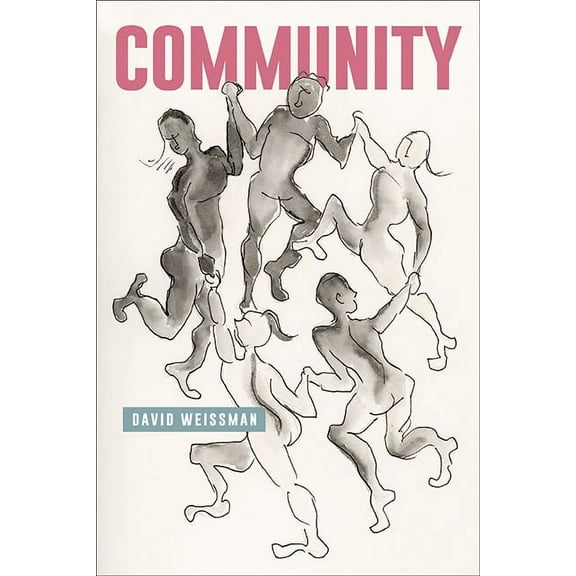
Community, (Hardcover) $118.54
 $11854current price $118.54
Community, (Hardcover)
The Paper Economy, (Hardcover) $120.01
 $12001current price $120.01
The Paper Economy, (Hardcover)
God and Ethics, (Hardcover) $56.27
 $5627current price $56.27
God and Ethics, (Hardcover)
Plato's Phaedo: Forms, Death, and the Philosophical Life, (Hardcover) $101.39
 $10139current price $101.39
Plato's Phaedo: Forms, Death, and the Philosophical Life, (Hardcover)
People of the Wachusett (Hardcover) $80.25
 $8025current price $80.25
People of the Wachusett (Hardcover)
Customer ratings & reviews

Related pages
- Ruth Ginsburg Quotes
- Feminist Slogans
- No More Racism
- Famous Advocates
- People Said
- Happened Worlds Fair
- Social Activists Biographies & Memoirs
- People with Disabilities Biographies & Memoirs
- Social Activists Biography & Autobiography Teen & Young Adult Books
- Women's History Month Nonfiction
- Editors, Journalists & Publishers Biographies & Memoirs
- Civil & Human Rights Social Themes Teen & Young Adult Books