
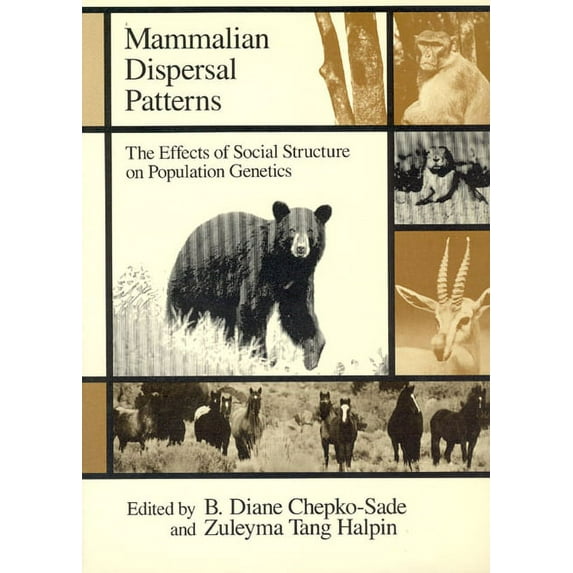
Mammalian Dispersal Patterns : The Effects of Social Structure on Population Genetics (Paperback)
Hero image 0 of Mammalian Dispersal Patterns : The Effects of Social Structure on Population Genetics (Paperback), 0 of 1

Mammalian Dispersal Patterns : The Effects of Social Structure on Population Genetics (Paperback)

(No ratings yet)

Key item features

Mammalian Dispersal Patterns examines the ways that social structure affects population genetics and, in turn, rates of evolution, in mammalian groups. It brings together fieldwork in animal behavior and wildlife biology with theoretical work in demography and population genetics. The focus here is dispersal—whether, how, and when individuals leave the areas where they are born.

Theoretical work in population genetics indicates that such social factors as skewed sex ratios, restrictive mating patterns, and delayed age of first reproduction will lower the reproductive variability of a population by reducing the number of genotypes passed from one generation to the next. Field studies have shown that many mammalian species do exhibit many such social characteristics. Among horses, elephant seals, and a number of primates, the majority of females are inseminated by only a fraction of the males. In pacts of wolves and mongooses, usually only the highest-ranking male and female breed in a given season. Although socially restricted mating tends to lower genetic variability in isolated populations, it actually tends to increase genetic variability in subdivided populations with low rates of migration between subunits. Among some species there is little dispersal and thus little gene flow between subpopulations; other species travel far afield before mating.

The contributors to this volume examine actual data from populations of mammals, the way patterns of dispersal correlate with the genetic structure of individuals and populations, and mathematical models of population structure. This interdisciplinary approach has an important bearing on work in conservation of both wildlife and zoo populations, for it shows that the home range and the population size needed to maintain genetic variability can differ greatly from one species to the next. The volume also offers a fruitful model for future research.
Current price is $49.62
Price when purchased online
  • Free shipping
  • Free 30-day returns

How do you want your item?

How do you want your item?
Columbus, 43215
Arrives between May 13 - May 19
|
Sold and shipped by newbookdeals
4.5607476635514015 stars out of 5, based on 1926 seller reviews(4.6)
Report an issue with this seller
Free 30-day returns

About this item

Product details

Specifications

Warranty

Warnings

Customer ratings & reviews

0 ratings|0 reviews
This item does not have any reviews yet
